
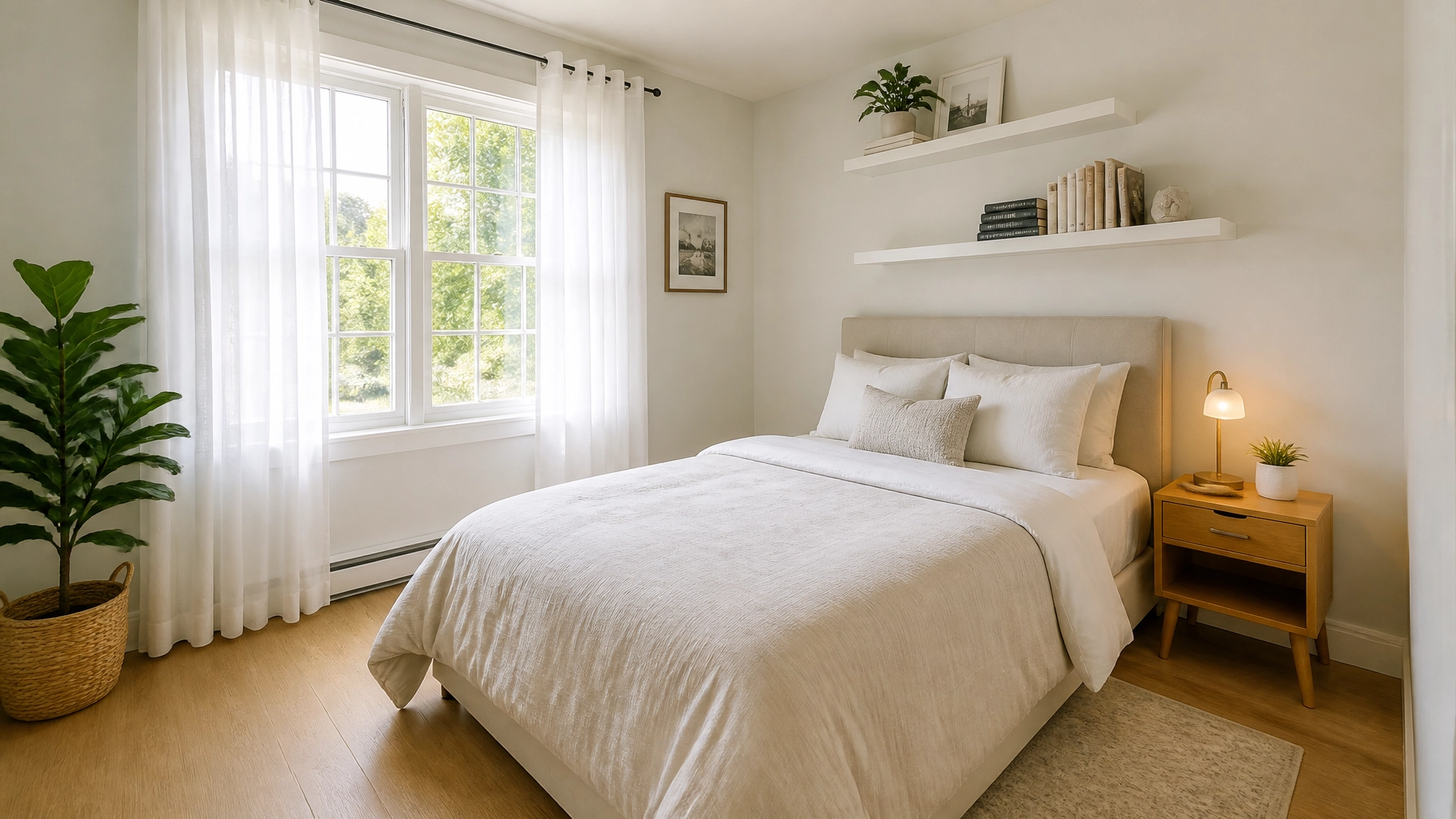
Organizing a small bedroom is often less about finding more space and more about managing the space that already exists. When square footage is limited, even minor errors in layout or storage choices can make a room feel cramped, chaotic, and uninviting. A bedroom should serve as a sanctuary for rest, but it often becomes a catch-all for clothing, books, and miscellaneous household items.
The challenge of a small room is that there is no margin for error. In a larger suite, a bulky dresser might just be a design choice; in a small room, it becomes a physical barrier that disrupts the flow of movement. Understanding the common pitfalls of small-space organization is the first step toward creating a functional, peaceful environment. By identifying these seven common mistakes and implementing practical, strategic fixes, any small bedroom can feel significantly larger and more organized.
1. The “Footprint” Fallacy: Overlooking Vertical Space
One of the most frequent mistakes in small bedroom organization is focusing entirely on floor-level storage. When the floor is crowded with hampers, shoe racks, and storage bins, the room feels closed in. This “footprint” fallacy assumes that storage must sit on the ground to be accessible. In reality, the walls offer a vast amount of unused potential that can relieve the pressure on the floor.
The Problem
By keeping all furniture and storage low, the middle and upper sections of the walls remain empty. This creates a visual “weight” at the bottom of the room, making the floor space feel even smaller than it is. It also leads to “shuffling”: the constant need to move one item on the floor to reach another.
The Fix: Aim High
To fix this, shift the focus from horizontal to vertical storage.
- Install Floating Shelves: Instead of a bulky bookcase, use floating shelves that reach toward the ceiling. This draws the eye upward, creating an illusion of height. Use the higher shelves for items not needed daily, such as seasonal decor or keepsakes.
- Utilize Over-the-Door Solutions: The back of the bedroom door and closet door are prime real estate. Use heavy-duty over-the-door organizers for shoes, accessories, or even cleaning supplies.
- Tall Wardrobes: If purchasing new furniture, opt for wardrobes that go as close to the ceiling as possible. The extra 12 to 18 inches of space at the top can hold several bins of off-season clothing.
- Wall-Mounted Lighting: Replace bedside lamps that take up precious nightstand space with wall-mounted sconces. This clears the surface for essentials like a glass of water or a phone.

2. The Furniture Mismatch: Choosing the Wrong Scale
In an effort to maximize storage, many people choose the largest dresser or wardrobe they can fit into the room. While this provides more internal volume, it often ruins the room’s proportions. Large, heavy furniture in a small space creates a “claustrophobic” effect and can physically block walkways.
The Problem
Oversized furniture forces the layout into awkward configurations. If a dresser is so deep that you have to turn sideways to walk past it, or if a bed is so large that the closet door only opens halfway, the room is not organized: it is obstructed.
The Fix: Prioritize Proportion and Multi-functionality
- Choose Slim Profiles: Look for “apartment-sized” furniture. A dresser that is 12 inches deep instead of 18 inches can save a significant amount of floor space while still providing ample drawer room.
- Leggy Furniture: Pieces with visible legs (like mid-century modern styles) allow you to see the floor underneath, which creates a sense of openness. Heavy, “to-the-floor” furniture acts as a visual wall.
- Multi-functional Pieces: Every piece of furniture in a small bedroom should do double duty. A nightstand could be a small chest of drawers. A bench at the foot of the bed should open up to provide storage for extra blankets.
- The 24-Inch Rule: Try to maintain at least 24 inches of walking space around the bed and in front of drawers. If the furniture doesn’t allow for this, it is likely too large for the space.
3. The Dead Zone: Wasted Under-Bed Potential
The space under the bed is often either completely ignored or treated as a “black hole” where items are shoved and forgotten. This is one of the biggest missed opportunities in small-room organization, as the footprint of a queen-sized bed offers nearly 30 square feet of potential storage.
The Problem
Leaving the under-bed area empty is a waste of space, but using it without a system is equally problematic. Dust bunnies thrive in disorganized under-bed spaces, and items stored there without containers become difficult to retrieve and maintain.
The Fix: Systematic Under-Bed Storage
- Use Proper Containers: Never just “shove” things under the bed. Use low-profile, lidded bins. Clear plastic bins allow you to see the contents, while fabric bins with handles are easier to pull out.
- Add Bed Risers: If the bed frame is too low to fit a standard bin, use bed risers. These small blocks can add 3 to 6 inches of height, which is often the difference between a wasted space and a highly functional one.
- Rolling Drawers: For items used more frequently, like shoes or extra linens, use rolling under-bed drawers. These are much easier to access than static bins.
- Vacuum Sealing: For bulky items like winter coats or extra duvets, use vacuum-sealed bags before placing them in under-bed bins. This can reduce the volume by up to 75%.

4. The “Catch-All” Surface: Nightstand and Dresser Clutter
Flat surfaces are clutter magnets. In a small bedroom, the nightstand and the top of the dresser are often the only horizontal spaces available, leading to an accumulation of mail, jewelry, loose change, and skincare products.
The Problem
When surfaces are cluttered, the room feels messy regardless of how well the drawers are organized. Visual clutter on surfaces contributes to a sense of mental “noise,” making it harder to relax. Furthermore, it makes cleaning and dusting significantly more difficult, as every item must be moved.
The Fix: Containment and Clear Zones
- The Tray Method: Use a small tray on the nightstand or dresser to corral daily essentials. By placing items on a tray, you define a specific “zone” for them, which prevents them from spreading across the entire surface.
- One-In, One-Out: Practice a strict one-in, one-out rule for bedside reading. Keep only the book currently being read on the nightstand; move others to a shelf or a different room.
- Daily Decluttering: Implementing a 5-minute daily declutter can prevent surface buildup before it becomes overwhelming.
- Drawer Organizers: The best way to keep surfaces clear is to make the space inside the drawers more functional. Use honey-comb organizers for socks or acrylic dividers for jewelry so that everything has a home tucked away from view.
5. The Visual Noise: Over-decoration and Open Storage
In a small room, every visual element “claims” a bit of space. While open shelving is popular, it can often backfire in a small bedroom. If every shelf is packed with items of different colors, shapes, and sizes, it creates “visual noise” that makes the room feel chaotic.
The Problem
Too many decorative pillows, small trinkets, or open-face cubbies can overwhelm the eyes. In a small space, “busy” translates to “cluttered.” Even if the items are neatly arranged, the sheer number of visible objects can make the walls feel like they are closing in.
The Fix: Streamline the Visuals
- Uniform Hangers: One of the easiest ways to reduce visual noise in a closet (especially if it lacks doors) is to use uniform hangers. Replacing a mix of plastic and wire hangers with slim velvet hangers instantly makes the space look more professional and organized.
- Conceal with Baskets: If using open shelving, place items inside uniform baskets or bins. This hides the varied shapes of the items and presents a clean, unified front to the room.
- Choose a Limited Palette: Stick to a cohesive color scheme for bedding, curtains, and storage bins. Using light, neutral tones can help the storage “blend” into the walls, making it less conspicuous.
- Selective Decor: Instead of ten small decorative items, choose one or two larger “statement” pieces. This provides personality without the clutter.

6. The Seasonal Shuffle: Storing Everything at Once
Trying to fit an entire year’s wardrobe into a small bedroom closet is a recipe for frustration. When closets are overstuffed, it is impossible to see what you own, leading to a cycle of wearing the same few items while the rest remain buried.
The Problem
Storing heavy winter sweaters alongside summer sundresses wastes valuable “prime” real estate. In a small room, every inch of closet space should be dedicated to what is being used now. Keeping off-season items in the main closet makes daily outfit selection more difficult and stresses the physical structure of the closet.
The Fix: Seasonal Rotation
- The Twice-Yearly Switch: Every six months, perform a full closet audit. Move off-season clothing to a secondary storage location, such as under-bed bins or a guest room closet.
- Label Everything: When storing off-season items, use clear labels. There is nothing more frustrating than digging through three different bins to find a specific pair of boots.
- Audit Before Storing: Before packing items away, ask if they were even worn during the past season. If not, consider donating them. This prevents you from “organizing” clutter.
- Utilize High-Up Space: Use the very top shelf of the closet for the off-season items if no other storage is available. This keeps them out of the daily workflow.
7. The Lighting Gap: Poor Illumination Hiding Clutter
Lighting is often overlooked as an organizational tool, but it is essential for maintaining a small space. Dark corners and poorly lit closets tend to become “dumping grounds” because we naturally avoid areas where we can’t see clearly.
The Problem
A single, dim overhead light creates shadows that make a room feel smaller and dingier. If you can’t see to the back of your closet or the bottom of your dresser drawers, you are less likely to keep those areas organized. Items get lost in the dark, leading to unnecessary duplicates and a general sense of disarray.
The Fix: Layered and Task Lighting
- Interior Closet Lights: Install battery-operated motion-sensor lights inside the closet. Being able to see every corner of the closet encourages better maintenance and makes it easier to put things back in their proper place.
- Layer the Light: Use at least three sources of light: the main overhead, a task light (like a reading lamp), and an accent light (like a small lamp on a dresser). This eliminates shadows and opens up the visual boundaries of the room.
- Mirror Placement: Place a large mirror opposite a window. This reflects natural light into the darker parts of the room, making the space feel airier and more organized.
- Warmth Matters: Choose “warm white” bulbs. Harsh blue light can make a small room feel clinical, while overly yellow light can make it feel dated. A clean, warm glow makes the organized space feel more inviting.

Implementing Your Small Bedroom Fixes
Reorganizing a small bedroom is not a one-time event but a series of small, intentional choices. Start by addressing the most significant physical barriers: the oversized furniture and the wasted vertical space. Once the layout is optimized, move on to the systems that keep clutter at bay, such as under-bed storage and seasonal rotations.
Remember that the goal of organization is to serve your lifestyle. A perfectly organized room that is impossible to navigate or maintain will not stay organized for long. Focus on creating “frictionless” systems where it is just as easy to put something away as it is to leave it out. For broader organizational strategies that can be applied to other areas of the home, such as the kitchen, consider learning how to organize a pantry to see how similar principles of categorization and containment apply.
By avoiding these seven common mistakes, a small bedroom can be transformed from a cramped storage unit into a peaceful, functional retreat. The key is to think vertically, scale down furniture, and ensure every item has a designated, well-lit home.

