
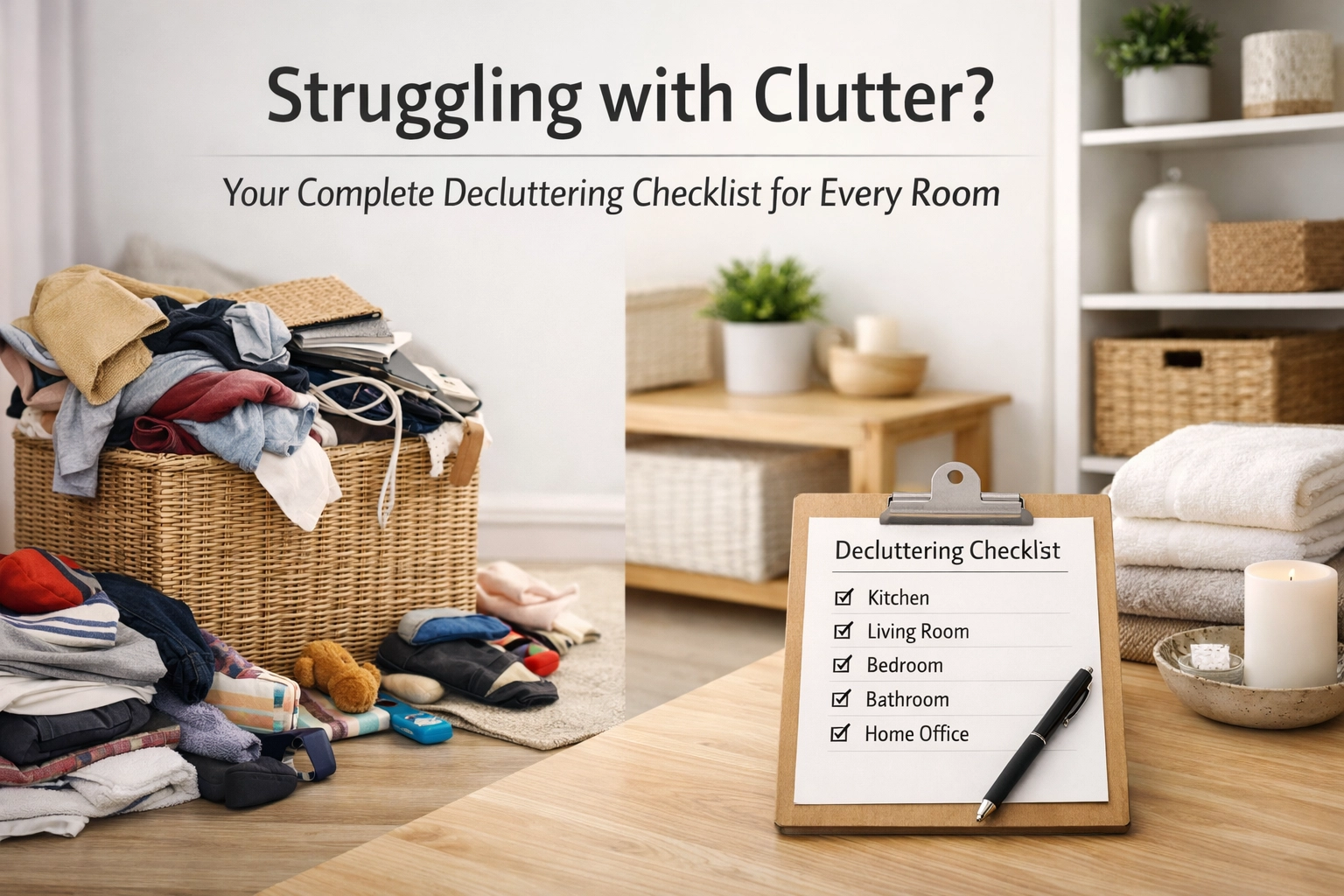
Clutter accumulates gradually. A magazine here, an unused gadget there, clothing that no longer fits tucked in the back of the closet. Before long, surfaces overflow, drawers jam shut, and the thought of organizing feels overwhelming. A systematic, room-by-room approach makes the process manageable and ensures no corner gets overlooked.
How to Prepare for Decluttering
Starting without a plan often leads to shuffling items between rooms rather than making actual progress. Proper preparation sets the foundation for success.
Gather four bags or boxes and label them clearly: donate, trash, recycle, and relocate. The relocate box holds items that belong in other rooms. This system prevents decision fatigue and keeps the sorting process moving forward.
Choose which room to tackle first based on where clutter impacts daily life most significantly. Some people prefer starting with the space that causes the most stress. Others find it easier to begin with a smaller area like a bathroom to build momentum.
Set realistic expectations about timing. Decluttering an entire home doesn’t happen in a weekend. Working through one room per week provides steady progress without burnout. For particularly cluttered spaces, breaking the work into smaller sessions over several days maintains energy and focus.

Entry and Living Areas
Entryways and living rooms serve as the home’s public face, yet they often become dumping grounds for daily life. These high-traffic areas accumulate items quickly but respond well to focused decluttering.
Mail and Paper Clutter
Old mail, newspapers, and magazines pile up faster than most items. Sort through every stack. Shred documents with personal information, recycle the rest. Moving forward, handle mail immediately: file important documents, take action on bills, and discard everything else.
Seasonal Items
Coats, shoes, and accessories for past seasons occupy valuable space in entryways. Pack away winter boots in spring and summer sandals in fall. Keep only current-season outerwear accessible. Donate any coats or shoes that went unworn during their appropriate season.
Electronics and Accessories
Miscellaneous cords, chargers, and old remote controls create visual chaos. Match cords to their devices. Recycle those that belong to long-gone electronics. Test remote controls: if they don’t work or belong to replaced devices, dispose of them properly.
Entertainment and Decor
Games and puzzles with missing pieces provide no value. Donate complete sets that rarely get used. Evaluate throw pillows honestly: keep those that look fresh and add comfort, remove excess or worn examples. Assess furniture and decor with a critical eye. Items that don’t spark enjoyment or serve a purpose only take up space.
Bedroom Organization
Bedrooms should promote rest and calm, yet they often store years of accumulated clothing, linens, and miscellaneous items that undermine their purpose.

Clothing and Wardrobe
Try on clothing that might not fit anymore. Donate items that are too large or small, even if there’s hope of future weight changes. Life changes, and bodies change: holding onto clothes “just in case” creates clutter and negative emotions.
Remove uncomfortable shoes immediately. Footwear that causes pain or discomfort never becomes more comfortable with time. Donate gently used pairs and discard those too worn for donation.
Assess accessories honestly. Jewelry, belts, and scarves that haven’t been worn in over a year likely never will be. Broken or damaged jewelry pieces belong in the trash unless they hold significant sentimental value worth repairing.
Replace mismatched hangers with uniform ones. The visual consistency creates a calmer closet and makes clothing easier to view and access.
Bedding and Linens
The rule for sheet sets is simple: keep two per bed maximum. One set for the bed, one set in the wash. Additional sets take up valuable linen closet space.
Examine all sheets, pillowcases, and towels for holes, stains, or excessive wear. Linens don’t improve with age. Worn bedding affects sleep quality and makes spaces feel less cared for. Old towels can become cleaning rags before disposal, giving them one final use.
Mismatched pillowcases and bedding pieces that don’t coordinate with anything else just create visual clutter. Keep complete, matching sets.
Bedroom Extras
Old magazines and books that won’t be read again deserve new homes. Libraries and used bookstores accept donations. Flat throw pillows with holes or stains detract from the room’s appearance. Children’s toys that are broken or haven’t been played with in months take up space that could be used more effectively.
Bathroom Decluttering
Bathrooms are small spaces that quickly become overcrowded with products, tools, and expired items. Regular decluttering maintains function and hygiene.
Medications and Health Products
Check expiration dates on all medications and supplements. Expired products lose effectiveness and can become harmful. Most pharmacies accept unused medications for safe disposal: never flush them down toilets.
Sunscreen and skincare products also expire. Check dates and discard anything past its prime. These products stop working properly and can irritate skin when old.
Personal Care and Beauty
Dried-up nail polish, broken hair tools, and brushes with missing bristles serve no purpose. Test nail polishes: if they’ve thickened beyond usability or separated, throw them out.
Hair accessories multiply mysteriously. Keep favorites that get regular use. Donate or discard duplicates and items that never get chosen. The same applies to combs, brushes, and makeup tools.
Old loofahs, shower poufs, and razors harbor bacteria. Replace these items regularly rather than holding onto worn examples. Empty product containers that haven’t been thrown out yet are just trash taking up space.
Sample-sized hotel toiletries rarely get used. If they’ve been sitting untouched for months, donate them to a shelter or discard them. The same applies to cosmetic samples and free makeup bags from gift-with-purchase promotions.
Bathroom Linens and Extras
Worn towels feel rough and don’t absorb properly. Replace them and repurpose old ones as cleaning rags. Candles and diffusers that have lost their scent only collect dust.

Kitchen and Pantry
Kitchens accumulate duplicate items, broken pieces, and unused gadgets that take up valuable space in what should be a functional workspace.
Dishes and Food Storage
Mismatched food storage containers without lids or lids without containers create frustrating drawer clutter. Match sets and recycle pieces that don’t pair up.
Chipped or cracked dishes can harbor bacteria and are unsafe to use. Discard them. Coffee mugs multiply rapidly: keep two to three per household member and donate extras.
Stained dish towels and worn pot holders look unclean even when freshly washed. Replace them regularly to maintain kitchen hygiene standards.
Cookware and Appliances
Extra baking pans, specialty cookware, and gadgets that seemed useful when purchased but rarely get used take up premium storage space. Keep items used regularly. Donate duplicates and specialized tools that proved impractical.
Countertop appliances deserve careful evaluation. If an appliance isn’t used at least five times per week, it doesn’t earn its counter space. Store it or donate it.
Food and Pantry Items
Check expiration dates on all pantry items. Dispose of anything expired or items purchased for a specific recipe that never got made. The same applies to vitamins and supplements: expired ones lose potency.
Forgotten food in the back of fridges and freezers wastes money and space. Do a thorough cleanout, checking dates and discarding anything questionable.
Takeout menus, condiment packets, and disposable utensils accumulate in drawers. Recycle menus: restaurant information is available online. Keep a small supply of packets if they get used, recycle or donate the rest.
Shopping bags: paper, plastic, and reusable: overflow their designated storage. Keep enough reusable bags for typical shopping trips plus a few extras. Recycle the overflow.
Laundry Room and Cleaning Supplies
Laundry rooms often become repositories for cleaning products, some used, some forgotten, many expired or ineffective.
Cleaning supplies don’t last forever. Laundry detergent, fabric softener, and stain removers lose effectiveness over time. Check dates and discard expired products. Evaluate supplies honestly: products that never get reached for despite multiple options take up space without adding value.
Clothing with rips, stains, or excessive wear that’s been sitting in the laundry room “to be fixed” rarely gets repaired. Decide immediately: repair it now, repurpose it as cleaning rags, or discard it.
Broken hampers, laundry baskets with cracks, and storage solutions that no longer function properly should be replaced rather than worked around.

Home Office and Paper Management
Home offices accumulate paper, office supplies, and digital clutter that impacts productivity and mental clarity.
Paper Clutter
Create three categories for every piece of paper: file, action required, or recycle/shred. Process every stack completely. Appliance manuals are available online: shred paper copies. Old bills, newspapers, and outdated planners serve no purpose. Shred anything with personal information, recycle the rest.
Business cards can be photographed or added to phone contacts, then recycled. Old photos or greeting cards worth keeping should be consolidated into a memory box, not scattered throughout the office.
Office Supplies
Test every pen and marker. Dried-out ones belong in the trash. Excess envelopes, outdated stationery, and freebies from conferences that never get used create drawer clutter without adding value.
Unused keychains, random batteries, and miscellaneous tools from junk drawers need honest evaluation. Keep items that serve a purpose, discard or relocate the rest.
Old electronics, their manuals, cords, warranties, and packaging can be recycled or disposed of properly. Many electronics retailers accept old devices for recycling.
Digital Decluttering
Physical clutter gets attention, but digital clutter affects productivity and mental load just as significantly.
Desktop screenshots, random downloads, and temporary files accumulate quickly. Schedule regular desktop cleanouts. Create clear folder systems for needed files, delete everything else.
Email inboxes benefit from aggressive unsubscribing. Promotional emails that never get read waste time and mental energy. Delete them and unsubscribe from the lists.
Camera rolls fill with duplicate photos, accidental screenshots, and images that seemed useful at the time. Regular photo reviews maintain organization and free up device storage.
Delete unused apps, old text threads, and contacts that are no longer relevant. Turn off unnecessary notifications that interrupt focus throughout the day.
Browser bookmarks and saved tabs pile up with good intentions but rarely get revisited. Clear them out regularly, keeping only actively used resources.
Maintaining Progress
Decluttering creates immediate improvement, but maintaining that clarity requires ongoing attention. A few habits prevent future accumulation:
Implement a one-in-one-out rule for categories that tend to accumulate, like clothing, books, or kitchen gadgets. When something new comes in, something old goes out.
Handle items immediately rather than setting them down “for now.” Mail gets sorted right away. Purchases find homes before tags come off. This prevents the creep of new clutter.
Schedule brief weekly reviews of high-traffic areas. A 15-minute reset prevents small messes from becoming overwhelming projects.
Clutter doesn’t appear overnight, and maintaining a clutter-free home isn’t a one-time project. It’s an ongoing practice of making intentional decisions about what deserves space in a home. The investment of time and energy pays dividends in reduced stress, improved functionality, and spaces that support rather than hinder daily life.

