
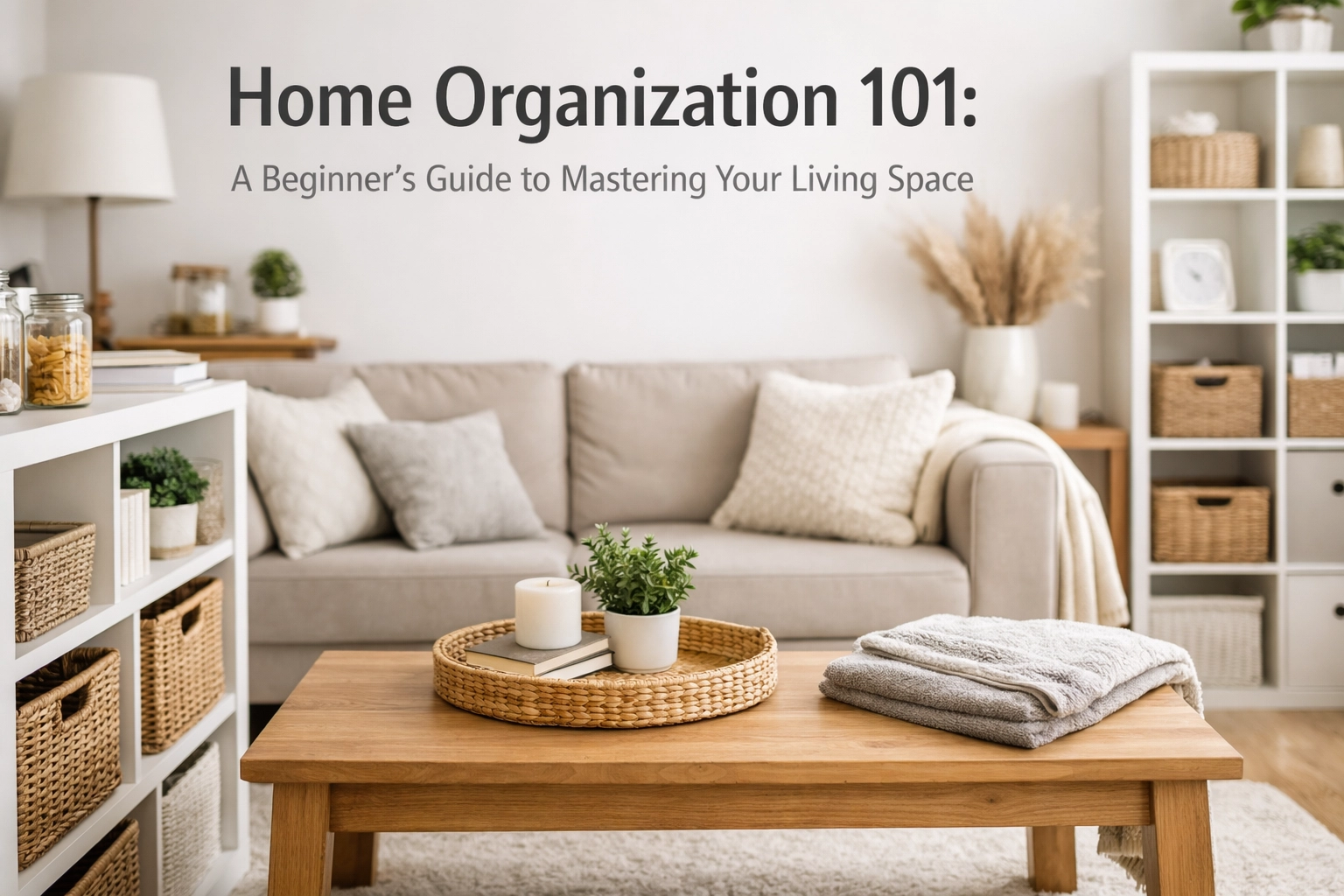
Maintaining an organized home is more than a matter of aesthetics. A structured living environment directly impacts mental clarity, reduces daily stress, and improves the functional efficiency of a household. When every item has a designated place, daily routines become more fluid, and the time spent searching for lost keys or misplaced documents is significantly reduced. Home organization is a skill that can be developed through consistent practice and the application of logical systems.
For many, the prospect of organizing an entire home feels overwhelming. However, by breaking the process down into manageable phases and focusing on one area at a time, anyone can achieve a sense of order. This guide provides a comprehensive framework for decluttering, categorizing, and implementing storage solutions that work for the long term.
The Fundamentals of Effective Home Organization
Organization is not about perfection or achieving a minimalist look that feels unlived in. It is about creating a system that supports the specific needs of the residents. An effective system follows the principle of “function over form.” While matching bins look pleasant, they are only useful if they accommodate the items they are meant to hold and are easy to access.
Success in organization relies on three core pillars:
- Decluttering: Removing items that no longer serve a purpose.
- Zoning: Grouping similar items and assigning them to specific areas of the home.
- Maintenance: Developing habits that prevent clutter from accumulating again.
Before purchasing any storage products, it is essential to understand the layout of the space and the volume of items that need to be housed. Buying containers before decluttering often results in having organized “trash”: items that are neatly tucked away but are never actually used.
Phase One: Preparation and the Decluttering Mindset
Organization begins with a mental shift. It requires a willingness to let go of items that are kept “just in case” or out of a sense of guilt. Preparation also involves gathering the necessary tools to make the process efficient.
Essential Tools
Before starting, gather the following supplies:
- Large, sturdy trash bags for items that cannot be donated.
- Cardboard boxes labeled “Donate,” “Relocate,” and “Sell.”
- Cleaning supplies (microfiber cloths, all-purpose cleaner, and a vacuum) to clean surfaces as they are emptied.
- Sticky notes and a marker for temporary labeling during the sorting process.
Strategic Starting Points
For beginners, starting with a high-traffic area that causes daily frustration provides immediate positive reinforcement. The entryway, the kitchen pantry, or a primary bathroom are often excellent starting points. Alternatively, starting with a low-emotion area, such as a junk drawer or a linen closet, allows for the “decision-making muscle” to be exercised without the difficulty of sentimental attachment.

The Step-by-Step Universal Organization Process
Regardless of the room being tackled, a consistent six-step process ensures thorough results.
1. Empty the Space Completely
Take every single item out of the closet, drawer, or cabinet. Seeing the empty space provides a blank canvas and forces an evaluation of every object. It is impossible to organize a space properly by simply shifting items around within it.
2. Sort into Categories
Group like items together. In a kitchen drawer, this might mean putting all the baking tools in one pile and all the measuring spoons in another. In a closet, group items by type: short-sleeve shirts, long-sleeve shirts, trousers, and skirts. Categorization reveals duplicates and helps determine how much storage space each category actually requires.
3. Declutter with Honesty
Evaluate each item. If it is broken beyond repair, discard it. If it hasn’t been used in over a year, consider donating it. Ask specific questions: Does this item serve a current purpose? Is there another item that does this job better? Would I buy this today? For more information on developing these decision-making skills, resources at Paris Wheel can provide educational insights into home management and productivity.
4. Clean the Surface
With the space empty, take the opportunity to wipe down shelves, vacuum corners, and remove dust. This step ensures that the items being kept are returned to a fresh, hygienic environment.
5. Categorize and Contain
Assign items to their new “homes.” Use containers to keep categories separated. Containers prevent items from migrating and becoming a jumbled mess. For example, use a small bin for batteries in a utility drawer or a tiered riser for canned goods in a pantry.
6. Label Everything
Labeling is the secret to long-term maintenance. It provides a visual cue for where items belong, making it easier for every member of the household to put things away correctly. Labels are especially important in shared spaces like the kitchen, laundry room, or playroom.
Room-by-Room Implementation: Targeted Strategies
Every room in a house serves a different function and presents unique organizational challenges.
The Entryway: Managing the Drop Zone
The entryway is the first and last place seen when leaving or entering the home. It often becomes a “catch-all” for mail, shoes, bags, and coats.
- The One-In, One-Out Rule: Keep only current-season coats and shoes in the entryway. Store off-season items in a secondary closet or under-bed storage.
- Vertical Storage: Use wall-mounted hooks for bags and coats to keep floor space clear.
- Command Center: Create a designated spot for keys, mail, and outgoing packages to prevent “surface creep” on tables.

The Kitchen: Maximizing Efficiency
The kitchen should be organized based on “work zones.” The goal is to minimize movement while performing specific tasks like cooking, cleaning, or prepping.
- The Cooking Zone: Keep pots, pans, and oils near the stove.
- The Prep Zone: Store cutting boards and knives near the main counter space.
- The Pantry: Use clear bins for snacks and dry goods. Group items by meal type: breakfast items on one shelf, pasta and grains on another. Check expiration dates monthly to prevent waste.
- Countertops: Aim to keep countertops as clear as possible. Only daily-use appliances (like a coffee maker) should remain on the surface.
The Bedroom and Closet: Creating a Sanctuary
A bedroom should be a place of rest. Visual clutter can interfere with sleep and relaxation.
- Closet Uniformity: Use matching hangers to create a streamlined look and prevent clothes from getting tangled.
- Drawers: Utilize the “file folding” method (vertical folding) so every garment is visible at a glance without digging through a stack.
- Nightstands: Keep only the essentials: a lamp, a book, and perhaps a glass of water. Use a drawer divider for smaller items like charging cables or sleep masks.

The Bathroom: Streamlining the Routine
Bathrooms are often small and prone to moisture, making organization both difficult and necessary.
- Under-Sink Storage: Use pull-out drawers or stackable bins to maximize the deep, dark space under the sink.
- Medicine Cabinets: Reserve this prime real estate for items used daily (toothpaste, facial cleanser).
- Linens: Store only a few sets of towels in the bathroom; keep the rest in a linen closet or secondary storage area.
Maximizing Storage in Small Spaces
When square footage is limited, creativity is required to find extra storage.
Utilize Vertical Space
Walls are often underutilized. Install floating shelves, pegboards, or over-the-door organizers. Over-the-door shoe organizers are versatile and can be used for cleaning supplies in a pantry, toiletries in a bathroom, or accessories in a bedroom closet.
Multipurpose Furniture
Invest in furniture that serves more than one purpose. An ottoman with hidden storage can hold blankets, while a bed frame with built-in drawers can eliminate the need for a bulky dresser.
The Power of Transparency
In storage areas like garages, basements, or high closet shelves, clear plastic bins are superior to opaque ones. They allow for instant inventory of contents without having to open every box. Even with clear bins, labeling is still recommended for quick identification.

Maintaining Order: Sustainable Habits for Long-Term Success
Organization is not a one-time event; it is a lifestyle of maintenance. Without daily and weekly habits, clutter will inevitably return.
The Five-Minute Reset
Every evening, spend five minutes returning items to their designated places. Clear the kitchen counters, put shoes in the rack, and hang up stray coats. This “reset” ensures that the next day begins with a clean slate.
The “One In, One Out” Policy
For every new item brought into the home, one old item must leave. This is particularly effective for clothing, toys, and kitchen gadgets. It forces a conscious decision about the value of new purchases.
Seasonal Audits
Twice a year: typically in the spring and autumn: conduct a deeper audit of the home. This is the time to swap seasonal wardrobes, check for expired pantry items, and evaluate whether current organizational systems are still meeting the family’s needs. If a system keeps failing (e.g., if mail always piles up on the dining table), it means the system is not convenient enough and needs to be adjusted.
For those interested in further developing their home management skills, visiting about can provide more context on the philosophy of structured learning and self-improvement.
Overcoming Common Organizational Challenges
Sentimental Items
One of the biggest hurdles is dealing with items that have emotional value. The key is to separate the memory from the object. If an item is not being used or displayed, consider taking a high-quality photograph of it and then donating or discarding the physical object. Limit sentimental storage to one “memory box” per person.
The “Maybe” Pile
When decluttering, some items fall into a grey area. For these, use the “Box Method.” Place these items in a box, seal it, and date it for six months in the future. If the box is not opened within those six months, the items can be safely donated without fear of regret, as they were clearly not needed for daily life.
Paper Clutter
Digital storage has reduced the need for physical paper, but it still finds its way into the home.
- Unsubscribe: Reduce the influx by opting out of physical catalogs and junk mail.
- Immediate Action: Sort mail as soon as it enters the house. Toss recycling immediately, put bills in a “To Pay” folder, and file important documents in a dedicated filing system.

Creating a Sustainable Living Environment
A well-organized home provides more than just a tidy view; it offers a foundation for a more intentional life. By reducing the physical chaos, one creates space for focus, creativity, and relaxation. The journey to an organized home does not happen overnight, but through the consistent application of these basic principles.
Whether the goal is to organize a single kitchen drawer or an entire house, the process remains the same: empty, sort, purge, clean, and contain. By focusing on the function of each room and the habits of the people living in it, a sustainable system can be built that lasts for years to come. For ongoing guidance and more educational resources on various life skills, the blog section offers a wealth of information to support continuous personal growth.
Organization is a gift to one’s future self. By putting in the effort to establish order today, the daily tasks of tomorrow become significantly easier, allowing more time for the activities and people that truly matter. For any specific inquiries regarding learning paths or further resources, visiting the contact us page is always an option for more personalized information.

