
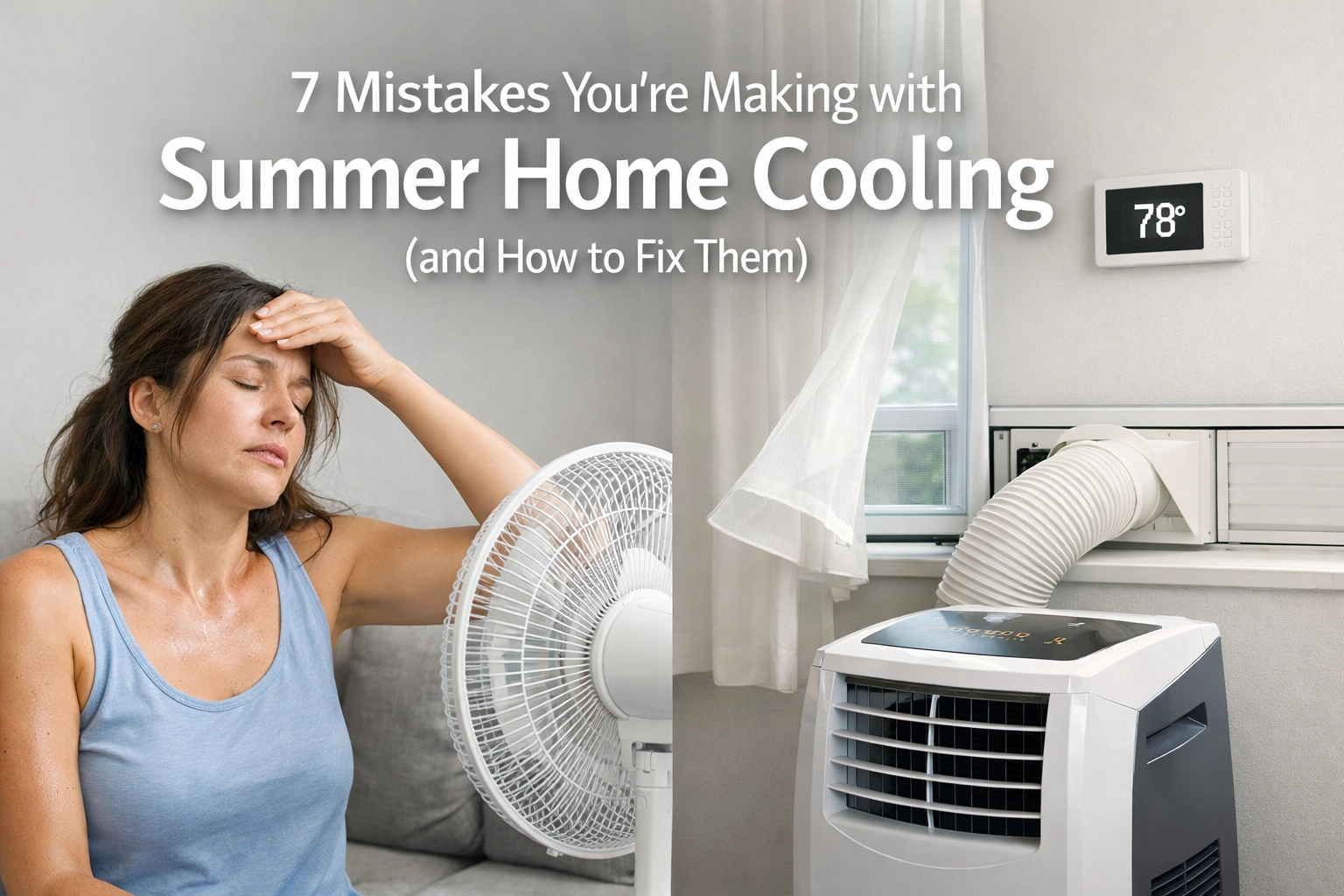
As the summer months approach, maintaining a comfortable indoor environment becomes a primary concern for homeowners. Effective cooling is not just about staying comfortable; it is also about managing energy consumption and ensuring the longevity of expensive HVAC systems. While it may seem as simple as pressing a button on a thermostat, many common habits actually hinder the cooling process and drive up utility costs.
Understanding the mechanics of home thermodynamics and air circulation is a valuable part of modern residential knowledge. This guide examines the seven most frequent mistakes made during the summer cooling season and provides evidence-based solutions to optimize home comfort.
1. Setting the Thermostat to an Extremely Low Temperature
One of the most persistent myths in home cooling is that setting the thermostat to 60°F (15°C) will cool a room faster than setting it to 72°F (22°C). In reality, most central air conditioning systems operate at a single speed. They deliver a consistent flow of cold air until the sensor detects that the target temperature has been reached.
The Problem
When the thermostat is set to an unrealistically low temperature, the system does not work “harder” or “faster.” Instead, it simply runs for a longer duration. This often results in the home becoming uncomfortably cold, wasting significant amounts of electricity, and putting unnecessary strain on the compressor. If the temperature is set significantly lower than the outside ambient air can realistically allow the system to reach, the unit may never shut off, leading to mechanical fatigue and potential freezing of the evaporator coils.
The Fix
Set the thermostat to the highest temperature that remains comfortable. For most people, this falls between 72°F and 78°F. If the house feels too warm when first entering, resist the urge to “crank it down.” Instead, use a ceiling fan to create a wind-chill effect, which makes the skin feel several degrees cooler without actually lowering the room temperature. For those interested in learning more about energy management, resources are often available at https://www.pariswheel.com/index.php/blog to help understand household efficiency.

2. Closing Vents in Unused Rooms
It seems logically sound to close the air vents in a guest bedroom or a storage area to “redirect” the cold air to the living room or master bedroom. However, this is one of the most damaging mistakes a homeowner can make regarding their HVAC system’s health.
The Problem
Central air conditioning systems are designed with a specific “static pressure” in mind. The ductwork is sized to handle a certain volume of air moving at a certain speed. When vents are closed, the air that would have gone into that room has nowhere to go. This increases the pressure inside the ductwork, which can cause leaks to expand or force the blower motor to work against higher resistance.
Furthermore, reducing the airflow across the cooling coils can cause them to drop below freezing, leading to ice buildup that blocks all airflow and can eventually destroy the compressor.
The Fix
Keep at least 80% to 90% of all registers open at all times. If certain rooms are consistently colder than others, a professional can perform a “manual balance” by slightly adjusting dampers inside the ducts rather than closing the external registers entirely. Maintaining open pathways for air ensures that the system operates within its designed parameters, protecting the equipment and maintaining consistent humidity control.
3. Installing an Incorrectly Sized AC Unit
When it comes to air conditioning, bigger is not always better. Many homeowners believe that a high-capacity unit will cool the home more effectively, but an oversized unit creates its own set of problems, primarily related to “short-cycling.”
The Problem
An air conditioner has two jobs: lowering the temperature and removing humidity. An oversized unit will reach the target temperature very quickly and then shut off. Because it doesn’t run for long enough cycles, it fails to remove sufficient moisture from the air. This results in a “cold and clammy” environment. Frequent starting and stopping also consumes more electricity and causes premature wear on the motor and electrical components. Conversely, an undersized unit will run continuously without ever reaching the desired temperature, leading to high bills and an overheated motor.
The Fix
Before replacing a cooling system, ensure a “Manual J” load calculation is performed. This calculation takes into account the home’s square footage, insulation levels, window orientation, and local climate. This ensures the unit is perfectly matched to the home’s specific thermal needs. If you are researching home improvement and technical skills, the https://www.pariswheel.com site provides a gateway to various learning paths that can assist in understanding residential systems.
4. Opening Windows and Doors During Peak Heat Hours
There is a common desire to “let the fresh air in” during the summer. While natural ventilation is excellent during the shoulder seasons, opening windows during a hot summer day is counterproductive.
The Problem
Outdoor air in the summer is not just hot; it is often laden with humidity. When windows or doors are left open during the heat of the day, the home’s “thermal mass”: the walls, floors, and furniture: absorbs the heat. Once the sun sets and the windows are closed, the air conditioner must work twice as hard to remove the heat stored in these objects. Additionally, the influx of humid air makes the indoor environment feel much warmer than the thermometer suggests, as sweat cannot evaporate effectively from the skin.
The Fix
Practice “night flushing.” If the outdoor temperature drops below the indoor temperature at night, open windows to let the cool air in. As soon as the sun rises or the outdoor temperature matches the indoor temperature, close all windows and pull the shades. This traps the cool air inside and prevents solar gain from heating the interior. Using heavy curtains or cellular shades can further reduce the heat entering through glass panes.

5. Turning the AC Completely Off When Leaving the House
It might feel like a waste of money to cool an empty house, but turning the system completely off for 8 to 10 hours during a heatwave can actually increase total energy consumption.
The Problem
As mentioned previously, a home consists of more than just air. It contains thousands of pounds of materials (drywall, wood, upholstery) that hold heat. If the AC is off all day, the internal temperature may rise to 85°F or 90°F. When the homeowner returns and turns the AC back on, the system must run for several hours at maximum capacity to cool not just the air, but the heated structure of the house. This creates a massive spike in energy demand, often during “peak hours” when electricity rates may be higher.
The Fix
Instead of turning the unit off, use a “setback” strategy. Raise the temperature by 7 to 10 degrees while the house is empty. For example, if the preferred temperature is 72°F, set it to 79°F while at work. This prevents the home from becoming a heat sink while still reducing the amount of time the compressor runs. A programmable or smart thermostat can automate this process, ensuring the home begins cooling down shortly before residents return. Information on navigating these types of smart home technologies can be found through resources at https://www.pariswheel.com/index.php/customer-help.
6. Neglecting Air Filter Maintenance and Airflow
The air filter is the most critical component for maintaining system efficiency, yet it is often the most neglected. Its primary purpose is not to clean the air for breathing (though it does help), but to protect the sensitive internal components of the HVAC unit.
The Problem
A dirty or clogged filter acts as a barrier, forcing the blower fan to work much harder to pull air through. This reduces the total volume of air moving through the system, which means the home takes longer to cool. Furthermore, a clogged filter allows dust to settle on the evaporator coils. Over time, this dust creates an insulating layer that prevents the refrigerant from absorbing heat effectively. This can lead to system failure and expensive professional cleaning requirements.
The Fix
Check the air filter once a month during the high-use summer season. While some high-efficiency filters are rated for six months, the high volume of air moved during July and August often necessitates a change every 30 to 90 days. If there are pets in the home or if the area is particularly dusty, more frequent changes are required. Using a filter with a MERV (Minimum Efficiency Reporting Value) rating between 8 and 11 is generally sufficient for residential cooling without overly restricting airflow.

7. Strategic Thermostat Placement
The location of the thermostat determines how the entire cooling system behaves. If the thermostat is receiving “false” data, the rest of the house will suffer from poor temperature regulation.
The Problem
Thermostats are often installed in locations based on convenience for the builder rather than optimal performance. If a thermostat is placed in direct sunlight, near a kitchen where cooking heat is present, or directly under an air supply vent, it will not accurately reflect the average temperature of the home. A thermostat in the sun will “think” the house is 85°F and keep the AC running indefinitely, even if the rest of the rooms are freezing. Conversely, a thermostat placed too close to a cooling vent will shut the system off before the rest of the house has reached the target temperature.
The Fix
The ideal location for a thermostat is on an interior wall, in a frequently used room (like a living room or hallway), away from direct sunlight, drafts, and heat-producing appliances. It should be mounted roughly five feet above the floor to capture the average air temperature. If the current location is problematic, wireless smart thermostats with remote sensors can be used. These sensors can be placed in bedrooms or living areas to give the system a more accurate reading of where people actually spend their time.
The Role of Passive Cooling and Maintenance
Beyond avoiding these seven mistakes, home comfort is significantly improved by addressing the “passive” elements of the building. Summer cooling is a battle against heat gain.
Landscaping and Shading
One of the most effective long-term solutions for summer cooling is strategic landscaping. Deciduous trees planted on the south and west sides of a home provide shade during the summer, blocking solar radiation from hitting the walls and windows. In the winter, these trees lose their leaves, allowing the sun to provide natural warmth. If planting trees is not an option, installing awnings or exterior shutters can block up to 80% of solar heat gain before it even enters the glass.
Ceiling Fan Optimization
Many people use ceiling fans incorrectly. In the summer, the blades should rotate counter-clockwise (when looking up at them). This direction creates a “downdraft” that pushes air directly onto the occupants. It is important to remember that fans cool people, not rooms. Because they work via the evaporative cooling of the skin, leaving a fan on in an empty room is a waste of electricity.
Professional Seasonal Maintenance
While many home cooling tasks are DIY-friendly, a professional “tune-up” once a year is highly recommended. A technician can check refrigerant levels, which must be exact for the system to operate efficiently. They can also clean the outdoor condenser coils, which often become clogged with grass clippings, pollen, and debris. A clean condenser can dissipate heat much faster, reducing the runtime of the compressor and extending the life of the unit by years.
Summary of Best Practices for Summer Cooling
Achieving an efficient and comfortable home during the hottest months of the year requires a combination of behavioral changes and mechanical maintenance. To summarize the necessary steps:
| Mistake | Fix |
|---|---|
| Cranking the AC to 60°F | Set it to a realistic, comfortable 72°F-78°F. |
| Closing Vents | Keep at least 90% of registers open to maintain pressure. |
| Wrong-Sized Unit | Use professional load calculations (Manual J). |
| Windows Open in Day | Keep the house sealed during heat; vent at night. |
| Turning AC Off | Use a temperature “setback” of 7-10 degrees instead. |
| Dirty Filters | Inspect monthly and replace every 1-3 months. |
| Bad Thermostat Spot | Ensure it is on an interior wall away from sun and drafts. |
By addressing these common errors, homeowners can enjoy a significantly more comfortable living space while simultaneously reducing their environmental impact and utility expenses. Effective home management is an ongoing learning process. For those looking to expand their knowledge in household maintenance, technology, or general life skills, the resources available at https://www.pariswheel.com/wp-sitemap-posts-post-1.xml provide a structured way to stay informed and capable in an ever-changing world.
Ultimately, the goal of summer cooling is to create a sanctuary from the exterior heat. When the HVAC system is treated as a balanced, scientific machine rather than just a simple appliance, it performs better, lasts longer, and provides the consistent comfort every resident deserves. Proper maintenance today prevents the discomfort of a mid-August breakdown and ensures that the transition between seasons is seamless and stress-free.

