
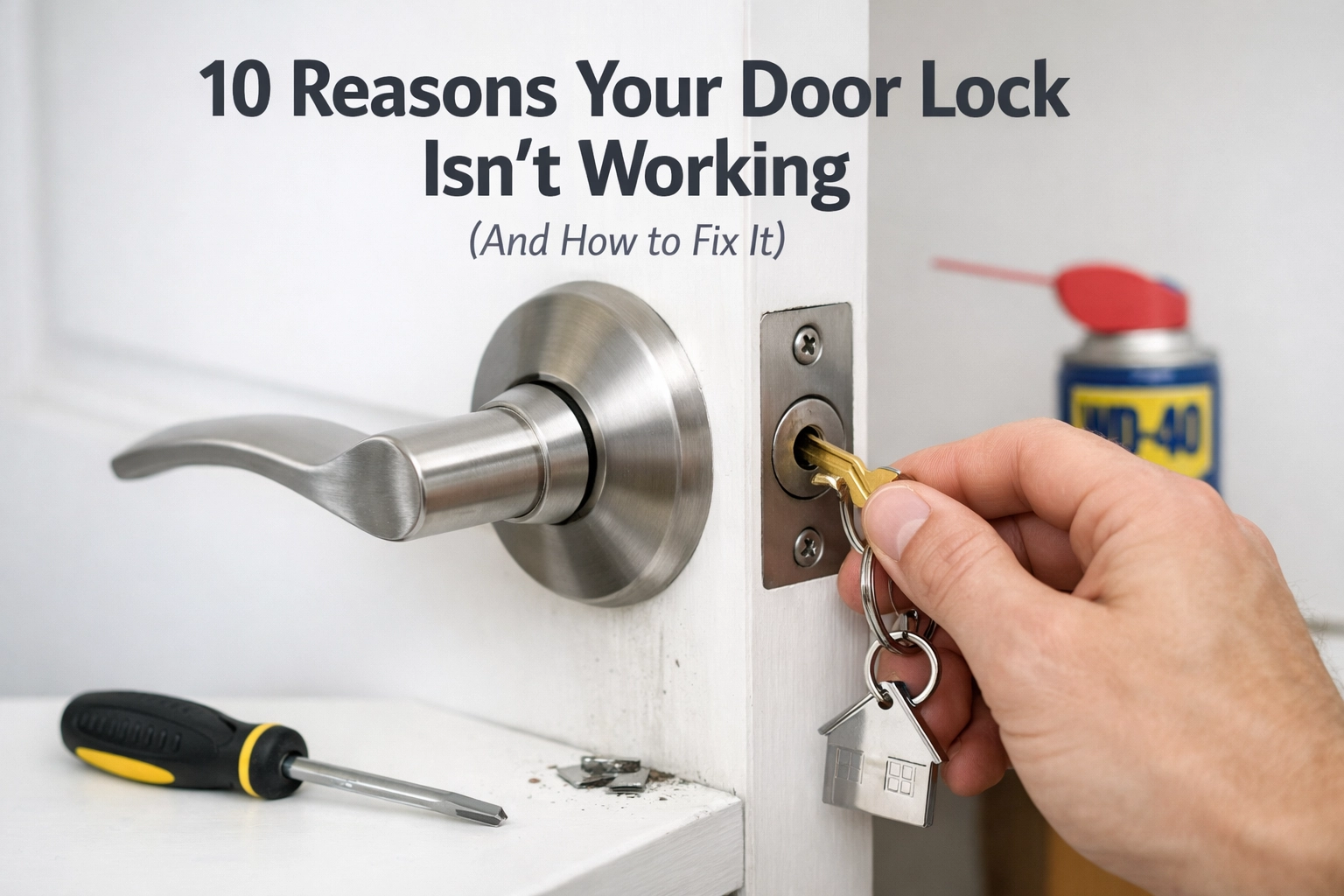
A door lock is the primary line of defense for any home or building. While these mechanical devices are designed to withstand years of repetitive use, they are not immune to wear, environmental factors, or installation errors. When a lock fails to operate smoothly, it can lead to frustration, security risks, or even a total lockout.
Understanding the mechanics of why a lock stops working is the first step toward a successful repair. Many issues can be resolved with basic tools and a bit of patience, saving the expense of a professional locksmith. This guide explores the ten most common reasons door locks fail and provides detailed, practical solutions for each scenario.
1. Loose Mounting Screws and Internal Fasteners
One of the most frequent causes of a “wobbly” or malfunctioning lock is loose screws. Over time, the repeated motion of turning a doorknob or the vibration from slamming doors can cause the internal and external fasteners to back out of their threads.
When a lock is loose, the internal components may not align correctly with the latch or the strike plate. This results in a lock that feels “spongy” or a handle that sags.
How to Fix It
To address this, identify the type of lock in use. For most standard residential doorknobs and deadbolts, the mounting screws are visible on the interior side of the door.
- Locate the Screws: Some modern locks have hidden screws behind a decorative faceplate or “rose.” If no screws are visible, look for a small hole or tab on the side of the handle to pop off the cover.
- Tighten Evenly: Use a screwdriver: not a power drill: to tighten the screws. A power drill can easily strip the heads or over-tighten the mechanism, leading to further damage.
- Inspect the Threads: If the screws continue to spin without tightening, the threads inside the lock or the wood of the door may be stripped. In this case, longer screws or wood filler might be necessary to provide a solid grip.
2. Misalignment of the Latch and Strike Plate
A door lock works by extending a latch or bolt into a hole in the strike plate, which is the metal plate attached to the door frame. If the door settles, the hinges sag, or the wood swells due to humidity, the latch may no longer align with the hole in the strike plate.
This is a common issue in older homes or areas with significant seasonal temperature shifts. A misaligned lock often requires the user to lift, pull, or push the door with force to get the bolt to click into place.

How to Fix It
Before adjusting the lock itself, check the door’s hinges.
- Tighten Hinges: Often, a sagging door is simply the result of loose hinge screws. Tightening these can pull the door back into its original alignment.
- Adjust the Strike Plate: If the door is level but the latch still misses the hole, the strike plate must be moved. Remove the screws from the strike plate and check the wood behind it. If the latch is hitting too high or too low, the hole in the frame may need to be slightly enlarged with a wood chisel.
- The Lipstick Test: To find exactly where the latch is hitting, apply a small amount of lipstick or chalk to the end of the latch. Close the door and try to lock it. The mark left on the strike plate will indicate exactly where the alignment is off.
3. Broken or Stuck Keys
Keys are subject to significant torque every time they are turned. Over time, micro-cracks can develop in the metal, leading to a key snapping off inside the cylinder. Alternatively, a key might simply get stuck because the pins inside the lock are not engaging correctly.
How to Fix It
If a key breaks off and a portion is still protruding from the keyway:
- Needle-Nose Pliers: Use a pair of thin needle-nose pliers to grasp the end of the key and pull it straight out. Avoid pushing the key deeper into the lock.
- Coping Saw Blade: If the key is flush with the lock face, a broken key extractor tool or a thin coping saw blade can be used. Slide the blade into the keyway alongside the key fragments, hook one of the key’s teeth, and pull outward.
- Lubrication: Spraying a dry lubricant into the keyway can help loosen the grip of the pins on the broken metal piece.
For stuck keys that are not broken, avoid forcing the turn. Gently jiggle the key while applying light outward pressure. If the key is stuck in a smart lock or electronic deadbolt, ensure the motor has finished its cycle before attempting to remove the key.
4. Accumulation of Dirt, Dust, and Debris
Locks are mechanical systems with tight tolerances. Over the years, dust, pollen, and metal shavings can accumulate inside the cylinder. This debris mixes with the factory-applied grease to create a thick “gunk” that prevents the internal pins from moving freely.
A jammed lock usually feels gritty or resists the entry of the key. This problem is particularly common on exterior doors that face high winds or dusty environments.
How to Fix It
The most effective way to clear a jammed lock is through cleaning and proper lubrication.
- Air Compression: Use a can of compressed air (the type used for cleaning keyboards) to blow out loose dust and debris from the keyway.
- Lock Cleaner: Use a dedicated aerosol lock cleaner to dissolve old, hardened grease.
- Avoid WD-40: While it is a common household item, standard WD-40 is a solvent, not a long-term lubricant. It can actually attract more dust over time. Instead, use a specialized lock lubricant.
For more information on maintaining household components, browsing the Everyday Living section can provide further insights into home maintenance.
5. Sticky or Stiff Lock Mechanisms
Even if a lock is not “jammed” with dirt, it can become stiff over time as the original lubricant dries out. This usually manifests as a lock that requires significant effort to turn or a key that is difficult to insert and remove.

How to Fix It
Lubrication is the primary solution for a stiff lock. However, the type of lubricant used is critical.
- Dry Graphite: This is the traditional choice for locks. It comes in a small squeeze tube and is puffed into the keyway. Because it is a dry powder, it does not attract dust.
- Silicone-Based Lubricants: High-quality silicone sprays are also effective. They provide a thin, slippery coating that lasts for a long time.
- Application: Insert the key into the lock after applying the lubricant and turn it back and forth several times to distribute the material across all the internal pins and springs.
6. Worn or Improperly Cut Keys
If a lock works perfectly with one key but fails with another, the issue is the key rather than the lock mechanism. Over years of use, the “bitting” (the teeth) of a key can wear down. Even a fraction of a millimeter of wear can prevent the key from lifting the lock pins to the correct “shear line.”
Furthermore, keys duplicated at automated kiosks are sometimes slightly off-spec.
How to Fix It
- Visual Inspection: Compare the working key to the non-working key. Look for rounded edges or flattened peaks on the teeth.
- Use the Original: If possible, always use a factory-original key to create duplicates. Making a copy of a copy often leads to cumulative errors in the bitting.
- Code Cutting: If all keys for a lock are worn out, a locksmith can “cut a key by code.” This involves determining the original factory specifications for that specific lock and creating a brand-new key that matches the original dimensions perfectly.
7. Frozen Lock Components
In cold climates, moisture can seep into the lock cylinder through the keyway or around the door handle. When temperatures drop below freezing, this moisture turns into ice, effectively “gluing” the internal pins in place.
Attempting to force a key into a frozen lock can result in a snapped key or a damaged cylinder.
How to Fix It
There are several safe ways to thaw a frozen lock:
- Hand Warmth: Sometimes simply holding your thumb over the keyhole for a few minutes can transfer enough body heat to melt thin layers of ice.
- Commercial De-icer: These small aerosol cans contain alcohol-based solutions that melt ice instantly and leave behind a thin film to prevent re-freezing.
- Heated Key: Use a lighter or match to carefully heat the blade of the key before inserting it into the lock. Do not get the key so hot that it melts any plastic components on the handle.
- Hairdryer: If an extension cord is available, a hairdryer can safely warm the entire lock assembly.
8. Interference from Weatherstripping
Weatherstripping is essential for energy efficiency, but if it is too thick or incorrectly installed, it creates excessive pressure on the door. This pressure pushes the latch or bolt against the side of the strike plate, creating friction that prevents the lock from turning.

How to Fix It
If the lock only works when the door is pulled tightly toward the frame, the weatherstripping is the likely culprit.
- Inspect the Seal: Check for areas where the weatherstripping is bunched up or peeling.
- Trim or Reinstall: If the seal is new, it may take a few weeks to compress. If it does not, it may need to be replaced with a thinner profile material.
- Adjust the Strike Plate: Moving the strike plate slightly outward (toward the interior of the house) can provide the latch with more “breathing room,” allowing it to engage even when the weatherstripping is applying pressure.
For those looking to organize their home repair tools, exploring home storage solutions can be a helpful step in keeping maintenance supplies accessible.
9. Dead Batteries in Electronic and Smart Locks
Electronic locks offer convenience but introduce a new point of failure: power. Most smart locks run on AA or AAA alkaline batteries. When these batteries lose their charge, the motor will lack the torque necessary to throw the bolt.
Most electronic locks provide a low-battery warning (often a flashing red light or a specific series of beeps), but these can be missed if the door is not used frequently.
How to Fix It
- Battery Replacement: Always use high-quality, name-brand alkaline or lithium batteries. Avoid rechargeable batteries unless the manufacturer specifically recommends them, as they often have a lower voltage that can trigger false low-battery alerts.
- Check Battery Contacts: If the batteries are new but the lock still lacks power, check for corrosion on the metal contacts inside the battery compartment. Clean any white, powdery residue with a cotton swab dipped in a tiny amount of vinegar or lemon juice, then dry thoroughly.
- Emergency Jump-Start: Many smart locks have two metal contact points on the bottom of the exterior housing. Touching a 9V battery to these points can provide enough temporary power to enter a code and unlock the door.

10. Connectivity Issues and Software Glitches
Smart locks rely on Wi-Fi, Bluetooth, or Z-Wave protocols to communicate with smartphones and hubs. If the lock is unresponsive to an app but works with a physical key or keypad, the issue is likely digital rather than mechanical.
Connectivity issues can be caused by distance from the router, interference from metal doors, or outdated firmware.
How to Fix It
- Reboot the System: Remove one battery from the lock, wait ten seconds, and reinsert it. This performs a “soft reset” of the onboard computer.
- Check the Router: Ensure the home Wi-Fi is functioning. If the lock is far from the router, a Wi-Fi extender may be necessary.
- Update Firmware: Check the manufacturer’s app for any pending firmware updates. These updates often contain patches for known connectivity bugs.
- Signal Interference: Large metal objects or thick masonry walls between the lock and the hub can block signals. Relocating the smart home hub closer to the door often resolves intermittent connection drops.
Summary Table of Common Lock Problems
| Problem | Likely Cause | Quick Fix |
|---|---|---|
| Wobbly handle | Loose screws | Tighten with a screwdriver |
| Latch won’t click | Misalignment | Adjust strike plate or hinges |
| Key won’t turn | Lack of lubrication | Apply dry graphite or silicone |
| Lock is frozen | Moisture/Ice | Use de-icer or heated key |
| Unresponsive App | Signal interference | Reboot lock and check Wi-Fi |
Preventive Maintenance Tips
Maintaining a door lock is significantly easier than repairing a failed one. A few simple habits can extend the life of the hardware by years.
Annual Cleaning
At least once a year, use compressed air to blow out the keyways of all exterior doors. Follow this with a small application of dry lubricant. This prevents the buildup of “gunk” that leads to jammed pins.
Hinge Check
Every few months, check the screws on the door hinges. If the door begins to sag even slightly, it puts immediate stress on the lock mechanism. Keeping the door square in the frame is the best way to ensure the lock operates smoothly.
Key Rotation
Avoid keeping too many heavy items on a keychain. The weight of a heavy keychain hanging from the ignition or a door lock can gradually bend the internal components or cause premature wear on the key’s bitting.

When to Replace the Lock
While most issues can be fixed, there are times when replacement is the safer and more cost-effective option.
- Internal Component Failure: If a spring or a small internal lever breaks inside the “chassis” of the lock, it is usually impossible to repair without specialized parts that are rarely sold individually.
- Significant Wear: If the metal components have worn down to the point where the lock can be opened with almost any similar key (a condition known as “ghosting”), the lock is no longer secure.
- Attempted Break-in: If a lock has been tampered with or forced, the structural integrity of the metal may be compromised. Even if it appears to work, the internal security features may be damaged.
For those interested in the broader category of home hardware and furniture, visiting the home and garden furniture section can provide options for upgrading household fixtures.
By following these diagnostic steps and solutions, most common door lock problems can be addressed without the need for professional intervention. Regular attention to alignment, cleanliness, and lubrication ensures that the primary security point of the home remains reliable and functional for years to come.

