
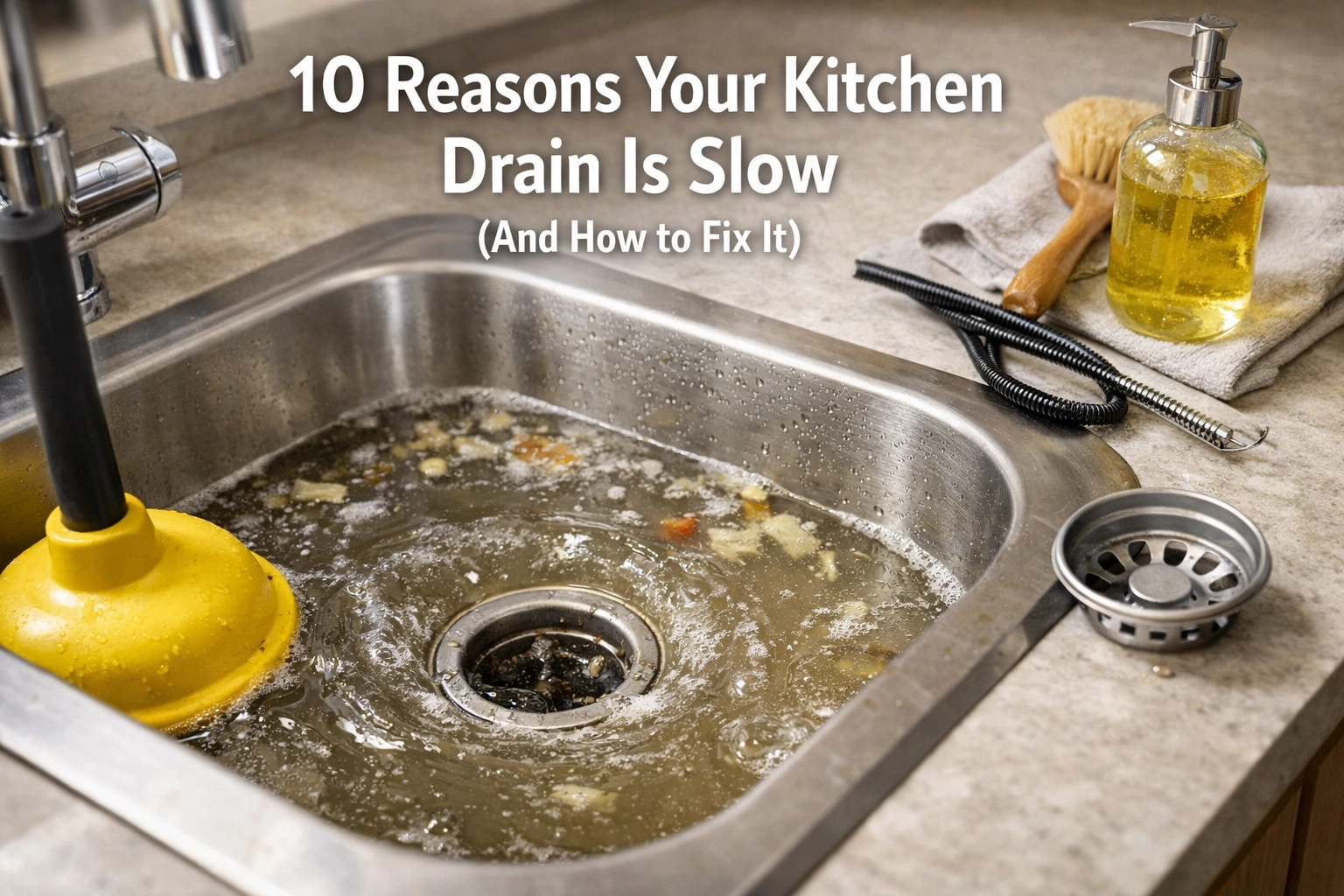
A slow-draining kitchen sink is a common household frustration that can disrupt daily routines, from meal preparation to cleaning up after dinner. When water begins to pool in the basin rather than disappearing down the drain, it is often a sign of an underlying issue within the plumbing system. While a complete blockage is easy to identify, a slow drain is more insidious, gradually worsening over time until it reaches a critical point.
Understanding the root cause of the sluggishness is the first step toward a permanent solution. From the accumulation of cooking byproducts to structural issues within the home’s pipe network, several factors can impede the flow of water. This guide provides an in-depth look at the ten most common reasons for a slow kitchen drain and offers practical, step-by-step solutions for each.
1. Solidified Cooking Fats, Oils, and Grease (FOG)
The most frequent culprit in kitchen drainage issues is the accumulation of fats, oils, and grease, often referred to as FOG. When these substances are warm, they exist in a liquid state and appear to flow easily down the drain. However, as they move further into the plumbing system, they cool down and solidify. This solid grease adheres to the interior walls of the pipes, creating a sticky lining that traps other debris.
Over time, this lining grows thicker, effectively narrowing the diameter of the pipe. This process is similar to how plaque builds up in arteries, eventually restricting flow to a crawl.
How to Fix It:
For mild grease-related sluggishness, boiling water is often the most effective first line of defense. Slowly pouring a kettle of boiling water down the drain can help melt the solidified fats and flush them through the system. If the grease is more stubborn, a mixture of baking soda and vinegar can be used to create a chemical reaction that helps break down the residue. Pour half a cup of baking soda down the drain, followed by half a cup of white vinegar. Let it sit for 15 minutes, then flush with hot water.
2. Starchy and Fibrous Food Scraps
Even with a garbage disposal, certain types of food are notorious for causing drainage problems. Starchy foods like pasta, rice, and potato peels expand when exposed to water. Even after being ground up by a disposal, these particles can swell within the pipes or turn into a thick, paste-like substance that clings to the plumbing.
Fibrous foods, such as celery, corn husks, and onion skins, present a different challenge. The long, tough strands can wrap around the blades of a garbage disposal or snag on small imperfections inside the pipes, creating a “nest” that catches other passing debris.

How to Fix It:
The primary solution for food-based clogs is manual removal or mechanical clearing. A standard cup plunger can often create enough pressure to dislodge starchy build-ups. Ensure there is enough water in the sink to cover the bell of the plunger and use firm, vertical strokes. If the clog is further down, a hand auger (drain snake) may be necessary to break up the organic mass. To prevent future issues, always discard starchy and fibrous scraps in a compost bin or trash can rather than the sink.
3. Mineral Scale Accumulation
In regions with hard water, mineral deposits are a significant concern for plumbing longevity. Hard water contains high levels of dissolved minerals, primarily calcium and magnesium. Over time, these minerals precipitate out of the water and attach to the inside of the pipes, forming a hard, crusty layer known as scale.
Scale buildup is particularly problematic because it creates a rough surface that catches grease and food particles. As the scale thickens, the interior of the pipe becomes increasingly restricted, leading to a noticeable drop in drainage speed across the entire kitchen system.
How to Fix It:
Addressing mineral scale can be difficult for a homeowner once it has hardened. However, regular maintenance with a descaling solution or a mixture of vinegar and water can help slow the accumulation. In severe cases, a professional plumber may need to use hydro-jetting: a high-pressure water treatment: to blast the scale away. For a long-term solution, installing a water softener can prevent minerals from depositing in the pipes in the first place.
4. Soap Scum and Detergent Residue
While soap is designed to clean, it can ironically contribute to a dirty plumbing system. Traditional bar soaps and some liquid detergents contain fats that can react with the minerals in the water to create soap scum. This waxy substance is incredibly sticky and acts as an adhesive for hair, lint, and food particles.
Modern dishwashing detergents are formulated to minimize this, but excessive use of detergent or using the wrong type of soap in a kitchen sink can lead to a film developing along the pipe walls.
How to Fix It:
Flushing the drain with very hot water and a degreasing dish soap can help break down soap scum. If the buildup is significant, a mechanical drain snake can be used to scrape the interior walls of the pipe. To prevent this, ensure that only detergents specifically designed for kitchen use are used and avoid over-sudsing.
5. Debris in the P-Trap
The P-trap is the U-shaped pipe located directly beneath the sink. Its primary function is to hold a small amount of water that acts as a seal, preventing sewer gases from entering the home. Because of its shape, the P-trap is also a natural collection point for heavy objects and debris.
Over months of use, a mixture of sediment, small food scraps, and grease can settle in the bottom of the “U,” creating a partial blockage that slows the exit of water from the basin.

How to Fix It:
Cleaning a P-trap is a manageable DIY task. Place a bucket under the trap to catch any standing water. Unscrew the slip nuts at both ends of the U-shaped pipe and remove it. Thoroughly clean the interior of the pipe with a brush and warm, soapy water. While cleaning the kitchen area, a dust removing brush can also help clear dry debris from under the cabinets or around the baseboards to keep the workspace tidy. Once the trap is clear, reattach it and check for leaks.
6. Clogged Plumbing Vents
Plumbing systems require air to function correctly. A vent pipe typically extends from the plumbing system up through the roof of the house. This vent allows air to enter the pipes, which maintains equalized pressure and allows water to flow smoothly. If the vent becomes blocked: by a bird’s nest, fallen leaves, or even ice: it creates a vacuum effect.
A tell-tale sign of a vent issue is a “gurgling” sound coming from the drain as the water struggles to pull air down with it to move forward.
How to Fix It:
Fixing a vent issue usually requires access to the roof. It is necessary to inspect the vent opening for obstructions and remove any debris found. Some homeowners use a garden hose to flush the vent from the top, which can clear out nests or spiderwebs. However, due to the height and safety risks involved, this task is often best left to a professional.
7. Garbage Disposal Malfunction or Misuse
The garbage disposal is often blamed for slow drains, but the issue is usually how it is operated. If the disposal is turned off before all the food particles have been completely flushed into the main drain line, the remaining “sludge” can settle in the pipes. Additionally, the disposal’s internal components can become coated in a thick layer of organic matter, reducing its efficiency.

How to Fix It:
Always run a strong stream of cold water while the disposal is in use and continue running the water for at least 15 to 30 seconds after the disposal is turned off. This ensures that the ground-up debris reaches the larger main sewer line. To clean the disposal itself, grinding ice cubes with a bit of rock salt can help scour the internal blades. After cleaning, lighting a scented candle in the kitchen can help dissipate any lingering odors from the unit.
8. Corrosion and Aging Pipes
In older homes, the pipes themselves may be the source of the problem. Galvanized steel pipes, commonly used in mid-20th-century construction, are prone to internal corrosion. As they age, the metal rusts and expands inward, effectively shrinking the pipe’s capacity. Furthermore, the rusted surface becomes extremely rough, catching every piece of debris that passes through.
Cast iron pipes can also develop “scales” of rust that can eventually break off and cause significant blockages downstream.
How to Fix It:
Unfortunately, there is no simple DIY fix for corroded pipes. Chemical cleaners will often do more harm than good by eating away at the remaining metal and causing leaks. The only permanent solution for a slow drain caused by pipe aging is the replacement of the affected sections with modern PVC or copper piping.
9. Foreign Objects and Non-Food Items
It is surprisingly common for non-food items to find their way into a kitchen drain. Bottle caps, small plastic ties from produce, or even small jewelry can slip past a strainer. These objects often get caught in the P-trap or snagged on a pipe joint. Unlike food or grease, these items will not dissolve or break down over time; they simply act as a foundation for a larger clog to form around them.
How to Fix It:
If a foreign object is suspected, the first step is to check the P-trap as described earlier. If the object has moved further into the wall, a flexible “grabber” tool or a drain snake with a hook attachment may be able to retrieve it. Using a high-quality sink strainer is the best preventative measure to keep non-food items out of the plumbing.
10. Improper Pipe Slope or Installation
Gravity is the driving force behind most residential drainage systems. Pipes must be installed at a specific “pitch” or slope: typically 1/4 inch of drop for every foot of horizontal travel. If a pipe is installed too flat, the water will move too slowly, allowing solids to settle and accumulate. If the slope is too steep, the water may move faster than the solids, leaving the debris behind to dry and harden on the pipe walls.

How to Fix It:
Correcting an improper slope is a structural plumbing repair. It often involves opening walls or reaching into crawlspaces to re-hang the pipes at the correct angle. This is a complex task that usually requires a licensed plumber to ensure the system meets local building codes.
General Maintenance Strategies for a Healthy Drain
Maintaining a kitchen drain is far easier than fixing a slow one. Beyond the specific fixes mentioned above, a weekly maintenance routine can keep water flowing freely.
- The Weekly Hot Water Flush: Once a week, boil a large pot of water and pour it down the drain in stages. This helps clear out any grease that began to accumulate during the week.
- The Baking Soda Refresh: Monthly, use the baking soda and vinegar method to deodorize and gently clean the pipes.
- Strainers are Essential: Never operate the sink without a fine-mesh strainer in place to catch hair, small scraps, and plastic bits.

When to Call a Professional
While many slow drains can be resolved with a plunger or a simple P-trap cleaning, certain symptoms indicate a more serious problem that requires professional intervention. If multiple drains in the house are slow simultaneously, the issue likely lies in the main sewer line rather than the kitchen sink specifically. Furthermore, if water starts backing up into the sink when the dishwasher runs, or if there are visible leaks under the counter, it is time to contact a plumber.
Persistent slow drains that do not respond to DIY methods often indicate deep-seated mineral buildup or structural pipe failure. Professional plumbers have access to specialized tools, such as fiber-optic cameras, that allow them to see exactly what is happening inside the walls, providing a clear path to a permanent fix.

