
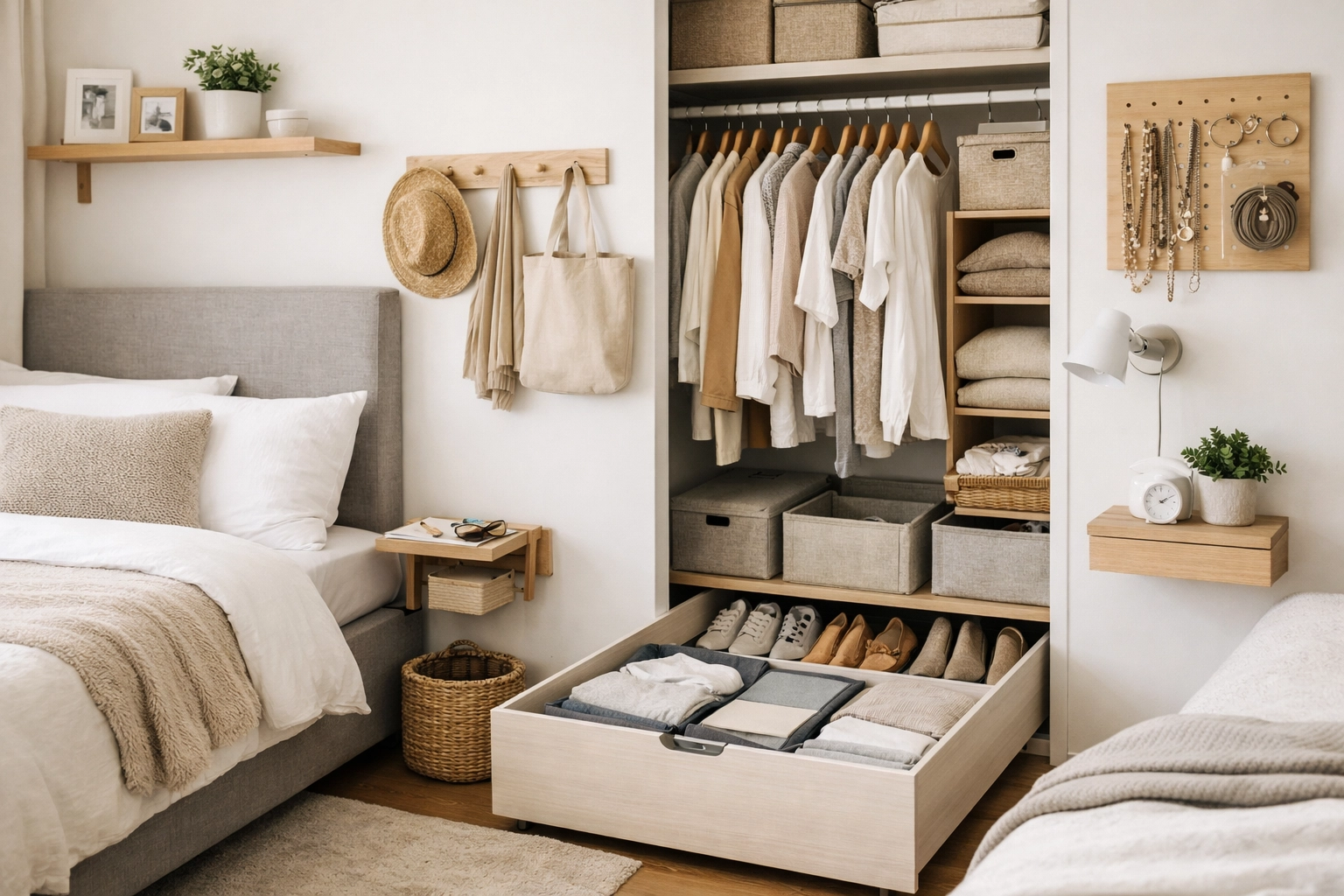
Living in a small bedroom often feels like a constant battle against clutter. When floor space is limited, every square inch becomes premium real estate. However, a small room does not have to feel cramped or disorganized. By shifting the perspective from horizontal to vertical and utilizing overlooked areas, it is possible to transform a tiny sleeping area into a functional, serene sanctuary.
Effective organization is less about having a large space and more about how the available space is managed. The following twenty-five ideas explore creative, practical, and often overlooked strategies to maximize storage and improve the flow of a small bedroom.
The Foundation: Decluttering and Mindful Curation
Before implementing new storage solutions, the most critical step is decluttering. No amount of clever organization can fix a room that simply contains too many items.
1. The Strategy of “One-In, One-Out”
To maintain order in a small room, many people adopt a strict “one-in, one-out” policy. For every new item brought into the room: whether it is a piece of clothing or a decorative object: one existing item must be donated, recycled, or sold. This prevents the slow accumulation of clutter that often overwhelms small spaces.
2. Categorization by Frequency of Use
Items should be stored based on how often they are used. Daily essentials belong at eye level or in easily accessible drawers. Seasonal items, such as heavy winter coats or spare blankets, should be relegated to higher shelves or deep under-bed storage. This prioritization ensures that the most accessible areas remain tidy and functional.
Maximizing Vertical Real Estate
When floor space is gone, look up. Walls offer immense storage potential that often goes completely unused.
3. Wall Pockets for Bedside Essentials
Traditional nightstands take up significant floor space. Replacing a bulky table with wall-mounted fabric or plastic pockets can clear the area while keeping essentials within reach. These pockets can hold phones, glasses, journals, and remote controls.
4. Picture Ledges as Minimalist Nightstands
A slim picture ledge mounted next to the bed provides just enough surface area for a glass of water and a reading lamp without the footprint of a traditional table. This keeps the floor visible, which creates an illusion of more space.
5. Floating Shelves Above the Door
The space between the top of the door frame and the ceiling is one of the most underutilized areas in any home. Installing a single long shelf here provides a perfect spot for books or storage bins containing items used only occasionally.
6. Wall-Mounted Hooks for Daily Wear
Instead of tossing a jacket or a bag onto a chair, install a series of high-quality wall hooks near the entrance or behind the door. This keeps items off the floor and surfaces, maintaining a clear walking path.

7. Pegboards for Customizable Storage
Pegboards are not just for garages. In a bedroom, a painted pegboard can serve as a customizable storage hub for jewelry, hats, or even small baskets for electronics. The layout can be changed as needs evolve, making it a highly flexible solution.
8. Floor-to-Ceiling Shelving Units
While it might seem counterintuitive to add a large piece of furniture to a small room, a tall, narrow shelving unit that reaches the ceiling utilizes vertical space efficiently. It draws the eye upward and provides significantly more storage than several shorter pieces of furniture.
Creative Under-Bed Storage Solutions
The area beneath the bed is often a “black hole” for clutter. With the right tools, it becomes the most valuable storage zone in the room.
9. Roll-Out Tubs and Boxes
Using clear, low-profile bins with wheels allows for easy access to items stored under the bed. These are ideal for shoes, extra linens, or out-of-season clothing. Labeling the ends of the bins makes it easy to identify contents without pulling everything out.
10. Bed Risers for Extra Clearance
If the bed frame sits too low to accommodate storage bins, bed risers can provide an extra three to six inches of height. This small adjustment can double the available under-bed storage capacity.
11. Built-In Storage Beds
For those looking for a permanent solution, a platform bed with built-in drawers offers a streamlined look. This eliminates the need for a separate dresser in many cases, freeing up floor space for movement.

Rethinking Furniture and Layout
Furniture in a small bedroom must work twice as hard. Multifunctional pieces are essential for maintaining an organized environment.
12. Storage Ottomans at the Foot of the Bed
A bench or ottoman with a hollow center provides a place to sit while offering hidden storage for bulky items like extra pillows or heavy comforters.
13. Nesting Tables
If a nightstand is necessary, nesting tables offer flexibility. They can be stacked when not in use and pulled out when extra surface area is needed for a laptop or a meal.
14. Clamp-On Lighting
Lamps take up valuable surface space on desks and nightstands. Using clamp-on LED lights or wall-mounted sconces removes the need for a base, leaving more room for organization. For those who enjoy reading, a bookmark light is a compact alternative to a bulky desk lamp.
15. The “In-Closet” Dresser
If the closet is large enough, moving a dresser inside it can open up the main bedroom area significantly. This creates a dedicated “dressing zone” and keeps the sleeping area feeling more open and less cluttered with furniture.
Optimized Closet and Drawer Systems
The interior of a closet is often a source of organizational frustration. Implementing specific systems can double its capacity.
16. Slimline Hangers
Replacing bulky plastic or wooden hangers with slim velvet-coated hangers can increase closet capacity by up to 50%. The velvet texture also prevents clothes from slipping off, keeping the closet floor clear.
17. Multi-Tiered Hangers
Hangers designed to hold multiple pairs of pants or several shirts vertically utilize the vertical drop of the closet. This is particularly useful for items that do not need to be folded.
18. Drawer Dividers for Small Items
Drawers often become “junk drawers” without internal structure. Using adjustable dividers or small bins within drawers keeps socks, underwear, and accessories separated and visible. For desk or vanity areas, a rotating cosmetic box can keep small items organized and easily accessible without cluttering the surface.

19. Over-the-Door Organizers
The back of the bedroom or closet door is a prime spot for organization. Transparent pockets can hold shoes, but they are also excellent for storing scarves, belts, or even cleaning supplies and electronics.
20. Shelf Risers Inside Closets
Most closet shelves have significant “dead space” above the folded clothes. Adding wire shelf risers allows for two layers of storage on a single shelf, preventing tall stacks of clothing from toppling over.
Hidden and Niche Storage Ideas
Sometimes the best storage is the kind that cannot be seen at first glance.
21. Magnetic Strips for Grooming Tools
Small metal items like bobby pins, tweezers, and nail clippers can be stored on a magnetic strip mounted inside a cabinet door or on the side of a vanity. This keeps them from getting lost in the bottom of a drawer.
22. Corner Shelving
Corners are frequently left empty. Installing small triangular shelves in the corners of the room provides a spot for decorative items or small plants without interfering with the flow of the room.
23. Cable Management Boxes
Tangled cords and power strips create visual clutter that makes a small room feel messy. Using dedicated cable management boxes hides the “spaghetti” of wires and creates a cleaner look on desks and nightstands.
24. Decorative Baskets on Wardrobe Tops
If there is a gap between the top of a wardrobe and the ceiling, uniform baskets can be used to store items. Because the baskets match, they look like part of the decor rather than a pile of storage.

25. Rolling Carts for Mobile Storage
A three-tier rolling cart can act as a mobile nightstand, craft station, or vanity. Its ability to be moved easily means it can be tucked into a corner when not in use and pulled out only when needed.
Creating a System for Maintenance
Organization is not a one-time event; it is a habit. In a small bedroom, even a few days of neglect can lead to a complete breakdown of the system.
Establishing “Homes” for Everything
Every object in the room must have a designated “home.” When an item is finished being used, it must be returned to its specific spot immediately. This prevents the “surface creep” where items begin to accumulate on the bed, desk, or floor.
Visual Limits
Using physical containers like bins and trays sets a visual limit on how much can be kept. If a shoe bin is full, a pair must be removed before a new one is added. This physical boundary helps reinforce the decluttering mindset.
The Role of Lighting in Organization
While not a storage solution, lighting plays a massive role in how organized a room feels. Dark corners can hide clutter and make a room feel smaller. Increasing the amount of light: through mirrors, light-colored paint, and multiple light sources: makes the organized space feel more intentional and airy.

Summary of Space-Saving Principles
To successfully organize a small bedroom, focus on these core principles:
- Accessibility: Keep daily items easy to reach and seasonal items tucked away.
- Visibility: Use clear bins or labels so items are not forgotten or replaced unnecessarily.
- Verticality: Always look for ways to move storage off the floor and onto the walls.
- Flexibility: Choose furniture that can be moved or repurposed as needs change.
By implementing even a handful of these twenty-five ideas, it is possible to reclaim a small bedroom from the chaos of clutter. The goal is to create a space that feels balanced, where everything has a place, and where the limited square footage is utilized to its highest potential. Small rooms require more discipline, but with the right organizational strategies, they can be the most comfortable and efficient spaces in a home.

