
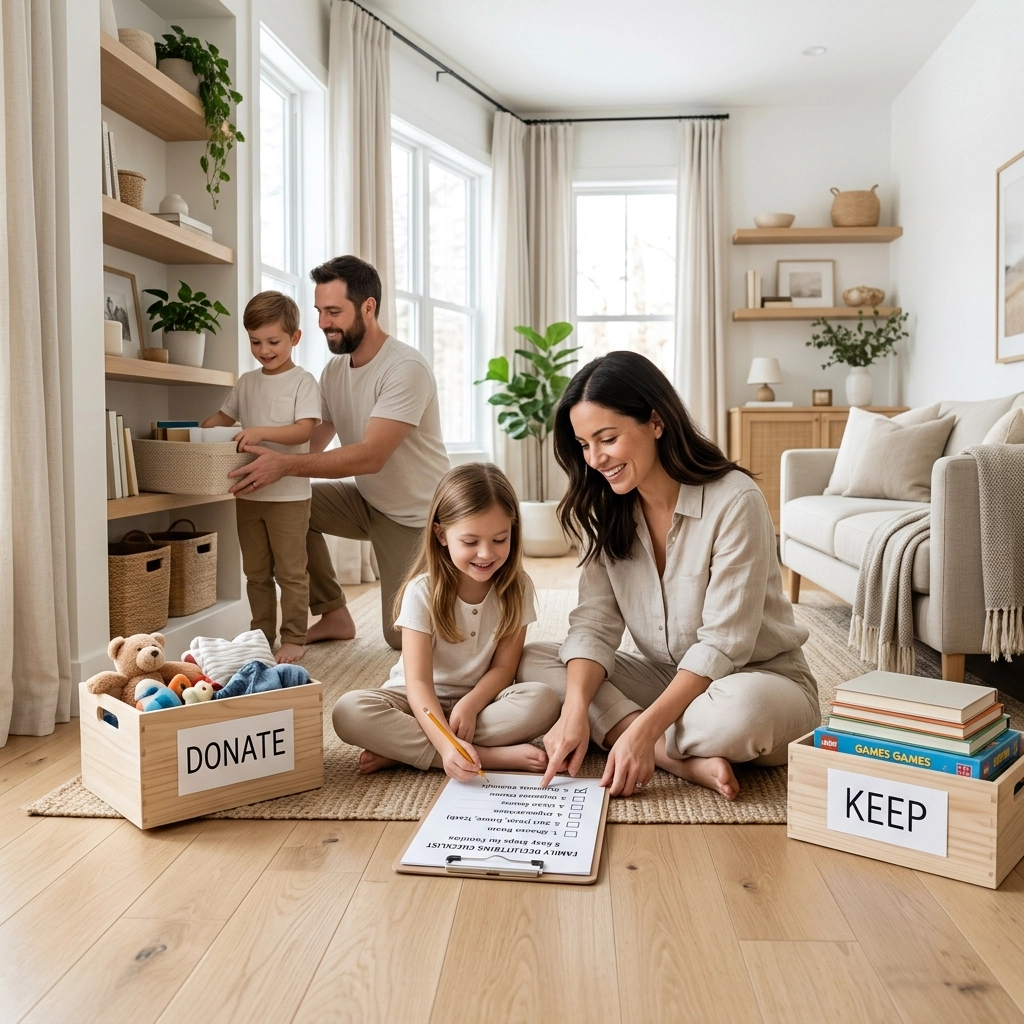
Maintaining a clean and organized home is a common challenge for many families. Between school schedules, work commitments, and extracurricular activities, household environments can quickly become overwhelmed by physical items. Clutter is more than just a visual distraction; research suggests it can contribute to increased stress levels and decreased productivity for both adults and children.
The implementation of a systematic decluttering checklist offers a structured path toward a more manageable living space. By breaking down the monumental task of “cleaning the whole house” into actionable steps, a sense of order can be restored. This guide outlines a comprehensive five-step approach to using a decluttering checklist effectively while establishing routines that ensure the home remains clean in the long term.
Step 1: Preparation and Strategic Planning
Success in decluttering is often determined before the first item is even moved. Jumping into a large-scale cleaning project without a plan frequently leads to burnout or a larger mess than when the project began.
Gather Essential Supplies
Effective decluttering requires a “kit” of supplies to prevent interruptions. Having these items on hand ensures that the momentum is not lost looking for a trash bag or a marker. Essential supplies include:
- Heavy-duty trash bags: For items that are broken, stained beyond repair, or no longer functional.
- Sturdy cardboard boxes: One set for items to be donated and another for items to be sold.
- Clear plastic bins: Useful for items that need to be relocated to a different room.
- Labeling tools: Markers and adhesive labels are vital for identifying the contents of storage bins.
- Cleaning supplies: Microfiber cloths and multi-surface cleaners allow for wiping down shelves and drawers as they are emptied.

Documentation and Motivation
Taking “before” photographs of targeted areas serves two purposes. First, it provides a realistic view of the current state of the room, which can sometimes be overlooked when living in the space daily. Second, these photos serve as a powerful motivational tool. When progress feels slow, looking back at the starting point provides a visual reminder of how much has been achieved.
Establish a Goal
A checklist should be prioritized based on the family’s specific needs. For some, the kitchen is the primary source of stress. For others, it may be the entryway or the home office. Identifying the “pain points” helps in directing energy where it will have the most significant impact on daily life.
Step 2: Prioritizing High-Traffic Zones
A common mistake in decluttering is starting with deep storage areas like the attic or the basement. While these areas often contain the most volume, they are not the spaces where the family spends the majority of its time. To see immediate improvements in daily quality of life, it is more effective to start with high-traffic zones.
The Entryway and Mudroom
As the first point of entry, these areas often collect shoes, mail, and bags. A decluttering checklist for this space should focus on removing items that do not belong there and creating designated spots for the essentials. Utilizing home storage solutions such as wall hooks or cubbies can prevent the floor from becoming a catch-all.
The Kitchen
As the heart of the home, the kitchen accumulates clutter rapidly. The focus here should be on surfaces first: clear the countertops of non-essential appliances. Next, move to the drawers and cabinets. Discard expired food items and donate duplicate kitchen tools. For families who cook frequently, organizing the kitchen and dining areas can significantly reduce the time spent on meal preparation.
Bathroom Surfaces
Bathroom counters often become crowded with skincare products, hair tools, and toiletries. A checklist for the bathroom should involve checking expiration dates on medications and disposing of old cosmetics. Keeping only the items used daily on the counter and storing the rest in drawers or under-sink organizers creates a much calmer environment for morning routines.
Step 3: Implementing Focused Time Blocks and the Sorting Method
Large decluttering projects can feel overwhelming, leading to procrastination. The most effective way to combat this is by using focused time blocks combined with a rigorous sorting method.
The 15-Minute Rule
Instead of dedicating an entire weekend to cleaning, set a timer for 15 to 30 minutes. Focus exclusively on one small area: a single drawer, a bookshelf, or a kitchen cabinet. This approach makes the task feel manageable and allows for progress to be made even on busy workdays.

The Four-Pile Sorting System
To make decisions easier, every item in a designated area must be sorted into one of four categories:
- Keep: Items that are used regularly, are in good condition, and have a specific place in the home.
- Donate/Sell: Items that are still functional but are no longer used or needed by the family.
- Trash/Recycle: Items that are broken, incomplete, or otherwise unusable.
- Relocate: Items that belong in the house but are currently in the wrong room.
It is important to handle each item only once. Make a decision immediately rather than creating a “maybe” pile, which often leads to the clutter simply being moved from one spot to another.
Step 4: Organization Systems and Practical Labeling
Once the decluttering process is complete, the next step is to organize what remains. The goal is to create a system where every item has a “home.” If an object does not have a designated spot, it is likely to become clutter again.
Zoning by Frequency of Use
Items used every day should be the most accessible. Store them at eye level or in the front of cabinets. Items used occasionally, such as seasonal decorations or specialized tools, can be stored on higher shelves or in less accessible areas. For those working from home, organizing a home office storage area is essential for maintaining professional productivity.
The Importance of Labeling
Labeling is particularly important in a family setting. It removes the guesswork for children and partners regarding where items should be returned. Use clear bins for items like toys or craft supplies, and add descriptive labels. This transparency encourages all family members to participate in maintaining the order of the home.

Utilizing Vertical Space
When floor space is limited, look upward. Wall-mounted shelves, over-the-door organizers, and tall shelving units can provide significant storage capacity without making a room feel cramped. This is especially useful in pantries and laundry rooms where supplies can be tucked away neatly.
Step 5: Establishing a Sustainable Maintenance Schedule
Decluttering is not a one-time event but an ongoing process. Without a maintenance plan, clutter will inevitably return. Establishing routines is the key to long-term success.
Daily “Reset” Rituals
A 10-minute nightly reset can prevent daily messes from compounding. This involves a quick walkthrough of the main living areas to return stray items to their proper places, loading the dishwasher, and clearing the dining table. When the family wakes up to a clean environment, it sets a positive tone for the day.
The “One-In, One-Out” Rule
To prevent the accumulation of new items, many families adopt the “one-in, one-out” rule. For every new item brought into the home: whether it is a piece of clothing, a toy, or a kitchen gadget: one old item must be donated or discarded. This practice encourages more mindful consumption and keeps the volume of possessions stable.
Weekly and Monthly Checklists
In addition to daily habits, a weekly maintenance schedule ensures that deeper tasks are handled. This might include a Friday afternoon paper purge (recycling junk mail and filing important documents) or a Sunday evening fridge clean-out. On a monthly basis, refer back to the master decluttering checklist to address areas that may have started to accumulate items again.

Addressing Room-Specific Challenges
Every room in a house presents unique decluttering challenges. Tailoring the checklist to the specific needs of each space ensures a more thorough result.
The Living Room
The living room is often the primary space for relaxation, yet it frequently becomes a graveyard for magazines, remote controls, and discarded toys.
- Media Storage: Evaluate physical media like DVDs or CDs. If they are no longer used due to streaming services, consider donating them.
- Textiles: Rotate throw pillows and blankets. If they are worn out or excess, remove them to create more visual “breathing room.”
Bedrooms and Closets
Closets are notorious for harboring clothes that no longer fit or styles that are no longer worn.
- The Reverse Hanger Method: Turn all clothes hangers backward. When an item is worn and replaced, turn the hanger the right way. After six months, any hangers still facing backward identify clothes that have not been used and are candidates for donation.
- Nightstands: Keep only the essentials (a lamp, a book, a glass of water) on the surface to promote a better sleep environment.
Managing Paper Clutter
Paper is one of the most persistent forms of clutter. It enters the home daily in the form of mail, school papers, and receipts.
- Go Digital: Where possible, opt for paperless billing and digital statements.
- The “Immediate Action” System: Sort mail over the recycling bin. Shred sensitive documents immediately and place bills in a designated folder for payment.
Involving the Entire Family
A clean home should not be the responsibility of a single person. Involving children in the decluttering process teaches them valuable life skills and gives them a sense of ownership over their environment.
Age-Appropriate Tasks
- Toddlers: Can help by putting toys into bins or matching socks.
- School-Aged Children: Can be responsible for clearing their own desks and sorting through toys they no longer play with.
- Teenagers: Should manage the organization of their own rooms and contribute to shared household chores like laundry or kitchen maintenance.
Making It Engaging
Turn decluttering into a family activity rather than a chore. Play music, set a timer for a “speed clean,” or offer small rewards for completing a significant section of the checklist. When children understand the “why” behind decluttering: such as making it easier to find their favorite toys: they are often more willing to participate.

Handling Sentimental Items and “Just in Case” Objects
One of the biggest hurdles to a clean home is the emotional attachment to objects. It is common to hold onto items because they were gifts, remind the owner of a specific time, or because they “might be needed someday.”
The “Just in Case” Trap
Items kept “just in case” rarely get used and often take up valuable space. A helpful rule is the “20/20 rule”: if an item can be replaced for less than $20 and in less than 20 minutes from the current location, it is safe to let go.
Preserving Memories Without the Bulk
For sentimental items like childhood artwork or old letters, consider digitizing them. Taking a high-quality photo of a child’s large art project allows the memory to be kept without the physical space requirement. For physical items that must be kept, limit them to one “memory box” per person. Once the box is full, something must be removed before a new item can be added.
Conclusion
A decluttering checklist is a powerful tool for any family looking to simplify their lives and regain control of their home environment. By following a structured five-step process: preparing thoroughly, prioritizing high-traffic areas, using focused time blocks, implementing smart organization, and maintaining the progress through routine: the dream of a clean and peaceful home becomes an achievable reality.
Consistency is more important than perfection. A home is meant to be lived in, and some degree of daily mess is natural. However, by establishing these systems, a family can ensure that the mess is temporary and that order can be restored quickly and easily. For further resources on home organization and household management, exploring the full site map can provide additional insights and specialized guides.

