
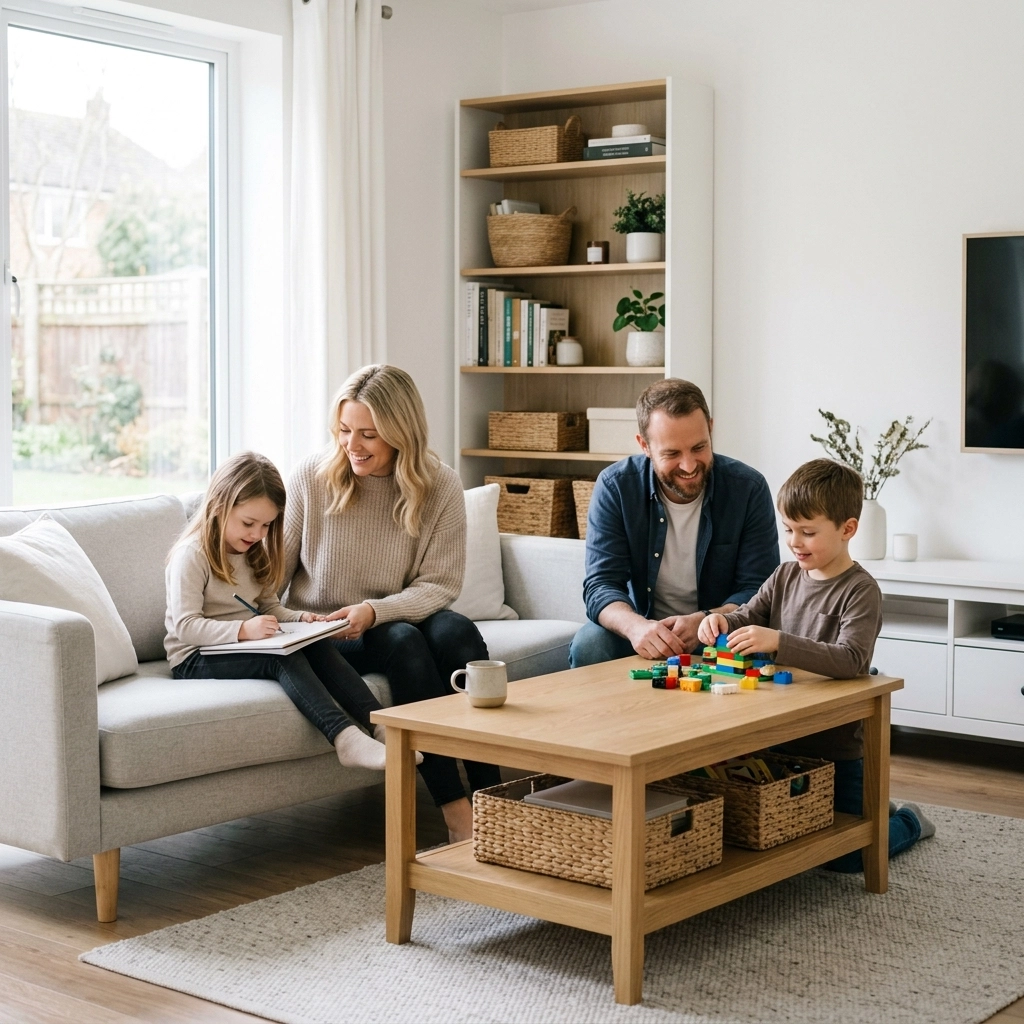
Maintaining a functional, peaceful home environment is a continuous process, especially for families with children. Clutter often accumulates not because of a lack of effort, but due to the absence of a sustainable system. Transitioning from a state of overwhelm to an organized living space requires a structured approach that addresses both the physical items and the habits that lead to accumulation.
This guide provides a comprehensive five-step framework designed to help families systematically purge unnecessary items, repair the environment, and implement lasting organizational structures.
Step 1: The Surface Level Sweep
The first phase of decluttering focuses on immediate visual impact and the removal of obvious “non-essentials.” This step is designed to build momentum without requiring difficult emotional decisions.
Identifying the Easy Wins
Begin by walking through each room with a large trash bag and a recycling bin. Focus exclusively on items that are clearly disposable. This includes:
- Expired food and medicine.
- Old newspapers, flyers, and junk mail.
- Broken toys that cannot be repaired.
- Dried-out pens and markers.
- Empty or near-empty product bottles.
By clearing these items first, the physical volume of clutter decreases significantly, making it easier to see the remaining items that require more thoughtful consideration.
Addressing Revealed Surface Issues
As surfaces like countertops and coffee tables are cleared, underlying issues often become visible. Neglected surfaces frequently harbor stains or minor damage that contribute to a feeling of “messiness” even when the clutter is gone.
Removing Common Household Stains
- Water Rings on Wood: If the decluttering process reveals white water rings on wooden furniture, these can often be removed by applying a small amount of non-gel toothpaste to a soft cloth and rubbing gently with the grain. For more stubborn rings, a mixture of equal parts vinegar and olive oil can restore the finish.
- Heat Marks: For faint white clouds on wood caused by hot plates, a hairdryer set to medium heat held a few inches away can sometimes draw out the moisture.
- Ink Stains on Desks: Isopropyl alcohol (rubbing alcohol) is effective for removing ink from laminate or finished wood. Always test a small, inconspicuous area first to ensure the finish is not damaged.

Step 2: The Deep Category Purge
Once the surface-level distractions are removed, the next step involves a deeper dive into specific categories of items. Rather than working by room, which can lead to shifting clutter from one corner to another, focus on categories to understand the true volume of belongings.
Sorting by Category
Gather every item of a specific type from across the whole house into one central location. This technique provides a realistic view of how many duplicates are owned. Common categories for families include:
- Clothing: Include everything from coats and shoes to cardigans and jumpers.
- Linens: Towels, bedsheets, and blankets.
- Kitchen Gadgets: Small appliances, utensils, and containers.
- Media and Electronics: Cables, chargers, old phones, and remote controls.
The Decision-Making Framework
For each item, ask the following questions:
- Has this been used in the last 12 months?
- Does it serve a clear, functional purpose in the current season of life?
- If it were lost, would it be replaced immediately?
If the answer to these questions is “no,” the item should be placed in a donation or sale pile. For families with growing children, this is the time to remove clothing that no longer fits, such as outgrown shorts or t-shirts.
Minor Repairs and Maintenance
During the deep purge, items that are being kept may require minor maintenance to remain functional.
- Loose Cabinet Handles: Over time, kitchen and bathroom hardware can become loose. If the screw hole is stripped, inserting a toothpick dipped in wood glue into the hole before re-inserting the screw provides a fresh grip.
- Squeaky Hinges: A small drop of silicone-based lubricant or even a dab of olive oil can silence a noisy closet or bedroom door.
- Scuffed Walls: High-traffic areas often suffer from scuff marks. A melamine sponge (magic eraser) dipped in water can remove most shoe and furniture scuffs without the need for repainting.

Step 3: Spatial Organization and Layout Fixes
After the volume of items is reduced, the remaining belongings must be integrated back into the home using logical systems. This phase focuses on the “flow” of the home and ensuring that every item has a designated “home.”
Maximizing the Home Layout
A common cause of clutter is a layout that does not support the family’s daily routine. If items naturally pile up in a specific area, it is an indication that the current storage solution is inconvenient.
- The Entryway Drop Zone: If coats and bags are consistently left on the floor, the entryway likely lacks sufficient hanging space. Installing a row of sturdy hooks or a dedicated bench with home storage compartments can resolve the “floor clutter” issue.
- The Kitchen Triangle: Ensure that the most frequently used items in the kitchen and dining areas are stored within reach of the primary workspace. Heavy appliances that are used daily should be on the counter, while seasonal items should move to higher or deeper cabinets.
- Zoning the Living Area: Use furniture to define specific areas for play, relaxation, and work. A bookshelf or a low cabinet can act as a divider to keep toys contained within a specific “zone.”
Implementing Functional Storage
Effective storage should be accessible to those who use it. In family homes, this means placing children’s items at a lower height.
- Vertical Space: Use walls for storage to keep floor space clear. Floating shelves are excellent for books and decorative items.
- Clear Containers: In pantries and closets, clear bins allow family members to see what is inside, reducing the time spent searching and the likelihood of purchasing duplicates.
- Smart Home Integration: Consider using smart home devices to manage schedules and grocery lists, reducing the need for paper calendars and sticky notes that clutter refrigerators and desks.

Step 4: Establishing Sustainable Systems for Families
Decluttering is not a one-time event but a shift in management. To prevent the home from returning to its previous state, specific systems must be adopted by all family members.
The Four-Box Method
When managing ongoing clutter, use four boxes: Keep, Donate, Relocate, and Trash. This simple system allows for quick decision-making during weekly resets.
- Keep: Items that belong in the current room and have a home.
- Donate: Items in good condition that are no longer needed.
- Relocate: Items that belong in a different room.
- Trash: Items that are broken or beyond use.
The “One-In, One-Out” Rule
For every new item brought into the home: whether it is a new pair of shoes or a toy: one existing item must be removed. This ensures that the total volume of belongings remains constant.
Managing Paper and Digital Clutter
Paper is one of the most persistent forms of clutter.
- Immediate Processing: Open mail near a recycling bin and discard junk immediately.
- The “To-Do” Folder: Keep a single folder for active documents like bills or school permission slips.
- Digitization: Use a phone app to scan important receipts or children’s artwork, allowing the physical copy to be recycled while preserving the information or memory.

Step 5: The Maintenance Cycle and Long-Term Habits
The final step is to integrate decluttering into the rhythm of daily life. For families, this means creating routines that prevent the accumulation of “background noise” clutter.
The Five-Minute Evening Reset
Before the end of the day, involve the whole family in a five-minute “reset.” This is not a deep clean, but a quick sweep to return items to their designated homes.
- Clear the dining table.
- Return remote controls to their station.
- Ensure toys and baby items are in their bins.
- Prepare the home office storage for the next morning.
Seasonal Deep Dives
Every three to four months, perform a more thorough check of specific areas.
- Wardrobe Rotation: As seasons change, evaluate coats and jackets or sportswear. If an item wasn’t worn during its appropriate season, it is a candidate for donation.
- Outdoor Equipment: Check camping and hiking gear for damage before the season begins. Repair or replace items as needed to ensure safety and functionality.
- Beauty and Health: Go through beauty tools and accessories to discard expired products or worn-out brushes.
Teaching Responsibility
Involving children in the process is essential for long-term success. Give children ownership of their space by letting them decide which toys to donate when their storage bins become full. Use visual labels (pictures for younger children, words for older ones) to help them understand where items belong.

Troubleshooting Common Home Problems During Decluttering
As the home becomes more organized, specific maintenance issues often become more apparent. Addressing these promptly prevents them from becoming major repairs.
Fix: Sticky Drawers
Old wooden drawers often stick due to humidity or wear. Rubbing a piece of paraffin wax or a plain white candle along the drawer runners provides a smooth, lubricated surface that allows the drawer to slide easily.
Fix: Carpet Indentations
When furniture is moved during a layout redesign, it often leaves deep divots in the carpet. To fix this, place an ice cube in the indentation and allow it to melt completely. The moisture will swell the fibers. Once dry, use a fork or a vacuum to gently fluff the carpet back to its original height.
Fix: Clogged Showerheads
While decluttering the health and beauty area, check the showerhead for mineral buildup. Fill a plastic bag with white vinegar, secure it over the showerhead with a rubber band, and let it soak for several hours. This dissolves calcium deposits and restores water flow.
Fix: Dull Wall Clocks
If clocks are failing to keep time, it is often a battery issue or a build-up of dust in the mechanism. Use a can of compressed air to clear the movement before assuming the device is broken.
By following these five steps and addressing the small maintenance needs of the home, families can create a space that is not only organized but also easy to maintain. A decluttered home reduces daily stress, improves focus, and allows the family to spend more time on activities together rather than managing their belongings.

