
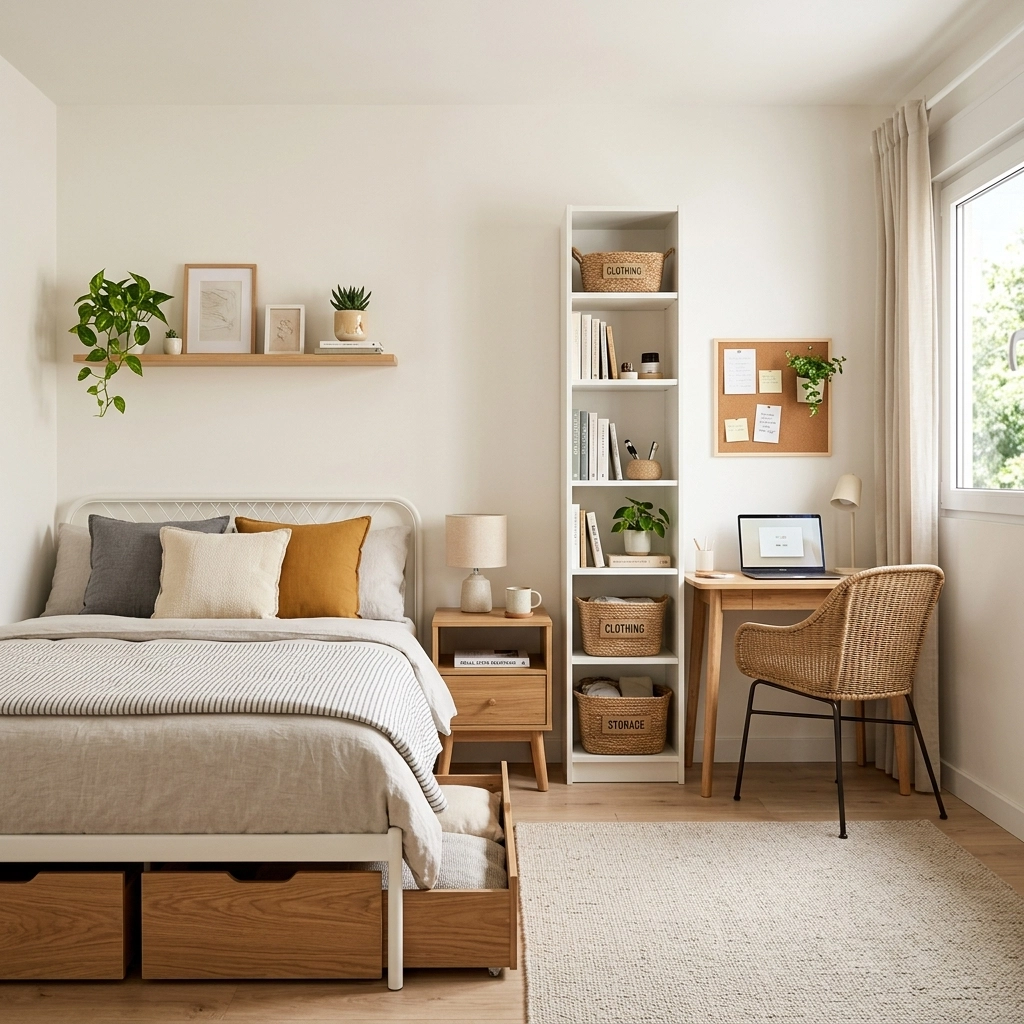
A bedroom serves as a sanctuary, a place for rest, and a private retreat from the demands of daily life. However, when square footage is limited, this space can quickly become a source of stress rather than relaxation. Small bedroom organization is not merely about finding a place for every item; it is about creating a functional environment that supports physical comfort and mental clarity. By applying strategic design principles and systematic storage solutions, it is possible to maximize even the most compact living quarters.
The Psychological Impact of a Cluttered Bedroom
Living in a cramped environment often leads to visual overstimulation. The human brain constantly processes the objects within its field of vision. When a bedroom is filled with unfolded laundry, stacks of books, and miscellaneous items, the mind struggles to enter a state of rest. Research suggests that a tidy environment can lower cortisol levels and improve sleep quality.
Organizing a small bedroom is an investment in personal well-being. It transforms the room from a storage locker into a curated space designed for restoration. Achieving this requires a shift in perspective, viewing every square inch of the room: including vertical and hidden spaces: as valuable real estate.
The 4-D Framework for Organization
To achieve lasting results, one must follow a systematic approach. The 4-D Method: Define, Declutter, Design, and Deploy: provides a structured pathway to a more organized bedroom.
Define the Purpose
Every room should have a primary function. In a small bedroom, clarity of purpose is essential. Is the room strictly for sleeping? Does it also need to serve as a home office or a dressing room? By defining these zones, decisions regarding furniture and storage become more straightforward. If a room must serve multiple purposes, vertical dividers or area rugs can help delineate different functional zones without consuming floor space.
Declutter with Intention
Decluttering is the foundation of organization. One cannot organize their way out of a space that contains too many items. The “Four-Box Method” is a standard practice where items are categorized into: Keep, Donate, Store (seasonal or sentimental), and Trash. In a small bedroom, if an item has not been used or worn in twelve months, it likely does not deserve a place in the limited footprint.
Design the Layout
Before purchasing bins or shelves, a layout plan is necessary. Measuring the dimensions of the room, including the swing radius of doors and the location of windows, prevents the purchase of oversized furniture. A common mistake is choosing furniture that is too large for the scale of the room, which makes the space feel smaller than it actually is.
Deploy Solutions
The final phase involves installing storage-organization systems. This includes everything from closet organizers to wall-mounted shelves. Deployment should focus on accessibility; items used daily should be the easiest to reach, while seasonal items can be placed in higher or more recessed areas.

Strategic Furniture Selection and Placement
Furniture choices dictate the flow of a small bedroom. Traditional bulky furniture can quickly overwhelm a room, making it feel claustrophobic.
Choosing the Right Bed
The bed is usually the largest piece of furniture in the room. To save space, consider a storage bed with built-in drawers. This eliminates the need for a separate dresser in some cases. Alternatively, a bed frame with high clearance allows for the use of under-bed bins. Scaling down from a king-sized bed to a queen or even a full-sized bed can reclaim significant floor space for movement and other furniture.
Floating Nightstands and Desks
Floor space is a precious commodity. Floating furniture: items mounted directly to the wall: creates the illusion of a larger room by keeping the floor visible. A floating nightstand provides a surface for a lamp and a phone without the visual weight of a traditional bedside table. Similarly, a wall-mounted drop-leaf desk can serve as a workspace that folds away when not in use.
Sliding Wardrobe Doors
In narrow bedrooms, hinged closet doors can be problematic. They require several feet of clearance to open fully, often hitting the bed or other furniture. Replacing hinged doors with sliding or bi-fold doors solves this issue. For a more open feel, some choose to remove closet doors entirely and use a decorative curtain, which adds texture and saves space.
Maximizing Vertical Space
When horizontal space is unavailable, look upward. Vertical organization utilizes the walls from floor to ceiling, providing ample storage without encroaching on the walking path.
High-Level Shelving
Installing a shelf around the perimeter of the room, approximately 12 to 18 inches below the ceiling, provides a perfect spot for books, decorative items, or storage bins. Since this area is typically unused, it provides “bonus” storage that does not interfere with the daily operations of the room.
Wall Hooks and Pegboards
Hooks are one of the most versatile tools in small bedroom organization. They can hold bags, hats, scarves, and even tomorrow’s outfit. A pegboard system offers a customizable solution for hobby-related items or jewelry, allowing the user to rearrange hooks and bins as their needs change.

Utilizing Door Backs
The back of a bedroom or closet door is often overlooked. Over-the-door organizers can hold shoes, beauty supplies, or cleaning tools. For a more aesthetic look, individual hooks can be used to hang robes or towels.
Closet Optimization Strategies
The closet is often the most cluttered area of a small bedroom. Maximizing its efficiency is key to keeping the rest of the room tidy.
Uniform Hangers
Using a single type of hanger: specifically slim, non-slip velvet hangers: can increase closet capacity by up to 30%. Because they are thinner than plastic or wood hangers, more garments can be hung in the same amount of rod space. Additionally, they prevent clothes from slipping off and creating a pile on the floor.
Double Hanging Rods
If the closet has a single high rod, much of the space below the hanging clothes is wasted. Installing a second, lower rod can double the amount of hanging space for shirts, skirts, and folded trousers. This simple adjustment is one of the most effective ways to increase storage density.
Shelf Dividers and Bins
Shelves in closets often become a jumbled mess of folded sweaters and linens. Clear acrylic shelf dividers keep stacks upright and organized. Smaller items like socks and undergarments should be placed in bins or baskets. Labeling these bins ensures that items are returned to their proper place. For those with a vanity setup inside or near the closet, using dedicated makeup-tool organizers helps maintain order.
Hidden Storage Opportunities
In a small room, every “dead” space should be evaluated for storage potential.
The Power of Under-Bed Storage
The area under the bed is essentially a horizontal closet. Low-profile plastic bins or fabric bags are ideal for storing out-of-season clothing, extra blankets, or shoes. To keep this area organized, use bins with wheels for easy access. It is important to keep this area clean; dust can accumulate quickly under furniture, so sealed containers are preferred.

Storage Ottomans and Benches
A storage ottoman at the foot of the bed serves three purposes: it provides a seat, a surface to set things down, and hidden storage for bulky items like spare pillows or workout equipment. This multi-functional approach is essential in small-scale living.
Behind-the-Headboard Storage
Some modern headboards are designed with integrated shelving or hidden compartments. This is an excellent way to store nighttime essentials, reducing the need for large nightstands.
Visual Organization and Aesthetics
How a room looks is just as important as how it functions. Visual clutter can be just as stressful as physical clutter.
The Role of Mirrors
While not a storage solution, mirrors are a vital tool in small bedroom design. They reflect light and create the illusion of depth, making a small, organized room feel twice its actual size. A large floor-length mirror or mirrored closet doors can transform the atmosphere of the space. To assist with daily routines, a makeup-mirror with built-in lighting can save space on a desk or dresser while providing necessary functionality.
Color Palettes and Uniformity
Using a cohesive color palette for storage bins and linens helps the room feel organized. When storage containers are mismatched in color and size, they create visual noise. Neutral tones like white, beige, or light gray help storage solutions blend into the walls, making the room feel more expansive.
Cord Management
In the age of electronics, tangled cords can make even the cleanest room look messy. Use cord clips or cable management boxes to hide chargers and power strips. Keeping surfaces like nightstands and desks free of “wire nests” contributes significantly to a calm environment.

Maintaining the System
Organization is not a one-time event; it is a habit. Once the systems are in place, they must be maintained.
The 15-Minute Reset
At the end of each day, spend 15 minutes returning items to their designated places. Putting away shoes, hanging up clothes, and clearing surfaces ensures that clutter does not have the chance to accumulate.
Seasonal Rotation
Twice a year, perform a seasonal swap. Move heavy winter coats and blankets to deep storage (like the top shelf of a closet or under the bed) and bring summer items to the most accessible areas. This rotation keeps the “active” storage areas from becoming overcrowded.
The “One In, One Out” Rule
To prevent future clutter, adopt the “one in, one out” rule. For every new item brought into the bedroom: whether it is a piece of clothing, a book, or a decorative object: one existing item must be removed. This practice encourages mindful consumption and ensures the bedroom remains within its storage capacity.
Implementing Small Changes for Large Results
Achieving an organized small bedroom does not require a complete renovation. Often, it is the accumulation of small, smart choices that leads to success. Replacing bulky hangers, installing a few floating shelves, and utilizing under-bed bins can collectively reclaim a significant amount of space.
By focusing on verticality, choosing multi-functional furniture, and maintaining a strict decluttering habit, any small bedroom can be transformed into a functional and peaceful retreat. The key is to start with a plan, address one area at a time, and remain consistent in keeping the systems updated as needs change. Successful organization is about making the space work for the individual, ensuring that the bedroom remains a place of comfort and efficiency.

