
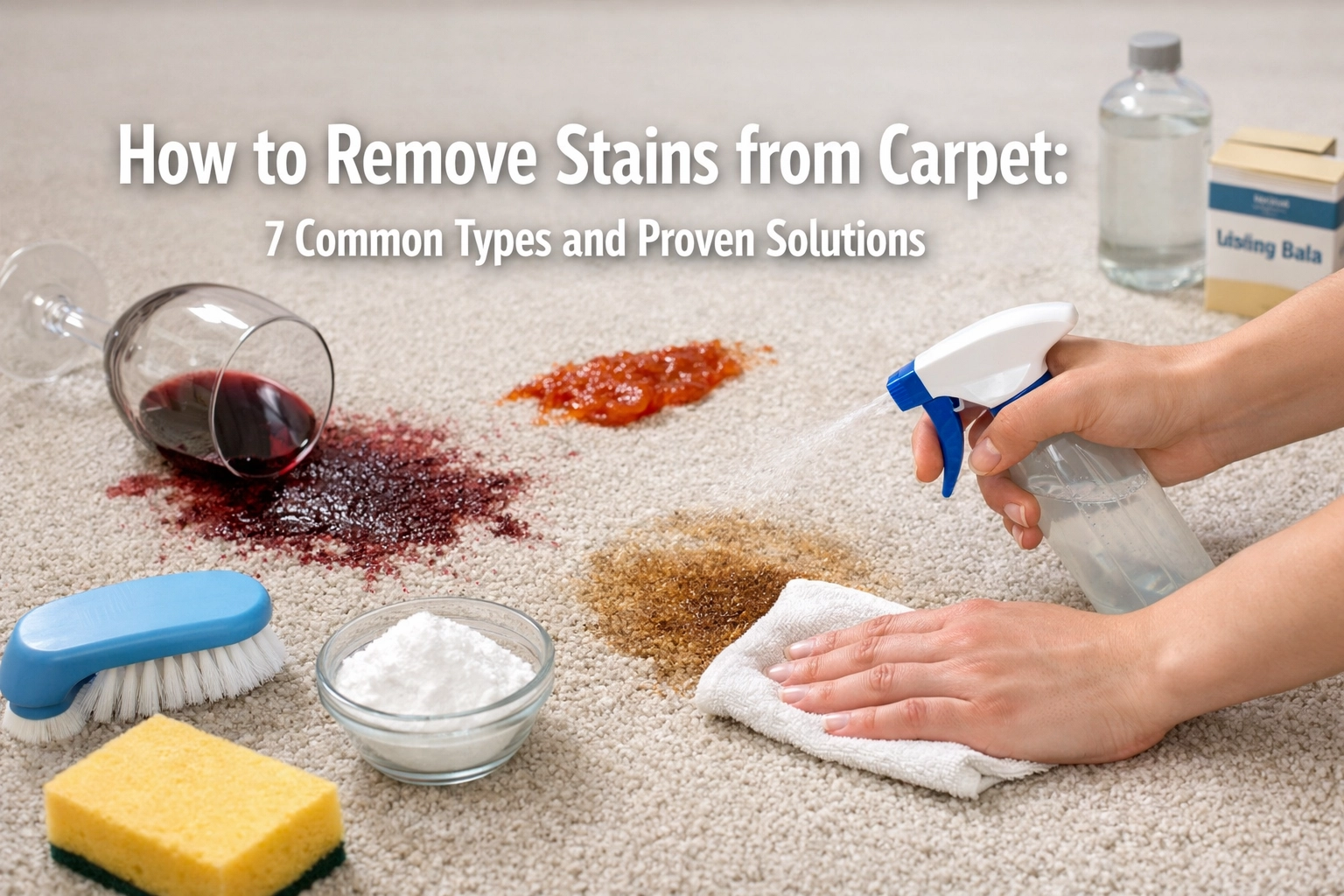
Carpet stains happen to every household. Whether it’s a dropped cup of coffee, a pet accident, or tracked-in mud, knowing how to tackle these mishaps quickly can mean the difference between a minor inconvenience and permanent damage. The key to successful stain removal lies in understanding what caused the stain and applying the right treatment method.
Different stains require different approaches. Using the wrong cleaning solution can sometimes set a stain permanently or damage carpet fibers. This guide covers seven of the most common carpet stains and provides step-by-step solutions that work.
Essential Tools for Carpet Stain Removal
Before diving into specific stain types, gathering the right supplies makes the process smoother. Most items are already available in typical households.
Basic supplies include:
- White vinegar
- Baking soda
- Dish soap
- Hydrogen peroxide (3%)
- Rubbing alcohol
- Club soda
- White paper towels or clean cloths
- Spray bottles
- Cold water
White cloths or paper towels are recommended because colored materials can transfer dye to light-colored carpets during cleaning.

General Carpet Cleaning Principles
Regardless of stain type, certain principles apply universally to carpet cleaning.
Always blot, never scrub. Scrubbing pushes stains deeper into carpet fibers and can damage the texture. Blotting uses gentle pressure to absorb the stain from the surface upward.
Act quickly. Fresh stains are significantly easier to remove than set-in ones. The longer a substance sits on carpet, the more it bonds with the fibers.
Test solutions first. Before applying any cleaning solution to a visible area, test it on a hidden section of carpet to ensure it won’t cause discoloration or damage.
Work from the outside in. When treating a stain, start at the outer edges and work toward the center. This prevents the stain from spreading.
1. Coffee and Tea Stains
Coffee and tea create tannin-based stains that can appear stubborn but respond well to acidic solutions.
Method One: Vinegar and Baking Soda
Mix equal parts white vinegar and water in a spray bottle. Spray the solution generously onto the stained area. Sprinkle baking soda over the wet spot. The combination will create a fizzing reaction that helps lift the stain.
Let this mixture sit overnight if possible, or at least for several hours. The extended contact time allows the solution to break down the tannins. After waiting, vacuum up the dried baking soda and blot any remaining moisture with a clean cloth.
Method Two: Beer Application
Pour a small amount of beer directly onto the coffee or tea stain. The carbonation and mild acidity in beer help break down the tannins. Dab the beer gently into the carpet fibers using a clean cloth. Wait a few minutes, then blot with a dry cloth. Repeat once or twice if traces of the stain remain.

2. Blood Stains
Blood stains require special attention because using hot water will cause them to set permanently.
Cold Water Method
Fill a spray bottle with cold water only. Spray the bloodstain thoroughly and blot immediately with white paper towels or a clean cloth. Repeat this spray-and-blot process multiple times. Each repetition should lift more of the stain.
Patience is essential. Keep spraying cold water and blotting until the stain disappears. This method works best on fresh blood but can also help with older stains.
Ammonia Solution for Tougher Stains
For blood that has dried or set in, mix one tablespoon of household ammonia with one cup of cold water. Spray this solution onto the stain and blot with a clean cloth. The ammonia helps break down the proteins in blood.
Ammonia has a strong odor, so ensure the room is well-ventilated. Never mix ammonia with bleach or other cleaners, as this creates dangerous fumes.
3. Red Wine and Juice Stains
Red wine and fruit juice contain pigments that can create dramatic-looking stains, but they’re highly treatable with the right approach.
Club Soda Treatment
Pour club soda directly onto the stain. The carbonation helps lift the pigments from the carpet fibers. Let the club soda sit for a few minutes while the bubbles work.
Vinegar and Baking Soda Follow-Up
After treating with club soda, spray a mixture of equal parts water and white vinegar onto the area. Blot the stain with paper towels. Sprinkle baking soda generously over the damp spot and let it sit for one hour.
The baking soda will absorb both moisture and remaining pigments. After an hour, vacuum the area thoroughly. The stain should be significantly lighter or completely gone.
Alternative: Hydrogen Peroxide Method
Mix one part dish soap with two parts hydrogen peroxide. Apply this solution to the stain, saturating it completely. Let it sit for several minutes. Blot with a clean cloth and repeat if necessary.
This method works particularly well on older, set-in wine stains.

4. Ink Stains
Ink from pens can be alarming on carpet, but alcohol-based solutions break down the pigments effectively.
Apply rubbing alcohol, nail polish remover (acetone-based), or aerosol hair spray directly to the ink stain. These products contain solvents that dissolve ink.
Let the solution sit on the stain for one hour. This waiting period is crucial: it allows the alcohol to fully penetrate and break down the ink.
After an hour, dab the stain with a paper towel. The ink should transfer to the towel. Continue dabbing with fresh sections of the towel until no more ink lifts.
For stubborn ink stains, repeat the application and waiting process. Some inks, particularly from permanent markers, may require multiple treatments.
5. Chocolate Stains
Chocolate combines fat, protein, and sugar, requiring a two-stage approach depending on whether it’s fresh or dried.
Fresh Chocolate
When chocolate has just fallen on carpet, resist the urge to wipe it immediately. Instead, place ice cubes in a plastic bag and hold it against the chocolate. The cold will harden the chocolate, making it brittle.
Once hardened, use a butter knife or spoon to gently scrape away the chocolate pieces. Work carefully to avoid grinding the chocolate deeper into the fibers.
Set-In Chocolate Stains
Mix a small amount of dish soap with warm water in a spray bottle. Spray the solution onto the chocolate stain and let it sit for 30 seconds to one minute. The soap breaks down the oils in the chocolate.
Blot the area with a clean cloth. The chocolate should transfer to the cloth. Repeat the spray-and-blot process until the stain is gone. For particularly stubborn spots, increase the soap concentration slightly.

6. Grease and Oil Stains
Grease and oil stains require methods that can absorb or transfer the oily substances.
Heat Transfer Method
Place a white paper towel directly over the grease stain. Set a warm iron on top of the paper towel for a few seconds. The heat will warm the grease, causing it to transfer from the carpet to the paper towel.
Lift the iron and check the paper towel. Move to a clean section of the towel and repeat until no more grease transfers. This method works surprisingly well for cooking oil, butter, and similar substances.
Cornstarch Absorption
If the heat method doesn’t fully remove the stain, or for larger grease spills, sprinkle cornstarch liberally over the affected area. The cornstarch acts as an absorbent, drawing the oil out of the carpet fibers.
Let the cornstarch sit for several hours or overnight for best results. Vacuum thoroughly to remove all the powder. The grease should be absorbed into the cornstarch and vacuumed away.
7. Pet Urine Stains
Pet accidents create both visible stains and lingering odors that require thorough treatment.
Immediate Absorption
As soon as a pet accident is discovered, place white towels over the wet area. Step on the towels to absorb as much urine as possible. Replace with dry towels and repeat until most of the liquid is absorbed.
Vinegar Solution Application
Mix equal parts white vinegar and lukewarm water. Pour or spray this solution onto the affected area, ensuring it penetrates as deeply as the urine did. This is important: the vinegar needs to reach all the urine in the carpet padding.
Continue blotting with clean towels until the area feels only slightly damp.
Enzyme Cleaner Finish
After treating with vinegar, apply an enzyme-based carpet cleaner specifically designed for pet stains. These cleaners contain bacteria and enzymes that break down the organic compounds in urine that cause odors.
Follow the product instructions for application time. Enzyme cleaners typically need to remain on the carpet for several hours to work effectively. This final step prevents pets from being attracted back to the same spot.

Quick Reference Tips
For unidentified stains: Mix one teaspoon of 3% hydrogen peroxide with a small amount of non-gel toothpaste or cream of tartar. Apply this paste to the stain with a soft cloth, let it sit briefly, then rinse with water and blot dry.
For mud and dirt: Allow mud to dry completely before attempting removal. Once dry, vacuum the area thoroughly. Many dirt particles will lift away. Treat any remaining discoloration with a water and vinegar solution.
For gum: Freeze the gum with ice cubes in a plastic bag. Once hardened, scrape it off with a butter knife. Treat any remaining residue with a small amount of rubbing alcohol.
Preventive Measures
While knowing how to remove stains is valuable, preventing them reduces cleaning time.
Consider applying a carpet stain protector spray to high-traffic areas and spots where spills are likely. These products create a barrier that gives more time to clean up accidents before they set.
Establish household rules about eating and drinking over carpeted areas, particularly for items like red wine, coffee, and dark juices.
Keep a basic stain-removal kit accessible. A spray bottle with vinegar solution, some clean cloths, and baking soda can handle many common accidents when applied immediately.
When to Call Professionals
Some situations benefit from professional carpet cleaning:
- Very old, set-in stains that resist home treatments
- Large spills that have soaked through to the padding
- Delicate or antique carpets that could be damaged by home methods
- Persistent odors that remain after treating pet stains
- Any situation where home treatments have made the stain worse
Professional cleaners have access to specialized equipment and cleaning solutions not available to consumers. They can also identify carpet fiber types and select the safest, most effective treatment.
Final Thoughts
Most carpet stains can be successfully removed with prompt action and the right approach. Understanding what caused the stain determines which solution will work best. Keep basic cleaning supplies on hand, act quickly when spills happen, and remember that blotting is more effective than scrubbing.
Each of these seven common stains has proven removal methods that work reliably when applied correctly. With this knowledge, carpet stains become manageable problems rather than permanent fixtures.

