
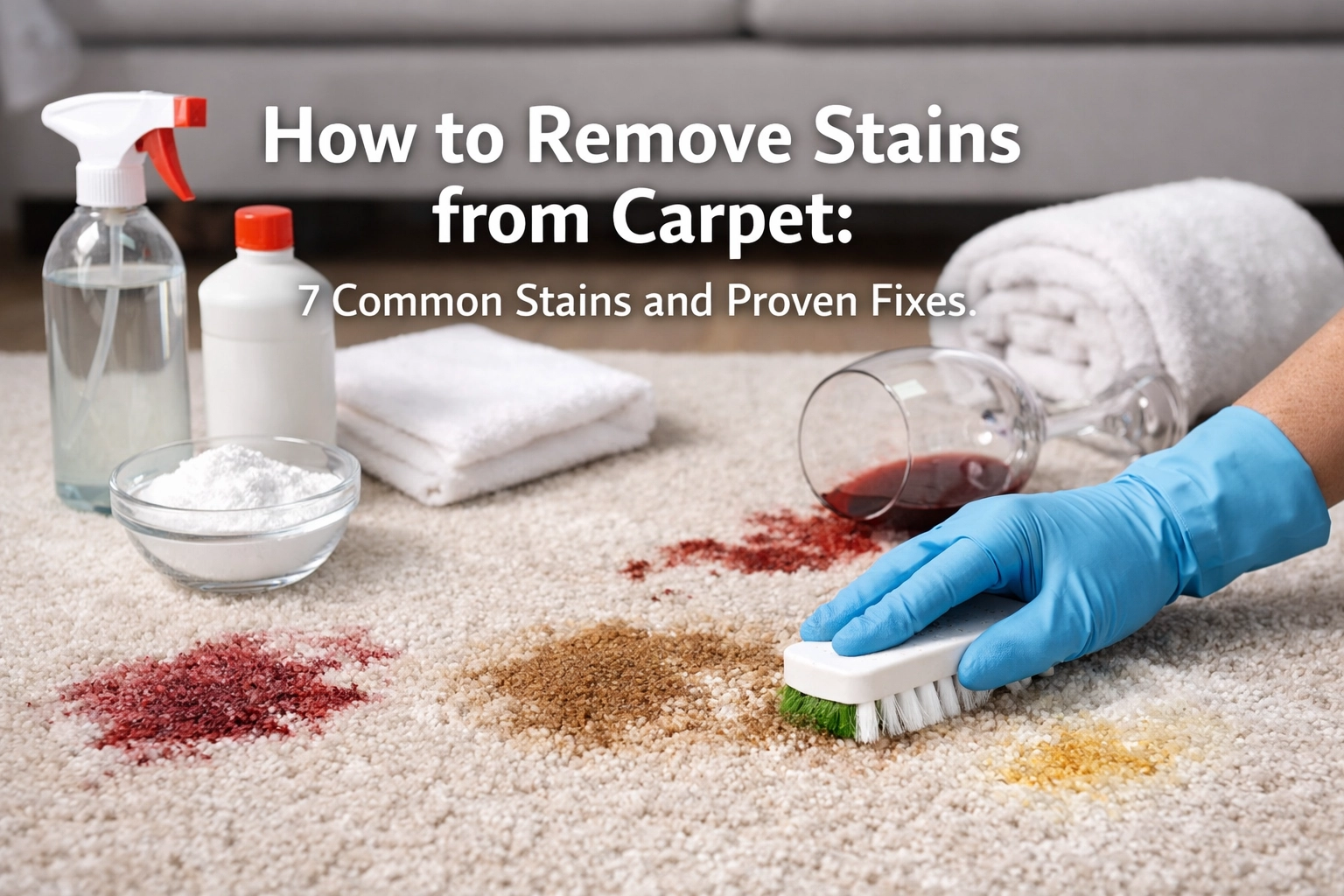
Carpet stains happen. Whether it’s a knocked-over glass of red wine, a pet accident, or tracked-in mud, knowing how to respond quickly and effectively can save both time and money. The good news is that most common carpet stains can be removed at home using simple household products and the right technique.
The key to successful stain removal lies in understanding what type of stain has occurred and acting fast. Different stains require different approaches, and using the wrong method can actually make things worse. This guide covers seven of the most common carpet stains and the proven methods for removing each one.
Essential Principles Before Starting
Always Blot, Never Rub
The single most important rule in carpet stain removal is to blot rather than rub. Blotting uses gentle pressure to lift the stain out of the fibers through wicking action. Rubbing, scrubbing, or brushing pushes the stain deeper into the carpet pad and spreads it across a wider area.
To blot correctly, use a clean white cloth or paper towel. Press down gently on the stain, hold for a few seconds, then lift straight up. Move to a clean section of the cloth and repeat. Continue until no more stain transfers to the cloth.
Work from Outside In
When treating any stain, always start at the outer edges and work toward the center. This prevents the stain from spreading outward and creating a larger affected area. Apply cleaning solutions to the edges first, blot, then gradually move inward.

Test Cleaning Solutions First
Before applying any cleaning solution to the stain, test it on an inconspicuous area of the carpet. Apply a small amount to a hidden spot, wait five minutes, then blot with a white cloth. Check for any color transfer or damage to the carpet fibers. This simple step prevents accidental discoloration or damage.
Act Quickly
Fresh stains are significantly easier to remove than set-in stains. The longer a substance sits on carpet, the more it bonds with the fibers. Whenever possible, address spills immediately. Even if complete removal isn’t possible right away, blotting up excess liquid prevents the stain from penetrating deeper.
Seven Common Carpet Stains and How to Remove Them
1. Red Wine or Fruit Juice
Red wine and dark fruit juices create some of the most panic-inducing carpet stains. The deep color can seem permanent, but quick action makes removal possible.
Start by blotting up as much liquid as possible with paper towels or a clean white cloth. Apply gentle pressure and continue blotting until no more liquid transfers.
Next, cover the stain completely with baking soda. The powder should form a thick layer over the affected area. Pour white vinegar directly over the baking soda. The mixture will fizz and bubble: this reaction helps lift the stain from the fibers.
Allow the baking soda and vinegar mixture to work for five to ten minutes. The fizzing action breaks down the stain compounds and pulls them upward. After the time has passed, blot the area thoroughly with clean cloths. Rinse by blotting with plain water, then blot dry with towels.
For stubborn wine stains, repeat the process. Some particularly deep stains may require two or three treatments.
2. Pet Stains (Urine, Vomit, or Feces)
Pet accidents require special attention because they contain proteins and bacteria that regular cleaners cannot fully address. These organic compounds can continue to smell even after the visible stain disappears.

For fresh pet urine, blot up as much liquid as possible immediately. Use thick layers of paper towels and apply pressure with your feet if needed to absorb deeply.
Enzyme-based cleaners work best for pet stains. These specialized products contain biological enzymes that break down the proteins in urine, vomit, and feces at a molecular level. Standard household cleaners may mask odors temporarily but don’t eliminate the source.
Apply the enzyme cleaner according to package directions, usually saturating the area thoroughly. The enzymes need time to work: most products require 10-15 minutes of contact time. Blot the area, then allow it to air dry completely.
For solid pet waste, carefully remove as much material as possible before applying any liquid cleaner. Use gloves and disposable materials for this step.
3. Coffee Stains
Coffee spills are common and can leave noticeable tan or brown marks on light-colored carpets. The tannins in coffee bond quickly to fibers, so speed matters.
Blot up excess coffee immediately. Don’t allow the liquid to soak in while searching for cleaning supplies.
Mix equal parts white vinegar and water in a spray bottle. Spray the solution directly onto the stain, saturating the area. Let it sit for five minutes, then blot with clean cloths. Repeat this process until the stain lightens significantly.
An alternative method uses club soda or plain soda water. Pour the carbonated water directly onto the coffee stain and let it sit for 15-30 minutes. The carbonation helps lift the stain. Blot with a damp cloth or sponge, working from the outside edges toward the center.
For dried coffee stains, the vinegar method works better than carbonated water. The acidity in vinegar helps break down set-in tannins.
4. Chewing Gum or Candle Wax
Sticky substances like gum and wax require a completely different approach than liquid stains. The goal is to harden the material so it can be physically removed without smearing.

Place ice cubes in a plastic bag and press the bag against the gum or wax. Hold it in place for several minutes until the substance becomes completely hard and brittle. Check by gently tapping it with a spoon: it should feel solid.
Once hardened, use the edge of a spoon or a dull butter knife to carefully chip away the gum or wax. Work slowly and gently to avoid damaging carpet fibers. The hardened material should break off in pieces.
After removing the bulk of the substance, some residue typically remains. Dampen a cloth with rubbing alcohol and blot the remaining sticky spot. The alcohol dissolves the residue without damaging most carpet types.
For candle wax on light-colored carpets, an alternative method involves heat. Place a brown paper bag over the wax and run a warm iron over it. The heat melts the wax, which then transfers onto the paper bag. This method requires careful attention to avoid scorching the carpet.
5. Grease and Oil Stains
Cooking oil, salad dressing, butter, and similar substances create oily stains that repel water-based cleaners. These stains require absorbent materials and solvents.
Begin by sprinkling a generous amount of baking soda, cornstarch, or talcum powder over the oil stain. These powders absorb oil effectively. Let the powder sit for at least 30 minutes: longer for large or saturated stains. The powder will gradually pull the oil out of the carpet fibers.
Vacuum up the powder thoroughly. Check the stain: if it’s significantly lighter, repeat the powder treatment. For fresh spills, two or three applications may remove the stain completely.
Once the powder has absorbed as much oil as possible, treat any remaining stain with rubbing alcohol. Apply a small amount to a clean cloth and blot the area. The alcohol acts as a solvent, breaking down oil compounds.
Avoid using dish soap on oil stains. While it works for dishes, soap can leave residue in carpet fibers that attracts dirt over time.
6. Ink Stains
Ink from pens can create challenging stains, but household rubbing alcohol (isopropyl alcohol) dissolves most ink types effectively.
Apply rubbing alcohol to a clean white cloth: never pour it directly onto the carpet. Blot the ink stain with the dampened cloth, starting at the edges. The ink will transfer from the carpet to the cloth. Rotate to clean sections of the cloth frequently to avoid re-depositing ink.
Continue blotting with fresh alcohol until no more ink transfers to the cloth. This process may take several minutes for large ink stains.

For particularly stubborn ink stains, nail polish remover (acetone) can be used as an alternative to rubbing alcohol. Test acetone in an inconspicuous area first, as it’s stronger and may affect carpet dyes. Use sparingly and only as a last resort.
After removing the ink, blot the area with plain water to remove alcohol residue, then blot dry.
7. Nail Polish
Spilled nail polish creates colorful, sticky stains that seem impossible to remove. Acetone-based nail polish remover works on carpet just as it does on nails.
Before starting, ensure the room is well-ventilated. Open windows and turn on fans if available: acetone has strong fumes.
Pour one to two ounces of acetone-based nail polish remover directly onto the dried nail polish stain. The acetone softens and dissolves the polish. Use a clean white cloth to work the acetone into the carpet by gently rubbing in small circular motions.
As the polish dissolves, it will transfer to the cloth. Continually move to clean sections of the cloth. Apply more acetone as needed and continue the process until all polish residue is gone.
This process can take time: be patient and avoid aggressive scrubbing. Nail polish removal requires dissolving rather than force.
After removing all visible polish, blot the area with water to remove acetone residue. Allow it to air dry completely.
Effective DIY Cleaning Solutions
All-Purpose Carpet Cleaner
For general spills and light stains, a simple homemade solution works effectively. Mix one cup of warm water, one tablespoon of white vinegar, and three to four drops of liquid dish soap in a spray bottle. Shake gently to combine.
Spray this solution lightly onto stains, let it sit for three to five minutes, then blot with clean cloths. The vinegar acts as a natural deodorizer and mild acid that breaks down many stain types. The small amount of dish soap helps lift dirt without leaving residue.
Baking Soda and Vinegar Treatment
For tougher stains, the baking soda and vinegar method provides extra cleaning power through chemical reaction.
Sprinkle baking soda generously over the entire stain, creating a thick layer. Pour white vinegar directly over the baking soda. The mixture will immediately begin to fizz and bubble. This effervescent reaction loosens stains and pulls them upward from deep in the carpet fibers.
Let the mixture work for 10-15 minutes. The longer contact time allows deeper penetration. After the fizzing stops, blot thoroughly with clean towels. Rinse by blotting with plain water, then blot dry.
This method works particularly well for organic stains like food, beverages, and some biological materials.

When to Consider Professional Cleaning
Some situations call for professional intervention rather than DIY methods.
Large stains covering multiple square feet require equipment that most homeowners don’t possess. Professional carpet cleaners use truck-mounted systems that provide deep extraction and faster drying.
Old, set-in stains that have been present for months or years may have bonded permanently with carpet fibers. While professional cleaners can’t guarantee removal of ancient stains, they have stronger chemicals and methods that sometimes work when household products fail.
Delicate or expensive carpets, such as wool, silk, or antique rugs, should be cleaned professionally. These materials require specific pH-balanced cleaners and techniques that prevent damage.
Recurring stains that keep reappearing in the same spot indicate that the stain has penetrated into the carpet padding beneath the visible fibers. This requires extraction from both the carpet and pad, which only professional equipment can accomplish.
Hot water extraction, also called steam cleaning, is the most effective professional method. High-powered machines spray heated cleaning solution deep into carpet fibers, then immediately vacuum everything out. This process removes not just surface stains but also dirt, allergens, and bacteria trapped deep in the pile.
Preventing Future Stains
While stain removal techniques are valuable, prevention reduces the need for them. Area rugs placed in high-traffic zones or under dining tables protect carpet from spills. Scotchgard or similar fabric protectors create an invisible barrier that gives extra time to blot spills before they soak in.
Establishing a shoes-off policy at entry points prevents tracked-in dirt, oil, and outdoor substances from reaching carpet. Providing a designated spot for shoes near the door makes this habit easier for household members and guests.
Regular vacuuming: at least once or twice weekly: removes loose dirt particles before they get ground into fibers. These tiny particles act like sandpaper when walked on, wearing down carpet and making it more susceptible to staining.
Final Considerations
Carpet stain removal success depends on three factors: speed, technique, and using the right method for the specific stain type. Keeping basic supplies on hand: white vinegar, baking soda, rubbing alcohol, and enzyme cleaner: ensures readiness when spills occur.
Remember that blotting, not rubbing, is the foundation of all carpet cleaning. Patience produces better results than aggressive scrubbing. Multiple gentle treatments work better than one harsh attempt.
With these seven stain-removal methods and general principles, most common carpet stains can be addressed effectively at home. Carpets represent a significant investment in home comfort and appearance. Knowing how to maintain them through proper stain removal extends their life and keeps them looking fresh for years.

