
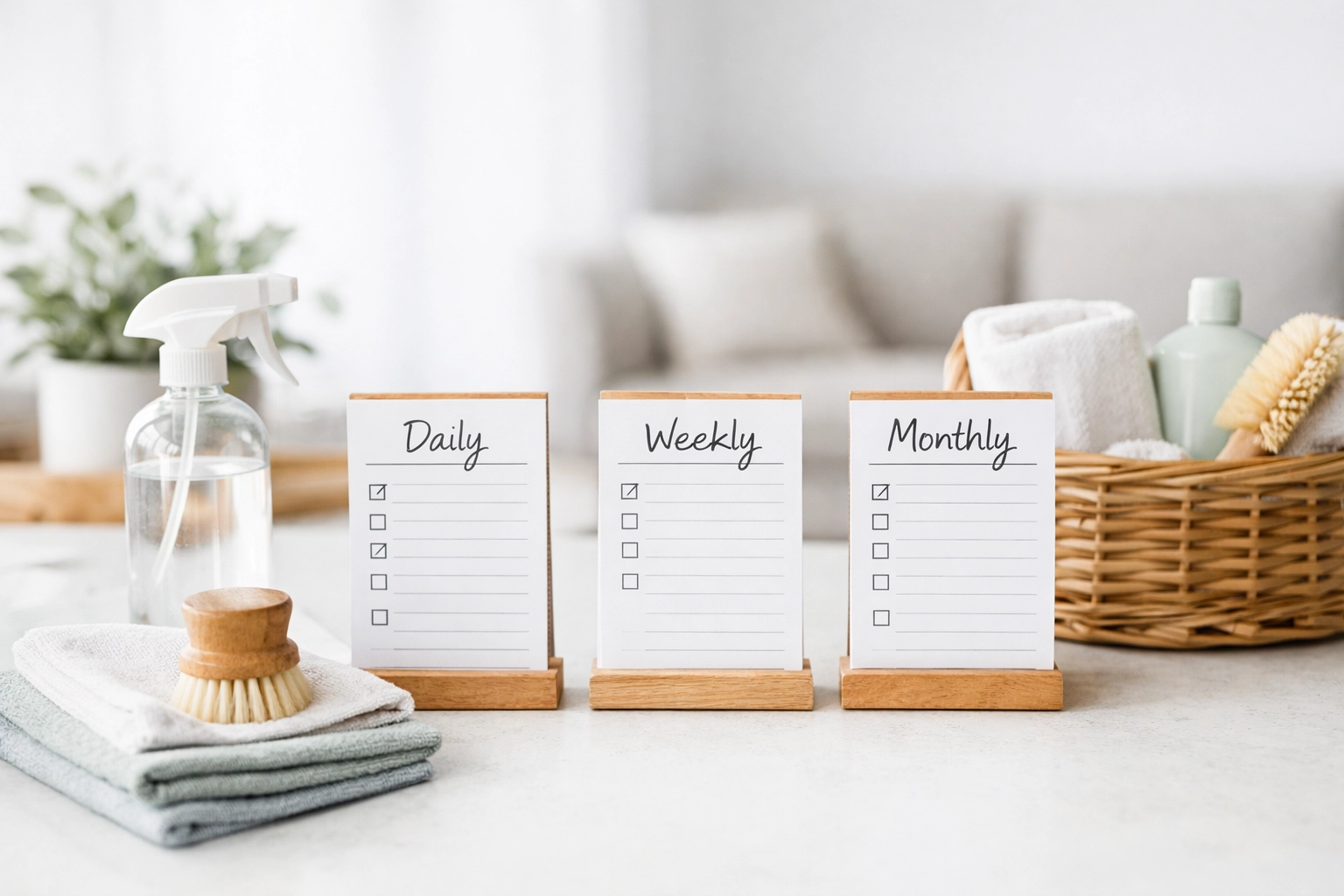
Keeping a clean home shouldn’t feel like an endless battle against dirt and clutter. Many people approach cleaning with sporadic deep-cleaning marathons that leave them exhausted and frustrated when the mess returns within days. The solution isn’t working harder: it’s working smarter by dividing tasks into daily, weekly, and monthly categories.
This approach transforms cleaning from an overwhelming chore into a manageable rhythm that fits naturally into everyday life. Instead of spending entire weekends scrubbing, small consistent efforts prevent dirt from accumulating in the first place.
Why Most Cleaning Routines Fail
Traditional cleaning approaches often collapse under their own weight. Attempting to clean everything at once creates several problems:
Burnout happens quickly. When cleaning feels like a massive project, it’s easy to procrastinate until the mess becomes genuinely overwhelming.
Inconsistency breeds mess. Long gaps between cleaning sessions allow dirt, grime, and clutter to build up exponentially. A bathroom that goes three weeks without attention requires far more effort than one wiped down regularly.
All-or-nothing thinking sabotages progress. If the only options are “spotless home” or “complete chaos,” most people give up when they can’t achieve perfection.
The daily-weekly-monthly framework solves these issues by breaking cleaning into appropriate intervals based on how quickly different areas get dirty.

Understanding the Three-Tier System
This organizational method categorizes cleaning tasks by frequency rather than room or type of cleaning. Each tier serves a specific purpose in maintaining a functional, comfortable home.
Daily tasks prevent messes from taking root. These quick maintenance actions stop small problems from becoming big ones.
Weekly tasks address areas that accumulate dirt steadily but don’t require daily attention. These deeper cleaning sessions keep the home genuinely clean rather than just tidy.
Monthly tasks handle spaces that get dirty slowly or are less visible. These prevent long-term grime buildup and maintain the overall condition of the home.
The beauty of this system lies in its scalability. Someone living alone in a small apartment will have fewer tasks in each category than a family of five in a larger home, but the framework remains the same.
Daily Tasks: The Foundation of a Clean Home
Daily cleaning tasks should take 15-30 minutes total. These aren’t meant to be perfect: they’re meant to be consistent.
Make the Beds
A made bed instantly makes a bedroom look more organized. This simple task takes under two minutes per bed and sets a productive tone for the day. It doesn’t need to be hotel-quality: just pull up the covers and arrange the pillows.
Manage Dishes
Dirty dishes multiply rapidly and attract pests while creating visual clutter. Whether using a dishwasher or washing by hand, keeping the sink clear prevents overwhelming pile-ups. Loading dishes directly after meals takes less time than soaking and scrubbing crusted-on food later.
Wipe High-Use Surfaces
Kitchen counters, bathroom sinks, and dining tables collect crumbs, spills, and grime throughout the day. A quick wipe-down with an appropriate cleaner after use prevents sticky buildup. Keep cleaning supplies accessible in each area to reduce friction.
Address Clutter Hotspots
Most homes have specific areas where clutter accumulates: entryway tables, kitchen counters, coffee tables. Spending five minutes returning items to their proper places prevents these zones from becoming overwhelming dumping grounds.
Quick Floor Check
High-traffic areas like kitchens and entryways benefit from a daily sweep or vacuum. This isn’t a thorough floor cleaning: just a quick pass to pick up visible dirt, crumbs, and debris before they get tracked throughout the house.

Weekly Tasks: Maintaining Real Cleanliness
Weekly tasks dig deeper than daily maintenance. These can be spread throughout the week rather than tackled all at once. Many people assign specific tasks to specific days to distribute the workload.
Vacuum and Mop All Floors
Floors accumulate dust, hair, and tracked-in dirt even with daily spot-cleaning. A thorough vacuuming of carpets and rugs, followed by mopping hard floors, keeps surfaces genuinely clean. Pay attention to corners and under furniture where dust collects.
Dust Surfaces Throughout the Home
Dust settles on everything: shelves, tables, electronics, windowsills, and decorative items. Working from top to bottom prevents re-dusting lower surfaces. Microfiber cloths trap dust more effectively than feather dusters, which often just redistribute particles into the air.
Deep Clean Bathrooms
Bathrooms require more intensive attention than daily wipe-downs provide. This includes scrubbing toilets, showers, and tubs; cleaning mirrors; emptying trash; and addressing any mildew or soap scum buildup. Allowing cleaners to sit for a few minutes before scrubbing reduces effort.
Change Bedding
Sheets, pillowcases, and towels should be washed weekly. This removes accumulated body oils, dead skin cells, and dust mites while keeping the bedroom fresh. Having two sets of sheets makes this task easier: one can be washed while the other is in use.
Clean Kitchen Appliances
The exterior of appliances collects fingerprints, spills, and grease. Wiping down the refrigerator, stove, microwave, and dishwasher maintains their appearance and function. This is also a good time to clean the microwave interior and wipe down cabinet fronts.
Empty All Trash and Recycling
Beyond daily kitchen trash removal, weekly collection should include bathrooms, bedrooms, and home offices. This prevents odors and overflow while establishing a consistent garbage schedule.

Monthly Tasks: Deep Cleaning for Long-Term Maintenance
Monthly tasks address areas that don’t get dirty quickly but still require periodic attention. These can be scheduled throughout the month: one or two tasks per week keeps the workload manageable.
Baseboards and Molding
Baseboards collect dust and scuff marks but are easy to overlook during regular cleaning. Wiping them down monthly keeps rooms looking polished. A damp cloth or vacuum brush attachment works well for this task.
Inside Appliances
Refrigerators, ovens, and dishwashers need internal cleaning beyond their daily or weekly exterior wipe-downs. This includes discarding expired food, scrubbing refrigerator shelves, running oven cleaning cycles, and checking dishwasher filters.
Windows and Glass Surfaces
Clean windows significantly brighten rooms and improve views. This includes interior and exterior window cleaning, as well as glass doors and mirrors beyond the quick daily bathroom mirror wipe-down.
Upholstered Furniture
Sofas, chairs, and cushions accumulate dust, crumbs, and pet hair. Vacuuming upholstery with appropriate attachments, spot-cleaning stains, and fluffing cushions maintains furniture condition and appearance.
Blinds and Curtains
Window treatments trap dust and allergens. Blinds can be dusted or wiped down, while curtains may need washing depending on fabric type. This often-neglected task makes a noticeable difference in room freshness.
Ceiling Fans and Light Fixtures
These elevated surfaces collect significant dust that becomes visible and can trigger allergies. Cleaning them monthly prevents dust from showering down during use and improves air quality.
Organize Storage Areas
Closets, pantries, and cabinets benefit from monthly organizing sessions. This includes discarding expired items, consolidating containers, and reorganizing spaces that have become cluttered through daily use.

Creating a Sustainable Routine
Understanding the three-tier system is one thing: implementing it consistently is another. Several strategies increase the likelihood of maintaining this routine long-term.
Attach Cleaning to Existing Habits
Pairing cleaning tasks with established routines makes them automatic. Wipe the bathroom sink after brushing teeth. Load the dishwasher while coffee brews. Tidy the living room during a commercial break or between work tasks. These habit stacks transform cleaning into natural extensions of daily activities rather than separate chores.
Use Time Blocks Strategically
Daily tasks often fit into morning or evening routines. Weekly tasks can be spread across designated days: Monday for bathrooms, Tuesday for vacuuming, Wednesday for dusting. Monthly tasks can be scheduled on specific weekends or spaced throughout the month on a calendar.
Keep Supplies Accessible
Storing cleaning supplies where they’re needed eliminates the excuse of needing to “go get” something. Bathroom cleaners in bathrooms, kitchen cleaners in kitchens, and a small cleaning caddy that can move between rooms all reduce friction.
Adjust for Life Changes
This framework adapts to different circumstances. During busy periods, focus on daily tasks and let some weekly items slide temporarily. When more time is available, tackle monthly tasks or catch up on missed weekly ones. The system accommodates real life rather than demanding perfection.
Involve Household Members
When multiple people share a space, distributing tasks prevents resentment and overwork. Children can handle age-appropriate daily tasks, while adults divide weekly and monthly responsibilities. Clear expectations and simple checklists help everyone contribute.

Common Obstacles and Solutions
Even with a solid system, challenges arise. Anticipating these obstacles helps maintain consistency.
“I don’t have time for daily cleaning.” Daily tasks should take less than 30 minutes total. Breaking them into smaller moments: five minutes here, ten minutes there: makes them manageable even on busy days. A partially completed daily routine still prevents significant buildup.
“I forget to do weekly tasks.” Calendar reminders, visible checklists, or specific day assignments help maintain consistency. Many people find success with “cleaning days” where they tackle several weekly tasks in one session.
“Monthly tasks feel overwhelming.” Spacing these throughout the month prevents this. Assigning one or two monthly tasks per week makes them feel manageable rather than like major projects.
“I get distracted or perfectionistic.” Setting timers helps maintain focus and prevents over-cleaning. A 15-minute bathroom cleaning session is complete when the timer rings, even if it’s not perfect. Consistency matters more than perfection.
“Life gets in the way.” Missed days happen. Rather than attempting to “catch up” on everything, simply resume the routine. The daily-weekly-monthly framework is forgiving: skipping a few days of daily tasks doesn’t negate the entire system.
The Real Benefits of This Approach
Beyond a cleaner home, this system offers several quality-of-life improvements.
Reduced stress comes from knowing that nothing is being forgotten or ignored. The structured approach eliminates the mental burden of trying to remember when each area was last cleaned.
More free time emerges when short, regular efforts replace marathon cleaning sessions. Spending 20 minutes daily instead of four hours on Saturday leaves weekends free for more enjoyable activities.
Better home maintenance results from consistent attention. Regular cleaning prevents damage: grime that’s removed weekly doesn’t have time to stain or corrode surfaces the way months of buildup does.
Improved health follows from regular cleaning, particularly in kitchens and bathrooms where bacteria multiply. Consistent dust removal also reduces allergens.
Mental clarity often accompanies physical order. Many people find that maintaining a baseline level of cleanliness reduces mental clutter and improves focus.
Getting Started Today
Implementing this system doesn’t require a complete overhaul. Start small:
-
Choose three daily tasks to establish first: making beds, wiping kitchen counters, and doing dishes are universally useful starting points.
-
Add one or two weekly tasks once daily habits feel automatic.
-
Schedule the first monthly task on the calendar.
-
Build gradually rather than attempting everything immediately.
The daily-weekly-monthly framework works because it aligns with how homes actually get dirty. Daily attention prevents buildup, weekly cleaning maintains genuine cleanliness, and monthly deep cleaning preserves long-term condition. This isn’t about achieving perfection: it’s about creating a sustainable rhythm that keeps a home functional and comfortable without consuming excessive time or energy.

