
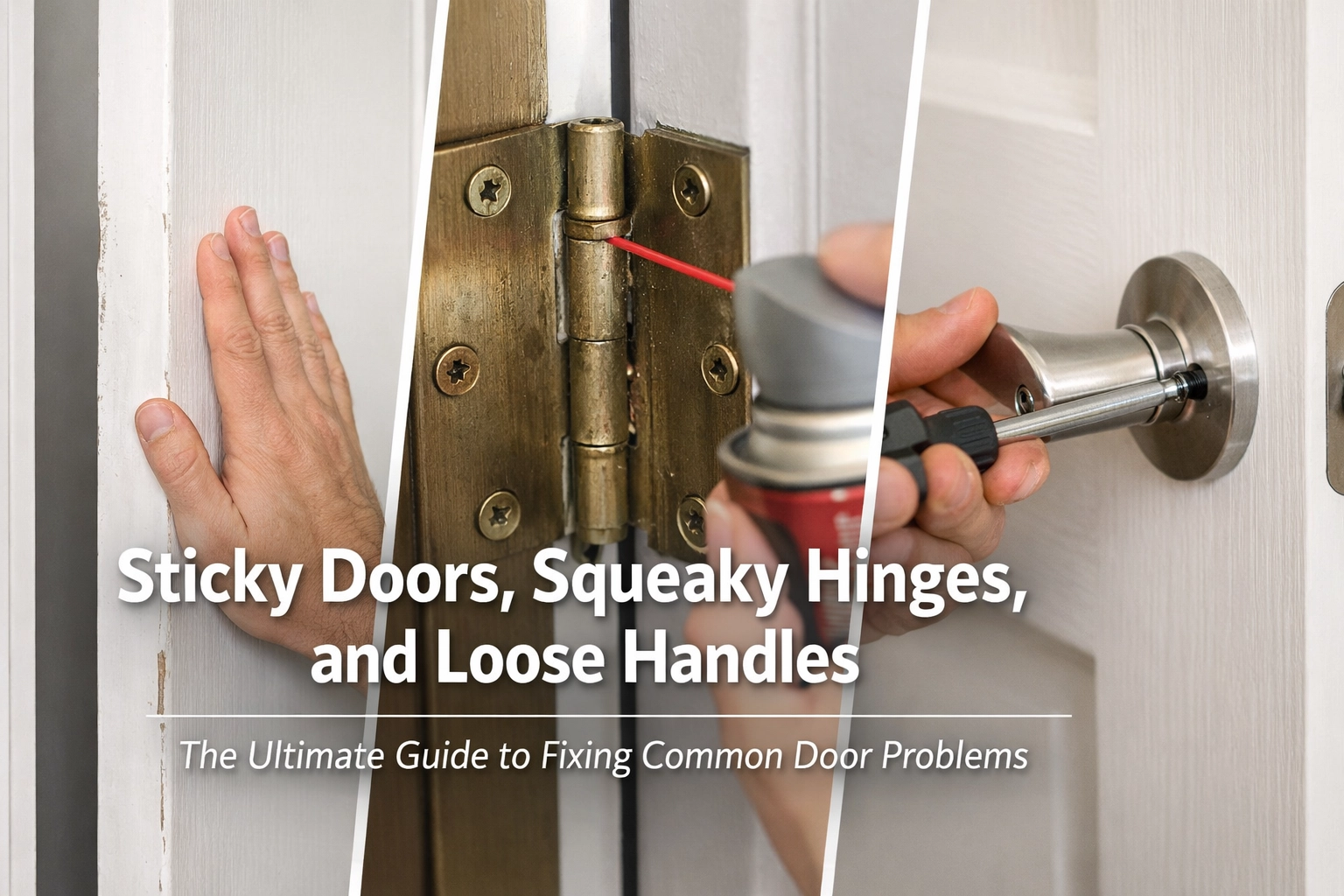
Doors endure constant use throughout the day, opening and closing hundreds of times each week. This regular wear inevitably leads to common problems: hinges that squeak with every movement, doors that stick in their frames, and handles that wobble or fail to latch properly. These issues create daily frustrations and can signal underlying problems that worsen over time if left unaddressed.
Most door problems stem from straightforward causes: dried-out hinges, humidity-related wood expansion, loose screws, or minor misalignment. The good news is that homeowners can fix the majority of these issues with basic tools and a bit of patience. This guide provides detailed, step-by-step solutions for the three most common door problems encountered in homes.
Understanding Why Door Problems Occur
Door problems rarely appear without reason. Several factors contribute to the issues that develop over time.
Environmental Changes: Temperature fluctuations and humidity levels cause wood doors and frames to expand and contract. During humid summer months, doors absorb moisture and swell, creating tight fits. In winter, dry air causes wood to shrink, potentially leaving gaps or creating different friction points.
Normal Wear: Regular use gradually loosens screws, dries out lubricant in hinges, and creates wear patterns on contact surfaces. A door opened and closed ten times daily experiences more than 3,600 cycles per year.
Settling and Shifting: Houses settle over time, especially newer construction. This settling can shift door frames slightly, changing how doors align with their jambs and creating new points of contact or friction.
Poor Initial Installation: Sometimes problems trace back to installation issues: hinges mounted incorrectly, frames not properly squared, or hardware installed without appropriate shimming or adjustment.

Fixing Squeaky Door Hinges
Squeaky hinges announce every entrance and exit, disrupting quiet moments and creating unnecessary noise. The squeak typically results from metal-on-metal friction when hinge pins move against their barrels without adequate lubrication.
Quick Lubrication Method
The fastest solution involves applying lubricant directly to hinge pins without removing them.
Step 1: Prepare the Door
Close the door to a position where hinges are accessible but the door remains stable. This provides the best working angle for each hinge.
Step 2: Raise the Pin
Use a hammer and nail punch (or a flathead screwdriver and hammer) to tap the hinge pin upward from underneath. Strike gently from the bottom of the hinge, tapping the pin up just enough to expose more surface area: typically one-quarter to one-half inch.
Step 3: Apply Lubricant
Apply lubricant to the exposed pin. Best options include:
- Silicone spray: Grease-free, won’t attract dust, safe for wood and metal surfaces
- Dry lubricants: Graphite powder or dry PTFE spray leaves no sticky residue
- WD-40: Effective but may require more frequent reapplication
- Petroleum jelly: Works in a pinch but attracts more dust over time
Coat the visible portion of the pin thoroughly, allowing the lubricant to seep into the barrel.
Step 4: Work It In
Tap the pin back down into place. Open and close the door several times to distribute the lubricant throughout the hinge mechanism. The squeaking should diminish immediately or disappear completely.
Step 5: Clean Excess
Wipe away any excess lubricant with a clean cloth to prevent drips on flooring or walls.
Deep Cleaning for Persistent Squeaks
When lubrication alone doesn’t solve the problem, built-up debris, rust, or old paint may be interfering with smooth hinge operation.
Remove the Hinge Pins
Work from the bottom hinge upward. Tap each pin completely out using a hammer and nail punch. Removing one hinge at a time keeps the door stable: never remove all pins simultaneously.
Clean Thoroughly
Scrub each pin with steel wool or a stiff wire brush to remove rust, dried paint, dirt, and old lubricant. For stubborn buildup, use a toothbrush dipped in diluted household cleaner or white vinegar. Rinse and dry completely.
Inspect the hinge barrel (the cylindrical part the pin slides through). Use a cotton swab or pipe cleaner to remove debris from inside the barrel.
Lubricate and Reinstall
Apply fresh lubricant to the clean pin. Insert the pin back into the hinge, tapping it into place with a hammer. Test the door movement before proceeding to the next hinge.

Tightening Loose Hinge Screws
Loose screws allow hinges to shift and create squeaks from improper alignment.
Examine all screws on each hinge. Use an appropriately sized screwdriver: Phillips or flathead depending on the screw type: to tighten each one firmly. Avoid over-tightening, which can strip the screw holes in the wood.
If screws spin without tightening, the screw hole has become enlarged. Solutions include:
- Replacing with slightly longer screws of the same diameter
- Inserting wooden toothpicks or matchsticks coated with wood glue into the hole, breaking off flush, and re-inserting the screw
- Using plastic wall anchors designed for wood
When to Replace Hinges
Consider replacement when hinges show:
- Significant rust or corrosion that cleaning can’t address
- Bent or damaged pins that won’t sit straight
- Cracked or broken hinge plates
- Stripped screw holes that repairs won’t secure
Plain bearing hinges (standard residential hinges) are more prone to squeaking than ball-bearing hinges. Upgrading to ball-bearing hinges eliminates most squeak issues permanently.
Fixing Sticky Doors
Doors that stick, requiring force to open or close, indicate friction between the door and frame. This problem worsens in humid conditions and can damage paint or finish over time.
Identifying Stick Points
Determining where the door sticks guides the repair approach.
Close the door slowly and note where resistance occurs. Look for:
- Shiny spots or worn areas on the door edge (indicates rubbing)
- Paint buildup on the door or frame
- Visible gaps on the opposite side from where sticking occurs
Mark problem areas with light pencil marks for reference during repairs.
Tightening Hinge Screws
Many sticky door issues stem from sagging hinges. When hinge screws loosen, the door drops slightly and the opposite corner contacts the frame.
Tighten all hinge screws on both the door and frame sides. Check if this resolves the sticking. If the door no longer sticks, the problem is solved.

Shimming Hinges
If the door sticks near the top on the latch side, the bottom hinge may need shimming to shift the door position.
Materials needed: Thin cardboard (from cereal boxes works well) or commercial hinge shims.
- Open the door and unscrew the bottom hinge from the door frame (not the door itself)
- Cut a piece of cardboard to match the hinge plate shape
- Place the cardboard shim behind the hinge plate
- Reattach the hinge through the cardboard
- Test the door swing
Add or remove shim thickness until the door clears the frame properly. Multiple thin shims work better than one thick piece.
Planing or Sanding
When humidity has caused significant wood swelling, removing material from the door edge may be necessary.
For minor sticking:
Close the door and mark the high spots. Open the door and sand these areas with 80-grit sandpaper wrapped around a sanding block. Sand gradually, testing frequently. Once the door closes smoothly, finish with 120-grit sandpaper and touch up with matching paint or stain.
For significant sticking:
This requires removing the door and using a hand plane or power planer. Mark the areas to be planed. Remove the door by tapping out hinge pins from bottom to top. Secure the door in a workbench or between sawhorses.
Plane with the grain, removing small amounts at a time. Test fit frequently by rehanging the door temporarily. Once the door operates smoothly, sand the planed area smooth, seal bare wood with primer, and repaint or stain to match.
Adjusting Strike Plates
Sometimes the door itself fits properly, but the latch doesn’t align with the strike plate (the metal plate on the door frame that receives the latch).
If the latch hits above or below the strike plate opening, the plate needs adjustment:
- Remove the strike plate screws
- Use a chisel to enlarge the mortise (the recessed area) slightly in the needed direction
- Reposition the strike plate
- Fill old screw holes with wood filler if new screw positions don’t align
- Reinstall the strike plate in its new position
Fixing Loose Door Handles
Loose door handles occur frequently due to constant use and the leverage forces applied during turning. Most modern door handles use set screws or mounting screws that can work loose over time.
Identifying Handle Type
Door handles fall into several categories, each with different tightening methods:
Doorknob sets with visible screws: Traditional round doorknobs often have two screws on the interior knob’s mounting plate.
Lever handles with set screws: Modern lever handles typically use a small Allen-head or Phillips set screw on the handle base.
Concealed mounting systems: Some contemporary handles hide mounting hardware behind decorative collars or roses.

Tightening Set Screw Handles
Most modern lever handles use this system.
Locate the set screw: Look on the underside of the lever handle near where it meets the door. The screw may be on the side or bottom of the base.
Determine screw type: Set screws typically use Allen (hex) keys, though some use small Phillips or flathead screwdrivers. Hardware stores sell inexpensive Allen key sets if needed.
Tighten carefully: Insert the appropriate tool and turn clockwise. Apply firm pressure but avoid over-tightening, which can strip the soft brass or aluminum set screw threads.
Test the handle: Once tight, operate the handle to ensure smooth function without wobble.
Tightening Visible Screw Handles
Older doorknob styles expose mounting screws on the interior side.
Remove the decorative cover plate if present (it typically twists counterclockwise or pulls off). Locate two mounting screws, usually positioned vertically. Tighten these screws, alternating between them to maintain even pressure. The screws pass through the entire mechanism, pulling both knobs firmly against the door.
Fixing Stripped Threads
When set screws or mounting screws won’t tighten due to stripped threads, several solutions exist:
Replace the set screw: Visit a hardware store with the old screw to find an exact match. New threads often grip effectively even in slightly worn holes.
Use thread-locking compound: Apply a small drop of removable thread-locking compound (like blue Loctite) to the screw threads before tightening. This fills gaps and prevents loosening.
Move the set screw position: If the handle shaft has multiple threaded holes, try tightening the screw in an alternate position.
Replace the handle: When the internal mechanism is worn, replacement provides a permanent fix. Modern handle sets are relatively inexpensive and available at home improvement stores.
Realigning Handles That Stick
Sometimes handles bind or resist turning rather than simply feeling loose.
This often indicates misalignment between the two handle sides. Loosen the mounting hardware slightly, align the handles properly so they’re level, then retighten while maintaining alignment. The latch mechanism should move freely when handles are properly aligned.
Preventive Maintenance for Doors
Regular maintenance prevents problems before they develop into major issues.
Quarterly Checks
Every three months, perform these quick checks:
- Operate each door slowly: Listen and feel for new squeaks or resistance
- Inspect hinges: Look for loose screws, rust spots, or worn areas
- Test handles and locks: Ensure smooth operation without excessive play
- Check door clearances: Verify consistent gaps around the door perimeter
Annual Maintenance
Once yearly, dedicate time to comprehensive door maintenance:
Lubricate all hinges: Even hinges that aren’t squeaking benefit from fresh lubrication. This prevents squeaks before they start.
Tighten all hardware: Check and tighten hinge screws, handle set screws, and strike plate screws. Loose hardware accelerates wear.
Clean door surfaces: Wipe down doors, frames, and hardware with appropriate cleaners. Remove built-up dirt and grime that can interfere with proper operation.
Inspect weatherstripping: On exterior doors, check weatherstripping for gaps, cracks, or compression. Replace worn weatherstripping to maintain energy efficiency.
Touch up paint and finish: Small paint chips or finish scratches allow moisture penetration, leading to wood swelling and door sticking.
Seasonal Adjustments
Spring/Summer: As humidity increases, monitor doors for signs of sticking. Address minor issues before they worsen. Consider using dehumidifiers in particularly humid climates to minimize wood expansion.
Fall/Winter: As air dries out, doors may develop new gaps or looseness. Adjust strike plates if latches no longer catch securely. Check weatherstripping becomes more important as gaps widen.
When to Call a Professional
Most door problems fall within the capabilities of homeowners comfortable with basic tools. However, certain situations warrant professional help:
Structural issues: Doors that stick due to foundation settling, wall movement, or structural problems require professional assessment. These issues may indicate more serious problems beyond simple door adjustment.
Security concerns: Exterior doors that don’t latch securely or show signs of forced entry damage need professional repair to ensure home security.
Complex hardware: High-security locks, electronic access systems, or commercial-grade hardware may require specialized knowledge and tools for proper adjustment or repair.
Damaged door frames: Frames with rot, significant cracks, or severe warping often need replacement rather than adjustment. Carpenters can ensure new frames install properly and square.
Time and tool constraints: When lacking the time, tools, or confidence to complete repairs safely and effectively, hiring professionals prevents further damage and ensures proper fixes.
Door problems create daily annoyances, but most issues resolve with straightforward repairs. Squeaky hinges typically need only lubrication or cleaning. Sticky doors usually respond to hinge adjustments, shimming, or minor sanding. Loose handles tighten with simple screw adjustments. Regular maintenance catches problems early, preventing minor issues from becoming major repairs. With basic tools and the techniques outlined above, keeping doors operating smoothly becomes a manageable part of home maintenance.

