
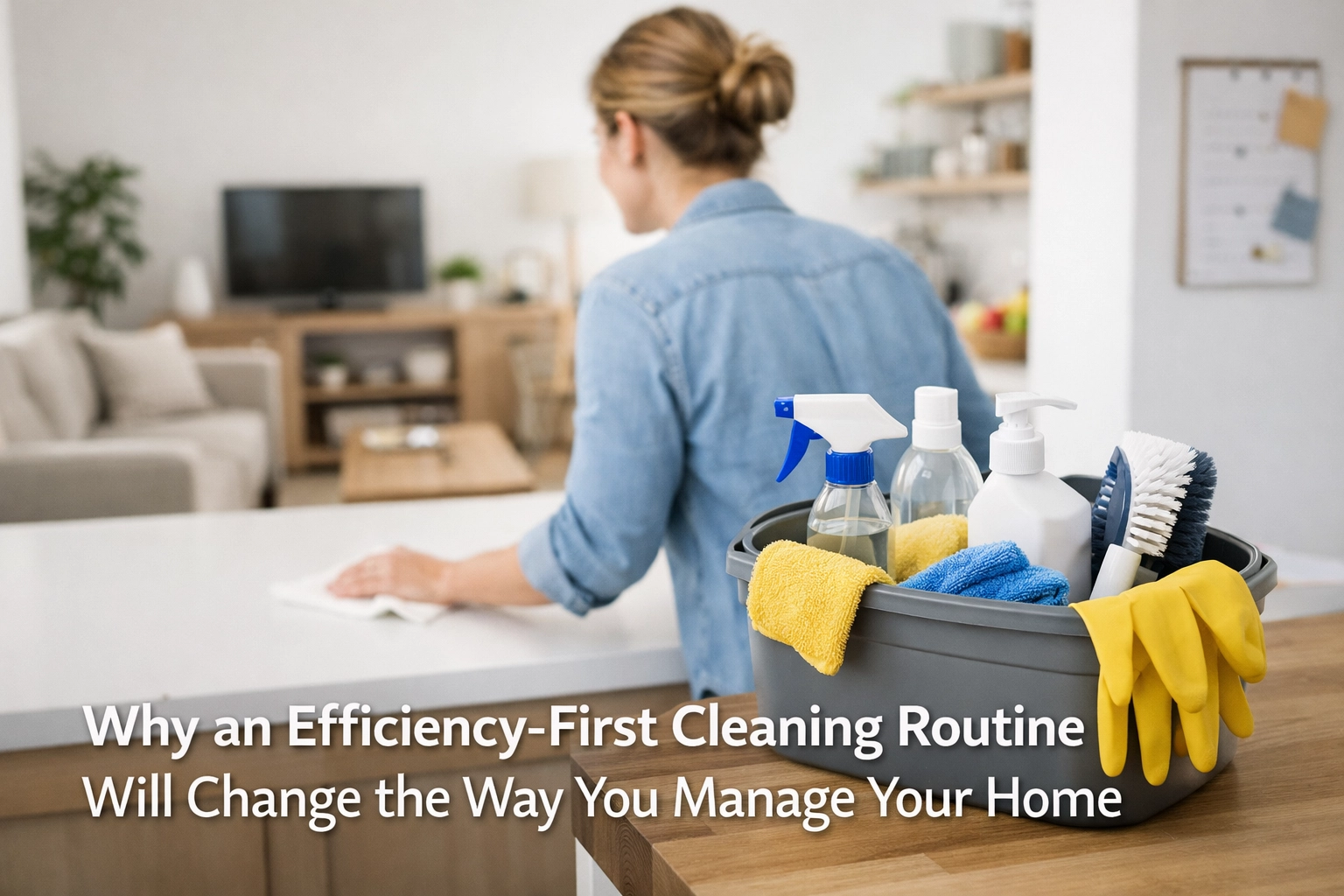
Maintaining a household often feels like an uphill struggle against entropy. Between professional obligations, social commitments, and personal rest, the time remaining for domestic maintenance is frequently limited. This scarcity of time often leads to “panic cleaning”: marathon sessions of scrubbing and tidying that leave the inhabitants exhausted and the home only temporarily orderly. An efficiency-first cleaning routine offers a fundamental shift in this dynamic. Instead of viewing cleaning as a series of disconnected, reactive chores, this method treats home management as a streamlined system designed to maximize output while minimizing physical and mental exertion.
The transition to an efficiency-first model relies on a blend of professional techniques, psychological strategies, and logical workflows. By understanding the principles of batching, zoning, and pre-organization, it is possible to maintain a pristine living environment in a fraction of the time typically required.
The Foundation of Efficiency: Organization Before Sanitation
One of the most common mistakes in household management is attempting to clean around clutter. This phenomenon, often referred to as “clutter-shuffling,” occurs when a person moves an object to wipe a surface, only to move it back or relocate it to another uncleared area. This process is inherently inefficient, as it requires the same physical movement to be repeated multiple times.
To implement an efficiency-first routine, the home must first be organized. This does not necessarily mean a deep purge of all possessions, though decluttering helps. Rather, it means that every item must have a designated “home.” When every object has a place, tidying becomes a mechanical process of returning items to their locations rather than a series of micro-decisions about where things should go.
Effective storage and organization systems act as the infrastructure for an efficient home. When storage solutions are logical: such as keeping keys by the door or spices near the stove: the time spent searching for items or clearing surfaces is drastically reduced. An hour invested in setting up these systems can save dozens of hours of inefficient cleaning over the course of a year.

The Professional Secret: Batch Tasking
Professional cleaners rarely clean one room at a time from start to finish. Instead, they utilize a technique called batch tasking. This involves performing a single type of task across the entire home before moving on to the next type of task.
Batching is effective because it minimizes “context switching.” Every time a person switches from vacuuming to scrubbing a sink, and then to dusting a bookshelf, the brain and body must adjust to different tools, different physical movements, and different chemical cleaners. By staying in a “vacuuming mode” or a “dusting mode,” a rhythm is established that naturally increases speed and thoroughness.
For example, instead of cleaning a bathroom top-to-bottom and then moving to the bedroom, one might:
- Dust all surfaces in every room.
- Clean all glass surfaces and mirrors throughout the house.
- Sanitize all high-touch surfaces (doorknobs, light switches).
- Vacuum or mop all floors in one continuous sweep.
This approach ensures that tools are only gathered once and used until the task is complete, preventing the wasted time of walking back and forth to a supply closet or under-sink storage.
Gravity-Based Cleaning: The Top-to-Bottom Rule
Efficiency is not just about speed; it is also about preventing the need to repeat work. The most fundamental rule of physical cleaning is to work from the top of a room to the bottom. Because of gravity, dust, hair, and crumbs will inevitably fall as they are disturbed.
If a floor is mopped before the countertops are wiped, debris from the counters will fall onto the clean floor, requiring it to be mopped again. By starting with ceiling fans, high shelves, and window casings, any displaced dirt lands on lower surfaces that have yet to be addressed. The final step in any efficient routine should always be the floors.
When cleaning specific items, such as a makeup mirror or a glass display case, the same rule applies. Spraying cleaner at the top and wiping downward ensures that drips are caught and incorporated into the cleaning motion rather than leaving streaks on a finished lower section.

Reducing Decision Fatigue through Scheduling
A significant portion of the exhaustion associated with housework is not physical; it is mental. Decision fatigue occurs when a person has to constantly evaluate what needs to be done: Should the floors be mopped today? Does the fridge need a deep clean? When was the last time the curtains were dusted?
An efficiency-first routine removes these questions by utilizing a fixed schedule. When a task is assigned to a specific day or time, the need for evaluation disappears. The resident simply follows the system.
The Daily Maintenance Tier
Daily tasks are designed to prevent the “snowball effect” where small messes accumulate into a weekend-long project. These are often tasks that take less than five minutes but have a high impact on the home’s overall feel:
- Resetting the kitchen surfaces.
- Sorting mail and paperwork immediately upon entry.
- One load of laundry from start to finish (washed, dried, and folded).
- Quickly organizing items in a fruit organizer or pantry to ensure freshness and visibility.
The Weekly Rhythm
Weekly tasks focus on the sanitation and aesthetics of the home. By batching these on specific days, the workload is distributed evenly.
- Monday: Dusting and glass cleaning.
- Tuesday: Bathrooms.
- Wednesday: Kitchen deep-clean (appliances and floors).
- Thursday: Bedrooms and linens.
- Friday: Floors (vacuuming and mopping throughout).
The One-Minute Rule and the Power of Proximity
Efficiency is often maintained in the “in-between” moments. The one-minute rule is a simple but transformative habit: if a task takes sixty seconds or less to complete, it should be done immediately. Hanging up a coat, rinsing a dish, or watering planters in the living room are all tasks that fit this description.
The power of proximity is another crucial element. Cleaning supplies should be stored as close as possible to where they are used. Keeping a small kit of bathroom cleaners under the bathroom sink, rather than in a central laundry room, makes it much more likely that a person will wipe down a counter or a mirror as soon as a spot is noticed. This “point-of-use” storage philosophy is a hallmark of industrial efficiency brought into the domestic sphere.

Zoning for High-Traffic Impact
Not all areas of a home require the same level of attention. An efficiency-first mindset recognizes that the entryway, kitchen, and primary bathroom have a much higher impact on daily life and health than a guest bedroom or a formal dining area.
By “zoning” the home, energy can be directed where it provides the greatest return on investment. High-traffic zones should be cleaned more frequently but with faster, more streamlined methods. For example, the entryway is a transition point for dirt from the outside. Maintaining this zone with a quick daily sweep prevents dirt from being tracked further into the home, effectively reducing the cleaning requirements for every other room.
For those sourcing supplies from different regions, such as items that ship from the United States, it is helpful to organize these zones based on the specific tools available. High-quality entryway mats and localized cleaning kits can significantly cut down on the time spent on these “gatekeeper” zones.
Room-by-Room Optimization Strategies
To truly master efficiency, one must look at the specific challenges posed by different rooms.
The Kitchen: The Functional Hub
The kitchen is often the most labor-intensive room. Efficiency here is achieved through “clean-as-you-go” practices. While waiting for water to boil or an oven to preheat, one can empty the dishwasher or wipe down the cabinets. Utilizing vertical space and clear organizers prevents the “digging” through cabinets that leads to disarray.
The Bathroom: Moisture and Management
In the bathroom, the goal is to prevent the buildup of soap scum and mildew, which take significant scrubbing to remove once established. Keeping a squeegee in the shower to dry the walls after each use takes thirty seconds but can eliminate the need for a heavy-duty scrub for weeks at a time.
The Living Area: Surface Control
The living room should be a place of rest, but it often becomes a “catch-all” for items from other rooms. Efficiency here is maintained by limiting the number of flat surfaces available for clutter. Using baskets or decorative boxes to contain remote controls, chargers, and magazines keeps the room looking tidy even between deeper cleaning sessions.

The Psychology of the “Clean Slate”
There is a profound psychological benefit to an efficiency-first routine. When a home is managed through a predictable system, the “mental load” of the household is lightened. The home stops being a source of stress and starts being a supportive environment.
This shift often leads to improved focus and productivity in other areas of life. A clear desk or a clean kitchen provides a “clean slate” for the brain, reducing the visual noise that contributes to anxiety. By treating cleaning as a system of efficiency rather than a burden of chores, the relationship between the resident and the home is permanently improved.
Maintaining the System Long-Term
Consistency is the final piece of the efficiency puzzle. An efficiency-first routine is not a “one-and-done” solution; it is a lifestyle adjustment. However, because it is designed to be easier than traditional cleaning, it is much more sustainable.
When the routine becomes a habit, the time required to maintain the home naturally decreases. What might have taken four hours of chaotic cleaning on a Saturday becomes twenty minutes of focused work each day. This reclaimed time can then be invested back into family, hobbies, or rest: the very things that home management is meant to support.

By adopting professional techniques like batch tasking, adhering to the top-to-bottom rule, and removing the friction of organization, any household can be transformed. The home becomes a well-oiled machine, and the act of managing it becomes a simple, stress-free part of a well-ordered life.

