
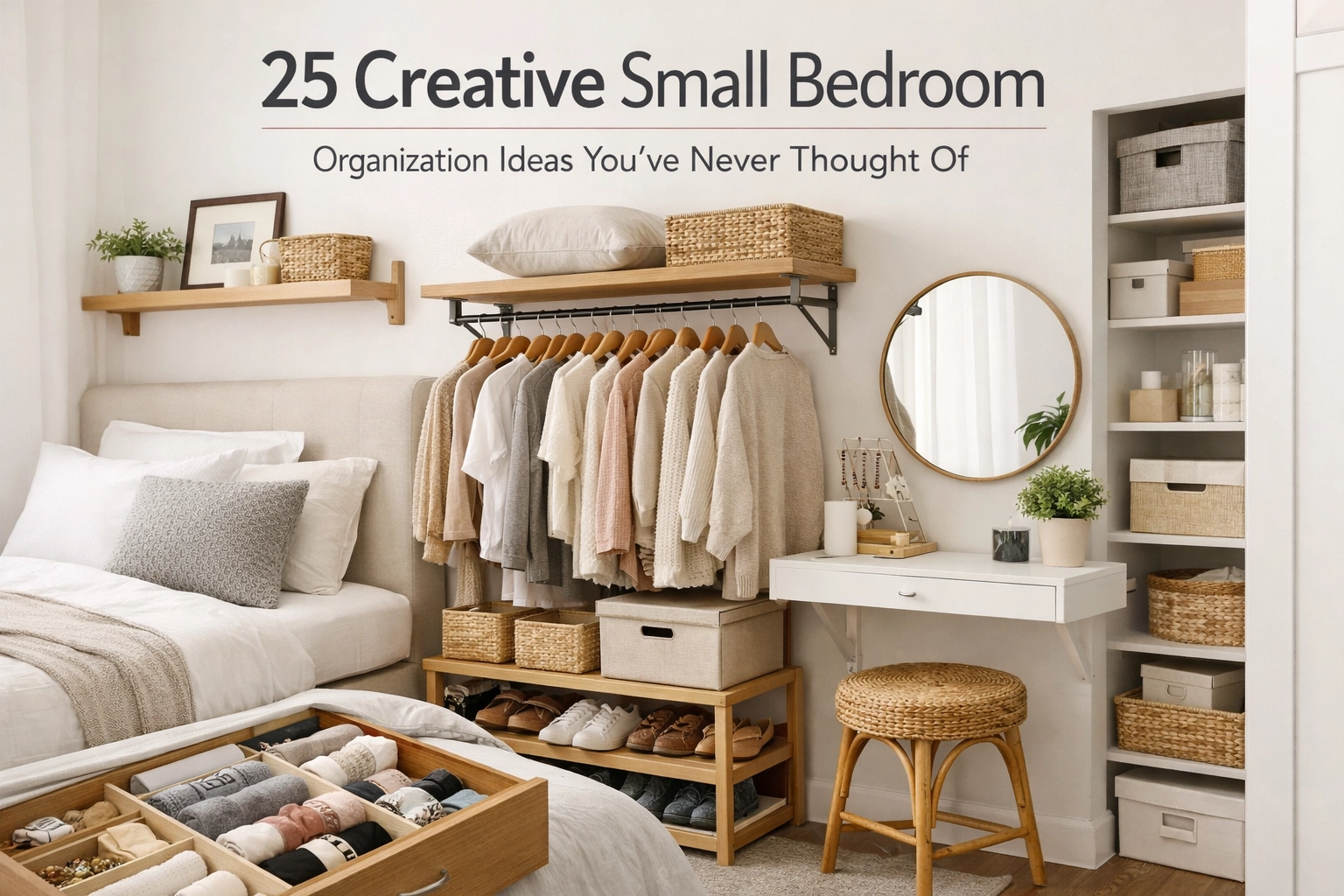
Living in a small bedroom often presents a unique set of challenges. When square footage is limited, the primary struggle is balancing the need for furniture with the requirement for storage. However, a small room does not have to feel cluttered or cramped. By shifting the perspective from horizontal floor space to vertical and hidden areas, it is possible to transform a tiny sleeping area into a highly functional and serene sanctuary.
Effective organization is less about having less stuff and more about finding a dedicated place for every item. The following strategies provide practical, innovative ways to maximize every inch of a small bedroom, ensuring that comfort is never sacrificed for utility.
Maximizing the Bed’s Footprint
The bed is typically the largest piece of furniture in the room. Instead of viewing it as a space-taker, it should be treated as a primary storage hub.
1. High-Lift Bed Risers
Bed risers are an inexpensive way to create immediate storage potential. By lifting the bed frame several inches off the floor, enough clearance is created to store bulky items like plastic bins or suitcases. This is particularly effective for items used infrequently, such as seasonal décor or heavy winter coats.
2. Under-Bed Rolling Bins
Traditional bins can be difficult to access when tucked deep under a bed. Rolling bins, equipped with small wheels or casters, allow for easy retrieval. Using clear containers makes it simple to identify contents without having to open every box. This system is ideal for shoe collections or storage organization for hobby supplies.
3. Integrated Platform Storage
For those looking to invest in new furniture, a platform bed with built-in drawers is a superior alternative to a standard bed frame and dresser. By eliminating the need for a separate dresser, significant floor space is freed up, allowing the room to feel more open. These drawers are excellent for storing t-shirts, linens, or denim collections.

4. Murphy Beds for Dual-Purpose Rooms
In studio apartments or guest rooms that double as offices, a Murphy bed is a transformative solution. This style of bed folds up into a wall cabinet during the day, revealing a desk or simply opening up the floor for movement. Modern designs are sleek and blend seamlessly with surrounding cabinetry.
5. Headboard with Built-in Shelving
If there is no room for nightstands, a storage headboard can serve the same purpose. These units often feature recessed shelves or cubbies that can hold books, alarm clocks, and charging phones. This keeps the bedside tidy while keeping essential items within arm’s reach.
Mastering Vertical Wall Space
When floor space is exhausted, the walls offer a vast, often underutilized landscape for organization.
6. Floating Perimeter Shelving
Installing a shelf that runs the entire perimeter of the room near the ceiling provides a place for items that are mostly decorative or used rarely. This keeps the lower levels of the room clear and draws the eye upward, which can make a ceiling feel higher.
7. Wall-Mounted Desk Solutions
A bulky desk can dominate a small bedroom. A wall-mounted “floating” desk or a fold-down secretary desk provides a workspace that disappears when not in use. Pairing this with a slim chair that can be tucked away prevents the workstation from becoming a permanent obstacle.
8. Pegboards for Accessories
Pegboards are not just for garages. In a bedroom, a painted pegboard can act as a modular storage unit for jewelry, hats, or small electronics. The ability to move hooks and bins around makes it a flexible system that evolves with changing needs.
9. Corner Shelving Units
Corners are frequently wasted space. Installing L-shaped floating shelves allows for the storage of books or small plants without occupying the center of the wall. This is a subtle way to add personality to the room while keeping surfaces like dressers clear.
10. Vertical Wall Pockets
Fabric or leather wall pockets can be hung near a bed or desk to hold mail, tablets, or glasses. They offer a soft visual texture and prevent small items from cluttering flat surfaces where they are easily lost.

Optimizing the Closet and Doors
The closet is the most critical area for organization, but it is often the most poorly utilized.
11. Over-the-Door Organizers
The back of the bedroom or closet door is prime real estate. Clear pocket organizers are perfect for more than just shoes; they can hold beauty products, makeup tools, or even rolled-up socks and underwear.
12. Slim Velvet Hangers
Switching from bulky plastic or wooden hangers to slim velvet versions can increase closet capacity by up to 50%. The non-slip surface prevents clothes from sliding off, and the uniform look creates a sense of visual calm inside the closet.
13. Double Hanging Rods
If the closet has a single rod with a lot of empty space beneath it, adding a second, lower tension rod can double the hanging space for shorter items like shirts and skirts. This is one of the most effective ways to organize a small closet without a full renovation.
14. Shelf Dividers
On the top shelf of a closet, stacks of sweaters or linens often topple over, creating a mess. Acrylic or wire shelf dividers keep these stacks upright and orderly. This makes it much easier to pull one item from the bottom of the stack without disturbing the rest.
15. Removing Closet Doors
In very tight quarters, the swing of a closet door can prevent other furniture from being placed nearby. Removing the doors entirely: or replacing them with a decorative curtain: removes this barrier. An “open closet” also encourages the inhabitant to keep their wardrobe organized, as it is always on display.

Creative Furniture Choices
Choosing furniture that serves more than one purpose is essential for small-room living.
16. Storage Benches and Trunks
A bench placed at the foot of the bed offers a place to sit while dressing and provides deep storage for extra blankets or pillows. An antique trunk can serve the same purpose while adding a unique aesthetic element to the room.
17. The Nightstand-Chest Hybrid
Instead of a small, spindly nightstand, consider using a small three-drawer chest. This provides a surface for a lamp while offering significant extra storage for clothing or office supplies.
18. Blanket Ladders
A leaning ladder rack takes up very little floor depth. It provides a stylish way to store extra blankets, scarves, or even pattern towels. Because it leans against the wall, it utilizes vertical space effectively.
19. Floating Nightstands
To keep the floor looking as open as possible, a floating nightstand is ideal. Being able to see the floor underneath the furniture creates the illusion of more space. It also makes cleaning and vacuuming much easier in a cramped room.
20. Ottoman with Hidden Storage
A small storage ottoman can serve as a vanity stool or a footrest. Inside, it can hide away electronics, chargers, or makeup-mirrors. It is a versatile piece that can be moved around the room as needed.

Visual and Strategic Organization
Sometimes, organization is about how the room is perceived and how routines are managed.
21. Utilizing Mirrors for Depth
While not storage in the traditional sense, mirrors are a powerful tool in organization. They reflect light and create the illusion of a larger room. A full-length mirror on the back of a door or a mirrored closet door can make a small bedroom feel twice its size.
22. Uniform Basket Systems
Using a series of identical baskets on open shelving or under furniture creates a cohesive look. It hides the “visual noise” of mismatched items. Baskets are particularly useful for grouping like items, such as a basket for chargers and a basket for winter accessories.
23. Bedside Caddies
For those with minimal bedside space, a fabric caddy that slips between the mattress and the box spring can hold a remote, a book, and a phone. This eliminates the need for a nightstand surface entirely.
24. Ceiling-High Armoires
In rooms without a built-in closet, a tall, narrow armoire is better than a wide, short dresser. Choosing a unit that reaches toward the ceiling maximizes storage without taking up additional floor width.
25. Regular Decluttering Routines
The most effective organization idea is the habit of regular decluttering. In a small space, even a few unnecessary items can cause the system to fail. Seasonally reviewing belongings and removing items that are no longer used ensures that the creative storage solutions remain effective.

Implementation and Maintenance
Successfully organizing a small bedroom requires a combination of the right tools and a commitment to a system. When implementing these ideas, it is helpful to start with one area at a time: such as the closet: before moving to the bed or wall space.
Consistency is the key to maintaining a small space. By returning items to their designated spots and utilizing every vertical and hidden inch, a small bedroom can remain a comfortable and organized environment. Whether you are sourcing items from local suppliers or looking for specialized solutions that ships from United States or ships from United Kingdom, the principles of small-space organization remain the same: think vertically, choose multipurpose furniture, and minimize visual clutter.

