
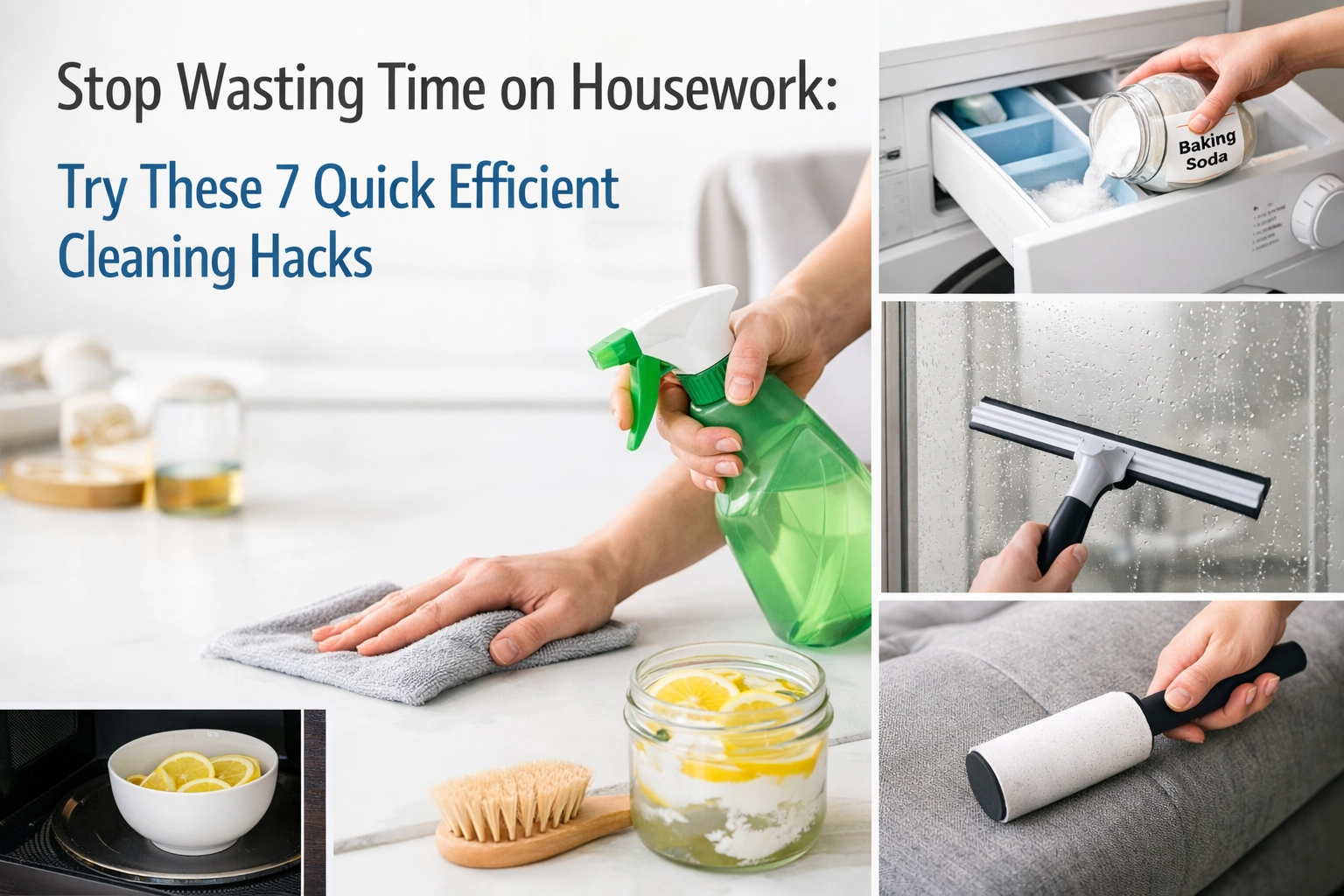
Maintaining a clean and organized home is often perceived as a labor-intensive, never-ending cycle of chores. For many, the weekend is frequently consumed by “deep cleaning” sessions that leave little room for rest or personal pursuits. However, the secret to a well-kept home does not lie in marathon cleaning sessions, but rather in the implementation of strategic systems and efficient habits. By shifting the focus from reactive cleaning to proactive maintenance, it is possible to significantly reduce the time spent on housework.
The following guide explores seven high-efficiency cleaning hacks designed to streamline household routines. These strategies prioritize consistency and smart tool selection over sheer effort, allowing for a balanced approach to everyday living.
1. Implement the Two-Minute Rule
The “Two-Minute Rule” is a foundational principle of productivity that translates perfectly to household management. The concept is simple: if a task takes less than two minutes to complete, it should be done immediately rather than being scheduled for later.
In a domestic setting, small tasks often accumulate throughout the day, eventually forming a daunting mountain of clutter. By addressing these micro-tasks as they arise, the visual “noise” of a home is kept to a minimum.
Examples of Two-Minute Tasks:
- Mail Processing: Instead of leaving mail on the entryway table, sort it immediately. Recycle junk mail and place bills in a designated folder.
- Entryway Management: Hang up coats, place shoes in their designated spots, and put away bags as soon as one enters the home.
- Surface Maintenance: After preparing a snack or coffee, immediately wipe down the counter. This prevents spills from hardening and becoming much harder to clean later.
- Laundry Transit: If a stray sock is found on the floor, take the extra thirty seconds to place it in the hamper rather than walking past it.
When these actions become habitual, the need for a “whole-house tidy” at the end of the day is virtually eliminated. This habit prevents the mental fatigue associated with “clutter blindness,” where a resident becomes so used to the mess that they no longer see it until it becomes unmanageable.

2. The 10-Minute Power Tidy
While the Two-Minute Rule handles immediate tasks, a daily 10-minute “Power Tidy” addresses the general drift of items throughout high-traffic areas. This is not a deep-cleaning session; it is a tactical “reset” of the home’s most-used spaces, such as the living room, kitchen, and entryway.
Setting a timer for exactly ten minutes creates a sense of urgency and prevents the task from expanding to fill an entire evening. The goal is visual order.
How to Execute a Power Tidy:
- Focus on High-Impact Areas: Straighten sofa cushions, fold throw blankets, and clear coffee tables.
- The “Basket Method”: Use a laundry basket or bin to collect items that belong in other rooms. Move through the main living area, placing displaced toys, books, or clothing into the basket. Do not put them away individually; do one circuit at the end to return them to their proper locations.
- Surface Clearing: Quickly wipe down visible surfaces to remove dust or crumbs. Using well-placed mirrors in the home can help one quickly spot areas where dust has accumulated or where lighting is being obscured by smudges.
- Floor Sweep: A quick pass with a vacuum or broom in the entryway and kitchen can prevent dirt from being tracked into carpeted areas.
This daily ritual ensures that every morning begins with a “clean slate,” reducing stress and improving the efficiency of the morning routine.
3. Simplify with Multi-Purpose Cleaning Products
A common time-waster in housework is the management and transport of an excessive number of specialized cleaning products. Moving from room to room with a different bottle for glass, tile, wood, and stone is inefficient and creates unnecessary clutter under the sink.
Transitioning to high-quality, multi-purpose cleaners simplifies the process. A single, effective pH-neutral cleaner can often handle 90% of household surfaces. This reduces decision fatigue and speeds up the transition between cleaning the kitchen and the bathroom.
Streamlining the Cleaning Caddy:
- All-Purpose Surface Cleaner: Look for a concentrate that can be diluted. These are effective on countertops, tables, and most flooring.
- Degreaser: Essential for the kitchen, particularly around the stovetop.
- Disinfectant: Reserved for high-touch areas like doorknobs and bathroom surfaces.
- Glass and Mirror Cleaner: For streak-free finishes on windows and bathroom mirrors.
Beyond liquids, the tools used should also be efficient. For example, maintaining personal grooming areas is much faster if one uses specialized makeup-tool cleaners that work quickly without requiring long soaking times. Keeping these tools organized in a portable caddy allows the resident to carry everything they need from room to room in one go, rather than making multiple trips back to the supply closet.

4. Create a Structured Cleaning Schedule
Ad-hoc cleaning: cleaning only when something looks dirty: is often the least efficient way to manage a home. By the time dirt is visible, the task usually requires more effort and harsher chemicals to resolve. A structured schedule, often found discussed in various online learning resources, allows for a “set it and forget it” mentality.
The most effective schedules are broken down by frequency: daily, weekly, and monthly.
The Zoning Method:
One of the most efficient scheduling techniques is “Zoning.” Instead of cleaning the whole house on Saturday, assign a specific “Zone” to each day of the week.
- Monday: Kitchen (Deep clean surfaces, wipe appliance fronts).
- Tuesday: Bathrooms (Scrub toilets, tubs, and clean mirrors).
- Wednesday: Living Areas (Dusting, electronics, and vacuuming).
- Thursday: Bedrooms (Change linens, tidy bedside tables).
- Friday: Floors (Mop all hard surfaces and thorough vacuuming).
By spending 20-30 minutes on a specific zone each day, the entire house remains consistently clean without ever requiring a full day of labor. This method also ensures that no single area is neglected for too long, preventing the build-up of lime-scale or deep-set grime.
5. Invest in Microfiber Cleaning Cloths
The transition from paper towels or cotton rags to high-quality microfiber cloths is one of the simplest ways to increase cleaning speed. Microfiber is engineered with tiny fibers that are much smaller than a human hair. These fibers are split, creating a hook-like structure that physically grabs and holds onto dust, dirt, and even some bacteria.
Benefits of Microfiber:
- Reduced Chemical Use: Many microfiber cloths are so effective that they only require water to clean windows and mirrors, leaving a streak-free finish.
- Dust Magnetism: Unlike cotton, which often just pushes dust around, microfiber traps it within the cloth.
- Durability: High-quality cloths can be washed hundreds of times, making them more cost-effective and environmentally friendly than disposable options.
- Color-Coding: One can use a color-coded system (e.g., blue for glass, red for bathrooms, green for kitchens) to prevent cross-contamination between different areas of the home.
Using these cloths on different textures, whether it is cleaning a pair of denim jeans that need a spot clean or wiping down a delicate pattern on a vase, ensures that the surface is protected while being thoroughly cleaned.

6. Leverage Natural Cleaning Solutions
Many homeowners are moving away from harsh synthetic chemicals in favor of natural alternatives like white vinegar, baking soda, and lemon juice. These ingredients are not only safer for households with children and pets but are also remarkably effective when used correctly.
The science of natural cleaning relies on pH levels. Vinegar is an acid, which makes it excellent for breaking down mineral deposits (like hard water stains) and cutting through grease. Baking soda is a mild alkali and a gentle abrasive, perfect for scrubbing surfaces without scratching them.
Natural Recipes for Efficiency:
- The Drain Refresh: Pour half a cup of baking soda down the drain, followed by half a cup of vinegar. The resulting fizzing reaction helps loosen minor clogs and removes odors.
- Glass Cleaner: A 50/50 mix of white vinegar and distilled water is often more effective than commercial blue sprays for cleaning mirrors and windows.
- Oven Cleaning: A paste of baking soda and water applied to the interior of an oven and left overnight can lift stubborn burnt-on food with minimal scrubbing.
Using these common household items reduces the time spent shopping for specialized products and ensures that a cleaning solution is always on hand.

7. Strategic Storage and Organization
A house is much faster to clean when every item has a dedicated “home.” Clutter is often just a symptom of a lack of functional storage. When surfaces are clear of miscellaneous items, dusting and wiping become five-minute tasks rather than thirty-minute projects involving moving dozens of objects.
Optimizing Storage for Cleanliness:
- Vertical Space: Use shelving to get items off the floor and counters.
- Clear Labeling: In pantries and laundry rooms, labeled bins help all household members know exactly where items should be returned.
- Kitchen Efficiency: Use a fruit-organizer to keep produce contained and prevent the counter from becoming cluttered. This also makes it easier to wipe down the counter underneath.
- The Power of Trays: Use trays to group similar items. A tray on a coffee table can hold remotes and coasters; a tray in the bathroom can hold skincare products. When it is time to clean, one simply lifts the tray, wipes the surface, and replaces it.
Effective storage-organization is the foundation of a low-maintenance home. When organizational systems are intuitive, the “tidy-up” phase of housework happens almost automatically.
Shared Responsibility and Delegation
Efficiency in housework is not solely about techniques and tools; it is also about the distribution of labor. In multi-person households, the burden of maintenance should be a shared responsibility. Delegation is most effective when tasks are assigned based on preference and schedule.
Strategies for Shared Maintenance:
- The “Clean as You Go” Culture: Establishing a household expectation that everyone cleans their own dishes and clears their own clutter immediately.
- Task Rotation: Rotating less desirable chores, such as taking out the trash or deep-cleaning the bathroom, ensures that no one person feels overwhelmed by a specific task.
- Visual Checklists: For children or roommates, a simple checklist on the refrigerator can clarify expectations for “clean.” This prevents the need for “re-cleaning” when a task wasn’t performed to the expected standard.
Room-by-Room Efficiency Tips
To maximize the impact of these seven hacks, one can apply specific techniques to the most challenging rooms in the house.
The Kitchen
The kitchen is the heart of the home and often the most difficult to keep clean. To save time, always start the dishwasher before bed and empty it first thing in the morning. This ensures that dirty dishes never have to sit in the sink throughout the day. Using liners in the bottom of the oven and at the bottom of the refrigerator crisper drawers can also catch spills, making cleaning as simple as replacing a liner.
The Bathroom
To prevent the buildup of soap scum and mildew, use a squeegee on glass shower doors after every use. This ten-second habit can save hours of scrubbing later in the month. Keeping a dish wand filled with a 50/50 mixture of dish soap and vinegar in the shower allows for quick “spot cleans” while one is already in the bathroom.
The Bedroom
The primary time-saver in the bedroom is the daily habit of making the bed. It provides an immediate visual sense of order and discourages the habit of leaving clothes on the bed or floor. To manage clothing clutter, ensure that there is a hamper located exactly where one usually undresses. If one wears a specific style often, such as skinny jeans or stripes, having dedicated hanging or folding zones for these items prevents “drawer rummaging” which leads to messy closets.

Sustaining the Routine
The transition from “time-wasting housework” to “efficient home maintenance” requires a shift in mindset. It is about valuing small, consistent actions over large, infrequent efforts. By using the Two-Minute Rule, a 10-minute daily tidy, and the right tools like microfiber and multi-purpose cleaners, the environment remains consistently pleasant.
Strategic organization, including the use of storage-organization tools, ensures that cleaning is a matter of maintenance rather than a battle against chaos. Whether one is preparing for a summer gathering or simply wanting to reclaim their weekends, these hacks provide the framework for a cleaner home with significantly less effort.
Ultimately, the goal of these systems is to spend less time managing the home and more time enjoying it. Through the application of these practical guides and perhaps exploring further online learning on home management, any individual can master the art of the efficient home.

