
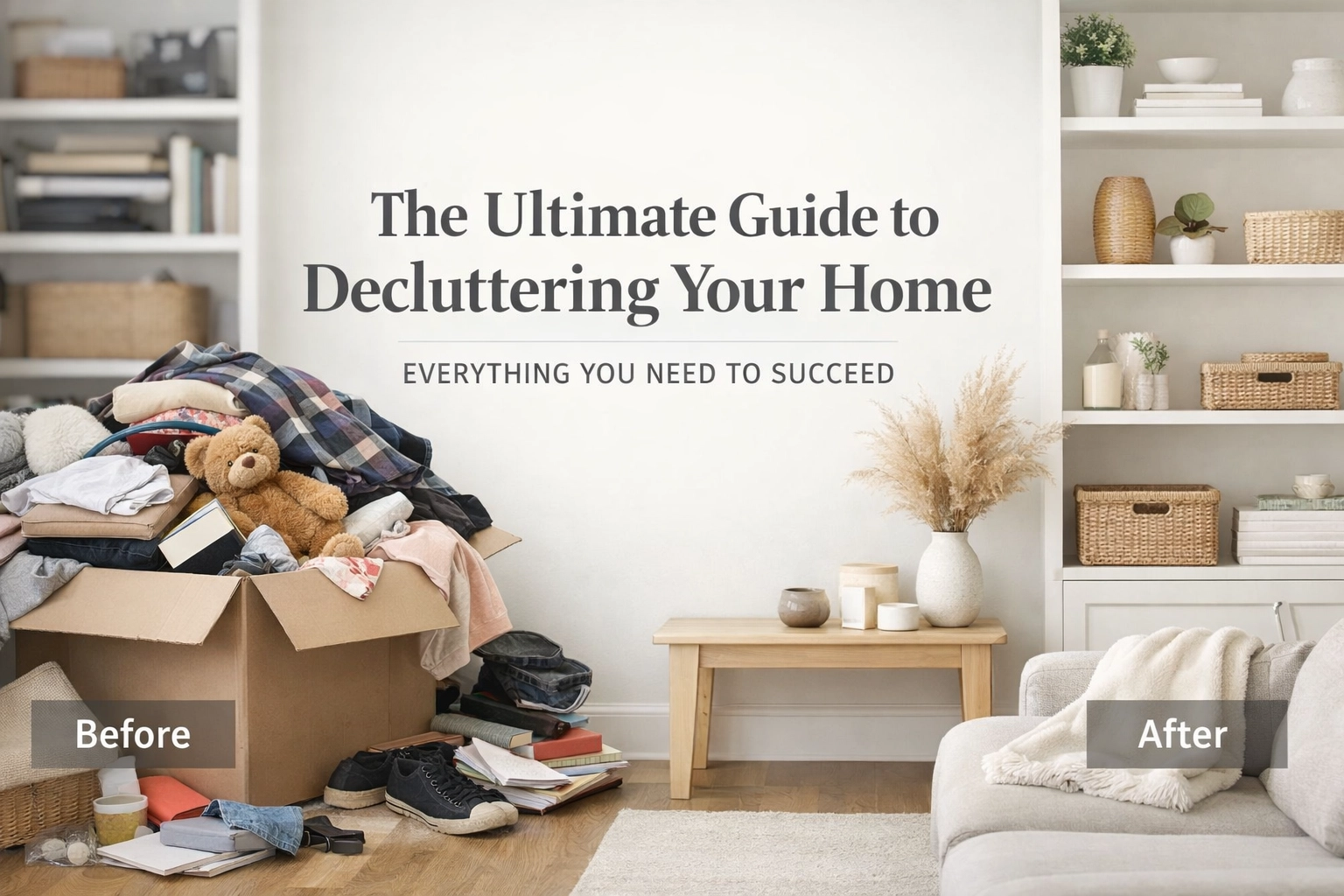
Maintaining an organized living space is more than an aesthetic choice; it is a fundamental aspect of home management that impacts mental clarity, productivity, and the overall functionality of a household. Over time, possessions tend to accumulate, leading to a phenomenon known as “clutter creep,” where items slowly occupy surfaces, storage areas, and living zones until the space becomes difficult to navigate or clean.
This comprehensive guide examines the most effective strategies for systematic decluttering, the psychological barriers to letting go of items, and the practical storage solutions required to maintain a streamlined environment. By understanding the methodologies used by professional organizers, any individual can transform a chaotic living space into an orderly sanctuary.
The Impact of an Organized Environment
A cluttered home often reflects a lack of systems rather than a lack of space. When every item has a designated location, the time spent searching for lost objects is eliminated, and the effort required for daily cleaning is significantly reduced. Beyond the physical benefits, an organized home reduces visual noise, which has been shown to lower stress levels and improve focus.
For those interested in the broader context of personal development and home management, further resources are available at https://www.pariswheel.com/index.php/blog. Understanding the principles of organization is a skill that can be developed through consistent practice and the application of proven methods.
Proven Methodologies for Successful Decluttering
Success in decluttering relies on selecting a framework that matches the available time and the volume of items involved. Attempting to organize an entire house without a plan often leads to burnout and a larger mess than when the process began.
The Four Box Method
The Four Box Method is a structured approach that forces a decision on every single item in a room. To implement this, four containers are labeled:
- Trash: Items that are broken, expired, or beyond repair.
- Storage: Seasonal items or keepsakes that are not needed daily but must be kept.
- Put Away: Items that belong in the home but have migrated to the wrong room.
- Give Away/Sell: Items that are in good condition but no longer serve a purpose for the current owner.
By working through a space and placing every item into one of these categories, the decision-making process becomes binary and efficient.
The SOS Strategy: Simplify, Organize, Stabilize
The SOS method is a holistic approach to home management.
- Simplify: This involves the radical removal of items. It is the “edit” phase where the volume of possessions is reduced to fit the actual capacity of the home.
- Organize: Once only the necessary items remain, strategic storage solutions are implemented. This includes grouping like items and utilizing ergonomic storage.
- Stabilize: This phase focuses on maintenance. It involves setting up daily or weekly routines to ensure that clutter does not reappear.
The Five-a-Day Approach
For individuals with limited time, the Five-a-Day approach offers a sustainable alternative to a marathon decluttering session. By committing to removing just five items from the home every day, whether through donation, recycling, or disposal, a homeowner can remove over 1,800 items in a single year. This method builds a “decluttering muscle,” making it easier to make decisions over time.

Preparation and Mindset
Before beginning the physical work, it is essential to gather the necessary supplies. This includes heavy-duty trash bags, sturdy cardboard boxes, packing tape, and a permanent marker for labeling. Having these tools ready prevents interruptions that can derail momentum.
A common roadblock in the decluttering process is the “sunk cost fallacy”, the idea that an item must be kept because it was expensive. However, the money is already spent; keeping an unused item only costs the homeowner valuable space and mental energy. Shifting the focus from what is being “lost” to what is being “gained” (space, peace, time) is a vital mental shift.
Room-by-Room Execution
A systematic, room-by-room approach prevents the feeling of being overwhelmed. It is often best to start with a high-impact, low-sentiment area like the entryway or a guest bathroom before moving to more emotionally charged spaces like the bedroom.
The Entryway: Managing the First Impression
The entryway often acts as a “catch-all” for mail, shoes, bags, and coats. To declutter this area:
- Audit Seasonal Gear: Remove out-of-season coats and footwear. These should be moved to long-term storage or a bedroom closet.
- Create a Drop Zone: Implement a tray for keys and a dedicated basket for mail.
- Limit Footwear: Keep only the pairs of shoes currently in rotation in the entryway. Excess shoes should be stored in individual closets.
The Kitchen: Maximizing Functional Space
The kitchen is frequently the most cluttered room in the house due to the high volume of small gadgets and perishable goods.
- Clear the Counters: Aim for empty surfaces. Only appliances used daily (such as a coffee maker) should remain on the counter.
- The Junk Drawer: Empty the drawer completely. Use small dividers to categorize essential items like scissors, tape, and batteries. Discard non-functional items and mystery keys.
- Pantry Audit: Check expiration dates on all dry goods. Group items by category (e.g., baking, grains, snacks) to prevent overbuying.
The Living Room: Creating a Relaxing Environment
The living room should be a place for relaxation, but it often becomes a graveyard for old magazines, unused electronics, and excess decor.
- Media Consolidation: Remove old remote controls for devices no longer owned. Untangle and label charging cables, discarding those that are frayed or obsolete.
- Surface Clearing: Evaluate coffee tables and end tables. Remove any decor that does not bring value to the space.
- Furniture Assessment: If a piece of furniture makes the room feel cramped or serves no functional purpose, consider removing it to improve the flow of the room.

The Bedroom and Closet: Prioritizing Personal Rest
A cluttered bedroom can interfere with sleep quality. The goal is to create a serene environment.
- The Bedside Table: Only items needed during the night or immediately upon waking should stay here.
- Under-Bed Storage: Avoid using this space for “clutter hiding.” If items are stored under the bed, they should be in sealed, labeled containers for specific categories like off-season linens.
- The 12-Month Closet Rule: If a piece of clothing has not been worn in a year, it is a prime candidate for donation. Exceptions can be made for formal wear, but everyday items should be ruthlessly edited.
For information on how the company manages customer data during the browsing of organizational tips, please see the privacy policy at https://www.pariswheel.com/index.php/privacy-policy.
Strategic Storage and Organizational Solutions
Once the decluttering phase is complete, the remaining items must be organized effectively. Proper storage ensures that the home stays organized in the long term.
Utilizing Vertical Space
In many homes, vertical space is underutilized. Adding floating shelves, over-the-door organizers, and wall-mounted hooks can significantly increase storage capacity without reducing floor space. This is particularly effective in small bathrooms, laundry rooms, and pantries.
The Importance of Clear Containers
Using clear acrylic or plastic bins allows the contents to be visible at a glance. This prevents the need to rummage through boxes to find a specific item. For items stored in opaque bins or on high shelves, labeling is non-negotiable. A simple label indicating the contents can save hours of searching over the course of a year.
Zoning Principles
Organize items according to “zones” of activity. For example, all baking supplies (flour, sugar, rolling pins) should be stored in one area of the kitchen. All gift-wrapping supplies should be stored together. This logic ensures that when a task needs to be performed, everything required is within reach.

Overcoming Emotional and Mental Barriers
Decluttering is often more of a mental challenge than a physical one. Sentimental items are the most difficult to process.
Handling Sentimental Items
It is important to acknowledge that memories reside in the person, not the object. If an item is being kept solely out of guilt, it is likely time to let it go. One effective strategy is to take a high-quality photograph of the item and then donate the physical object. This preserves the memory without the physical bulk.
For those who wish to keep certain mementos, a “Memory Box” with a fixed size can be helpful. Once the box is full, one item must be removed for every new item added.
The “Just in Case” Trap
Many people hold onto items because they fear they might need them in the future. The “20/20 Rule” can be applied here: If an item can be replaced for less than $20 and in less than 20 minutes from the current location, it is safe to let go.
Long-Term Maintenance and Sustainability
A common mistake is treating decluttering as a one-time event. Without maintenance, clutter will inevitably return.
The One-In-One-Out Rule
To maintain a balanced home environment, adopt a “one-in-one-out” policy. For every new item brought into the home: whether it’s a new pair of shoes, a kitchen gadget, or a toy: a similar item must be donated or discarded. This prevents the total volume of possessions from increasing.
The Daily Reset
Spending 10 to 15 minutes each evening performing a “reset” can prevent clutter from accumulating. This involves clearing the kitchen counters, putting shoes away, and dealing with mail. These small daily actions are more effective than a massive monthly cleanup.

Responsible Disposal of Unwanted Items
The final step in the decluttering process is ensuring that unwanted items leave the home. Leaving “Give Away” boxes in the hallway or the trunk of a car for weeks often leads to items creeping back into the house.
Donation and Recycling
Research local charities that accept specific items. Some organizations specialize in professional attire for job seekers, while others focus on furniture for families transitioning out of homelessness. Items that are not fit for donation should be recycled responsibly. Electronic waste (e-waste) should never be thrown in the trash; many municipalities have dedicated drop-off points for old computers and televisions.
Selling Items
For high-value items, online marketplaces can be an effective way to recoup some costs. However, it is important to set a deadline. If an item does not sell within two weeks, it should be donated. The goal of decluttering is to regain space, and holding onto items in hopes of a sale can hinder that progress.
For more information about the mission of Paris Wheel and how online learning can aid in lifestyle management, visit https://www.pariswheel.com/index.php/about.
Conclusion of the Process
Successful home organization is a journey of intentionality. It requires evaluating the relationship between an individual and their belongings. By applying structured methods like the Four Box or SOS strategies, utilizing vertical storage, and maintaining strict “one-in-one-out” rules, the home remains a functional and peaceful environment.
The process of decluttering provides a fresh start, allowing for more time and energy to be spent on meaningful activities rather than managing excessive possessions. With the right mindset and practical tools, achieving a clutter-free home is an attainable goal for anyone.


