
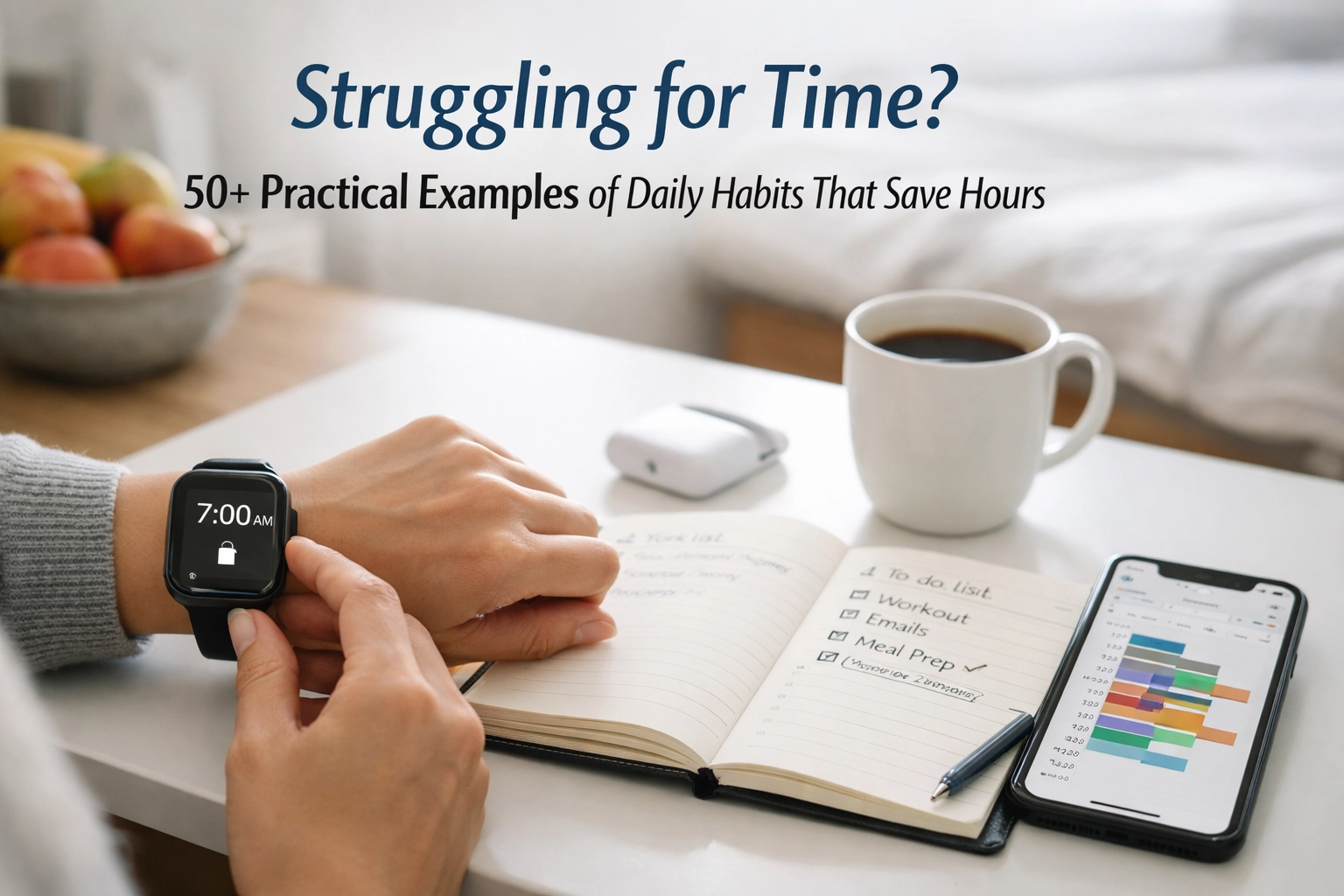
Time is a finite resource, yet many daily schedules are filled with “friction”: small, repetitive inefficiencies that consume minutes and eventually hours. Reclaiming this lost time rarely requires a massive lifestyle overhaul. Instead, significant gains come from implementing micro-habits that eliminate decision fatigue and streamline recurring tasks.
By adopting a series of deliberate actions across morning routines, work blocks, and home management, it is possible to save over 20 hours per week. This guide explores over 50 practical habits designed to optimize daily life and reduce the stress of a crowded calendar.
The Foundation of Time-Saving: Habit Stacking
Before diving into specific examples, it is important to understand how these habits stick. Habit stacking is the practice of “stacking” a new, small habit onto an existing one. For instance, if the existing habit is brewing coffee, the new habit might be filling a water bottle for the day. This eliminates the need for willpower and ensures the new action becomes automatic.
The following habits are categorized to help target the areas of life where time is most frequently lost.
Morning Momentum: Starting the Day with Efficiency
The first hour of the day often dictates the pace for the remaining fifteen. Reducing the number of decisions made in the morning prevents “decision fatigue,” allowing cognitive energy to be reserved for more complex tasks.
- Prepare the night before: Spend 10 minutes every evening choosing an outfit, packing a bag, and setting out breakfast items.
- The “Feet on the Floor” rule: Move the alarm clock across the room. For those who struggle to wake up, utilizing a flying alarm clock ensures that the individual must physically get out of bed to silence it.
- Drink 500ml of water immediately: This rehydrates the body and increases alertness faster than caffeine alone.
- Make the bed: This three-minute task provides an immediate sense of accomplishment and discourages returning to sleep.
- Standardize your breakfast: Eat the same high-protein meal every weekday to eliminate morning “what should I eat?” debates.
- Avoid the “Scroll Hole”: Keep the smartphone in another room until after breakfast and a primary task are completed.
- Batch grooming supplies: Use a 360-degree rotating cosmetic box to keep all daily essentials in one place, preventing time wasted searching for specific products.
- The 5-minute movement: Engage in light stretching or a brief walk to wake up the nervous system without the time commitment of a full gym session.
- Review the daily top three: Identify the three most important tasks for the day while the mind is fresh.
- Use a “Go-Station”: Place keys, wallet, and sunglasses in the same designated spot every single day.

Workplace Productivity and Focus
Professional life is often the greatest source of “time leaks.” Between constant notifications and the myth of multitasking, focus is frequently fragmented.
- The Pomodoro Technique: Work in 25-minute intervals followed by 5-minute breaks. This prevents burnout and keeps the mind sharp.
- Single-tasking: Research consistently shows that multitasking can reduce productivity by up to 40%. Focus on one objective until it is finished or the scheduled block ends.
- Batch email checking: Instead of reacting to every ping, check and respond to emails at designated times (e.g., 9:00 AM, 1:00 PM, and 4:00 PM).
- Use “Do Not Disturb” mode: Automate phone settings to silence non-essential notifications during work hours.
- The 2-Minute Rule: If a task takes less than two minutes (like replying to a quick Slack message or filing a document), do it immediately rather than adding it to a to-do list.
- Keyboard shortcuts: Learning the top 10 shortcuts for your most-used software can save hours of mouse-clicking over a year.
- Template common responses: If the same questions are asked repeatedly, save “canned responses” in your email or messaging app.
- Stand up during meetings: Standing meetings tend to be shorter and more focused than seated ones.
- Clear the desk at end-of-day: A clean workspace for the following morning reduces the “startup cost” of beginning work.
- Use a task management app: Move all “to-dos” out of your head and into a digital system to reduce mental overhead.
Streamlining Home and Car Management
Domestic tasks often expand to fill the time available. By applying systems to the home environment, chores become less intrusive.
- Automate lighting: Use a voice-controlled smart switch socket to turn off all lights at once, saving the nightly circuit of the house.
- The “Full Hands” rule: Never leave a room empty-handed. If something belongs in another room, take it with you.
- Organize the vehicle: Use a car trunk storage bag to keep emergency supplies, shopping bags, and tools organized, preventing items from rolling around and creating a mess.
- Use a wireless key finder: Attach a wireless key finder to frequently lost items like keys or remotes to eliminate the frantic search before leaving the house.
- Weekly meal prep: Spend two hours on Sunday chopping vegetables and cooking grains to save 30–45 minutes every weeknight.
- Clean as you go: Wash dishes or load the dishwasher while the food is cooking, rather than leaving a mountain of cleaning for after the meal.
- Maintain clothing regularly: Use a hair ball trimmer to refresh sweaters and coats during the change of seasons, preventing the need for frequent replacements.
- Batch laundry days: Doing one or two large loads on specific days is more efficient than running small loads daily.
- Designated “Inbox” for mail: Prevent paper clutter by having one spot for all physical mail, and process it once a week.
- Keep a digital grocery list: Use a shared app so family members can add items the moment they run out, avoiding extra trips to the store.

Health and Wellness for Long-Term Energy
Fatigue is a major time-waster. When energy is low, tasks take twice as long to complete. These habits ensure the body and mind remain in peak condition.
- Walking meetings: If a call doesn’t require a screen, take it while walking. This combines exercise with work.
- Pack healthy snacks: Prevent the “afternoon slump” and the time spent searching for food by having nuts or fruit readily available.
- Use a blood pressure monitor: Monitoring health trends with an electronic blood pressure monitor at home can save time on unnecessary clinic visits for routine check-ups.
- The “10-Minute Tidy”: Set a timer for 10 minutes every evening to clean common areas. It prevents the need for a 4-hour “deep clean” on the weekend.
- Micro-meditation: Take 60 seconds to breathe deeply between meetings to reset stress levels.
- Keep a water bottle visible: Constant hydration improves focus and reduces the frequency of headaches.
- Screen-free meals: Eating without distractions improves digestion and helps one recognize fullness sooner, leading to better energy levels.
- Sunlight exposure: Get 10 minutes of natural light as early as possible to regulate the circadian rhythm for better sleep.
- Standardize gym clothes: Keep a gym bag packed with essentials in the car or by the door.
- Practice “No” as a default: Only commit to social or professional events that truly align with your goals to protect your calendar.

Evening Routines for Restorative Sleep
How the day ends determines how the next one begins. A structured evening routine prepares the brain for deep, restorative sleep.
- Digital Sunset: Turn off all blue-light-emitting screens at least 60 minutes before bed.
- Reading for relaxation: Use a luminous LED bookmark lamp to read in bed without the harsh glare of overhead lights, which can interfere with melatonin production.
- Brain dump: Write down everything on your mind for the next day to clear mental space.
- Lower the temperature: A cool room (around 18°C or 65°F) is optimal for deep sleep.
- Set the coffee timer: Modern coffee makers can be programmed to start brewing five minutes before the alarm goes off.
- Stretch for 5 minutes: Relieve the physical tension accumulated from sitting at a desk all day.
- Limit late-night liquids: To avoid interrupted sleep, reduce water intake an hour before bed.
- Review the “Wins”: Briefly note three things that went well during the day to foster a positive mindset.
- Prepare a “Launchpad”: Ensure the bag, keys, and wallet are at the Go-Station before going to sleep.
- Consistent sleep schedule: Going to bed and waking up at the same time every day: even on weekends: optimizes the body’s internal clock, making it easier to wake up without feeling groggy.
Bonus: Maintenance Habits that Prevent Emergencies
Emergency situations are the ultimate time-killers. Proactive maintenance habits prevent these disruptions before they happen.
- Monthly expense review: Spend 20 minutes once a month reviewing bank statements to catch errors or unwanted subscriptions.
- Keep a “Car Kit”: Ensure the car is always equipped with a portable folding mat and emergency supplies.
- Quarterly digital declutter: Delete unused apps and organize desktop folders every three months to keep digital speed high.
- Annual “Admin Day”: Dedicate one day a year to handle all “life admin”: insurance renewals, doctor appointments, and tax preparation.

Implementing Change Without Overwhelm
The prospect of adopting 50 new habits can feel daunting. The most effective approach is to select just two or three habits that address your current biggest time-wasters. For many, this is the morning routine or digital distractions.
Once those initial habits become second nature: usually after 21 to 60 days: another set can be introduced. The goal is not perfection, but the steady reduction of friction. Over time, these small shifts accumulate, transforming a frantic schedule into a streamlined, intentional life.
By focusing on physical organization, digital discipline, and restorative health, the average person can reclaim significant portions of their day. Whether it is using a multifunctional brush to quickly clean clothes before leaving or setting a “Digital Sunset,” every small action contributes to a more productive whole.
Reclaiming time is not about doing more; it is about removing the obstacles that prevent you from doing what truly matters.


