
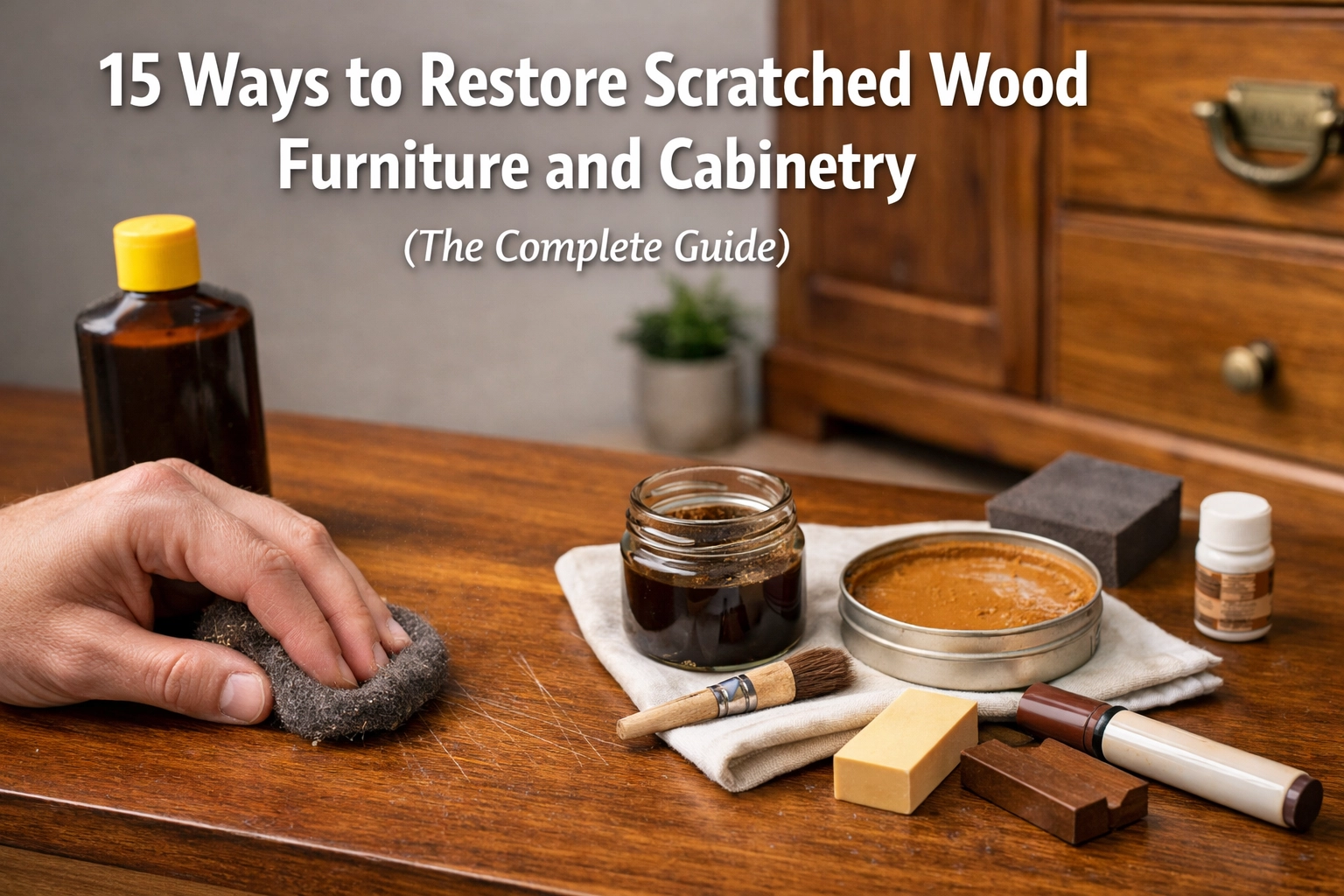
Wood furniture and cabinetry are investments that bring warmth and character to a home. However, daily use often leads to inevitable wear and tear. Whether it is a stray claw mark from a pet, a scrape from moving a vacuum cleaner, or a deep gouge from a dropped object, scratches can diminish the aesthetic appeal of high-quality woodwork.
Restoring these surfaces does not always require professional refinishing. Many effective solutions range from simple pantry staples to specialized hardware products. Understanding the depth of the damage and the type of finish on the wood is the first step toward a successful restoration. This guide explores fifteen proven methods to repair scratched wood, categorized by severity and technique.
Assessing the Damage
Before selecting a restoration method, identify the type of scratch:
- Surface Scratches: These only affect the clear protective coating (wax, lacquer, or polyurethane) and do not reach the wood itself. They often appear as light white lines.
- Medium Scratches: These penetrate the finish and reach the stain or the top layer of the wood fibers. The color of the wood is usually altered.
- Deep Gouges: these are significant indentations where wood material has been removed or compressed. These require structural filling rather than just color correction.
Always clean the area with a mild detergent and water or a specialized wood cleaner before beginning any repair. Removing dust and wax buildup ensures that repair materials adhere properly.
1. The Walnut Method
For light to medium scratches on natural wood finishes, a common walnut is one of the most effective organic tools. Walnuts contain natural oils and proteins that act as both a filler and a light stain.
To use this method, crack a walnut and rub the nut meat directly over the scratch in the direction of the grain. The friction warms the oils, allowing them to seep into the wood. After rubbing the area, let the oil sit for several minutes to soak into the fibers. Finally, buff the area with a soft, dry cloth. This method works exceptionally well on mid-tone woods like walnut, oak, and maple.
2. Hemp Oil Restoration
Hemp oil is a drying oil, meaning it hardens into a protective film over time. It is particularly effective for reviving old, thirsty wood that has developed a network of fine surface scratches.
Apply a small amount of food-grade or furniture-grade hemp oil to a lint-free cloth. Rub the oil into the wood using circular motions to ensure it fills the microscopic gaps in the finish. For deeper scratches, a second coat may be necessary after the first has had 24 hours to cure. Hemp oil darkens the wood slightly, making it ideal for mahogany or dark cherry pieces.

3. Cooking Oil and White Vinegar
A mixture of cooking oil (such as canola or vegetable oil) and white vinegar is a classic home remedy for surface-level scuffs. The vinegar works to clean the scratch and slightly soften the existing finish, while the oil hydrates the wood and provides a sheen that hides the imperfection.
The most effective ratio is typically three parts oil to one part white vinegar. Dip a soft cloth into the mixture and rub it firmly into the scratch. Allow it to sit for two minutes before wiping away the excess. This method is best suited for furniture with a satin or semi-gloss finish.
4. Wax-Based Filler Sticks
For scratches that have penetrated the finish but are not deep gouges, wax filler sticks are a standard hardware solution. These sticks resemble large crayons and come in a wide variety of wood-tone shades.
Choose a shade that matches the lightest part of the wood grain. Rub the stick back and forth across the scratch until it is filled. Use a plastic scraper: or the edge of a credit card: to level the wax with the surface of the furniture. Buff the area with a clean cloth to remove any waxy residue around the repair. For a more realistic look, use two different shades of wax sticks to mimic the natural variegation of the wood grain.
5. Specialized Touch-Up Markers
Stain markers or touch-up pens are ideal for restoring color to scratches where the wood fibers are exposed but the surface is still relatively level. These markers contain wood stain and a binder that seals the wood in one step.
When using markers, start with a shade slightly lighter than the furniture, as it is easier to darken a repair than to lighten it. Apply the marker along the scratch, then immediately smudge the edges with your finger or a cloth to “feather” the color into the surrounding finish. This prevents the repair from looking like a sharp line.
6. Iodine for Dark Woods
Iodine is an effective dye for dark wood species such as mahogany, cherry, or dark oak. Because iodine has a deep reddish-brown tint, it can camouflage scratches on these specific finishes.
Use a cotton swab to apply a small amount of iodine to the scratch. If the wood is very dark, apply the iodine at full strength. For lighter mahogany tones, dilute the iodine with a small amount of rubbing alcohol before application. Allow it to dry completely, then apply a coat of furniture wax to seal the color.
7. Shoe Polish
If you are in a pinch and need to hide a scratch on a dark piece of furniture, paste shoe polish can serve as a temporary filler and stain. Shoe polish is designed to be buffed into leather, and it behaves similarly on porous wood.
Select a color that matches the furniture. Apply a small amount with a cotton swab specifically into the scratch. Avoid getting polish on the undamaged sections of the wood, as the wax in the polish can be difficult to remove. After the polish dries, buff the area with a soft cloth to create a shine that matches the original finish.
8. Coffee Grounds
For dark-stained cabinets or tables, damp coffee grounds can act as a natural wood dye. This is a subtle method that works best on shallow scratches.
Place used, damp coffee grounds on a cotton swab and dab them onto the scratch. Let the grounds sit for 10 to 15 minutes to allow the tannins to stain the wood. Wipe away the grounds and buff the area dry. Repeat the process if a darker tone is required to match the surrounding area.

9. Mayonnaise for Water Rings and Scuffs
While it may seem counterintuitive, mayonnaise is a powerful tool for removing white cloudy scuffs and water rings that sit in the top layer of a wax or lacquer finish. The oils in the mayonnaise displace the moisture trapped in the finish.
Apply a thick layer of full-fat mayonnaise over the affected area and let it sit for several hours or even overnight. As the oils penetrate the finish, the white cloudiness or light scuffs should disappear. Wipe the surface clean and buff with a dry cloth. This method is highly effective for mirrors with wooden frames that have been exposed to bathroom humidity.
10. Black Tea Steeping
Similar to coffee, black tea contains tannins that can darken exposed wood fibers. This method is excellent for light-to-medium woods where you want to build color gradually.
Steep a black tea bag in a few tablespoons of hot water for at least five minutes. The longer it steeps, the darker the “stain” will be. Dab the tea onto the scratch with a cotton swab. Because tea is water-based, it may raise the grain of the wood slightly, so be prepared to lightly buff the area with a very fine 0000-grade steel wool once dry.
11. Crayon Wax Filling
Standard wax crayons can be used as a budget-friendly alternative to professional filler sticks, especially for storage organization units or children’s furniture.
Select a crayon color that matches the wood. For better results, you can melt a small piece of the crayon in a microwave-safe container and drip the liquid wax into the scratch. Once the wax hardens, scrape off the excess with a plastic tool. The advantage of crayons is the vast array of colors available, allowing for precise matching of unconventional wood stains.
12. Wood Putty and Epoxy
Deep gouges that have removed actual wood material require a structural filler. Wood putty (non-stainable) or wood epoxy are the best choices for these repairs. These materials harden significantly and can be sanded.
Clean the gouge of any loose splinters. Press the putty into the hole using a putty knife, leaving it slightly mounded above the surface to account for shrinkage as it dries. Once fully cured, sand the putty flush with the wood using 220-grit sandpaper. Because putty is often opaque, you will likely need to use a touch-up marker or paint to mimic the wood grain over the top of the repair.

13. Stainable Wood Filler
If you intend to re-stain the entire surface of the furniture after the repair, use a stainable wood filler. Unlike standard putty, these fillers are porous and designed to absorb liquid stains similarly to real wood.
Apply the filler with a putty knife and let it dry completely. Sand the area smooth. When you apply the new stain, the filled area should take on the color of the surrounding wood. This is a common method used when restoring large planters or outdoor wooden benches that have suffered deep gouges.
14. Fine-Grit Sanding and Refinishing
When a surface is covered in hundreds of tiny “spider web” scratches, individual repairs are impractical. In this case, light sanding of the finish is necessary.
Use a high-grit sandpaper (320 to 400 grit) and lightly sand the surface in the direction of the grain. The goal is not to remove the finish entirely, but to level the scratches. After sanding, wipe away all dust with a tack cloth. Re-apply a thin coat of the original finish: such as wipe-on poly or a spray lacquer: to restore the depth and protection of the wood.
15. Colored Pencils and Shellac
For professional-grade restoration of fine furniture, colored pencils can be used to “draw” the wood grain back onto a filled scratch.
After filling a deep scratch with putty and sanding it smooth, use artist-grade colored pencils to draw the dark and light lines of the wood grain across the patch. To lock the pencil marks in place and provide depth, spray a very thin coat of clear shellac or lacquer over the area. Repeat the process with different colors of pencils if necessary to achieve a seamless blend.

Finishing and Protecting the Repair
Once the scratch is filled or colored, the repair must be sealed to ensure it lasts. Unsealed repairs: especially those using oils or tea: can fade or be wiped away during regular cleaning.
Clear Coatings
If the furniture has a glossy finish, apply a small amount of clear nail polish or a specialized furniture lacquer over the repair. Use a fine-tip brush to keep the coating contained within the repair area. For matte finishes, a thin layer of furniture wax (such as paste wax) is often sufficient to protect the repair while maintaining a low-sheen appearance.
Buffing Techniques
Buffing is the final step in any wood restoration. Using a microfiber cloth, rub the repaired area in a circular motion. This generates a small amount of heat that helps the waxes and oils settle into the wood. It also levels out the edges of the repair, making it less noticeable to the eye.
Preventing Future Scratches
While knowing how to fix scratches is valuable, prevention is the best strategy for maintaining wood furniture.
- Use Coasters and Trivets: Heat and moisture can soften wood finishes, making them more susceptible to scratching.
- Felt Pads: Place felt or cork pads under the bases of lamps, vases, and decorative objects.
- Consistent Humidity: Wood expands and contracts with humidity changes. Significant fluctuations can cause finishes to crack or brittle, leading to easier scratching. Aim for a consistent indoor humidity level between 35% and 45%.
- Proper Cleaning: Avoid using abrasive sponges or dry cloths to dust. A dry cloth can drag dust particles across the finish, acting like sandpaper. Always use a slightly damp microfiber cloth or a dedicated wood polish.

Restoring wood furniture is a rewarding process that extends the life of household items. By matching the right method to the depth of the scratch, most homeowners can achieve professional-looking results with minimal tools. Whether using a walnut from the kitchen or a professional wood filler, the key is patience and working with the natural grain of the wood.

