
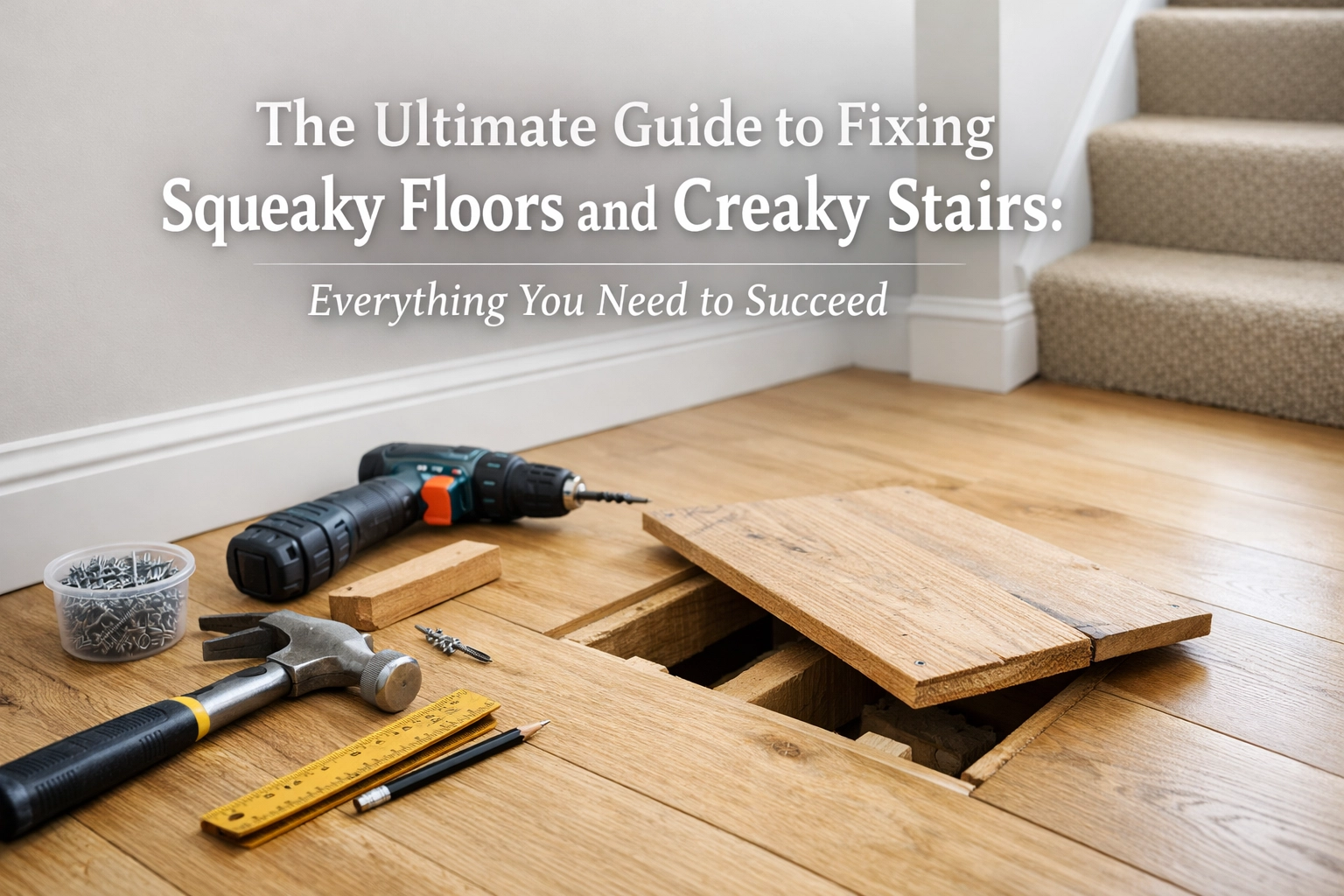
Squeaky floors and creaky stairs are more than just a minor annoyance; they are often a sign of aging, environmental changes, or structural shifting within a home. While these sounds rarely indicate an immediate structural failure, they can disrupt the peace of a living space and become a point of frustration for residents. Understanding the mechanics of these noises is the first step toward achieving a silent, solid walking surface.
The sound usually occurs when two pieces of wood rub together or when a nail has loosened and is sliding in and out of its hole. This guide explores the various causes of floor and stair noise and provides detailed, step-by-step instructions for fixing them, whether there is access from below or only from above.
The Mechanics of Floor Squeaks
Wood is a natural material that reacts to its environment. Most squeaks are caused by the expansion and contraction of wood due to changes in humidity. During dry winter months, wood loses moisture and shrinks, which can create gaps between the floorboards, the subfloor, and the joists. When someone walks across the floor, these components shift and rub against each other, creating that familiar high-pitched groan or sharp squeak.
Common culprits include:
- Loose Subfloors: The plywood or OSB panels underneath the finished floor can pull away from the floor joists.
- Floorboard Friction: Hardwood strips may rub against each other if they have shrunk.
- Bridging and Joists: In some cases, the structural supports (joists) or the metal/wooden bracing between them (bridging) can become loose.
- Improper Nailing: If nails were driven into the subfloor but missed the joist, they might rub against the wood.
Identifying the Source of the Noise
Before any repairs can begin, the exact location of the squeak must be pinpointed. This is a two-person job. One person should walk slowly over the floor while another person marks the spots where the noise occurs.
If there is access to the floor from a basement or crawlspace, the second person should be underneath the floor with a flashlight. As the person above walks, the person below can look for movement between the joists and the subfloor. If there is no access from below, the person above should use blue painter’s tape to mark every specific board that produces a sound.

Low-Impact Solutions: Lubrication
For minor squeaks in hardwood floors where the boards are simply rubbing against each other, lubrication is the least invasive method. This does not involve oil, which could damage the finish, but rather dry lubricants.
Using Powdered Lubricants
Powdered graphite or talcum powder can work wonders for small surface squeaks.
- Identify the seam between the two floorboards that are squeaking.
- Sprinkle a generous amount of powdered graphite or talcum powder over the seam.
- Place a cloth or paper towel over the area and walk on it repeatedly. This pressure helps work the powder deep into the grooves.
- Once the squeak has stopped or significantly diminished, use a damp cloth to wipe up the excess powder or a vacuum to clean the crevices.
Note: While effective, this is often a temporary fix. As the house continues to shift with the seasons, the powder may eventually work its way out.
Intermediate Fixes: Access from Below
If the squeak is caused by a gap between a floor joist and the subfloor, the most effective repairs are made from the basement or crawlspace. This allows for a permanent fix without affecting the appearance of the finished floor.
The Shim and Adhesive Method
If a gap is visible between the top of a joist and the bottom of the subfloor, a wooden shim can bridge the space.
- Locate the moving joist while someone walks on the floor above.
- Apply a layer of carpenter’s glue or construction adhesive to a thin wooden shim.
- Gently tap the shim into the gap between the joist and the subfloor. Do not force it in too far; over-driving the shim can actually lift the floor and create a new, larger gap elsewhere.
- The goal is to fill the void, not to jack up the floor.
Sistering Joists
In cases where the subfloor is sagging significantly between joists, “sistering” may be necessary. This involves taking a length of 2×4 or 2×6 lumber, applying construction adhesive to the top edge, and nailing it directly to the side of the existing joist so that it supports the sagging subfloor panel.
Blocking and Bridging
If the joists themselves are twisting or vibrating when walked upon, installing solid wood blocking between the joists can provide the necessary rigidity. Cut blocks of wood to the exact width of the joist cavity and nail them in a staggered pattern. This prevents the joists from “rolling” or moving laterally.
Properly organizing tools like hammers, saws, and adhesive tubes is essential for these tasks. Effective storage and organization of your DIY supplies ensures that when a repair is needed, the right equipment is easily accessible.

Advanced Fixes: Repairs from Above
In many homes, there is no access to the underside of the floor. This is common on second stories or in homes built on concrete slabs. In these instances, the repair must be done through the finished floor.
Specialized Squeak-Repair Screws
There are specialized kits designed to fix floor squeaks through carpet or hardwood. These kits include screws with a specific “break-away” point.
- Locate the floor joist using a stud finder.
- Drill a small pilot hole through the floor and subfloor into the joist.
- Drive the specialized screw through the floor. The screw head is designed to snap off just below the surface of the wood or the carpet backing.
- For hardwood floors, the tiny hole left behind can be filled with matching wood putty. For carpet, the hole is completely invisible.
Surface Nailing and Screw Methods
For those who do not have specialized kits, standard trim screws or finishing nails can be used.
- Pilot Holes: Always drill pilot holes in hardwood to prevent splitting.
- Counter-Sinking: Drive the screw or nail into the joist. Ensure the head is counter-sunk (driven below the surface of the wood).
- Filling: Use a wood filler that matches the color of the floor. After the filler dries, it can be lightly sanded and touched up with a finish pen.
To see a variety of tools that might assist in home maintenance, browsing through all products can provide ideas for the right hardware for the job.
Managing Squeaks Under Carpet
Carpeted floors are often the easiest to fix because the repair remains hidden. The source of the noise is almost always the subfloor panels rubbing against the floor joists or against each other.
- Find the Joist: Use a stud finder or tap the floor with a hammer to find the solid sound of a joist.
- The Screw Method: Use the snap-off screws mentioned above. These allow you to secure the subfloor to the joist directly through the carpet without pulling the carpet up.
- Pulling Back the Carpet: If the squeak is extensive, it may be easier to pull back the carpet and padding from one side of the room. This allows you to see the subfloor clearly. You can then use standard 2-inch wood screws to secure the subfloor to every joist in the area. Once the subfloor is silent, the carpet can be re-stretched and re-tacked.

Troubleshooting Creaky Stairs
Stairs are complex structures with many interlocking parts. A standard staircase consists of:
- Treads: The horizontal part you step on.
- Risers: The vertical part between treads.
- Stringers: The heavy support beams that run along the sides.
- Glue Blocks: Small blocks of wood underneath that provide extra stability.
A squeak occurs when any of these parts loosen and rub against one another.
Diagnosis of Stair Squeaks
Walk slowly up the stairs and identify if the sound is coming from the front, back, or side of the tread. If the sound happens when you step on the very front of the tread, the tread is likely rubbing against the riser below it. If the sound is at the back, it is rubbing against the riser above it.
Fixes from Behind the Stairs
If there is a closet or access under the stairs, this is the preferred way to fix them.
- Tighten Wedges: Most stairs are built with wedges that hold the treads and risers into the stringers. If these have fallen out or loosened, apply glue and tap them back into place.
- Add Glue Blocks: Cut small triangular blocks of wood. Apply wood glue to two sides and press them into the corner where the tread meets the riser. Screw the blocks into both the tread and the riser for maximum stability.
- Apply Construction Adhesive: For long-term silence, run a bead of construction adhesive along every joint where wood meets wood.
Fixes from Above the Stairs
If the back of the stairs is finished with drywall, repairs must happen from the front.
- Drilling and Screwing: Drive two or three trim screws through the tread into the riser below it (at the front of the step) or through the tread into the riser above it (at the back of the step).
- Angle the Screws: To create a “clamping” effect, drive the screws at slight opposite angles to each other.
- Hiding the Repair: Just like with hardwood floors, counter-sink the screws and use high-quality wood filler. If the stairs are carpeted, the snap-off screw method is ideal.

Tools and Materials Needed
To succeed in fixing floor and stair noises, having a dedicated set of tools is essential. A well-prepared homeowner should have:
- Drill and Impact Driver: For creating pilot holes and driving screws.
- Wood Glue and Construction Adhesive: To permanently bond moving parts.
- Wood Shims: For filling gaps between joists and subflooring.
- Trim Screws and Finishing Nails: For visible surface repairs.
- Wood Filler: For aesthetic touch-ups on hardwood and stairs.
- Hammer and Nail Set: For driving nails below the wood surface.
For those who are just starting to build their home repair kit, finding a dedicated space to keep these items is vital. Using specialized storage and organization solutions can prevent tools from becoming lost in a garage or basement.
Long-Term Prevention
Once the squeaks are silenced, preventing their return involves managing the home’s environment. Wood will always respond to moisture.
- Humidity Control: Maintaining a consistent indoor humidity level (ideally between 35% and 55%) can prevent the excessive shrinking and swelling that leads to gaps and squeaks. Using a humidifier in the winter and a dehumidifier in the summer is the most effective preventative measure.
- Regular Inspections: Periodically checking the basement or crawlspace for signs of settling or moisture can help catch potential issues before they become audible.
- Rugs and Runners: In high-traffic areas, using rugs or stair runners can help distribute weight more evenly and reduce the impact on individual boards, potentially extending the life of your repairs.

Summary of Techniques
| Problem | Location | Primary Fix | Difficulty |
|---|---|---|---|
| Hardwood Rubbing | Surface | Powdered Graphite/Talcum | Easy |
| Gap under Subfloor | Below | Wood Shims and Adhesive | Moderate |
| Sagging Subfloor | Below | Sistering or Blocking | Advanced |
| Squeaky Carpet | Above | Snap-off Screws | Easy |
| Loose Stair Tread | Below | Glue Blocks and Wedges | Moderate |
| Loose Stair Tread | Above | Trim Screws and Filler | Moderate |
Addressing floor and stair noises requires patience and a systematic approach. By correctly identifying the source of the friction and choosing the appropriate mechanical or chemical fix, any homeowner can restore the quiet and stability of their floors. Whether it is a simple application of powder or a more complex reinforcement of the joists, these repairs are among the most satisfying DIY tasks, providing immediate and audible results.

