
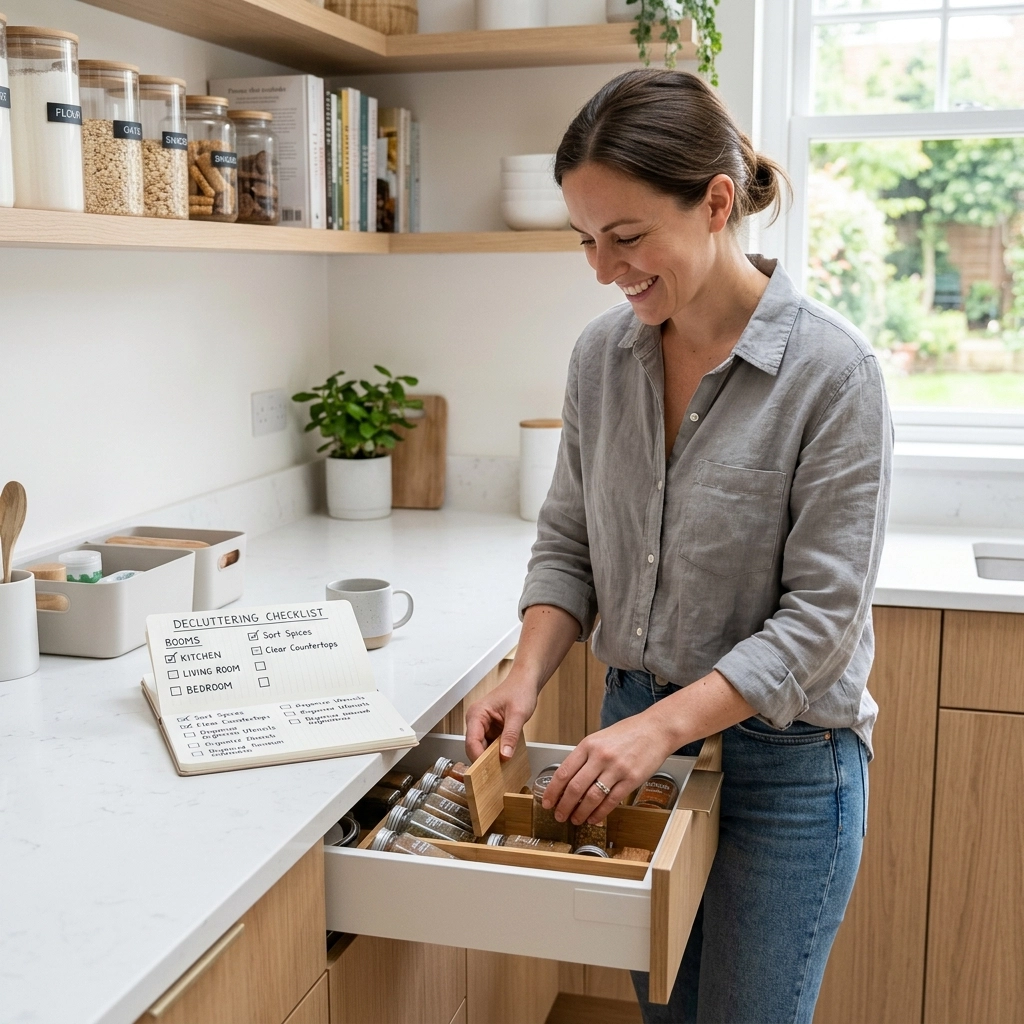
A home is more than just a physical structure; it is a sanctuary, a workspace, and a place of rest. However, when surfaces disappear under piles of paper and closets overflow with forgotten items, the home can become a source of stress rather than comfort. Decluttering is the process of intentional removal, choosing what adds value to a life and releasing what no longer serves a purpose.
Achieving a clutter-free home does not require a single, Herculean effort. Instead, success often comes from a systematic approach that breaks the task into manageable segments. By using a room-by-room decluttering checklist, the process becomes less overwhelming and more sustainable. This guide provides a comprehensive framework to reclaim space and restore order to every corner of the house.
The Foundation of Successful Decluttering
Before picking up the first item, it is essential to establish a strategy. Diving into a messy room without a plan often leads to “shuffling clutter”, moving items from one spot to another without actually removing them from the home.
The Sorting Station Method
The most effective way to handle items during a decluttering session is the “Four-Box Method.” Prepare four distinct containers or designated areas:
- Keep: Items that are used regularly, have a specific function, or hold genuine sentimental value.
- Donate/Sell: Items that are in good condition but no longer needed.
- Trash/Recycle: Items that are broken, expired, or beyond repair.
- Relocate: Items that belong in the house but are currently in the wrong room.
Setting Realistic Goals
Attempting to declutter an entire house in one weekend is a common mistake that leads to burnout. A more practical approach is to dedicate specific blocks of time, such as 30 minutes a day or one full room per week. Consistency is more important than speed. For those with extremely busy schedules, starting with a 5-minute daily declutter can build the necessary momentum to tackle larger projects later.
The Entryway and Mudroom: Setting the Tone
The entryway is the first thing seen when walking through the door and the last thing seen when leaving. It sets the emotional tone for the rest of the home. Because it is a high-traffic transition zone, it easily accumulates shoes, mail, and bags.
Entryway Checklist:
- Shoes: Sort through the pile. Remove shoes that are worn out or out of season. Store off-season footwear in a secondary location like a bedroom closet.
- Coats and Jackets: Keep only the ones currently being worn. Check pockets for old receipts or trash.
- Mail and Paperwork: Create a “one-touch” rule for mail. Sort it immediately into recycle, shred, or action folders.
- Keys and Accessories: Designate a specific bowl or hook for keys to prevent the “lost key” panic.

The Kitchen: The Heart of the Home
The kitchen is often the most difficult room to keep organized because it serves so many functions, cooking, eating, socializing, and sometimes even working. Clutter here can make meal preparation feel like a chore.
Countertops and Cabinets
Clear countertops are the hallmark of an organized kitchen. If an appliance is not used daily (like a toaster or coffee maker), it should be stored in a cabinet.
- Duplicate Tools: Most households do not need three sets of measuring cups or five spatulas. Keep the highest quality set and donate the rest.
- The “Junk Drawer”: Every kitchen seems to have one. Empty it completely, discard dried-out pens and broken rubber bands, and use small dividers to categorize the remaining essentials.
The Pantry and Fridge
A disorganized pantry leads to food waste and unnecessary spending.
- Expirations: Check every can and box. Dispose of anything past its prime.
- Categorization: Group like items together, baking goods, pasta and grains, snacks, and canned goods.
- Decanting: For a more streamlined look and better freshness, consider moving dry goods into clear, airtight containers.
For a deeper dive into creating a functional food storage space, reviewing a guide on how to organize a pantry can provide specific steps to ensure the system remains effective over time.
The Living Room: Creating a Space for Relaxation
The living room should be a place of rest, but it often becomes a “catch-all” for various household items. The goal here is to reduce visual noise.
Living Room Checklist:
- Media and Electronics: Tangled cords, old remote controls, and stacks of DVDs or CDs can create significant clutter. Consolidate cords with ties and consider digitizing physical media collections.
- Books and Magazines: Only keep books that will be read again or hold deep personal meaning. Recycle magazines that are more than a month old.
- Decorative Objects: If a shelf is packed with knick-knacks, they lose their impact. Choose a few favorites to display and donate the rest.
- Textiles: Evaluate throw pillows and blankets. If they are flat, stained, or simply excessive, it is time to thin the collection.

The Bathroom: Streamlining Personal Care
Bathrooms are often small, making clutter even more apparent. Because many items in this room have expiration dates, it is one of the easiest rooms to declutter quickly.
Bathroom Checklist:
- Toiletries: Check for expired skincare, old makeup, and nearly empty bottles of shampoo. Be honest about products that were purchased but never used, they are unlikely to be used now.
- Medicine Cabinet: Safely dispose of expired medications and old first-aid supplies.
- Linens: Most households only need two sets of towels per person. Dispose of towels that are frayed or have lost their absorbency.
- Hair Accessories: Sort through ties, clips, and styling tools. Discard anything broken or unused.
The Bedroom and Closet: Prioritizing Rest
A cluttered bedroom can interfere with sleep quality. The focus should be on creating a serene environment by removing anything that doesn’t contribute to rest.
The Wardrobe
Clothing is often the most emotional category of clutter. To make decisions easier, use the “90/90 Rule”: Have you worn it in the last 90 days? Will you wear it in the next 90 days? If the answer is no, it is a candidate for donation.
- The Hanger Trick: Turn all hangers backward. When an item is worn and returned to the closet, turn the hanger the right way. After six months, any hangers still backward represent clothes that are not being worn.
- Shoes and Accessories: Discard mismatched socks and shoes that are uncomfortable to wear.
Small Space Solutions
In smaller homes, the bedroom often doubles as storage. If the space feels cramped, identifying small bedroom organization mistakes can help uncover hidden storage potential, such as utilizing the space under the bed or behind the door.

The Home Office: Managing Paper and Digital Clutter
In an era of remote work, the home office can easily become overwhelmed by paper piles and tech gadgets.
Office Checklist:
- Paperwork: This is the primary source of office clutter. Invest in a shredder and a scanner. Most documents can be stored digitally. For physical papers that must be kept (like tax returns or birth certificates), use a dedicated filing system.
- Stationery: Test every pen and marker. Discard the ones that don’t work. Group like items like paperclips, staples, and sticky notes in small bins.
- Cables: Use a labeling system for power cords and chargers so their purpose is always clear.
The Laundry Room and Utility Spaces
Though often overlooked, these rooms are essential for the smooth running of a household. When they are cluttered, chores take longer.
Utility Checklist:
- Cleaning Supplies: Group products by use (e.g., floor care, glass cleaning). Dispose of old sponges or nearly empty bottles.
- Laundry Products: Keep only what is used. Detergents, stain removers, and dryer balls should be easily accessible.
- Unfinished Projects: Often, “to-be-repaired” items end up in the laundry room. If an item has been waiting for repair for more than six months, it is time to let it go.
The Garage, Attic, and Basement: The Long-Term Storage
These areas are the “danger zones” of decluttering because they are often used to store things “just in case.” To tackle these spaces, focus on vertical storage and clear labeling.
- Holiday Decorations: Go through the boxes. If a decoration wasn’t put up last year, it probably isn’t needed this year.
- Sports Equipment: Donate gear for hobbies that are no longer practiced or items that children have outgrown.
- Tools: Organize tools on a pegboard or in a dedicated chest. Dispose of rusted or broken items.
For those struggling to find a place for everything, exploring home storage solutions can provide room-specific strategies for maximizing these larger storage areas.

Digital Decluttering: The Invisible Mess
Clutter isn’t always physical. A cluttered digital life can be just as distracting as a messy desk.
- Email: Unsubscribe from retail newsletters that tempt unnecessary spending.
- Desktop: Organize files into folders and delete screenshots or downloads that are no longer needed.
- Photos: Spend 15 minutes a week deleting blurry or duplicate photos from mobile devices.
Maintaining the Order: Post-Decluttering Habits
Decluttering is not a one-time event; it is a lifestyle. Once the home is organized, habits must change to prevent the clutter from returning.
- The One-In, One-Out Rule: For every new item brought into the home, one item must leave.
- Daily Reset: Spend 10 minutes every evening putting items back in their designated “homes.”
- Regular Maintenance: Integrate decluttering into a broader household cleaning routine. When a space is cleaned weekly, it is easier to spot clutter before it accumulates.
- Morning Routines: Starting the day with a focused morning routine often includes small tasks like making the bed or emptying the dishwasher, which prevent “mess-creep” throughout the day.

Final Thoughts on the Decluttering Journey
Decluttering a home is an act of self-care. It provides the mental clarity and physical space needed to focus on what truly matters. While the process requires time and decision-making energy, the result: a peaceful, functional, and organized environment: is well worth the effort.
By following a room-by-room checklist and implementing a proven cleaning framework, any homeowner can transform a chaotic space into an organized haven. The key is to start small, stay consistent, and remember that the goal is not perfection, but progress.

