
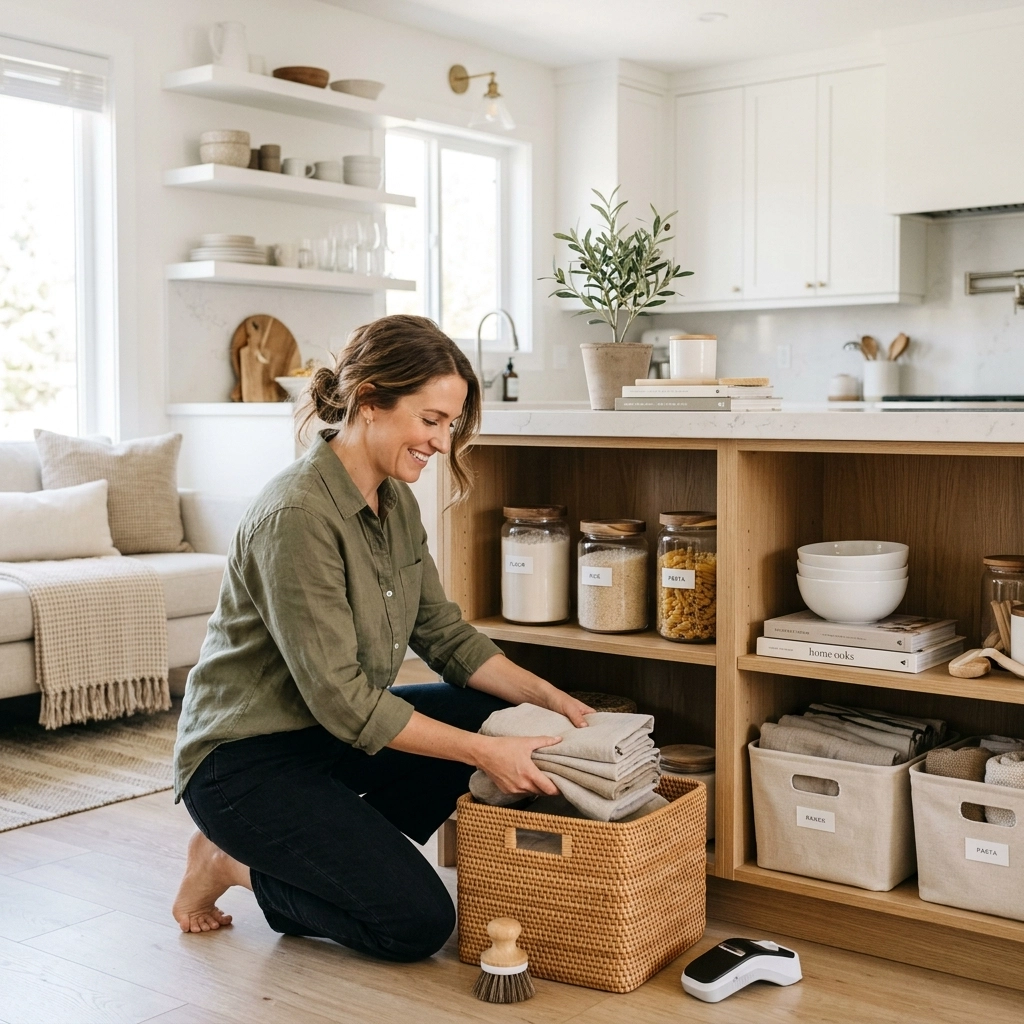
Maintaining an organized home often feels like a monumental task that requires entire weekends of labor. However, the most effective strategy for achieving a clutter-free environment is not found in massive overhauls, but in the implementation of consistent, time-boxed systems. By shifting the focus from “cleaning the whole house” to managing small, manageable intervals, the process becomes sustainable and far less intimidating.
The key to rapid improvement in home organization lies in the marriage of micro-habits and smart storage logic. When every item has a designated home and the barriers to tidying are lowered, the home remains functional without the need for constant stress.
The Power of Time-Boxed Sessions
Research indicates that the most significant barrier to organization is the feeling of being overwhelmed. To combat this, the 20-Minute Method is highly effective. Instead of attempting to organize the entire kitchen or a walk-in closet in one go, a timer is set for exactly 20 minutes. During this period, the focus remains on one specific sub-task, such as a single drawer or one shelf in the pantry.
Once the timer expires, the session ends. This prevents burnout and ensures that the individual does not leave a room in a state of “organized chaos”, where everything is pulled out of the cabinets but there is no energy left to put it back. For those with even tighter schedules, the 15-Minute Win Routine provides a similar benefit. It allows for quick victories, such as tidying a coffee table or sorting through a daily mail pile, fostering a sense of accomplishment that builds momentum for the next day.

Decision-Making and the 90/90 Rule
Organization is as much about removal as it is about arrangement. Decision fatigue is a common obstacle when deciding what to keep and what to discard. To bypass this mental hurdle, the 90/90 Rule offers a clear framework.
The rule requires asking two simple questions:
- Have I used this item in the past 90 days?
- Will I use this item in the next 90 days?
If the answer to both questions is “no,” the item is a strong candidate for donation or disposal. This rule is particularly useful for seasonal items, hobby supplies, and clothing. By applying a mathematical constraint to the decision-making process, the emotional attachment to unnecessary clutter is reduced.
The Kitchen: Zone-Based Efficiency
The kitchen is often the highest-traffic area in the home, making it prone to rapid disorganization. Improving this space requires a “zone-based” approach. This means grouping items based on their function rather than their size or category alone.
Cooking and Preparation Zones
Store pots, pans, and cooking oils as close to the stove as possible. Utensils used for food prep, such as knives and cutting boards, should be located near the main counter space. This reduces unnecessary movement across the room, keeping the workflow efficient.
The Pantry and Dry Goods
Visibility is the primary goal in a pantry. Using clear containers allows for an immediate inventory of what is on hand, reducing the likelihood of overbuying. Tiered shelving for canned goods ensures that items in the back do not expire unnoticed.
Daily Use Items
Items used multiple times a day, such as coffee mugs or frequently used plates, should be kept at eye level. Less frequently used items, like holiday platters or specialized appliances, can be moved to higher cabinets or lower storage areas. Utilizing rotating storage solutions, such as a 360-degree rotating cosmetic receiving box repurposed for spices or small condiment jars, can significantly improve accessibility in deep corner cabinets.

Living Room: Managing Visual Noise
Living rooms often accumulate “visual noise”: small items like remote controls, magazines, and chargers that clutter flat surfaces. To organize this room quickly, focus on “contained storage.”
Every flat surface should be evaluated. If a surface is not for a specific task (like a desk) or decoration, it should ideally be clear. Remote controls can be housed in a dedicated tray or drawer. Magazines and books should be limited to what is currently being read. For those who enjoy reading in the living room, a portable LED bookmark lamp can keep a reading nook tidy by providing light without the need for a bulky floor lamp.
The “one in, one out” rule is particularly effective here. For every new decorative item or book brought into the room, one must be removed. This maintains a steady equilibrium and prevents the space from feeling cramped over time.
The Bedroom and Closet: Verticality and Maintenance
Closet organization is often seen as a daunting project, but it can be managed through systematic habits. One of the fastest ways to identify clothes that are no longer needed is the “Reverse Hanger Trick.” Turn all hangers so the hook faces outward. After wearing and washing an item, return it to the closet with the hook facing inward. After six months, any hangers still facing outward indicate clothes that have not been worn and can likely be decluttered.
To maximize space, vertical storage is essential. Hanging organizers for shoes or folded sweaters utilize the height of the closet that often goes to waste. It is also important to maintain the quality of the items kept. Using a rechargeable sweater shaver to remove pilling from knitwear ensures that the organized closet contains clothes that are ready to wear, rather than items that need repair.
Under-Bed Storage
The space beneath the bed is ideal for long-term storage of out-of-season clothing or extra linens. Using low-profile, wheeled bins allows for easy access while keeping the items out of sight, reducing the visual clutter of the room.

Bathroom: Streamlining the Morning Routine
Bathrooms are usually small, meaning every square inch must be used intentionally. The primary goal is to clear the countertop. Only items used daily: such as a toothbrush or hand soap: should remain on the surface.
Under-Sink Management
The area under the sink is often a “black hole” for half-empty bottles. Use stackable bins or pull-out drawers to create layers of storage. Grouping items by category: hair care, skincare, first aid: ensures that everything is easy to find during a busy morning.
The Vanity
Small items like lipsticks, cotton swabs, and brushes are easily lost in large drawers. A rotating cosmetic receiving box is an excellent way to keep these daily essentials organized and accessible while taking up minimal horizontal space.
Entryways and Mudrooms: The Landing Strip
The entryway serves as the transition between the outside world and the home. Without a system, this area quickly becomes a pile of shoes, bags, and mail. To fix this, create a “landing strip.”
Hooks and Bins
Install hooks at varying heights for coats and bags. This is much faster than using hangers in a closet and more likely to be used by all household members. A designated bin for each person can house shoes, preventing them from scattering across the floor.
Mail Sorting
Create a station for incoming mail. Sort it immediately: shred junk mail, place bills in an “action” folder, and file important documents. By handling mail daily, the “paper pile” never has a chance to form.

Utility Spaces and Garages
The garage or utility room often becomes a catch-all for items that don’t have a place elsewhere. The fastest way to organize these spaces is to group items by activity. For example, all car care products should be stored together. Using a folding car utility storage bag can help keep cleaning supplies or emergency kits organized within the vehicle, while also serving as a transportable bin for items kept in the garage.
Vertical Wall Systems
Pegboards and slat walls are the gold standard for garage organization. They keep tools and equipment off the floor and visible. When an item is visible, it is more likely to be put back in its correct place.
Establishing the “Reset” Habit
The fastest way to get better at organizing is to get better at maintaining. The “Nightly Reset” is a five-to-ten-minute routine where the house is returned to its baseline state. This involves:
- Clearing the kitchen counters.
- Putting away stray items in the living room.
- Preparing the entryway for the following morning.
When the home is reset every night, the 20-minute organization sessions can focus on improving the systems rather than just cleaning up yesterday’s mess.

Sustainable Organization for the Long Term
The goal of home organization is not perfection; it is functionality. By using time-boxed sessions, applying the 90/90 rule, and utilizing smart storage solutions that maximize vertical and hidden spaces, any room can be transformed quickly.
Focusing on problem-based queries: such as “how to manage a messy pantry” or “where to put shoes in a small entry”: allows for targeted solutions that address specific pain points. Organization is a skill that improves with consistency. Small, daily actions lead to a home that supports a lifestyle rather than one that creates additional work.
For more information on home systems and lifestyle management, exploring structured resources and guides can provide further insights into optimizing a living environment. Maintaining a tidy home is a continuous process, but with the right methods, it can be the fastest path to a more peaceful daily life.
Check out the product categories for more ideas on how to categorize your home essentials. Whether it is managing a closet or refining a home office, the principles of micro-habits and smart storage remain the same. Consistency, not intensity, is the secret to a well-organized home.

