
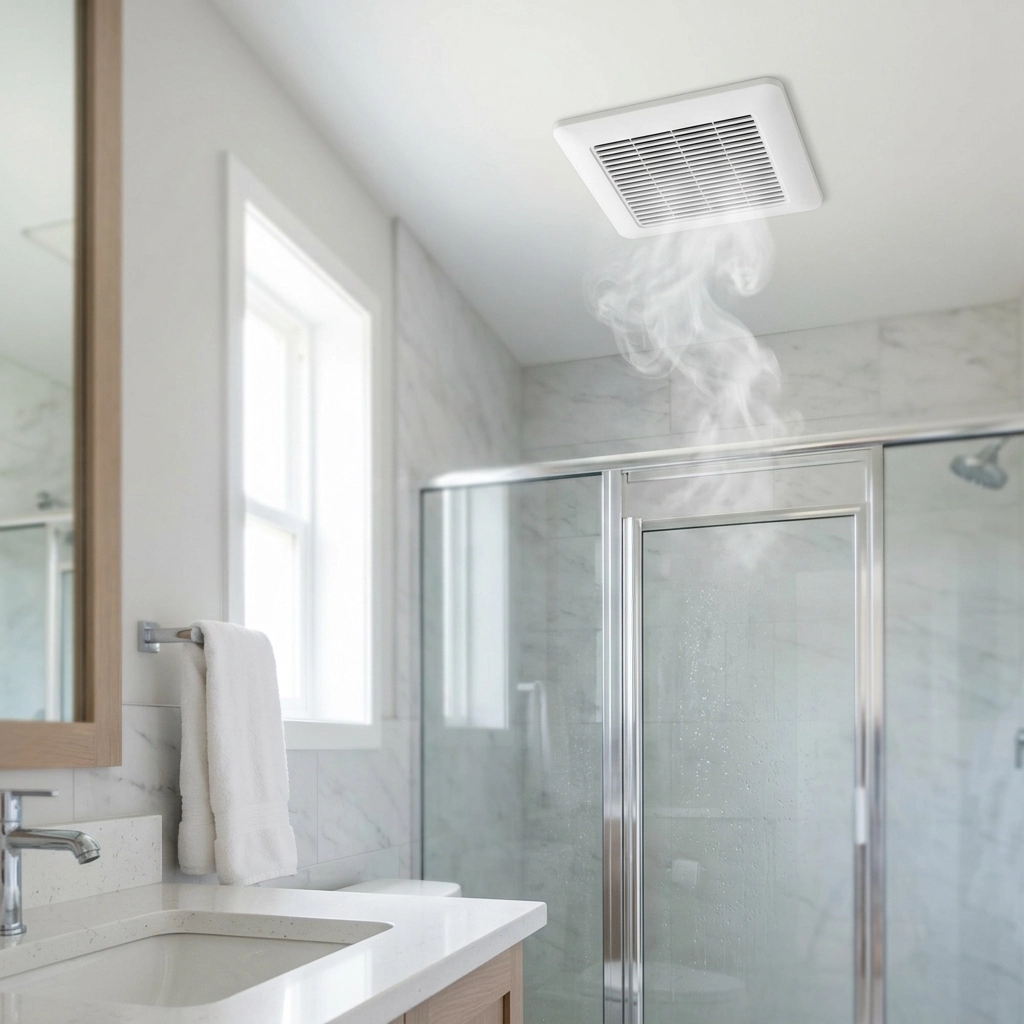
A functional bathroom ventilation system is essential for maintaining a healthy home environment. Its primary purpose is to remove moisture-laden air, odors, and airborne pollutants, preventing the growth of mold and mildew while protecting the structural integrity of the building. When a fan fails to perform these duties, the result is often foggy mirrors that take hours to clear, peeling wallpaper, or a persistent damp smell.
Understanding the mechanics of airflow and the common points of failure in these systems allows homeowners to troubleshoot and resolve issues effectively. This guide explores the ten most frequent reasons for ventilation failure and provides practical, step-by-step solutions for each.
1. Dust and Lint Accumulation
The most common cause of a poorly performing bathroom fan is a simple buildup of dust and debris. Because of the static electricity generated by the motor and the presence of moisture in the air, dust particles cling to the fan blades and the plastic grille. Over time, this creates a thick layer of grime that weighs down the blades and narrows the gaps in the cover.
When the blades are coated in dust, they lose their aerodynamic efficiency. The motor has to work harder to move less air, which often results in increased noise without a corresponding increase in suction. If left uncleaned, the motor may eventually overheat and burn out.
The Fix:
Begin by turning off the power to the fan at the circuit breaker. Remove the plastic cover: usually held in place by metal tension springs: and soak it in warm, soapy water. Use a vacuum with a brush attachment to clear out the housing and the fan assembly. For the fan blades, a damp microfiber cloth can remove stubborn grime. Ensure all components are completely dry before reassembling. Regular cleaning every six months is recommended to maintain peak performance.

2. Improper Duct Termination
A ventilation system is only as effective as its exit point. A significant installation error occurs when the ductwork terminates inside an attic, a crawl space, or between floor joists rather than exiting the building entirely. While the fan may seem to be “sucking” air out of the bathroom, it is actually dumping hot, humid air into an enclosed space.
This creates a high risk for wood rot and mold growth in the attic or structural framing. Furthermore, the backpressure created by dumping air into a semi-sealed space reduces the fan’s ability to pull air from the bathroom.
The Fix:
Inspect the attic or the area above the bathroom to trace the path of the duct. If the duct ends in the attic, it must be extended to a dedicated roof vent or a wall cap. Ensure the termination point has a proper hood and screen to prevent moisture and pests from entering. For more information on home maintenance standards, visiting the customer help section can provide insights into general property care.
3. Obstructions in the Exterior Vent
Even if the ducting is routed correctly to the outside, the exterior vent cap can become a bottleneck. Bird nests, beehives, and accumulated lint frequently block the louvers or the screen of the vent cap. In some cases, the “flapper” (the swinging door that opens when air blows out) can become stuck shut due to paint, rust, or physical damage.
When the exterior vent is blocked, the air has nowhere to go. This creates static pressure that prevents the fan from moving any volume of air, regardless of how fast the motor spins.
The Fix:
Locate the exhaust vent on the exterior wall or roof. Use a ladder to safely inspect the opening. Remove any nesting material or debris. Check that the damper or flapper moves freely. If the flapper is broken or stuck, it may be necessary to replace the vent cap with a new, high-quality model designed for bathroom exhausts.
4. Incorrect Fan Sizing (CFM Rating)
Airflow is measured in Cubic Feet per Minute (CFM). A common reason for “ineffective” ventilation is that the fan was never powerful enough for the size of the room. As a general rule, a bathroom requires 1 CFM for every square foot of floor space. A 70-square-foot bathroom needs at least a 70 CFM fan.
If the bathroom has exceptionally high ceilings (over 8 feet) or features a large soaking tub or multiple showerheads, the required CFM increases. An undersized fan will struggle to clear steam, leading to persistent humidity even after the fan has been running for thirty minutes.
The Fix:
Measure the bathroom’s length, width, and height. Calculate the total square footage. Check the label on the fan motor (accessible by removing the grille) to find its CFM rating. If the rating is lower than the room’s square footage, the fan unit should be upgraded. For those looking for technical specifications on home components, the frequently asked questions page may offer additional guidance on sizing standards.

5. Poor Ductwork Routing and Kinks
The path the air takes from the bathroom to the outside should be as straight as possible. Every 90-degree turn in a duct significantly reduces airflow efficiency. Furthermore, many contractors use flexible “slinky” style ducting. If this ducting is not pulled tight, it creates “ribs” and sagging sections that trap air and moisture.
Sharp kinks or flattened sections of ducting act as physical barriers. If a duct is crushed or bent at a sharp angle to fit around a structural beam, the fan’s capacity can be reduced by 50% or more.
The Fix:
Examine the ductwork in the attic or ceiling. Replace flexible ducting with rigid metal or PVC ducting where possible, as the smooth interior surfaces minimize friction. If flexible ducting must be used, ensure it is pulled taut and supported with straps every few feet to prevent sagging. Minimize the number of elbows and turns in the run.
6. Lack of Makeup Air (The Vacuum Effect)
For a fan to pull air out of a room, new air must be able to enter the room to take its place. This is known as “makeup air.” If a bathroom door is tightly sealed with a high threshold or thick carpeting, the fan creates a slight vacuum (negative pressure) in the room.
In this scenario, the fan will spin and make noise, but it cannot move air because there is no source of replacement air. You can test this by opening the bathroom door slightly while the fan is running; if the fan suddenly sounds “freer” or if a piece of tissue paper is pulled more strongly toward the grille, you have a makeup air issue.
The Fix:
The simplest solution is to ensure there is a gap of at least 1/2 inch to 3/4 inch between the bottom of the bathroom door and the flooring. If a door sweep or high threshold is necessary for privacy or sound, consider installing a louvered door or a small transfer grille in the wall or door to allow air to circulate from the hallway.
7. Excessively Long Duct Runs
Even a powerful fan has limits on how far it can push air. Most standard bathroom fans are designed for duct runs of 10 to 20 feet. If the duct has to travel 40 feet across a house to reach an exterior wall, the air will lose its momentum long before it reaches the exit.
Static pressure increases with every foot of ducting and every bend. When the pressure becomes too high, the air stalls in the pipe, cools down, and the moisture condenses into liquid water inside the duct.
The Fix:
If the duct run is longer than 20 feet, consider rerouting the exhaust to a closer exterior wall or through the roof directly above the bathroom. If a long run is unavoidable, replace the existing fan with a high-performance model designed for high static pressure, or install an inline booster fan to assist in moving the air through the long channel.
8. Uninsulated Ducts in Cold Spaces
When warm, moist air from a shower travels through a duct located in a cold attic, the moisture condenses on the cold inner surface of the ducting. This water can pool in sagging sections of the duct or run backward into the fan housing, leading to rust, electrical shorts, and water stains on the bathroom ceiling.
This moisture also creates a “wet” environment inside the duct that traps dust more quickly, leading back to the issues of clogs and reduced airflow mentioned earlier.
The Fix:
Any ductwork passing through unconditioned space (like an attic or crawl space) must be insulated. You can purchase pre-insulated flexible ducting or wrap existing rigid ducts with R-4 to R-11 fiberglass duct wrap. Ensure the vapor barrier on the insulation is sealed with foil tape to prevent attic moisture from reaching the duct surface.

9. Mechanical Wear and Motor Failure
Like any mechanical device with moving parts, bathroom fan motors eventually wear out. Signs of a failing motor include a loud grinding noise, a high-pitched squeal, or a fan that takes a long time to start spinning after the switch is flipped.
In some cases, the fan might spin but at a much lower RPM than intended. This is often caused by worn bearings or a failing capacitor. If the motor is hot to the touch but the fan isn’t moving, the motor has likely seized.
The Fix:
In many modern fan units, the motor and blade assembly (the “power midget”) can be removed and replaced without tearing out the entire housing from the ceiling. Look for the model number on the motor and search for a replacement kit. If the unit is very old, it is usually more efficient to replace the entire fixture with a modern, quieter, and more energy-efficient model. You can find more about the history of such improvements on the about page of our site.
10. Dampers Stuck or Installed Backward
Most bathroom fans have a small plastic flap at the point where the housing connects to the duct. This is the backdraft damper, designed to prevent cold air from blowing into the bathroom when the fan is off. If this damper is stuck shut due to debris or was installed incorrectly (backwards), the air cannot exit the housing.
Similarly, the exterior vent cap has a damper. If both dampers are present and one is malfunctioning, the system is essentially sealed.
The Fix:
Remove the fan grille and reach into the housing to locate the damper where the duct connects. Ensure the flap moves easily when pushed. If it is stuck, clean any debris or reposition the flap. If you are installing a new fan, double-check the orientation of the damper to ensure it opens in the direction of the airflow.

Testing Fan Performance
To determine if a fix has been successful, there are two simple DIY tests.
The Tissue Test
Take a single square of toilet paper and hold it up to the fan grille while the fan is running. A properly functioning fan should have enough suction to hold the paper firmly against the grille without assistance. If the paper falls, the airflow is insufficient.
The Fog Test
After a hot shower, observe how long it takes for the bathroom mirror to clear. With an appropriately sized and functioning fan, the mirror should begin clearing within five to ten minutes of the shower ending, and the room should be free of visible steam within fifteen minutes.
Long-Term Maintenance Strategies
Maintaining a ventilation system is more effective than repairing one. A regular maintenance schedule ensures the longevity of the motor and prevents the secondary damage caused by excess moisture.
- Quarterly: Vacuum the grille and the interior of the housing.
- Bi-Annually: Deep clean the fan blades and check the exterior vent for obstructions like bird nests or lint.
- Annually: Inspect the ductwork in the attic (if accessible) to ensure there are no new sags, leaks, or disconnected joints.
Proper ventilation is not just about comfort; it is a critical component of home health. By addressing these ten common issues, the bathroom environment remains dry, the air stays fresh, and the structure of the home is protected from the silent threat of moisture damage. For further reading on various home topics or to explore our educational resources, feel free to browse our blog.

