
A home serves as a sanctuary, a place of rest, and a hub for daily activity. However, when physical items accumulate beyond the capacity of the space, the environment often transitions from peaceful to chaotic. Research suggests that physical clutter can lead to increased stress levels and decreased productivity, as the brain constantly processes the visual stimuli of unfinished tasks and unorganized belongings.
Mastering the art of decluttering is not merely about throwing things away; it is about creating a functional living space that supports a specific lifestyle. This comprehensive guide provides a structured approach to reclaiming a home, focusing on sustainable systems and practical storage solutions.
Understanding the Framework of Effective Decluttering
Success in home organization relies on a repeatable system rather than sporadic bursts of energy. A structured method prevents the “rebound effect,” where clutter returns shortly after a cleaning session. The most effective framework follows three core stages: Simplify, Organize, and Systematize.
Simplify: The Editing Phase
The first step is always reduction. Attempting to organize a space before removing unnecessary items often results in “organized clutter”: items that are neatly tucked into bins but serve no purpose. During the simplification phase, every item is evaluated based on its utility and value. If an item has not been used in the past year and holds no significant sentimental value, it is likely a candidate for removal.
Organize: The Placement Phase
Once the volume of items is reduced, the remaining belongings require a logical “home.” Organization involves grouping similar items together and placing them in locations that correlate with their frequency of use. For example, daily-use kitchen tools should be easily accessible, while holiday decorations can be stored in less accessible areas like high shelves or the attic.
Systematize: The Maintenance Phase
The final stage involves creating habits and boundaries to ensure the home remains tidy. This includes establishing routines for processing mail, tidying surfaces, and adhering to a “one-in, one-out” rule for new purchases. Consistent maintenance is the key to long-term success. For those looking to integrate these habits into a busy schedule, exploring everyday living strategies can provide additional context on lifestyle management.
Planning the Decluttering Journey
A common reason for failure in decluttering is the lack of a realistic timeline. The size of the home and the current volume of clutter dictate the pace.
The One-Month Sprint
This approach is suitable for individuals who prefer high-intensity projects or those preparing for a move. It requires a daily commitment of at least 20 to 30 minutes, supplemented by several hours of work on weekends. The focus is on rapid decision-making and immediate removal of discarded items from the premises.
The Three-Month Gradual Plan
For larger family homes or individuals with limited free time, a three-month plan is more sustainable. This timeline allows for the deep decluttering of one major room or category per week. It provides the space to process sentimental items without feeling rushed and allows for the gradual implementation of new organizational systems.
Building Momentum
Procrastination often stems from the overwhelming nature of the task. To combat this, it is best to start small. A single junk drawer or a bathroom cabinet serves as an excellent starting point. Completing a small area provides an immediate sense of accomplishment and the motivation necessary to tackle larger, more complex zones like the garage or the home office.

Essential Sorting Categories
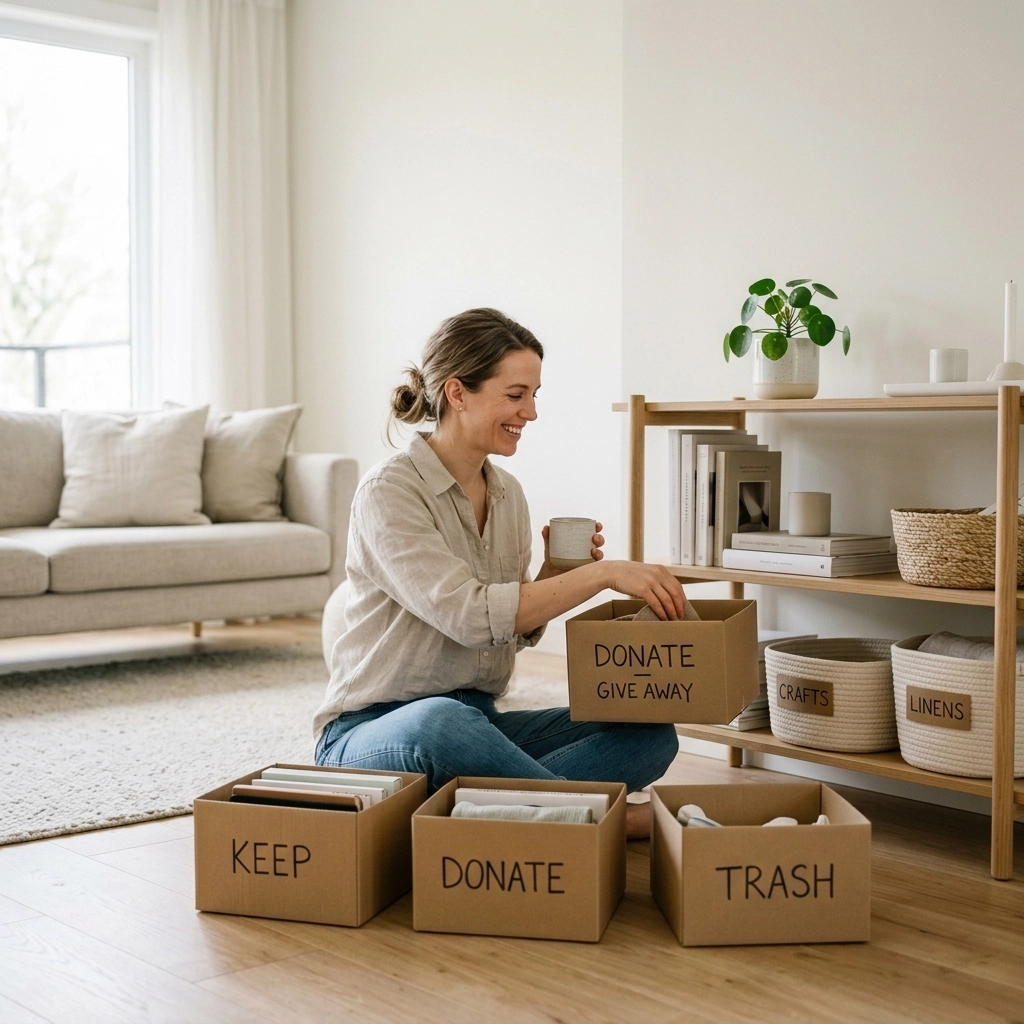
A standard sorting system simplifies the decision-making process. Every item encountered should be placed into one of four categories:
- Keep: Items that are used regularly, function well, and have a designated storage spot.
- Donate/Sell: Functional items that are no longer needed but could benefit someone else.
- Toss/Recycle: Items that are broken, expired, or beyond repair.
- Relocate: Items that belong in a different room of the house.
Using physical bins or boxes for these categories prevents items from getting mixed back together during the process.
A Room-by-Room Strategy
Approaching a home room by room allows for a focused effort and prevents the chaos of having multiple unfinished projects throughout the house.
The Entryway and Mudroom
As the transition point between the outside world and the home, the entryway often accumulates shoes, bags, mail, and seasonal gear.
- Audit Outerwear: Keep only the coats and shoes currently in season. Store off-season items in a closet or under-bed storage.
- Assign Hooks: Wall-mounted hooks provide a designated spot for frequently used bags and keys, preventing them from landing on flat surfaces.
- Manage Paperwork: Place a recycling bin near the entry to immediately discard junk mail before it enters the main living areas.
The Kitchen: Maximizing Efficiency
The kitchen is often the most difficult room to maintain because it is a high-traffic zone with numerous small items.
- Clear the Counters: Aim for “visual silence” by storing appliances that are not used daily inside cabinets. A clear countertop makes meal preparation more efficient and cleaning easier.
- Group by Activity: Store baking supplies together, coffee supplies near the machine, and everyday dishes near the dishwasher.
- The Pantry Audit: Remove everything from the pantry. Check expiration dates and group items by type (e.g., grains, canned goods, snacks). Clear containers can help visualize inventory and prevent duplicate purchases.
The Living Room: Creating a Relaxing Space
The living room should be a place for relaxation, but it often becomes a catch-all for toys, blankets, and media.
- Evaluate Furniture: Sometimes the clutter is the furniture itself. If a coffee table or end table is purely decorative but hinders movement, consider removing it.
- Hidden Storage: Utilize ottomans with storage compartments or media consoles with doors to hide necessary but visually distracting items like remote controls and gaming accessories.
- Decorative Editing: Too many knick-knacks can make a room feel small. Select a few meaningful pieces to display and rotate them seasonally rather than displaying everything at once.

The Home Office and Paper Management
Paper clutter is one of the most significant challenges in modern organization.
- Digital Transition: Whenever possible, opt for paperless billing and scan important documents to a secure cloud-based system.
- The Filing System: For physical papers that must be kept (tax records, legal documents), use a simple filing system with categories like To Do, To File, and Follow-Up.
- Supply Consolidation: Test all pens and markers; discard those that no longer work. Store office supplies in divided drawer organizers to prevent them from becoming a tangled mess.
Bedrooms and Closets: Prioritizing Rest
A bedroom should be a sanctuary. Visual clutter near the bed can interfere with sleep quality.
- The Closet Edit: Try on clothing that hasn’t been worn in a year. If it doesn’t fit or suit your current style, donate it.
- Nightstand Management: Keep only the essentials on the nightstand: a lamp, a book, and perhaps a glass of water. Use drawers for items like chargers and medications.
- Linens: Most households only need two sets of sheets per bed and two towels per person. Excess linens take up valuable space and are rarely used.
Bathrooms and Toiletries
Bathrooms are often small, making organization even more critical.
- Check Expirations: Many beauty products and medications have expiration dates. Discard anything that is past its prime or that has changed consistency/smell.
- Vertical Storage: Use over-the-door organizers or floating shelves to maximize storage in small bathrooms.
- Daily Essentials: Keep daily items like toothbrushes and skincare within easy reach, while tucking away occasional-use items like hair styling tools.

Storage Solutions and Principles
Buying containers before decluttering is a common mistake. Once the items have been edited, storage solutions can be selected to fit the remaining belongings.
The Power of Transparency
Clear plastic or glass bins are often superior to opaque ones because they allow the user to see the contents immediately. This reduces the time spent searching and prevents the “out of sight, out of mind” phenomenon where items are forgotten and replaced.
Utilizing Vertical Space
In small homes, floorspace is at a premium. Wall-mounted shelving, pegboards in garages or craft rooms, and tall bookcases allow for storage without encroaching on the living area.
Grouping and Sub-Categorizing
Within a large bin, use smaller organizers to keep categories separate. In a “Utility Bin,” for example, use small pouches for batteries, lightbulbs, and tape. This prevents small items from migrating to the bottom.
Maintaining the Results
Decluttering is not a one-time event but a continuous process. Implementing small habits is the most effective way to prevent the return of clutter.
The 5-Minute Daily Reset
At the end of each day, spend five minutes returning items to their designated homes. This prevents small messes from snowballing into weekend-long projects. For a structured approach, a 5-minute daily declutter checklist can be an invaluable resource for maintaining order.
One-In, One-Out Rule
To keep the volume of belongings stable, commit to removing one old item for every new item brought into the home. This is particularly effective for clothing, kitchen gadgets, and children’s toys.
Seasonal Reviews
Every few months, perform a quick walkthrough of the home to identify areas where clutter is beginning to accumulate. Often, the change of seasons is a natural time to evaluate gear and clothing.

Ethical Disposal of Items
The final step in decluttering is ensuring that discarded items leave the home responsibly.
- Donation Centers: Many charities accept clothing, household goods, and furniture. Research local organizations to find those that support causes you care about.
- Recycling Programs: Electronics, batteries, and certain plastics require specialized recycling. Check local municipal guidelines to prevent hazardous materials from entering landfills.
- Selling Items: For high-value items, online marketplaces can be effective. However, set a deadline. If an item doesn’t sell within two weeks, donate it to prevent it from remaining in the “to sell” pile indefinitely.
Sustainable Home Organization
A well-organized home provides more than just aesthetic appeal; it provides time and mental clarity. When items are easy to find and the environment is easy to clean, daily life becomes significantly less stressful.
The journey to a decluttered home is personal and depends on individual needs and lifestyle goals. By following a structured approach: Simplify, Organize, and Systematize: any resident can transform their living space into a functional and peaceful environment.
For additional questions regarding home management or specific organizational challenges, reviewing a list of frequently asked questions can provide further clarity on common household dilemmas. Success lies not in perfection, but in the consistent application of these principles to create a home that truly serves its inhabitants.

