
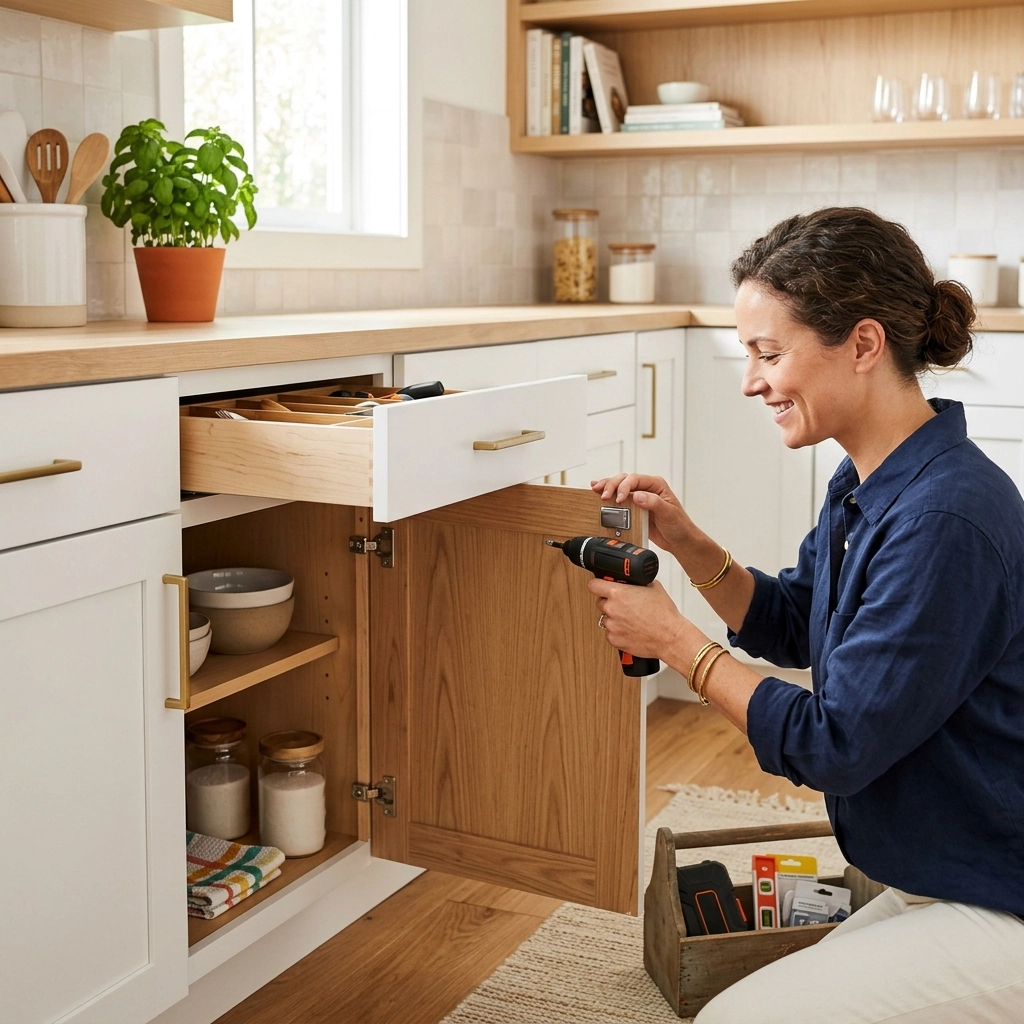
Maintaining a functional kitchen or bathroom involves more than just keeping surfaces clean. Over time, the cabinetry, the literal backbone of these rooms, begins to show signs of wear. Doors hang crooked, drawers stick, and finishes lose their luster. While many homeowners assume these issues require professional intervention or expensive replacements, most cabinet and drawer problems can be resolved with simple, creative techniques.
The following guide explores 25 unconventional and highly effective solutions for the most common cabinetry frustrations. These methods prioritize accessible household items and straightforward mechanical adjustments to restore order and function to any storage space.
Structural and Door Alignment Fixes
The most visible issues in a kitchen are often the cabinet doors. Misalignment, sagging, and the inability to stay closed are frequent complaints.
1. The Toothpick and Glue Reinforcement
When hinge screws no longer bite into the wood, the door will inevitably sag. This happens because the wood fibers inside the screw hole have stripped away. A creative and permanent fix is to coat a few wooden toothpicks in wood glue and jam them into the hole. Once the glue dries, snip off the protruding ends. This creates a fresh, solid “plug” of wood for the screw to grip.
2. Cardboard Shimming for Instant Leveling
If a door is hanging slightly lower on one side and the hinge adjustments have reached their limit, a small piece of thin cardboard (like from a cereal box) can act as a shim. Placing a small square of cardboard behind the hinge leaf before screwing it back into the frame can subtly tilt the door into the correct position.
3. Clear Nail Polish for Set-Screws
Cabinet handles and knobs that constantly wiggle are a nuisance. If tightening the screw doesn’t work because vibrations eventually loosen it again, apply a drop of clear nail polish to the screw threads before driving it home. The polish acts as a light-duty thread locker, preventing the screw from backing out while still allowing it to be removed with a screwdriver later if needed.
4. Magnet Strength Reduction
Sometimes, magnetic catches are too strong, making it difficult to open a cabinet without a significant tug. To fix this without replacing the hardware, place a small piece of transparent tape or a thin layer of electrical tape over the magnet. This creates a microscopic gap that reduces the magnetic pull just enough to make the door easier to open.
5. Felt Bumper “Silencers”
Loud slamming doors are often the result of missing or compressed bumpers. While store-bought rubber bumpers are standard, they often fall off. A more durable creative solution involves using small circles cut from heavy-duty felt sheets. These provide a softer “thud” than rubber and tend to have stronger adhesive backings.

Enhancing Drawer Performance
Drawers bear the weight of heavy cutlery and cookware, leading to mechanical failures like sticking, sagging, or jumping off tracks.
6. The Paraffin Wax Slide
For older wooden drawers that slide on wooden runners rather than metal tracks, friction is the primary enemy. Rubbing a block of paraffin wax or a simple white unscented candle along the contact points on both the drawer and the cabinet frame will significantly reduce friction. Unlike oil, wax does not attract dust or grime, keeping the action smooth for months.
7. Pool Noodle Drawer Stops
If a drawer pulls out too far and risks falling on your feet, a creative “stop” can be fashioned from a small slice of a foam pool noodle. By wedging a section of foam at the back of the drawer track (if accessible) or using it to create a soft friction barrier, the drawer can be prevented from flying out of the frame.
8. Graphite Lubrication for Metal Tracks
Squeaky or grinding metal slides shouldn’t always be oiled, as grease can become a magnet for kitchen crumbs. Instead, use a carpenter’s pencil to rub graphite onto the tracks. Graphite is a dry lubricant that allows metal components to glide silently without the mess of liquid sprays.
9. Binder Clip Cord Management
Drawers used for electronics often become a tangled mess of cables that get caught in the tracks. To prevent this, clip large binder clips to the back or side of the drawer box. Route the cables through the silver “wings” of the clip to keep them organized and away from the moving mechanical parts.
10. Velcro for Shifting Liners
Drawer liners that bunch up and interfere with the closing mechanism are common. Rather than using permanent adhesive, place small dots of hook-and-loop fastener (Velcro) in the corners of the drawer. This keeps the liner perfectly flat and allows for easy removal when the drawer needs a deep cleaning.

Restoring Finishes and Surface Repairs
Kitchen environments are harsh, involving heat, moisture, and grease. These factors eventually take a toll on the aesthetic appeal of the cabinets.
11. The Walnut Scratch Filler
For minor scratches on dark wood cabinets, a shelled walnut is a surprising tool. Rub the meat of the walnut directly over the scratch. The natural oils and the pigment in the nut will penetrate the wood, effectively camouflaging the scratch and sealing the surface from moisture.
12. Baking Soda and Oil Grease Cutter
Over time, a thick layer of “kitchen gunk”, a mix of grease and dust, builds up near the handles. Standard cleaners often fail here. Create a paste of two parts baking soda and one part vegetable oil. Rub this onto the sticky areas with a soft cloth. The oil breaks down the old grease, while the baking soda provides a gentle abrasive to lift it away without scratching the finish.
13. Ironing Out Peeling Veneer
If the edge banding or veneer on a cabinet door is starting to peel, the original heat-activated glue can often be “re-awakened.” Place a clean cotton cloth over the peeling section and press a medium-heat clothes iron over it for 15-20 seconds. The heat melts the adhesive, allowing it to bond again once pressed down firmly with a wooden block.
14. Cornstarch for Oil Stains
If oil has splashed onto a porous wood cabinet and left a dark spot, apply a thick layer of cornstarch to the area and leave it overnight. The cornstarch acts as a desiccant, drawing the oil out of the wood fibers. Wipe it away in the morning and repeat if the stain persists.
15. Toothpaste for Water Rings
Non-gel, white toothpaste can remove white water rings caused by steam or damp towels hanging over cabinet doors. Gently rub the toothpaste onto the ring with a soft cloth in the direction of the wood grain, then wipe with a damp cloth. The mild abrasives in the toothpaste lift the minerals left behind by the water.

Innovative Hardware and Latch Solutions
Hardware isn’t just about handles; it’s about how the cabinet interacts with its environment.
16. Rubber Band Grip Enhancement
When a knob is too small or slippery to turn (common in utility rooms or for those with arthritis), wrap a small, thick rubber band around the circumference of the knob. This provides instant tactile grip and leverage without the need to replace the hardware entirely.
17. Aluminum Foil Rust Removal
Chrome or stainless steel handles that have developed small rust spots can be cleaned with aluminum foil. Crumple a piece of foil, dip it in water, and rub the rusted area. A chemical reaction between the aluminum and the rust creates a polishing compound that removes the corrosion without scratching the metal underneath.
18. Chalk for Moisture Control
Musty smells in under-sink cabinets are often due to trapped humidity. Hanging a bundle of school chalk inside the cabinet can help. Chalk is highly porous and will absorb excess moisture from the air, preventing the growth of mildew and keeping the wood dry.
19. Hairspray for Ink Marks
If a pen leaks inside a drawer or a child marks a cabinet door, an alcohol-based hairspray can act as a solvent. Spray the mark and let it sit for a minute, then blot with a clean cloth. The alcohol breaks down the ink, allowing it to be lifted from the finished surface.
20. Essential Oil Odor Neutralizers
For cabinets that have sat empty or stored old linens, a musty odor can linger. Instead of using chemical sprays, place a few drops of lemon or eucalyptus essential oil on a cotton ball and tuck it into the back corner of the cabinet. This provides a natural, clean scent that lasts for weeks.

Layout and Organization Fixes
Sometimes the “issue” with a cabinet isn’t mechanical, but rather a failure of design that makes it difficult to use.
21. Tension Rod Vertical Dividers
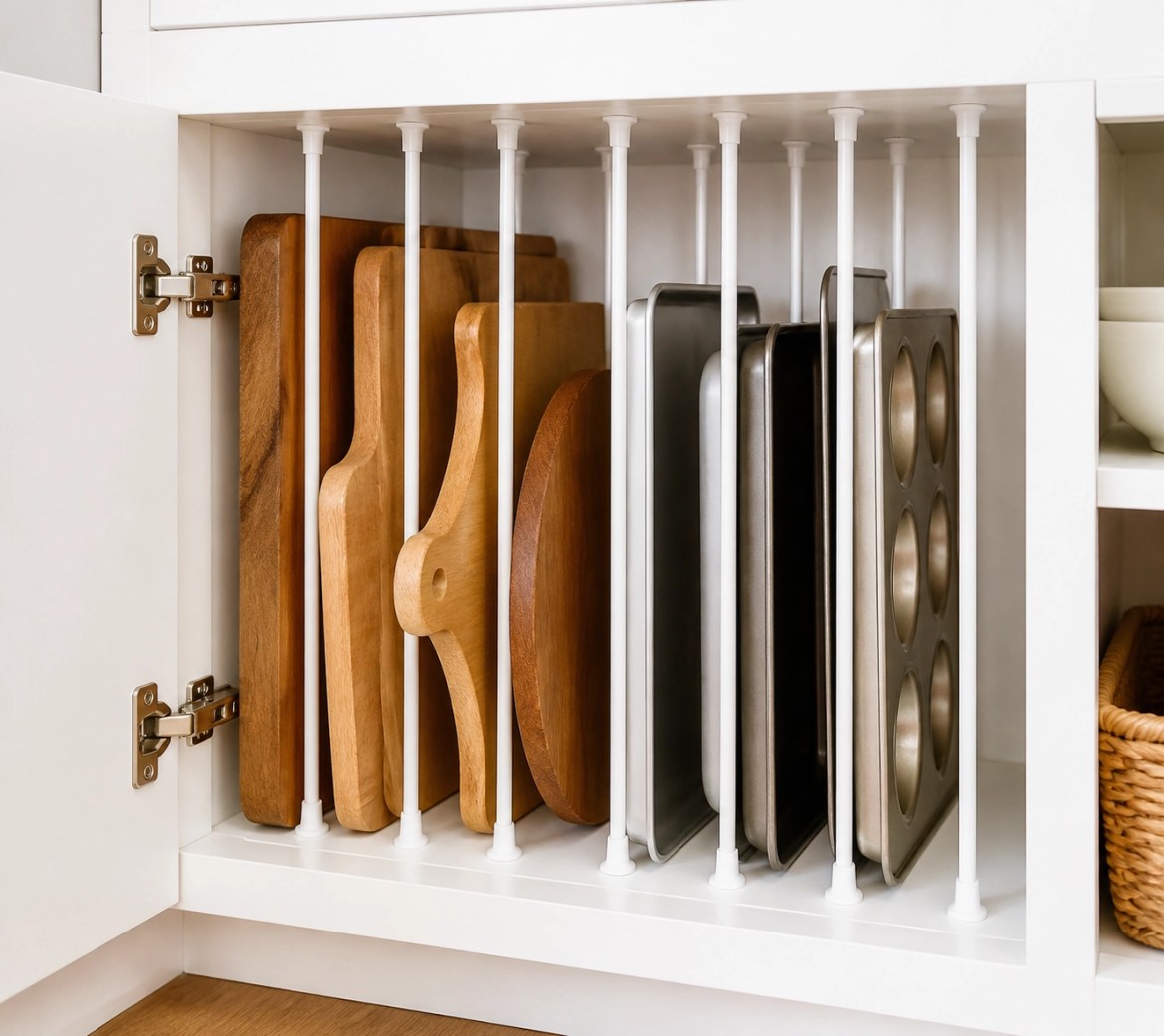
Large cabinets often have a “piling” problem with baking sheets and cutting boards. By installing small tension rods vertically between the top and bottom of a shelf, you can create custom slots for slim items. This prevents the “avalanche” effect when trying to pull out a single tray.
22. Magnetic Strip Tool Storage
The inside of a cabinet door is wasted real estate. Installing a magnetic knife strip on the interior of a bathroom cabinet door allows for the organized storage of bobby pins, tweezers, and nail clippers, keeping the drawer itself free for larger items.
23. Pipe Cleaners for Ornate Grooves
Dust and grease often get trapped in the intricate “cove and bead” molding of traditional cabinets. A standard cloth cannot reach these depths. Using a pipe cleaner allows you to hook into the tightest corners and pull out debris that would otherwise require a toothbrush and hours of scrubbing.
24. Super Glue and Baking Soda for Gouges
For deep gouges in painted cabinets, a mixture of super glue and baking soda creates a structural plastic filler that dries instantly. Fill the hole with a bit of baking soda, drop the super glue on top, and it will harden into a sandable surface in seconds. This is much faster than traditional wood filler and much stronger for high-impact areas.
25. Vaseline for Squeaky Hinges
If a hinge is squeaking and you don’t have specialized lubricant, a tiny dab of petroleum jelly (Vaseline) works wonders. It stays in place better than liquid oils and provides a long-lasting barrier against the metal-on-metal friction that causes the noise.
Maintaining the Results
Fixing these issues is only half the battle; maintaining them ensures the longevity of the cabinetry. It is recommended to perform a “hardware audit” twice a year. This involves checking for loose screws and reapplying lubricants to drawers and hinges.
For those interested in learning more about home maintenance and DIY repairs, visiting the Paris Wheel Blog offers a variety of resources. Additionally, if you find that your cabinetry issues are related to more complex structural problems, reviewing the Frequently Asked Questions page can provide further guidance on when to seek professional help.
By applying these creative solutions, homeowners can extend the life of their kitchen and bathroom storage significantly. These fixes are not just about saving money; they are about taking control of the home environment and ensuring every drawer and door functions exactly as it should. For more information on our terms or to get in touch regarding specific inquiries, please visit our Contact Us or About pages.

