
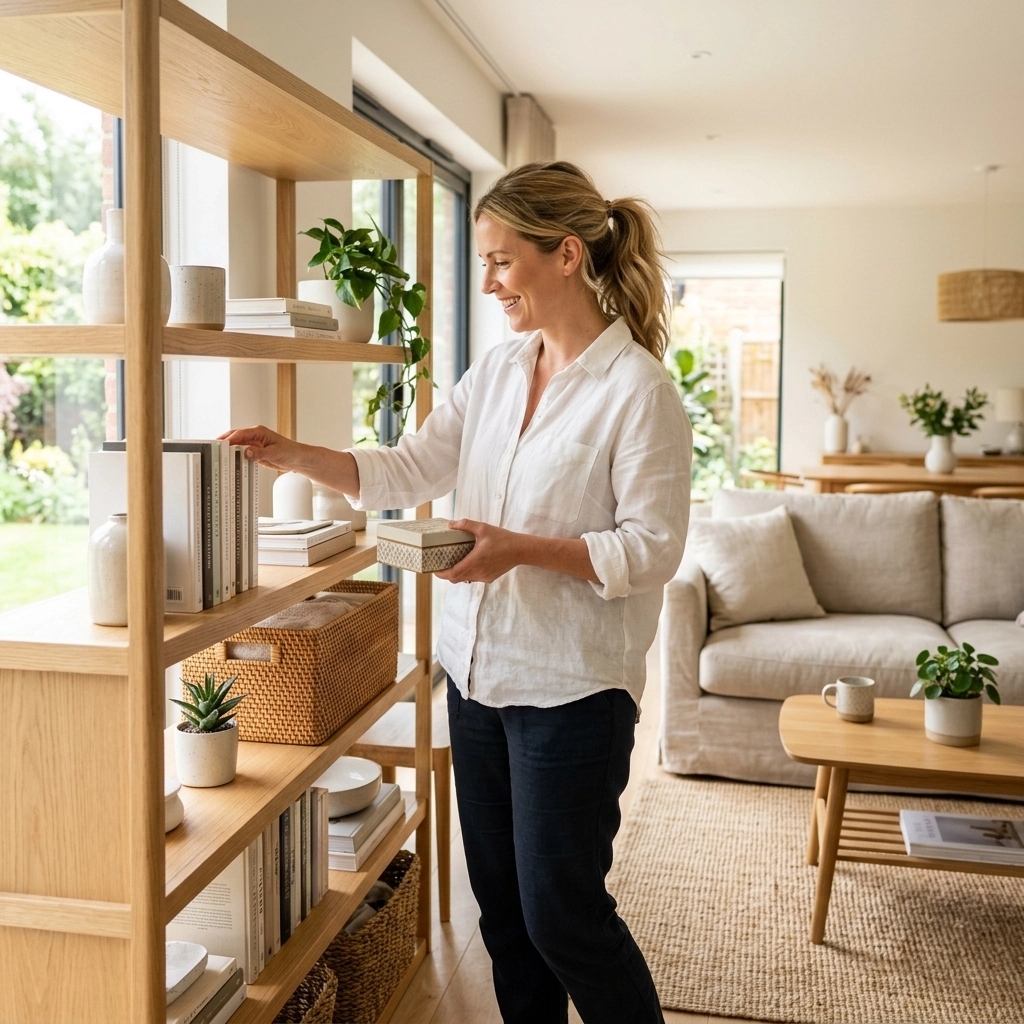
Maintaining a clean and organized living space often feels like a full-time job. Between professional responsibilities, personal development, and social commitments, finding hours to dedicate to deep-cleaning is a luxury few can afford. However, the accumulation of physical clutter is more than just an aesthetic issue; it is a significant drain on time and mental energy. Research into environmental psychology suggests that excessive visual stimuli in a home or office environment can decrease focus and increase cortisol levels, leading to a persistent state of low-level stress.
The primary reason most decluttering efforts fail is the perceived scale of the task. When a person looks at a garage or a packed closet, the brain often defaults to a state of overwhelm, leading to procrastination. By shifting the focus from “cleaning the whole house” to specific, time-bound, and habit-based actions, it is possible to reclaim space and time without a massive weekend overhaul.
The Relationship Between Clutter and Time Management
Time management is often viewed through the lens of calendars and to-do lists, but the physical environment plays a critical role. Every misplaced item represents a “delayed decision.” A stack of mail is a collection of decisions about bills, invitations, or recycling that have been postponed. A pile of laundry on a chair is a delayed decision about where to store those garments.
When these delayed decisions accumulate, they create “friction” in daily life. Finding car keys takes five minutes longer than it should. Preparing a healthy meal becomes difficult because the kitchen counters are occupied by non-cooking items. These micro-losses of time add up to hours of lost productivity every week. Implementing quick hacks to manage this friction is essential for anyone looking to optimize their daily routine.
1. The One-Minute Move
The “One-Minute Move” is rooted in the idea of immediate completion. The core rule is simple: if a task takes sixty seconds or less to complete, it must be done the moment it is identified. This prevents the “stacking” of small chores that eventually become a daunting mountain of work.
Applications of the One-Minute Rule
Many household tasks fall into this category. For example:
- Mail Management: Bringing the mail inside and immediately dropping junk advertisements into the recycling bin rather than placing them on the kitchen island.
- Entryway Habits: Hanging up a coat and placing shoes in their designated spot rather than draping them over furniture.
- Kitchen Cleanup: Rinsing a coffee mug and putting it directly into the dishwasher instead of leaving it in the sink.
- Trash Removal: Tossing obvious pieces of trash: snack wrappers, empty pens, or old receipts: the moment they are spotted while walking through a room.
The psychological benefit of the One-Minute Move is the reduction of “open loops” in the brain. Each small, unfinished task stays in the back of the mind as a reminder of something that needs to be done. By closing these loops instantly, mental clarity is preserved for more important tasks. Over time, this becomes a subconscious habit, leading to a home that stays “naturally” tidier without a dedicated cleaning schedule.
2. 10-Minute Declutter Sprints
When a space has become significantly cluttered, the One-Minute Move may not be enough. This is where the 10-Minute Declutter Sprint becomes effective. This technique utilizes time-boxing: a common productivity strategy: to overcome the barrier of perfectionism.
Executing the Sprint
To perform a sprint, a timer is set for exactly ten minutes. The goal is not to clean a whole room, but to tackle one high-impact “micro-zone.”
Effective Micro-Zones include:
- A single “junk” drawer in the kitchen.
- The surface of a bedside table.
- The medicine cabinet.
- The area surrounding the kitchen sink.
- A specific shelf in the pantry.

The key to the sprint is momentum. There is no time for deep contemplation or emotional processing of items. Decisions must be rapid: keep, toss, or donate. Because the commitment is only ten minutes, it is much easier to start. Most people can find ten minutes in their day: perhaps while a meal is in the oven or before starting a nightly routine. The time-bound nature of the task prevents burnout and ensures that the effort does not spiral into a multi-hour project that leaves the room in more disarray than when it started.
3. The 12–12–12 Challenge
The 12–12–12 Challenge is a gamified approach to decluttering that provides a clear finish line. It is particularly useful for those who struggle to decide where to begin or how much is “enough” for one session.
The mission is to find:
- 12 items to throw away: Focus on broken items, expired products, or literal trash.
- 12 items to donate: Focus on items that are in good condition but are no longer used or loved.
- 12 items to put back in their proper home: Focus on items that have migrated to the wrong room.
This challenge can be done as a solo activity or turned into a family event. For households with children, it serves as an educational tool for teaching organization and the value of donating to others. By the end of the challenge, 36 items have been processed, which often results in a visible improvement in the room’s atmosphere. This structured approach removes the “analysis paralysis” that often accompanies decluttering.
For more information on organizational habits, visiting the blog can provide further insights into lifestyle management.
4. Clear One Flat Surface Completely
In many homes, horizontal surfaces act as magnets for clutter. This is often referred to as “clutter creep.” Once one item is placed on a clean dining table, it becomes socially and psychologically easier to place a second, third, and fourth item there.
Reclaiming the “Clean Spot”
The strategy here is to choose one prominent flat surface and commit to keeping it 100% clear.
- The Kitchen Island: Clearing this surface makes food preparation easier and provides a sense of calm in the heart of the home.
- The Entryway Table: Keeping this clear ensures that the first thing seen when entering the house is order rather than chaos.
- The Desk: A clear desk is essential for focused work and reducing procrastination.

The process involves removing every single item from the surface, wiping it clean, and then very intentionally deciding what: if anything: is allowed to return. Usually, only functional or highly aesthetic items (like a single lamp or a vase of flowers) should remain. This “clean spot” serves as a lighthouse; it is a visual reminder of what the rest of the home can look like and provides immediate psychological relief.
5. The “Maybe” Box (The 30-Day Test)
One of the greatest hurdles to decluttering is the fear of regret. The thought of “I might need this someday” keeps drawers full of old cables, extra buttons, and kitchen gadgets that are never used. The “Maybe Box” is a low-stress solution to this problem.
How to Implement the Maybe Box
If an item’s utility is questionable, it should be placed into a box. The box is then taped shut and labeled with a date exactly 30 days in the future. The box is stored in a closet, garage, or attic: anywhere out of the immediate line of sight.
If, during those 30 days, a specific item from the box is needed, it is retrieved and integrated back into the home. However, if the 30 days pass and the box remains unopened, it is a clear indication that the items inside are not necessary for daily life. At this point, the box can be donated or discarded without even opening it again. This prevents the “re-sorting” trap, where a person looks at the items again and talks themselves back into keeping them.
This technique is especially helpful for those transitioning through different life stages or those following the guidelines found in the terms and conditions of certain professional organization systems.
6. Declutter by Category, Not Room
Standard cleaning often involves moving from the kitchen to the living room to the bedroom. The problem with this method is that similar items are often scattered throughout the house. For example, one might find scissors in three different rooms, or pens in five.
The Categorical Approach
Instead of tackling a room, one should tackle a category.
- Footwear: Gather every pair of shoes from every closet and entryway.
- Linens: Collect all towels and bedsheets into one pile.
- Mugs and Glassware: Bring every cup in the house to the kitchen counter.

When all items of a single category are in one place, the sheer volume of duplicates becomes apparent. It is much easier to let go of a fourth set of bedsheets when they are sitting next to the three sets that are actually used. This method provides a comprehensive view of what is owned, preventing the accidental “shuffling” of clutter from one room to another.
7. Quick Paper and Digital Sweep
Clutter is not always physical. In the modern age, digital and paper clutter can be just as overwhelming. Paper clutter often creates a sense of “visual noise,” while digital clutter contributes to “cognitive load.”
The 5-Minute Paper Reset
Standing by a recycling bin or shredder, one should go through the “active” paper piles. Every piece must be sorted into one of three categories:
- Recycle/Shred: Junk mail, old newspapers, or expired coupons.
- Action: Bills that need payment or forms that need signatures.
- File: Documents that must be kept for legal or tax reasons (like those related to a privacy policy or insurance).
The 5-Minute Digital Reset
Digital decluttering can happen anywhere: even while waiting in line or during a commute.
- Unsubscribe: Use the search bar in an email inbox to find the word “unsubscribe” and remove oneself from retail lists that are no longer relevant.
- Delete Screenshots: Most phone galleries are full of temporary screenshots that have served their purpose.
- Clear the Desktop: Move loose files on a computer into organized folders or the trash.

By treating digital space with the same respect as physical space, the mind remains more organized and less prone to the distractions of endless notifications and unorganized files.
Sustaining the Decluttered Home
The true secret to a decluttered home is not a single cleaning event, but a series of systems and mindset shifts. Once the initial layers of clutter are removed using the seven hacks above, maintenance becomes the priority.
The “One In, One Out” Rule
To prevent clutter from returning, many successful organizers adopt the “One In, One Out” rule. For every new item brought into the home: whether it is a new pair of shoes, a book, or a kitchen tool: an equivalent item must leave. This ensures that the total volume of possessions remains stable.
The Power of “Empty Space”
There is a common tendency to feel that every shelf or corner must be filled with decor or storage bins. However, empty space is a valuable design element. It allows the eyes to rest and highlights the items that are truly valued. Embracing empty space is a psychological shift that values “room to breathe” over “room to store.”
Addressing the Sunk Cost Fallacy
Many people hold onto items because they were expensive or were received as gifts. This is known as the sunk cost fallacy. The money spent on an item is already gone; keeping the item does not bring the money back. In fact, if the item is taking up space and causing stress, it is continuing to “cost” the owner in terms of mental health. Learning to let go of these items is an important step in personal growth and home management.
If further assistance is needed in understanding these concepts, the customer help section or the About page can offer more information on the company’s philosophy regarding lifestyle education.
The Mental Benefits of Order
The transition from a cluttered environment to an organized one often results in a significant shift in mood and productivity. When the physical environment is controlled, it provides a sense of agency and competence. It is easier to focus on personal goals, such as learning a new skill through online platforms, when the surroundings are not constantly demanding attention through mess and disorganization.

Furthermore, a decluttered home is easier to clean. When there are fewer items to move, dusting and vacuuming take a fraction of the time. This creates a positive feedback loop: less clutter leads to more time, and more time allows for better maintenance of the home environment.
Final Thoughts on Habit Building
The seven hacks outlined here: The One-Minute Move, 10-Minute Sprints, the 12-12-12 Challenge, Clearing Flat Surfaces, the Maybe Box, Categorical Decluttering, and Digital Sweeps: are not meant to be one-time fixes. They are tools for building a lifestyle centered on simplicity and efficiency.
By starting small and focusing on consistent, micro-actions, anyone can transform their living space. The goal is not a “perfect” home, but a home that serves its residents rather than one that requires the residents to serve it. Through these practices, the time wasted on managing clutter is reclaimed, allowing for a more focused, peaceful, and productive life. For those interested in staying updated on similar lifestyle tips, signing up for a newsletter can provide a steady stream of helpful information.

