
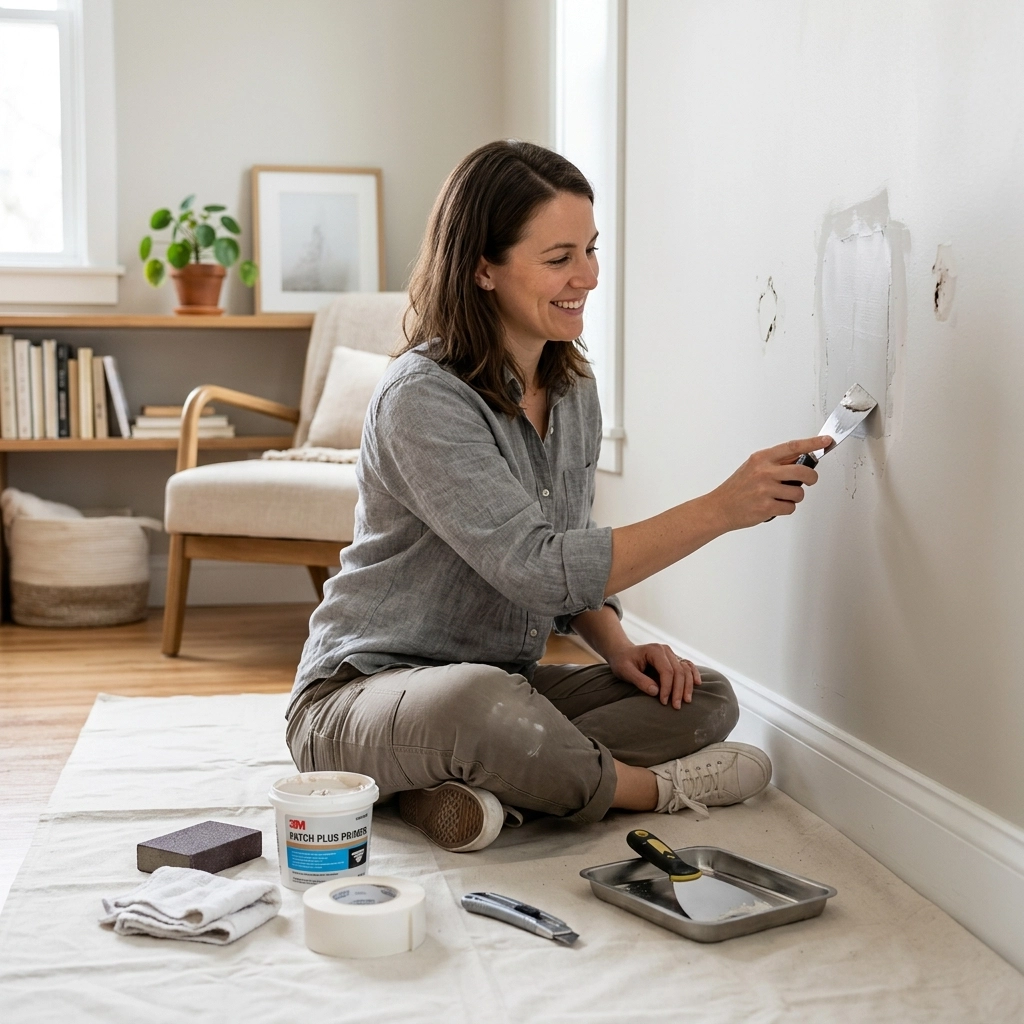
Maintaining the interior of a home involves more than just cleaning and decorating; it requires the ability to address the inevitable wear and tear that occurs on vertical surfaces. From the small punctures left by picture hooks to the unsightly dents caused by moving furniture, minor wall damage is a universal experience for homeowners and renters alike. While these imperfections may seem daunting to a novice, repairing them is one of the most accessible and rewarding DIY skills to master.
Achieving a professional-grade finish requires a combination of the right materials, a steady hand, and patience. A wall that has been repaired correctly should be indistinguishable from the surrounding area, with no visible bumps, dips, or color variations. This guide provides a comprehensive walkthrough of the tools, materials, and techniques necessary to restore walls to their original, pristine state.
Essential Tools and Materials for Wall Repair
Before beginning any repair project, gathering the correct supplies is paramount. The quality of the finish is often directly proportional to the quality and suitability of the tools used.
The Repair Toolkit
- Putty Knives: A set of putty knives in various sizes is essential. A 1-inch or 2-inch knife is ideal for small nail holes, while a 6-inch or 10-inch “broad knife” is necessary for feathering out larger patches.
- Sanding Blocks and Sandpaper: 120-grit and 220-grit sandpaper are the standard choices. A sanding block provides a flat surface, ensuring the repair remains level with the wall rather than following the contour of a finger.
- Utility Knife: A sharp blade is needed for cutting away loose drywall paper or widening cracks to allow the repair compound to bond more effectively.
- Joint Compound vs. Spackle: For very small holes (less than 1/4 inch), a lightweight spackle is sufficient. For larger repairs or areas prone to movement, all-purpose joint compound (often called “mud”) is preferred for its durability and better adhesion.
- Wall Patches: For holes larger than two inches, a self-adhesive mesh patch or a “California patch” (made from a scrap of drywall) will provide the necessary structural support.
- Primer and Paint: Repair compounds are porous and will absorb paint differently than the rest of the wall. A high-quality primer is required to seal the repair before applying the finish coat.
For those who travel between properties or need to keep their maintenance supplies organized, a car trunk storage bag can serve as an excellent portable kit for these tools.

Repairing Tiny Imperfections: Nail Holes and Scuffs
Nail holes and small scuffs are the most common forms of wall damage. These typically occur when rearranging artwork or through the daily impact of household life.
Step-by-Step for Nail Holes
- Preparation: Use the handle of a putty knife to lightly tap the edges of the hole inward. This creates a small depression that holds the spackle and prevents a “mushroom” effect where the material sits on top of the wall surface.
- Application: Take a small amount of lightweight spackle on the edge of a 1-inch putty knife. Press it firmly into the hole.
- The “Swipe” Technique: Hold the knife at a 45-degree angle and swipe across the hole. Then, hold the knife at a 90-degree angle and scrape away the excess material in a single, clean motion.
- Drying and Sanding: Allow the spackle to dry completely. Most lightweight spackles dry within 30 minutes. Once dry, lightly sand the area with 220-grit sandpaper until it feels flush with the wall.
- Clean Up: Wipe away the dust with a damp cloth before proceeding to paint.
Managing Surface Scuffs
Scuffs from shoes or furniture often do not require filler. Before reaching for the spackle, attempt to clean the area with a melamine foam sponge (often sold as “magic” erasers). If the scuff has actually indented the drywall, treat it as a shallow dent by applying a very thin layer of joint compound and sanding it smooth.
Addressing Dents and Small Gouges
Dents are shallow depressions where the drywall has been compressed but not punctured. These are common in high-traffic areas like hallways.
Filling the Depression
To repair a dent, the goal is to create a perfectly flat surface. Because joint compound shrinks slightly as it dries, deeper dents may require two applications.
Apply the compound with a 6-inch putty knife, extending the material about two inches beyond the edges of the dent. This technique, known as “feathering,” makes the transition between the patch and the original wall invisible. After the first coat dries, sand it lightly and apply a second, thinner “skim coat” if any indentation remains.
Fixing Medium Holes: The Mesh Patch Method
Holes caused by doorknobs or accidental impacts (between 1 and 4 inches) require structural reinforcement. Simply filling a hole of this size with compound will result in the material cracking or falling out.
Using Self-Adhesive Mesh
- Clean the Edges: Use a utility knife to remove any ragged pieces of drywall paper or crumbling gypsum.
- Apply the Patch: Center a self-adhesive fiberglass mesh patch over the hole. Press it firmly against the wall.
- The First Coat: Using a 6-inch putty knife, apply joint compound over the mesh. The goal is to press the compound through the holes in the mesh to create a bond with the interior of the wall.
- Feathering Out: Spread the compound outward, tapering the edges so they become thinner the further they get from the center.
- Subsequent Coats: Large patches almost always require three coats. The second coat should be applied with an 8-inch or 10-inch knife, extending even further out (about 6 to 8 inches from the center).

Solving the Mystery of Popped Nails
A “nail pop” appears as a small, circular bump or a crack on the wall surface. This occurs when the wooden studs behind the drywall shrink or swell, causing the nail or screw to loosen and push against the drywall tape and compound.
How to Fix a Nail Pop Permanently
Simply hammering the nail back in is a temporary fix that will likely fail again. Instead, follow this process:
- Expose the Fastener: Use a utility knife or a small chisel to remove the loose compound covering the nail head.
- Secure the Board: Drive a new drywall screw into the stud approximately 2 inches above or below the original nail pop. Ensure the screw head sits slightly below the surface of the drywall (creating a “dimple”) without tearing the paper facing.
- Drive the Old Nail: If the original fastener is a nail, use a hammer and a nail set to drive it deep into the stud. If it is a screw, use a screwdriver to tighten it.
- Fill and Sand: Cover both the new screw head and the old nail location with joint compound. Since these are small, two coats usually suffice.
Repairing Corner Bead Damage
The corners of walls are often reinforced with a metal or plastic strip called a corner bead. When a corner is hit, the compound over this bead can chip or the bead itself can dent.
Restoring Sharp Corners
If the metal bead is severely dented, a small section may need to be cut out and replaced, which is a more advanced repair. However, for most chips:
- Remove Loose Debris: Scrape away any flaking paint or loose compound.
- Apply Compound: Use a 4-inch or 6-inch knife to apply joint compound to one side of the corner. Use the metal bead itself as a guide for the knife.
- The Other Side: Allow the first side to dry before applying compound to the adjacent side of the corner. Trying to do both at once often results in “pulling” the material off the first side.
- Sanding: Use a sanding sponge specifically designed for corners to maintain the crisp 90-degree angle.

Managing Wall Cracks
Cracks often appear above door frames or windows due to the natural settling of a house.
Stress Cracks vs. Structural Issues
Thin, hairline cracks are generally cosmetic. However, if a crack is wider than 1/4 inch or is accompanied by doors that no longer close properly, it may indicate a structural issue that requires professional inspection.
For cosmetic cracks:
- The V-Groove: Use a utility knife to “V-out” the crack, making it slightly wider at the surface. This provides more surface area for the compound to bond.
- Tape for Stability: For cracks that have reappeared in the past, apply a strip of fiberglass mesh tape over the length of the crack before applying compound. This adds tensile strength to the repair.
The Art of Finishing: Sanding and Texturing
The difference between a DIY job and a professional one lies in the finishing steps.
Sanding Techniques
Sanding should be done with a light touch. The goal is to remove high spots, not to sand the compound entirely away.
- Dust Control: Drywall dust is extremely fine and can travel throughout a home. Use a vacuum with a HEPA filter or perform “wet sanding” using a large, damp sponge for smaller repairs to minimize airborne particles.
- The Light Test: Hold a bright flashlight or a luminous LED lamp flush against the wall. The side-lighting will cast shadows on any imperfections, showing exactly where more sanding or filling is needed.

Matching Wall Textures
If the walls are not smooth, a flat patch will stand out. Common textures include “orange peel,” “knockdown,” and “popcorn.”
- Orange Peel: This can be replicated using a spray-on texture available in aerosol cans. Practice on a piece of cardboard first to match the “heaviness” of the spray.
- Knockdown: Apply the spray texture, wait a few minutes for it to become dull, and then lightly drag a wide putty knife over the peaks to flatten them.
- Stipple/Brush Texture: Use a stiff-bristled brush or a sea sponge to dab joint compound onto the patch, matching the surrounding pattern.
Priming and Painting the Repair
Never skip the primer. Joint compound is essentially a dried paste that is highly absorbent. If paint is applied directly to the compound, the moisture in the paint will be sucked into the patch, resulting in a dull, flat spot known as “flashing.”
Achieving an Invisible Blend
- Prime the Patch: Apply a coat of drywall primer to the repaired area and at least two inches of the surrounding wall.
- Feather the Paint: When applying the topcoat, start in the center of the patch and work outward. Use a roller rather than a brush if the rest of the wall was rolled; the texture of the tool must match.
- Corner-to-Corner Painting: If the patch is still visible after one coat, the best solution is to repaint the entire wall from corner to corner. This eliminates the “halo” effect where the new paint meets the old, faded paint.

Troubleshooting Common Repair Problems
Even with careful preparation, issues can arise during the repair process.
Bubbles in the Compound
Tiny air bubbles can appear in the joint compound as it is spread. This is often caused by mixing the compound too vigorously or applying it too thickly. To fix this, allow the layer to dry, sand it, and apply a very thin “tight” coat of compound, pressing firmly with the knife to fill the tiny voids.
Cracking During Drying
If the compound is applied too thickly in a single pass, it may crack as the water evaporates. This is particularly common in deep holes or when the humidity is high. The solution is to apply multiple thin coats rather than one thick one. If cracks occur, simply sand them and apply a finish coat over the top.
Visible Edges
If the edges of the patch are visible after painting, it usually means the feathering was insufficient or the sanding was not thorough enough. In this case, the area must be re-sanded and a wider layer of compound must be applied to create a more gradual transition.
Maintaining Your Walls Long-Term
Repairing minor damage is an essential part of home stewardship. By addressing small issues like nail holes and dents as they occur, homeowners can prevent them from becoming larger problems and ensure the property remains in excellent condition.
Understanding the properties of drywall and the behavior of joint compound allows for a more confident approach to DIY maintenance. Whether preparing a home for sale or simply wanting to refresh a living space, these skills provide the foundation for a professional-looking interior. For those interested in expanding their home maintenance knowledge further, exploring courses in Online Learning can provide deeper insights into advanced renovation techniques and home improvement strategies.

