
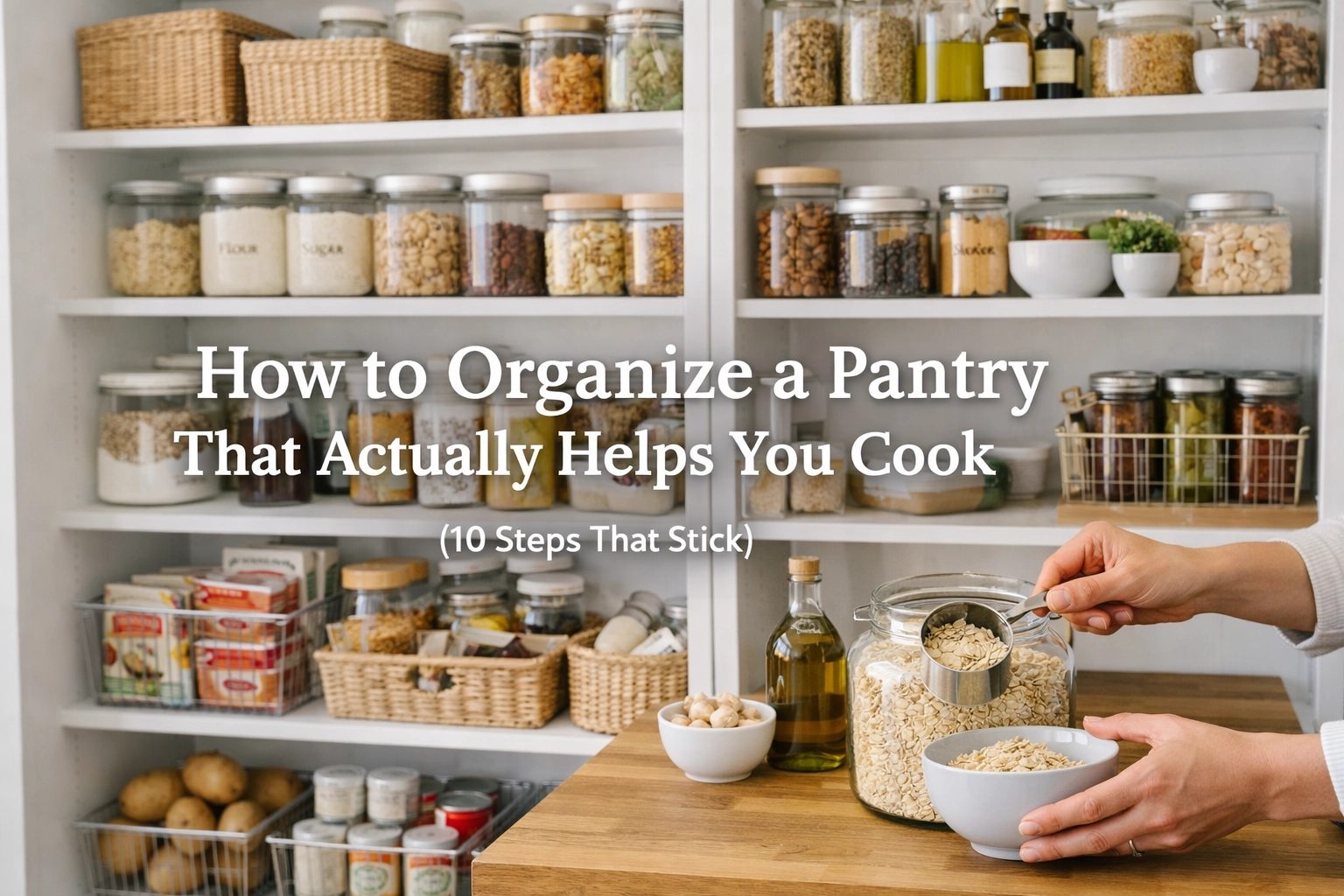
A disorganized pantry creates daily frustration. Searching for ingredients adds time to every meal. Expired items hide behind newer purchases. Duplicate purchases waste money and space.
An organized pantry transforms cooking from a chore into a smoother process. Everything has a designated spot. Ingredients appear at a glance. Meal planning becomes straightforward instead of guesswork.
The following ten steps create a pantry system that supports daily cooking rather than complicating it.
Step 1: Empty Everything Out
Remove every item from the pantry shelves. This includes jars, boxes, cans, bags, and containers tucked in the back corners.
Place everything on a large table, kitchen counter, or cleared floor space. This complete removal serves two purposes: it reveals the full storage space available, and it forces an honest assessment of what’s actually being stored.
Many pantries accumulate items over months or years without regular review. The emptying process exposes forgotten ingredients, duplicate purchases, and items that no longer fit current cooking habits.
Clean the empty shelves with a damp cloth. Wipe down any sticky spots or spills. This fresh start makes the reorganization process more effective.

Step 2: Sort and Discard
Check expiration dates on every item. Discard anything past its expiration date, even if it looks fine. Safety matters more than saving a few dollars.
Examine packaging for signs of spoilage. Look for bulging cans, torn bags, or compromised seals. These items belong in the trash, not back on the shelf.
Consider realistic usage. A specialty ingredient purchased for one recipe two years ago probably won’t get used. Items that don’t match current cooking styles or dietary preferences create clutter without value.
Donate unexpired, unused items to local food banks. Many unopened, non-perishable items can help others rather than taking up valuable space.
Step 3: Group Items Into Categories
Organize the remaining items into logical groups based on how they’re used in cooking:
- Baking supplies (flour, sugar, baking powder, chocolate chips)
- Breakfast items (cereal, oatmeal, pancake mix)
- Canned goods (vegetables, beans, soups, tomato products)
- Grains and pasta (rice, quinoa, various pasta shapes)
- Snacks (crackers, nuts, chips, popcorn)
- Oils and vinegars
- Spices and seasonings
- Condiments and sauces
These categories can be adjusted based on individual cooking patterns. Someone who bakes frequently might separate cake ingredients from bread ingredients. A household with multiple dietary needs might create separate zones for gluten-free or allergen-free items.
The goal is to group items that are used together. This reduces searching time during cooking and makes inventory checks simpler.
Step 4: Measure and Plan Storage Zones
Before purchasing any storage containers, measure the pantry shelves. Record the width, depth, and height of each shelf.
Note any obstacles like support brackets, light fixtures, or uneven spacing. These measurements determine what storage solutions will actually fit.
Sketch a rough plan of which categories will go on which shelves. Consider these practical factors:
- Heavy items (canned goods, large flour bags) work better on lower shelves
- Frequently used items should sit at eye level or within easy reach
- Rarely used items can go on high shelves or in harder-to-reach corners
- Items used by children should be positioned at appropriate heights
This planning stage prevents the common mistake of buying storage containers that don’t fit the actual space.

Step 5: Choose Appropriate Containers
Select storage solutions based on the categories and available space. Different types of items need different storage approaches.
For dry goods in opened packages:
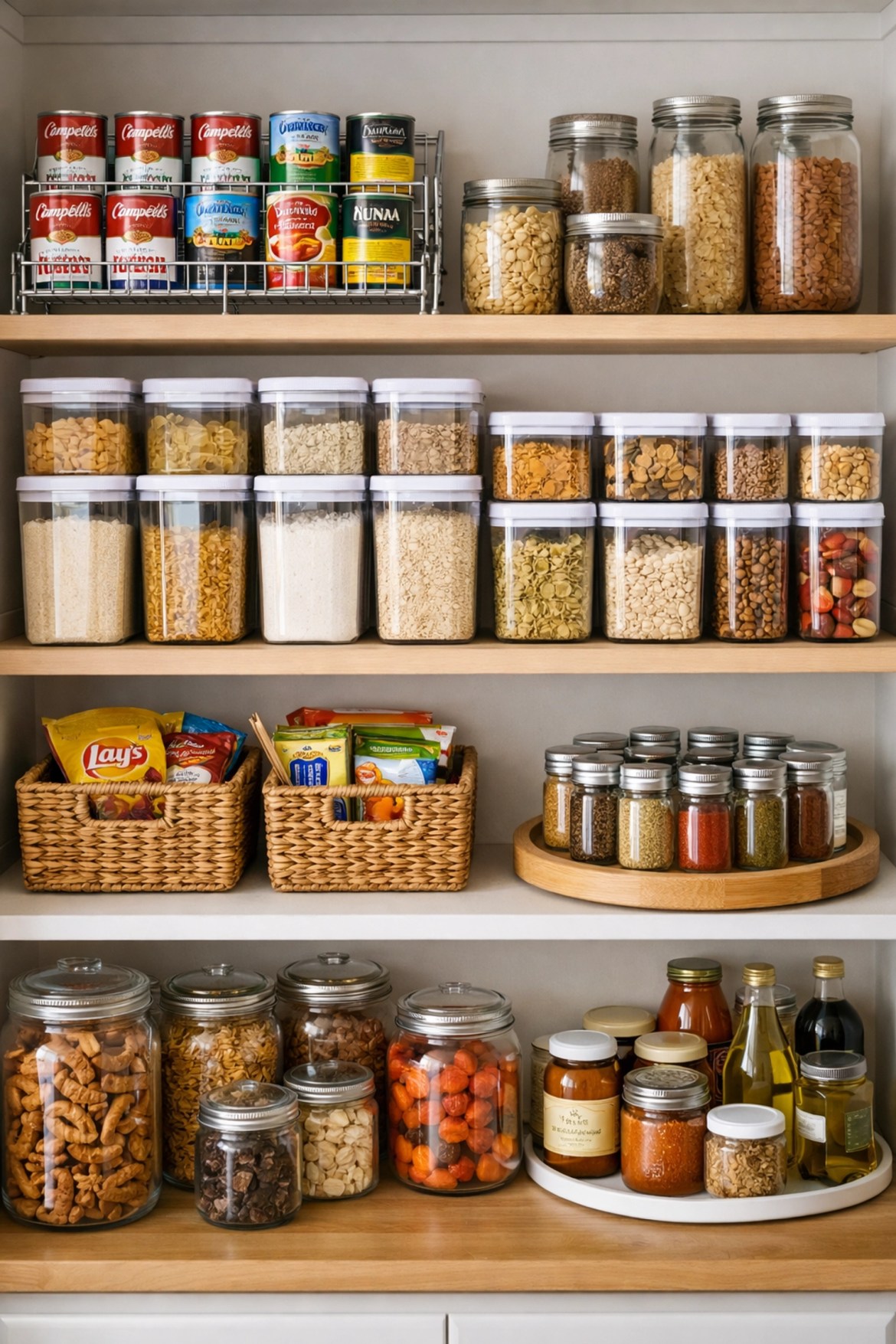
Clear airtight containers keep flour, sugar, rice, and pasta fresh while making contents immediately visible. Square or rectangular shapes maximize shelf space better than round containers.
For small items:
Bins or baskets corral packets, small cans, and snack-sized items. Without containers, these items scatter across shelves and become difficult to track.
For cans and jars:
Tiered shelf organizers or can racks make labels visible without having to move front items to see what’s behind them.
For spices:
Drawer organizers, lazy Susans, or tiered spice racks keep small bottles accessible. Alphabetical organization helps locate specific spices quickly.
Choose containers that fit the actual quantities stored. Oversized containers waste space. Undersized containers force awkward stacking or create overflow problems.
Step 6: Label Everything Clearly
Labels eliminate confusion about container contents. Even clear containers benefit from labels, especially for similar-looking items like different types of flour or sugar.
Include the item name and the date it was opened or transferred to a container. This tracking helps manage freshness and prevents using ingredients past their prime.
Use a label maker for a consistent, easy-to-read appearance. Alternatives include chalkboard labels, printed labels, or painter’s tape with permanent marker.
For bulk items, note any cooking instructions on the label. Rice cooking times or pasta serving sizes referenced directly on the container save trips to look up information later.
Replace labels as contents change. Outdated labels create confusion and defeat the organizational system.
Step 7: Utilize Vertical Space
Most pantries have unused vertical space. Standard shelves often leave several inches of empty space above items.
Install additional shelf risers or stacking shelves to create two levels where there was previously one. This doubles storage capacity without requiring more floor space.
Store baking sheets, cutting boards, and serving platters vertically using dividers or tension rods. Vertical storage makes these flat items easier to access than stacking them horizontally.
Consider adjustable shelving if the pantry allows modifications. Being able to customize shelf heights accommodates different item sizes and maximizes every inch of space.
Door-mounted organizers add storage without taking up shelf space. The back of a pantry door can hold spices, snack bags, foil and plastic wrap, or cleaning supplies.
Step 8: Arrange Items by Frequency of Use
Place the most frequently used items in the most accessible locations. This typically means eye level on easy-to-reach shelves.
Common cooking oils, everyday spices, and regularly used grains belong in these prime spots. Items that see daily or weekly use shouldn’t require a step stool or deep reaching.
Reserve top shelves for specialty items, bulk backstock, or seasonal ingredients. The decorative serving platter used once a year can live in a harder-to-reach spot.
Lower shelves work well for heavy items that are difficult to lift overhead. Large bags of flour, cases of canned goods, or bulk rice belong in these positions for safety and convenience.
This arrangement reduces the physical effort required for routine cooking while still providing storage for less frequently needed items.
Step 9: Create Landing Zones
Designate specific areas for common pantry activities beyond just storage:
Meal prep zone: Keep frequently combined ingredients together. Pasta, pasta sauce, and Italian seasonings in one area streamline dinner preparation.
Baking zone: Group flour, sugar, baking powder, vanilla extract, and chocolate chips. Having baking supplies in one location makes gathering ingredients for recipes faster.
Breakfast zone: Cereals, oatmeal, coffee, tea, and breakfast bars together create a one-stop morning station.
Snack zone: Keep crackers, nuts, granola bars, and other snacks in an easily accessible area, especially if children regularly access this section.
These zones reduce the back-and-forth movement during cooking. Related items stored together create efficiency in daily kitchen routines.
Step 10: Establish a Maintenance Routine
Organization requires ongoing maintenance. Without regular attention, even the best systems gradually deteriorate.
Set a monthly reminder to check for expired items. A quick five-minute review prevents accumulation of outdated products.
Return items to their designated spots after each use. This small habit prevents the gradual drift toward disorganization.
Adjust the system as cooking habits change. A new interest in baking might require expanding the baking zone. Dietary changes might eliminate entire categories.
Every three to six months, do a deeper review. Wipe down shelves, reassess category groupings, and evaluate whether the current system still matches actual usage patterns.
Track frequently depleted items to inform shopping lists. An organized pantry makes inventory management straightforward, reducing last-minute store runs and impulse purchases.

The Impact of Pantry Organization
A properly organized pantry reduces meal preparation time. Ingredients appear immediately rather than requiring searches through multiple shelves.
Food waste decreases when items remain visible and accessible. Nothing gets lost in the back of a shelf and forgotten until it expires.
Grocery shopping becomes more efficient. A clear view of current inventory prevents duplicate purchases and helps identify what actually needs restocking.
Meal planning shifts from overwhelming to manageable. Seeing available ingredients at a glance makes it easier to plan menus around existing supplies rather than always buying new ingredients.
The time invested in pantry organization pays dividends with every meal prepared. A functional pantry supports cooking rather than hindering it, transforming a storage space into a practical kitchen tool.

