
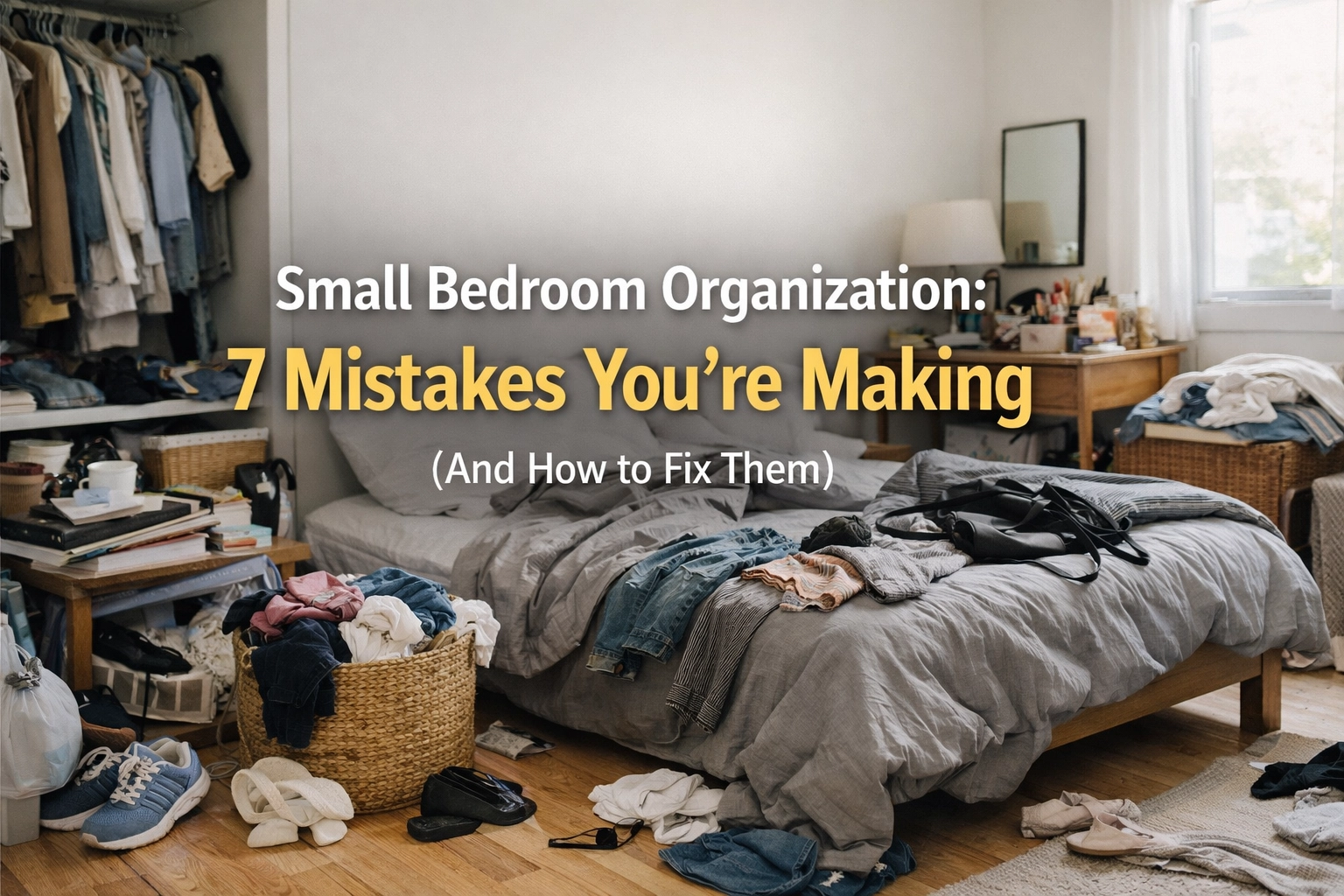
Small bedrooms present unique storage challenges. Limited square footage requires thoughtful organization strategies that maximize every inch of available space. Many people struggle with cluttered, cramped bedrooms simply because they’re making common organizational mistakes.
These errors aren’t always obvious. They develop gradually as habits form and possessions accumulate. The good news is that most small bedroom organization problems have straightforward solutions that don’t require major renovations or expensive furniture purchases.
Ignoring Vertical Space
Most people focus on floor-level storage and completely overlook the walls. This is one of the costliest mistakes in a small bedroom because vertical space offers substantial storage potential without consuming precious floor area.

Empty walls represent missed opportunities. The space between furniture and ceiling can hold books, decorative items, accessories, and everyday essentials. Many small bedrooms have 8 to 10 feet of vertical space that goes completely unused.
Solutions for maximizing vertical storage:
- Install floating shelves above the bed, desk, or dresser to display books and keep frequently used items accessible
- Mount wall-mounted cabinets or cubbies for enclosed storage that keeps belongings dust-free
- Add hooks at different heights for bags, hats, scarves, and jewelry
- Use tall bookcases that extend toward the ceiling rather than short, wide storage units
- Install pegboards for customizable storage that adapts to changing needs
Wall space near the door is particularly valuable. Over-the-door organizers can hold shoes, accessories, cleaning supplies, or toiletries without requiring any floor space. These organizers come in various configurations, from clear pockets to fabric compartments to metal racks.
The key is thinking upward instead of outward. When floor space is limited, the only direction to expand is up.
Neglecting Under-Bed Storage
The area beneath the bed is prime storage real estate that many people leave empty or use inefficiently. This space typically accounts for 12 to 20 square feet of storage area: equivalent to a small closet.

Without proper organization, under-bed space becomes a collection point for dust, forgotten items, and random objects shoved underneath in moments of quick cleaning. This wastes valuable storage potential in the room where space matters most.
Effective under-bed storage solutions:
- Use flat, rolling storage containers specifically designed to fit under beds
- Store seasonal clothing that isn’t currently needed
- Keep extra bedding, blankets, and pillows in sealed containers to protect from dust
- Organize shoes in clear boxes for easy identification
- Consider bed frames with built-in drawers or lift-up mattress platforms
Bed risers can create additional under-bed clearance if the current gap is too shallow for standard storage containers. These simple additions can add 3 to 8 inches of height, transforming unusable space into practical storage.
For maximum efficiency, store items used less frequently toward the back and everyday items near the front. Label containers clearly so contents can be identified without pulling everything out.
Overstuffing Drawers and Closets
Cramming too many items into limited drawer and closet space creates multiple problems. Clothes become wrinkled and difficult to locate. Drawers stick or refuse to close properly. The act of finding a specific item becomes frustrating and time-consuming.
Overstuffed storage also damages clothing. Constant compression creates permanent creases and stretches fabrics. Delicate items get crushed under heavier pieces. The resulting disorganization makes it impossible to see what’s actually available, leading to forgotten items and redundant purchases.
Strategies for right-sized drawer and closet storage:
- Remove everything and sort into keep, donate, and discard piles
- Keep only clothing that fits well, is in good condition, and gets worn regularly
- Use drawer dividers to create designated spaces for different item types
- Roll clothes instead of folding to save space and reduce wrinkles
- Store bulkier items like sweaters in bottom drawers
- Limit hanging closet items to one rod depth: double hanging creates chaos
A good rule is that drawers should close easily with items lying flat and closet rods should have enough space between hangers to slide items without struggle. If this isn’t possible, the space contains too many items.
Seasonal rotation helps manage limited storage. Store off-season clothing elsewhere and swap items as weather changes. This keeps active wardrobe manageable while preserving clothing quality.
Leaving Dresser Tops Cluttered
The surface of a dresser often becomes a catch-all for random items. Keys, jewelry, receipts, loose change, hair accessories, and miscellaneous objects pile up because the flat surface is conveniently located and visible.

This horizontal clutter makes the entire room feel disorganized, even when other areas are tidy. It also wastes the dresser’s storage potential by creating visual chaos instead of functional organization.
Solutions for organized dresser surfaces:
- Use a decorative tray to corral small daily items like jewelry, watches, and keys
- Add small containers or dishes for loose change and miscellaneous objects
- Install a small wall shelf above the dresser to move some items off the surface
- Limit dresser-top items to essentials used daily
- Create a specific home for each item category
Jewelry boxes, small baskets, and divided containers transform random piles into organized displays. Clear acrylic organizers work well for visibility, while decorative boxes hide contents for a cleaner appearance.
The goal is intentional placement rather than random accumulation. Each item on the dresser should have a designated spot. Everything else belongs in a drawer or alternative storage location.
Keeping Too Much Clothing
Many small bedrooms struggle with organization simply because they contain too many clothes for the available space. Closets burst with items that don’t fit, aren’t worn, or no longer match personal style.
This overcrowding isn’t just a storage problem: it’s a daily frustration. Getting dressed takes longer when too many choices compete for attention. Favorite pieces get lost among rarely worn items. The bedroom feels cramped and chaotic.
Practical approaches to clothing reduction:
- Try on questionable items and honestly assess fit and comfort
- Remove anything unworn in the past year
- Eliminate duplicates of basic items
- Check for stains, damage, or excessive wear that makes items unwearable
- Consider whether each piece matches other wardrobe items
- Donate or sell items in good condition rather than storing indefinitely
A smaller, well-curated wardrobe actually makes daily dressing easier. With fewer choices, outfit planning becomes simpler and faster. Every item gets worn regularly instead of some pieces languishing unused for months or years.
For those hesitant to permanently remove clothing, try the box method. Pack questionable items in a box with a date label. If nothing from the box is needed within six months, donate without reopening.
Missing Functional Nightstand Storage
Nightstands in small bedrooms often lack adequate storage or become cluttered with random items. This wastes valuable surface space and creates visual chaos in the sleeping area.
A nightstand should provide both surface area for essentials and enclosed storage for items that don’t need to be visible. Many nightstands are purely decorative, with no drawers or shelves, forcing everything onto the tabletop.
Optimizing nightstand organization:
- Choose nightstands with at least one drawer for hidden storage
- Use drawer dividers to organize small items like medications, pens, and notepads
- Keep the surface clear except for a lamp, clock, and perhaps a book
- Add a small tray or dish for jewelry removed before sleep
- Install a wall-mounted shelf if floor space doesn’t allow a traditional nightstand
- Use the back of a door-mounted organizer for overflow nightstand items
Charging cables create particular nightstand clutter. Cable management clips or a small charging station keeps cords organized and prevents tangling. Some nightstands include built-in charging stations with USB ports and cable routing channels.
Books and magazines deserve special consideration. While keeping one or two current reads on a nightstand makes sense, accumulating stacks creates clutter. A small bookshelf or wall-mounted book ledge provides better storage for reading material.
Ignoring Dead Space and Corners
Small bedrooms typically have awkward corners, narrow wall sections, and odd spaces that don’t accommodate standard furniture. These areas often remain empty or become dust-collecting zones because they seem too difficult to organize.

This unused space represents missed storage opportunities. Even small, awkward areas can hold items when properly outfitted with appropriate storage solutions.
Creative uses for overlooked spaces:
- Place corner shelving units in room corners to utilize typically wasted triangular floor space
- Install floating corner shelves at various heights for vertical storage
- Use the back of the bedroom door for hanging organizers, hooks, or shallow shelves
- Add narrow rolling carts that fit between furniture pieces
- Mount tension rods in small alcoves to create mini-closet space
- Position slim storage towers in narrow wall sections
The space at the foot of the bed often goes unused. A storage bench or trunk provides seating while hiding blankets, pillows, or off-season items. This dual-purpose furniture maximizes functionality without adding clutter.
Similarly, the area above the door can hold a small shelf for items used infrequently. This high-up storage keeps belongings accessible while clearing valuable lower-level space.
Window areas also offer storage potential. Window seats with lift-up tops provide substantial hidden storage. Even without built-in seating, the space beneath windows can accommodate low storage units or baskets.
Creating Sustainable Organization
Fixing organizational mistakes is only effective if the solutions remain functional long-term. Many organization systems fail because they’re too complicated or don’t match actual usage patterns.
Sustainable organization in small bedrooms requires systems that are easy to maintain. If putting something away takes multiple steps or requires moving other items, the system will eventually break down.
Principles for lasting organization:
- Store items where they’re actually used
- Make storage access easy: nothing should require climbing or excessive reaching
- Label containers and shelves for easy identification
- Establish one designated home for each item category
- Schedule quick 5-minute daily tidying sessions
- Conduct seasonal reviews to prevent accumulation
The most organized small bedrooms aren’t necessarily the most minimal: they’re the ones where everything has a logical place and returning items to those places requires minimal effort.
Visual simplicity matters too. Even well-organized spaces feel cluttered when too many items remain visible. Using closed storage for most belongings while displaying only favorite or frequently used items creates a calmer environment.
Regular maintenance prevents small disorder from becoming overwhelming chaos. A brief daily reset: hanging up clothes, clearing surfaces, returning items to designated spots: keeps organization systems functional.
Making Small Bedrooms Work
Small bedroom organization isn’t about fitting more stuff into limited space. It’s about making the available space work efficiently for daily life. Every organizational choice should support easier mornings, better sleep, and reduced stress.
The seven common mistakes outlined here create unnecessary frustration and waste valuable space. Addressing these issues doesn’t require expensive renovations or complicated systems. Simple changes in how space is used and what items are kept make small bedrooms feel larger and function better.
Start with one problem area rather than attempting complete reorganization overnight. Master vertical storage, then move to under-bed solutions. Clear out excess clothing before investing in new organizers. Small, consistent improvements create lasting change more effectively than overwhelming overhauls.
Small spaces can be just as comfortable and functional as large ones when organized thoughtfully. The key is recognizing common mistakes and implementing practical solutions that match actual daily routines and needs.

