
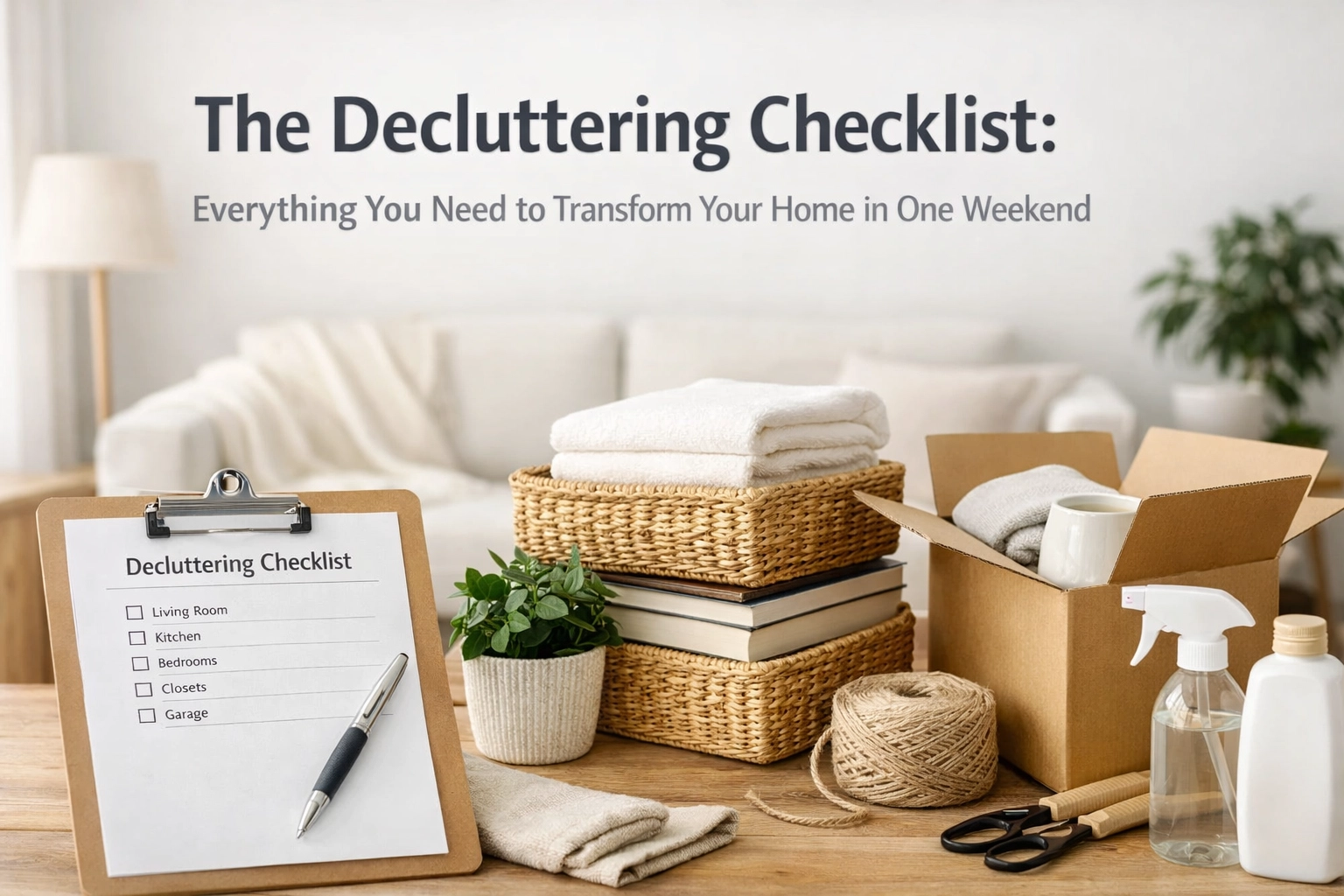
Clutter accumulates gradually until one day it feels overwhelming. Tackling an entire home might seem impossible, but with proper planning and a focused approach, a complete transformation can happen in just two days. The key lies in strategic preparation, realistic scheduling, and knowing exactly what to target in each space.
Planning Before the Weekend Begins
Success starts before any actual decluttering happens. Taking time to create a detailed plan prevents the common pitfall of starting strong but losing momentum halfway through.
Write down every area that needs attention. Break the home into specific zones: master bedroom, guest bedroom, kitchen, bathrooms, living areas, entryway, and garage or storage spaces. Assign a realistic time estimate to each area. A master bedroom closet might need three hours, while a half bathroom might only require 30 minutes.
Consider energy levels throughout the weekend. Morning hours typically offer peak focus and physical energy, making them ideal for the most challenging spaces. Save smaller, less demanding areas for afternoon when fatigue sets in.
Schedule specific meal and rest breaks. Skipping breaks leads to decision fatigue, which results in keeping items that should be discarded or making hasty decisions about sentimental belongings.

Essential Supplies and Setup
Having the right tools within reach eliminates interruptions and keeps momentum going. Gather everything before starting:
Sorting containers:
- Large garbage bags for donations
- Boxes or bins for items to sell
- Trash bags for genuine garbage
- Small bins for items that belong in other rooms
Cleaning supplies:
- All-purpose cleaner
- Microfiber cloths
- Vacuum or broom
- Dusting spray
Organization tools:
- Labels and permanent markers
- Storage bins or baskets
- Drawer dividers
- Shelf liners
Comfort items:
- Water bottle
- Snacks
- Comfortable clothes
- Upbeat playlist or podcast
Create a portable caddy with the most frequently needed items: cleaner, cloths, trash bag, and marker. This caddy moves from room to room, eliminating trips back and forth for supplies.
The Weekend Schedule Framework
Friday Evening: Final Preparation
If possible, dedicate Friday evening to final setup. Review the plan, gather all supplies, and create designated drop zones for donations, trash, and items to relocate. Some people find it helpful to clear out the garage or designate a spare room as the temporary holding area for sorted items.
Eat a good meal and get adequate sleep. Physical decluttering is more demanding than it appears.
Saturday: High-Impact Spaces
Start with the areas that create the most stress or see the most daily use. For most households, this means the master bedroom, closet, and main bathroom.
Morning (8:00 AM – 12:00 PM): Master Bedroom and Closet
Begin by stripping the bed and setting linens aside to wash later. This creates immediate visual progress and provides a fresh starting point.
Remove everything from nightstands, dressers, and visible surfaces. Wipe down all surfaces completely before deciding what returns. This forces an evaluation of each item rather than simply rearranging clutter.
Tackle the closet systematically. Remove all clothing and lay it on the bed. This might feel extreme, but seeing everything at once makes decision-making faster. Sort into clear categories:
- Keep and wear regularly
- Keep but needs repair or alteration
- Donate or sell
- Trash (stained, damaged beyond repair)
Apply the one-year rule: if something hasn’t been worn in the past year and there’s no specific upcoming event requiring it, let it go. Seasonal items get a pass, but be honest about whether that cocktail dress or those uncomfortable shoes will ever get worn.

Address shoes, accessories, and bags with the same approach. Purge items with broken zippers, missing buttons, or damage that won’t realistically get repaired.
Afternoon (1:00 PM – 5:00 PM): Bathrooms
Bathrooms accumulate products faster than almost any other space. Start by removing everything from counters, drawers, medicine cabinets, and shower areas.
Check expiration dates on:
- Medications (dispose of properly at a pharmacy)
- Sunscreen
- Cosmetics
- Skincare products
General guidelines for cosmetic expiration: mascara lasts 3 months, liquid foundation 6-12 months, lipstick 1-2 years, and powder products 2 years. When in doubt, if it smells off, has changed texture, or hasn’t been used in a year, discard it.
Remove excess inventory. Multiple half-empty bottles of the same shampoo, hotel toiletries that will never get used, and samples that have been sitting for months all create visual clutter without adding value.
Organize remaining items by category: haircare together, skincare together, first aid together. Use drawer dividers or small bins to maintain these groupings. Under-sink areas benefit from stackable bins or pull-out organizers.
Clean all surfaces thoroughly before returning items. Wipe down mirrors, scrub counters, and clean inside drawers and cabinets.
Sunday: Functional Spaces and Final Touches
Morning (8:00 AM – 12:00 PM): Kitchen
The kitchen requires careful attention because it combines functional items, food storage, and often becomes a catch-all for mail, paperwork, and miscellaneous household items.
Start with countertops. Remove everything except daily-use appliances. A clutter-free counter creates the biggest visual impact in a kitchen.
Check the refrigerator and pantry for expired food. Remove everything, wipe down shelves, check dates, and discard anything past its prime. Group similar items together: baking supplies in one area, canned goods in another, snacks together.
Tackle one cabinet or drawer at a time. Evaluate:
- Duplicate tools (most kitchens don’t need five wooden spoons)
- Broken or damaged items
- Gadgets that never get used
- Mismatched or chipped dishes
- Excessive food storage containers
For food storage containers, match each bottom with a lid. Orphaned pieces without mates can be discarded or repurposed for organizing small items like craft supplies or hardware.

Organize drawers with dividers. The utensil drawer, junk drawer, and cooking tool drawers all function better with defined spaces for different categories.
Afternoon (1:00 PM – 4:00 PM): Living Areas and Finishing Touches
Living rooms, family rooms, and entryways need attention to papers, decor, and miscellaneous items that migrate from other rooms.
Sort through:
- Magazines and newspapers older than two months
- Mail and paperwork (create a system for incoming papers)
- Toys and games (remove broken items, discard puzzles with missing pieces)
- Books that won’t be reread
- DVDs or CDs that are never used
- Decorative items that don’t bring joy or serve a purpose
Designate specific homes for items that tend to wander: keys, phone chargers, remote controls, reading glasses. Baskets, hooks, and small trays help maintain order.
Address the entryway or mudroom. This transitional space sets the tone for the entire home. Install hooks for coats and bags, create a shoe storage solution, and establish a drop zone for items coming in and going out.
What to Purge Without Hesitation
Certain categories of items can be discarded immediately without lengthy deliberation:
In bathrooms:
- Expired medications and cosmetics
- Worn-out towels with holes or permanent stains
- Empty bottles and containers
- Broken hair tools
- Old toothbrushes and razors
In bedrooms:
- Clothing with permanent stains or damage
- Stretched-out undergarments and socks with holes
- Wire hangers from dry cleaning
- Dried-out pens and markers
- Old electronics that no longer work
In kitchens:
- Expired food and spices
- Chipped or cracked dishes
- Single-use gadgets that never get used
- Excess takeout containers and utensils
- Cookbooks that are never referenced
Throughout the home:
- Broken electronics without repair value
- Instruction manuals for items no longer owned
- Promotional items and free giveaways
- Craft projects that will never be completed
- Gifts that were never liked or used
Organization Strategies That Last
Decluttering creates space, but organization maintains it. Implement systems during the weekend that can be sustained long-term.
Group like items together. All batteries in one location, all light bulbs together, all cleaning supplies in one cabinet. This prevents duplicate purchases and makes finding items effortless.
Use labels extensively. Label shelves, bins, drawers, and storage containers. Labels create accountability and make it easier for all household members to maintain organization.
Implement the one-in-one-out rule. Moving forward, when something new comes into the home, something similar leaves. A new shirt means an old shirt gets donated. This prevents clutter from rebuilding.
Create launching pads. Designate specific spots for items needed daily: keys, wallet, phone, bag. Having a consistent home for these items eliminates morning search sessions.
Maintain flat surfaces. Countertops, tabletops, and other horizontal surfaces attract clutter magnetically. Make it a rule that these surfaces get cleared completely at the end of each day.

Dealing With Sentimental Items
Sentimental items pose the biggest challenge during decluttering. They require a different approach than functional objects.
For paper memorabilia like children’s artwork, cards, and letters, photograph items before discarding them. Digital storage preserves the memory without the physical space requirement.
For inherited items that carry guilt but not genuine attachment, remember that keeping something out of obligation doesn’t honor the original owner. Donate useful items so they can benefit someone else.
Limit sentimental collections to a specific container size. When the container fills, evaluate what truly matters most. This forces prioritization and prevents sentimental items from overtaking entire closets or storage areas.
After the Weekend: Maintaining Progress
The Monday after a decluttering weekend often brings a sense of calm and control. Maintaining this feeling requires building small habits into daily routines.
Spend 10 minutes each evening doing a quick reset: dishes in the dishwasher, items returned to their designated homes, surfaces cleared. This prevents the gradual accumulation that leads to overwhelming clutter.
Conduct monthly mini-decluttering sessions. Choose one drawer, one shelf, or one cabinet to evaluate. This ongoing maintenance prevents the need for another full weekend overhaul.
Evaluate incoming items before they enter the home. Before purchasing something new, consider where it will be stored and whether it serves a genuine purpose or brings real joy.
Troubleshooting Common Challenges
Running out of time: If Sunday afternoon arrives and areas remain untouched, prioritize visible spaces over hidden storage. A cluttered junk drawer matters less than a cluttered living room.
Decision fatigue: When overwhelmed by choices, apply the 10-second rule. Hold an item for 10 seconds. If the decision isn’t clear in that time, it likely should go.
Family resistance: Include household members in planning and give each person control over their personal spaces. Decluttering works best when everyone participates willingly rather than feeling forced.
Perfectionism paralysis: Done is better than perfect. The goal is progress and improved functionality, not magazine-worthy perfection.
A decluttered home creates mental space along with physical space. A single focused weekend can shift an entire household from chaotic to calm. The key lies in planning, committing to the time, and implementing sustainable systems that prevent clutter from returning. The transformation might surprise you: not just in how the home looks, but in how it feels to live in a space where everything has a purpose and a place.

