
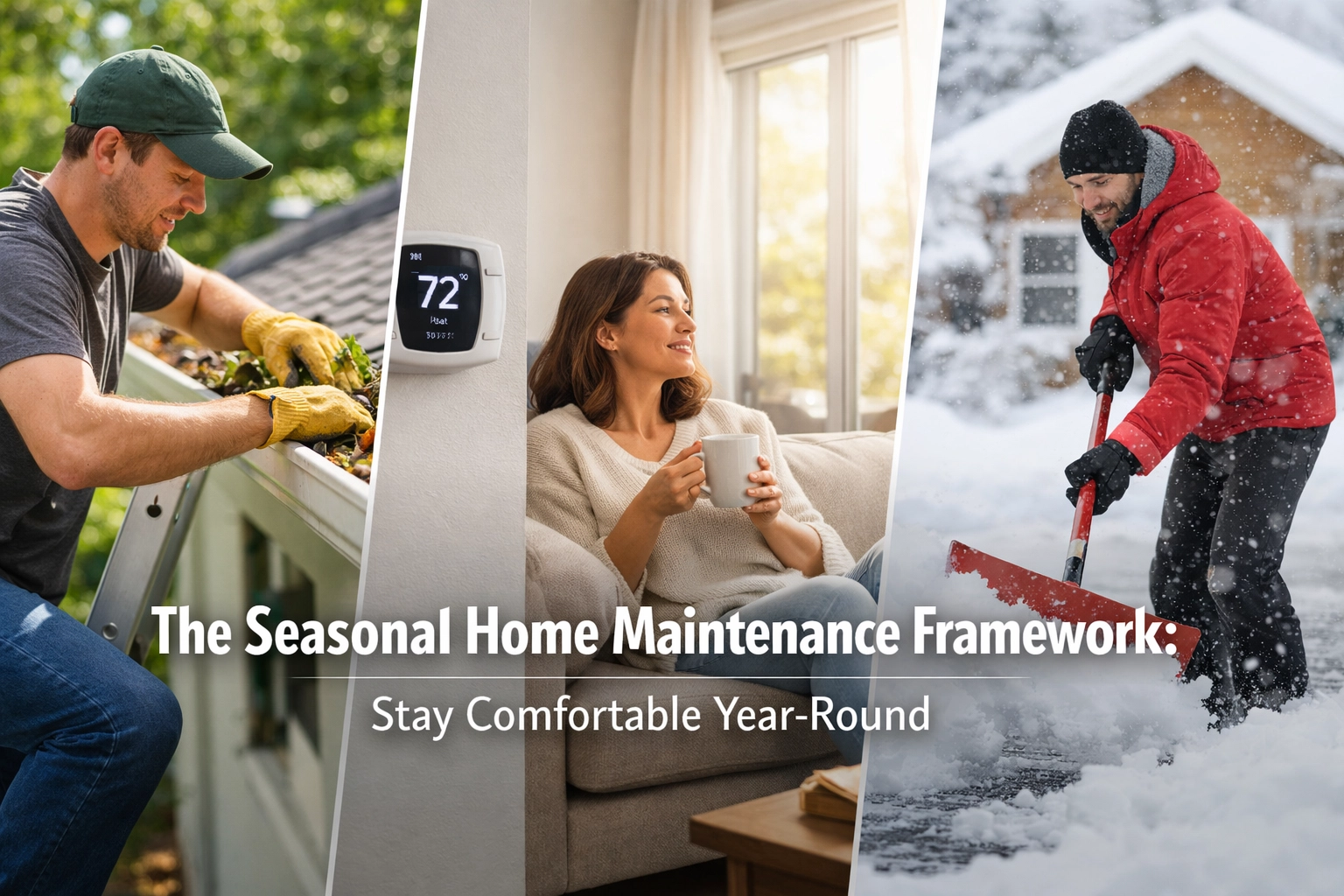
Home maintenance often feels overwhelming when viewed as one massive to-do list. Breaking tasks into seasonal chunks transforms the process into manageable, timely actions that align with weather patterns and household needs. This approach prevents emergency repairs, reduces energy costs, and keeps living spaces comfortable throughout the year.
Why Seasonal Maintenance Matters
Different seasons place unique demands on a home. Winter stresses heating systems and exposes plumbing to freezing risks. Summer tests air conditioning units and increases pest activity. Spring brings moisture challenges after snow melts. Fall requires preparation before cold weather arrives.
Addressing maintenance seasonally means tackling tasks when they’re most relevant. Cleaning gutters before fall leaves accumulate prevents water damage. Servicing air conditioning before summer heat waves ensures comfort when it matters most. This timing reduces the likelihood of expensive emergency repairs and extends the lifespan of home systems and materials.
Seasonal maintenance also builds a predictable routine. Instead of remembering dozens of disconnected tasks, homeowners develop four quarterly checklists. This structure makes planning easier and reduces the mental load of home ownership.

Spring Maintenance: Recovery and Preparation
Spring maintenance focuses on assessing winter damage and preparing outdoor systems for warmer weather. As temperatures rise and snow melts, this season reveals problems that developed during colder months.
Exterior Inspection
Walk around the home’s perimeter to identify winter damage. Check for:
- Missing, cracked, or lifted roof shingles
- Damaged siding or trim pieces
- Cracks in foundation or concrete surfaces
- Separation between materials at joints
Document any significant damage with photos for contractor consultations or insurance claims if needed.
Gutter and Drainage Systems
Clean gutters and downspouts thoroughly, removing winter debris and built-up sediment. Verify that water flows freely through the system and drains at least six feet away from the foundation. Poor drainage causes basement flooding, foundation cracks, and soil erosion around the home.
Check that downspout extensions are properly positioned and consider installing splash blocks if water pools near the foundation.
HVAC System Transition
Schedule a professional inspection and tune-up for the air conditioning system before cooling demands begin. Technicians check refrigerant levels, clean coils, test electrical connections, and identify potential failures before they become emergencies.
Replace air filters in the furnace or air handler. Clean return air vents throughout the home to improve air quality and system efficiency.
Window and Door Maintenance
Inspect weatherstripping around exterior doors and windows. Replace any pieces that appear cracked, compressed, or loose. Test window operation, lubricating tracks if needed, and repair or replace damaged screens before insect season arrives.
Check for drafts by holding a lit incense stick near door and window edges on a windy day. Smoke movement indicates air leaks that waste energy.
Outdoor Plumbing
Reconnect outdoor faucets and check for leaks. Turn on irrigation systems and inspect each zone for broken sprinkler heads, leaks, or coverage gaps. Repair issues before establishing watering schedules for lawns and gardens.

Summer Maintenance: Efficiency and Protection
Summer maintenance emphasizes keeping cooling systems efficient, managing moisture, and preventing pest intrusions during peak activity months.
Air Conditioning Optimization
Check air conditioning performance regularly throughout summer. The system should cool the home to the desired temperature without running constantly. Unusual sounds, weak airflow, or inability to reach set temperatures indicate problems requiring professional attention.
Replace or clean air filters monthly during heavy use. Dirty filters restrict airflow, forcing systems to work harder and use more energy.
Keep outdoor condenser units clear of debris, plants, and obstructions. Maintain at least two feet of clearance around the unit for proper airflow.
Foundation and Basement Monitoring
Inspect basement or crawl space areas for moisture, standing water, or new cracks. Check for musty odors indicating hidden water problems. Dehumidifiers help control moisture in humid climates, preventing mold growth and protecting stored items.
Verify that basement floor drains contain water in the trap. Pour a gallon of water into any dry drain to restore the seal that prevents sewer gas entry.
Deck and Patio Care
Clean deck surfaces with appropriate cleaners for the material type. Inspect for loose boards, protruding nails, or damaged railings. Tighten any loose fasteners and replace damaged pieces before they create safety hazards.
Reseal wood decks every two to three years to protect against moisture damage and UV degradation. Choose a dry period with moderate temperatures for best results.
Pest Prevention
Summer brings increased insect activity. Inspect the home’s exterior for entry points where pests access interior spaces:
- Gaps around utility lines entering the home
- Damaged weatherstripping or door sweeps
- Torn window screens
- Cracks in foundation or siding
- Unsealed penetrations for cables or pipes
Seal gaps with appropriate materials: caulk for small cracks, expanding foam for larger openings, metal mesh for areas requiring ventilation.
Check for termite tubes on foundation walls, carpenter bee holes in wood trim, or wasp nests under eaves. Address pest problems early before populations grow.
Safety System Testing
Test smoke detectors and carbon monoxide alarms. Replace batteries in units lacking hardwired backup power. Smoke detector sensors degrade over time: replace any unit more than ten years old regardless of apparent function.
Verify that fire extinguishers show proper pressure levels. Review emergency evacuation plans with household members, especially if young children or elderly individuals reside in the home.

Fall Maintenance: Winterization and Protection
Fall maintenance prepares homes for winter challenges while addressing autumn-specific needs like leaf management and heating system preparation.
Heating System Service
Schedule professional furnace or boiler inspection and cleaning before heating season begins. Technicians clean burners, test safety controls, verify proper combustion, and identify worn parts before they fail during cold weather.
Replace furnace filters and stock several replacements for use throughout winter. Clean return air grilles and ensure furniture or storage items don’t block airflow.
Test heating system operation on a cool day well before freezing temperatures arrive. Verify that all rooms heat adequately and thermostats respond properly.
Gutter and Roof Preparation
Clean gutters again after trees lose their leaves. Accumulated leaves and debris cause ice dams in winter, allowing water to back up under shingles and leak into attics or walls.
Inspect roof condition before winter weather arrives. Address any damaged or missing shingles identified during spring inspection or developed during summer storms.
Clean window wells around basement windows, removing leaves and debris that trap moisture against foundation walls.
Weatherization
Check and replace weatherstripping installed or repaired during spring. Months of use may have caused new wear.
Install storm windows if the home uses seasonal window protection. Consider plastic window insulation kits for drafty windows that are difficult or expensive to properly seal.
Inspect door sweeps and thresholds. Replace worn door sweeps to prevent cold air infiltration under exterior doors.
Chimney and Fireplace
Have chimneys inspected and cleaned by certified professionals before using fireplaces or wood stoves. Creosote buildup causes chimney fires, and blockages from bird nests or debris create dangerous carbon monoxide hazards.
Check fireplace dampers for proper operation and tight sealing when closed. Replace or repair damaged dampers that allow heated air to escape when the fireplace isn’t in use.
Outdoor Winterization
Drain and disconnect outdoor hoses. Turn off interior shut-off valves for exterior faucets if present, then open outdoor faucets to drain remaining water. Trapped water freezes and cracks pipes or faucet bodies.
Winterize irrigation systems according to climate requirements. In freezing regions, blow out lines with compressed air to prevent pipe damage.
Store patio furniture cushions, remove or cover outdoor furniture, and secure any items that could blow around in winter storms.

Winter Maintenance: Monitoring and Prevention
Winter maintenance focuses on monitoring critical systems, managing snow and ice, and preventing cold-weather damage.
Heating and Insulation
Keep thermostats at consistent temperatures rather than extreme setbacks. Large temperature swings stress heating systems and increase the risk of frozen pipes in unheated areas.
Check attic insulation and ventilation during winter months. Proper insulation prevents heat loss, while adequate ventilation prevents moisture buildup that damages roof decking and creates ice dams.
Inspect areas where pipes run through unheated spaces: basements, crawl spaces, attics, or exterior walls. Insulate exposed pipes or add heat tape in vulnerable locations.
Ice and Snow Management
Keep walkways, steps, and driveways clear of snow and ice for safety. Stock adequate supplies of ice melt or sand before winter storms arrive.
Remove heavy snow from roof areas if accumulation exceeds design loads for the region. Hire professionals for this dangerous task rather than attempting it without proper equipment and safety measures.
Address ice dams quickly if they form. Ice dams indicate heat loss through the roof, combined with inadequate ventilation. Long-term solutions involve improving attic insulation and ventilation, but immediate removal prevents water damage.
Plumbing Monitoring
During extreme cold, allow faucets on exterior walls to drip slightly. Moving water resists freezing better than standing water.
Check under sinks and in basements for signs of frozen pipes: no water flow when faucets open, frost on exposed pipes, or bulging pipe sections. Thaw frozen pipes slowly with warm air from a hair dryer or space heater, never with open flames.
Know the location of the main water shut-off valve. If pipes burst, quickly shutting off water minimizes damage.
Interior Checks
Monitor for drafts around windows and doors. Temporary solutions like rolled towels against door bottoms help until permanent repairs can be made in spring.
Check that heating vents remain unblocked by furniture, curtains, or storage items. Blocked vents waste energy and create uneven temperatures.
Verify that bathroom and kitchen exhaust fans vent properly to exterior spaces. Winter condensation problems often trace to exhaust fans that discharge into attics rather than outside.

Year-Round Monthly Tasks
Some maintenance tasks require attention throughout the year regardless of season:
Monthly Checks
- Replace or clean HVAC filters
- Test GFCI outlets in bathrooms, kitchens, and outdoor locations
- Clean kitchen sink disposals and check for drain clogs
- Inspect under sinks for leaks
- Test garage door auto-reverse safety features
- Check washing machine hoses for bulges or cracks
Quarterly Reviews
- Inspect fire extinguishers for proper pressure
- Clean refrigerator coils
- Check water heater for leaks or unusual sounds
- Test sump pump operation where applicable
- Vacuum refrigerator and freezer door seals
Creating a Personal Maintenance Calendar
Develop a customized maintenance schedule based on home age, climate, and specific systems present:
Start by listing all major systems and components: HVAC, plumbing, roof, foundation, appliances. Note the last service date and recommended service intervals for each.
Create digital calendar reminders for seasonal tasks. Set recurring annual reminders two weeks before target completion dates to allow scheduling flexibility.
Maintain a home maintenance log documenting completed tasks, service providers used, costs, and any problems identified. This record proves valuable when selling the home and helps identify recurring issues requiring attention.
Budget for seasonal maintenance costs. Setting aside funds monthly prevents financial stress when multiple tasks coincide. Professional HVAC service, chimney cleaning, and gutter maintenance often range from several hundred to over a thousand dollars annually depending on home size and local costs.
Building Sustainable Maintenance Habits
Seasonal maintenance becomes easier with practice and routine. Starting small with basic tasks builds confidence and knowledge over time. Homeowners unable or uncomfortable performing certain tasks should hire qualified professionals rather than risk injury or property damage.
The investment in regular maintenance consistently proves less expensive than emergency repairs. A well-maintained home provides reliable comfort, lower utility costs, and preserved property value. Breaking maintenance into seasonal chunks makes the entire process manageable, predictable, and effective.

