
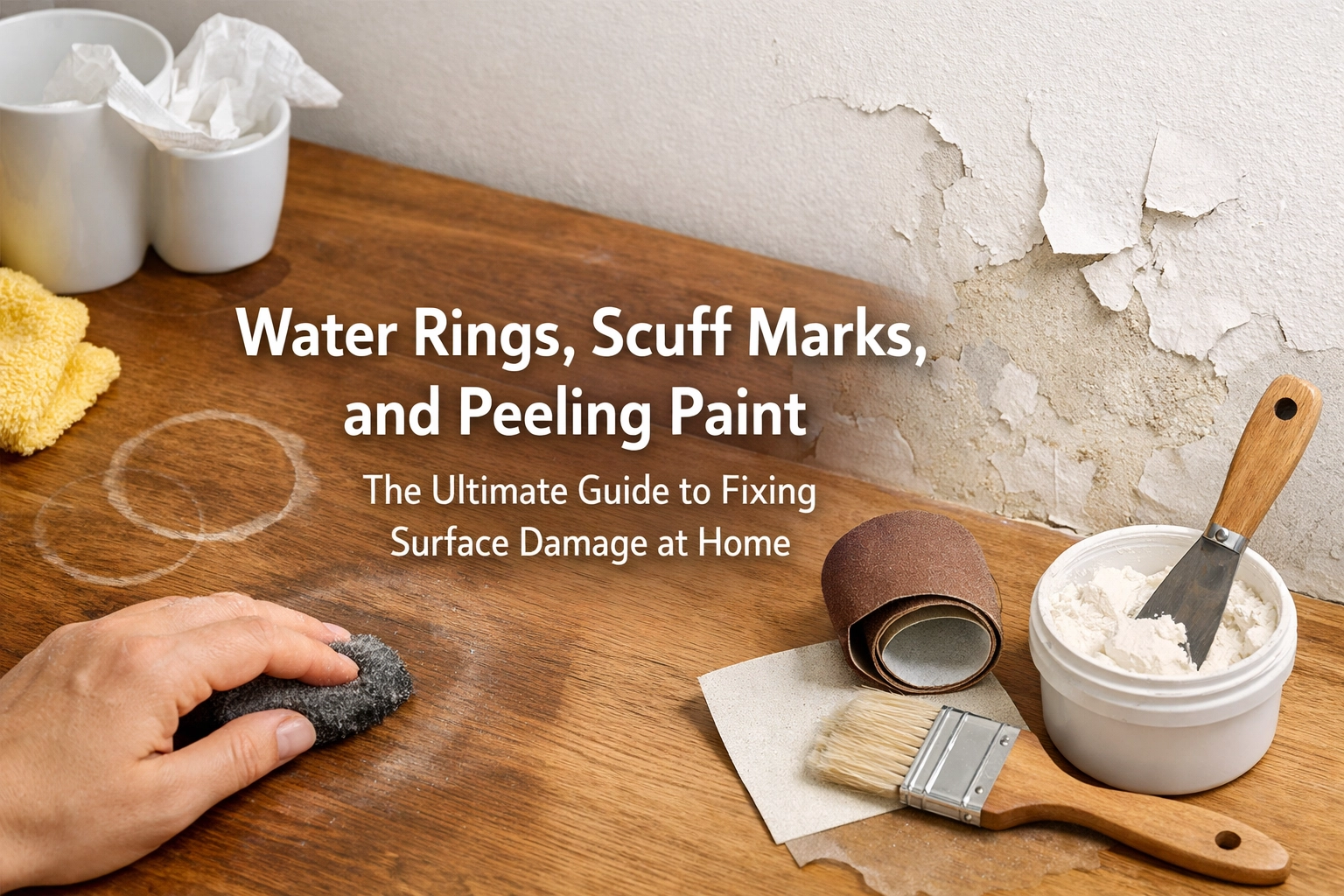
Surface damage happens in every home. A forgotten glass on a wooden table leaves a white ring. Furniture bumps against walls creating dark streaks. Paint bubbles and flakes away from moisture. These common issues look intimidating but most can be fixed without professional help or expensive materials.
This guide breaks down three of the most frequent surface damage problems homeowners face and provides step-by-step solutions using household items and basic supplies. Understanding what causes each type of damage helps determine which repair method will work best.
Understanding and Removing Water Rings from Wood Furniture
Water rings appear on wood surfaces when moisture penetrates the protective finish. The color of the ring indicates how deep the damage goes and determines which treatment will be most effective.
White Rings vs. Dark Rings
White rings form when moisture gets trapped in the finish layer but hasn’t reached the wood itself. These are the most common type and the easiest to remove. The cloudiness comes from moisture disrupting the finish at a molecular level.
Dark rings signal deeper damage. Moisture has penetrated through the finish and stained the wood fibers. These require more aggressive treatment and may need professional refinishing if home methods don’t work.
The type of finish on the furniture affects both how likely rings are to form and how easily they can be removed. Polyurethane finishes resist water penetration best. Shellac, lacquer, and wax finishes are more vulnerable to water damage but also more responsive to home treatments.

Method 1: Vinegar and Olive Oil Treatment
This two-step approach works well on oil-based and lacquer finishes. Vinegar breaks down mineral deposits left behind when water evaporates, while olive oil restores shine to the finish.
Apply white vinegar directly to the water ring using a soft cloth. Let it sit for 30 seconds to one minute. The vinegar dissolves the mineral buildup that creates the white haze. Wipe away the vinegar with a clean, dry cloth.
Next, apply a small amount of olive oil to another clean cloth and rub it into the affected area using circular motions. The oil penetrates the finish and helps restore its original appearance. Buff the area with a dry cloth to remove excess oil and restore shine.
This method works gradually. For stubborn rings, repeat the process two or three times, allowing the wood to dry between applications.
Method 2: Heat Treatment with an Iron
Heat draws moisture out of the wood finish. This method requires careful attention to avoid creating new damage, but it’s highly effective for white rings.
Set a clothing iron to medium heat with no steam. Place a clean, dry cotton cloth (an old t-shirt or pillowcase works well) over the water ring. Press the iron onto the cloth for 10 to 15 seconds, then lift it completely off the surface.
Check the progress after each application. The ring should gradually lighten and disappear as heat draws the moisture out. If needed, reposition the cloth slightly and repeat. Always lift the iron completely between applications rather than sliding it around, which can create heat marks.
Never place the iron directly on the wood without a protective cloth. The high heat will damage the finish immediately and create worse problems than the original water ring.
Method 3: Baking Soda Paste
Baking soda acts as a gentle abrasive that can lift water stains from the finish. Mix two parts baking soda with one part water to create a thick paste. The consistency should be similar to toothpaste.
Apply the paste to the water ring using a soft cloth. Rub gently in the direction of the wood grain, not in circles. The fine abrasive action of baking soda removes the damaged top layer of finish along with the water stain.
Let the paste sit on the stain for a few minutes, then wipe it away with a damp cloth. Dry the area thoroughly. This method works best on oil-based and lacquer finishes. Avoid using it on water-based finishes, as the moisture in the paste can cause additional damage.
Method 4: Mayonnaise Overnight Treatment
Mayonnaise contains oils that penetrate wood finishes and can displace trapped moisture. This method works slowly but requires minimal effort.
Spread a thick layer of mayonnaise over the entire water ring. Cover the mayonnaise with plastic wrap to prevent it from drying out. Leave it in place overnight, or for at least eight hours.
Remove the plastic wrap and wipe away the mayonnaise with a clean cloth. Buff the area with a dry cloth to restore shine. This method makes rings less noticeable rather than eliminating them completely, so it works best for light rings or as a first attempt before trying more aggressive methods.

Tackling Scuff Marks on Walls and Floors
Scuff marks appear when rubber soles, furniture legs, or other objects drag across painted walls or finished floors. The marks consist of material transfer rather than actual damage to the surface, which means most can be removed without repainting or refinishing.
Scuff Marks on Painted Walls
The magic eraser (melamine foam sponge) has become the go-to solution for wall scuffs for good reason. Dampen the sponge slightly and rub it gently over the scuff mark. The micro-abrasive structure of melamine foam lifts the transferred material without damaging most paint finishes.
Test the magic eraser in an inconspicuous area first. It can dull flat or matte paint finishes or remove paint entirely if scrubbed too aggressively. Use light pressure and let the sponge do the work.
For marks that resist the magic eraser, try a paste of baking soda and water. Mix equal parts of each to create a spreadable paste. Apply it to the scuff with a soft cloth, rub gently, then wipe clean with a damp cloth.
Stubborn scuffs on white or light-colored walls sometimes respond to plain white toothpaste (not gel). Apply a small amount to a cloth and rub the mark gently. The mild abrasives in toothpaste can lift transferred material without damaging paint.
Tennis balls also work surprisingly well for wall scuffs. Cut an X in a tennis ball and mount it on the end of a broomstick, or simply rub the ball directly on the mark. The texture of tennis ball felt grabs transferred rubber and lifts it away from the wall.
Scuff Marks on Hardwood Floors
Hardwood floor scuffs require gentler treatment than wall marks because floor finishes are more vulnerable to scratching. Start with the least aggressive method and only move to stronger solutions if needed.
A clean tennis ball removes most rubber scuffs from hardwood. Rub the scuff firmly with the tennis ball in a circular motion. The texture grabs the rubber transfer and pulls it away from the floor finish.
For marks that resist the tennis ball method, dampen a cloth with mineral spirits or rubbing alcohol. Wipe the scuff mark gently, then dry the area immediately. These solvents dissolve transferred material without damaging polyurethane floor finishes. Always test in an inconspicuous area first.
Baking soda paste works on hardwood floors but requires extreme caution. Apply only a tiny amount, rub very gently, and rinse thoroughly. Excessive scrubbing or leaving the paste on too long can dull the floor finish.
Scuff Marks on Tile and Vinyl Floors
Tile and vinyl can handle more aggressive cleaning than wood. Magic erasers work well on both surfaces. For stubborn marks on tile, make a paste from baking soda and hydrogen peroxide. Apply it to the scuff, let it sit for a few minutes, then scrub with a soft brush and rinse clean.
WD-40 removes difficult scuffs from vinyl and tile floors. Spray a small amount on the mark, let it sit for a minute, then wipe clean with a damp cloth. Follow up by washing the area with mild dish soap and water to remove any oily residue.

Repairing Peeling Paint on Walls and Ceilings
Peeling paint occurs when the bond between paint and surface fails. Understanding why the paint is peeling determines the proper repair approach. Fixing peeling paint without addressing the underlying cause leads to the same problem recurring within months.
Common Causes of Peeling Paint
Moisture is the primary culprit behind most paint failures. Bathrooms, kitchens, and exterior-facing walls are particularly vulnerable. Water vapor penetrates the paint film from behind and breaks the adhesive bond between paint and surface.
Poor surface preparation during the original paint job causes early failure. Painting over dirt, grease, or loose existing paint creates a weak foundation. The new paint adheres to the contamination layer rather than the wall itself.
Incompatible paint layers also lead to peeling. Oil-based paint applied over latex, or latex over oil without proper priming, creates bonds that fail over time. Temperature extremes during application: painting in very hot or cold conditions: can prevent proper curing and adhesion.
Fixing Small Peeling Areas
For peeling spots smaller than a dinner plate, spot repairs work well and blend into the surrounding wall when done carefully.
Start by scraping away all loose paint using a putty knife. Don’t stop when the peeling ends. Continue scraping lightly around the damaged area until the blade encounters paint that’s firmly adhered. Loose paint always extends beyond what’s visible.
Sand the edges of the scraped area with 120-grit sandpaper to create a smooth transition between the exposed surface and the remaining paint. This feathered edge prevents visible ridges after repainting. Wipe away all dust with a damp cloth.
Apply primer to the exposed surface. This step is not optional. Primer creates a proper base for new paint and prevents the bare wall from absorbing moisture from the paint, which can cause adhesion problems. Let the primer dry completely according to manufacturer directions.
Apply thin coats of paint that matches the wall color. Two or three thin coats produce better results than one thick coat. Thick paint takes longer to dry and is more likely to peel again. Feather the paint beyond the repaired area to blend it into the surrounding surface.

Addressing Large-Scale Peeling
When peeling covers large sections of wall or ceiling, spot repairs don’t work. The entire surface needs attention.
Remove all loose paint by scraping and wire brushing. This is tedious but essential. Any loose paint left behind will continue peeling and take the new paint with it.
Wash the entire surface with a solution of trisodium phosphate (TSP) or a TSP substitute. This removes grease, dirt, and any residue that could prevent proper adhesion. Rinse thoroughly and let the surface dry completely.
If moisture caused the original peeling, address the source before repainting. Improve bathroom ventilation, fix leaks, or consider a dehumidifier for chronically damp rooms. Repainting without fixing moisture issues guarantees the paint will peel again.
Prime the entire surface with a high-quality primer designed for problem surfaces. Stain-blocking primers work well for moisture-damaged areas. The primer creates a uniform surface and ensures good adhesion for the topcoat.
Apply two coats of quality paint suitable for the room’s conditions. In high-moisture areas like bathrooms, use paint specifically formulated for those conditions. These paints contain mildewcides and create tougher, more moisture-resistant films.
Peeling Paint on Trim and Woodwork
Wood trim peels for the same reasons as walls but requires slightly different treatment. Wood expands and contracts with humidity changes, creating stress on paint films. Cracks in the paint allow moisture to penetrate and lift the paint away from the wood.
Strip peeling paint from trim using a chemical stripper for large areas or a heat gun for spot work. Chemical strippers work faster but require careful handling and ventilation. Heat guns give more control but take longer.
Sand the wood smooth after removing old paint. Start with 80-grit sandpaper to remove any remaining paint residue and smooth rough spots, then progress to 120-grit for a smooth finish. Always sand with the wood grain.
Prime bare wood with an oil-based primer or bonding primer. These primers penetrate wood grain and create superior adhesion compared to latex primers. Let the primer cure for the full recommended time before painting.
Apply thin coats of trim paint, sanding lightly between coats with 220-grit sandpaper. This creates a smooth, durable finish that resists future peeling. Three thin coats produce better results than two thick ones.

Prevention Strategies
Preventing surface damage requires less time and effort than repairing it. Simple habits protect wood furniture, walls, and painted surfaces from the most common types of damage.
Always use coasters under glasses and hot items on wood furniture. The few seconds required to grab a coaster prevents hours of repair work on water rings. Keep coasters visible and easily accessible in all rooms where drinks are consumed.
Apply felt pads to furniture legs and the bottoms of decorative items. These inexpensive pads prevent scuff marks on floors and walls when furniture is moved or bumped. Replace worn pads annually or when they stop cushioning effectively.
Maintain proper humidity levels in the home. Wood furniture and painted surfaces both perform best at 30-50% relative humidity. Use dehumidifiers in damp climates or seasons and humidifiers in dry conditions. Consistent humidity prevents wood from swelling and shrinking, which stresses finishes and paint.
Clean painted surfaces regularly with appropriate cleaners. Accumulated dirt and grease weaken the paint film over time and make it more vulnerable to peeling. Use pH-neutral cleaners and avoid harsh chemicals that can degrade paint.
Address moisture problems immediately. Fix leaky faucets, improve ventilation in bathrooms, and repair roof leaks before they damage paint and finishes. Water damage compounds quickly, turning small problems into expensive repairs.
When Professional Help Makes Sense
Some surface damage exceeds the scope of DIY repairs. Knowing when to call professionals saves time and prevents making problems worse.
Dark water stains on wood that penetrate into the grain require professional refinishing. The entire finish must be stripped, the wood bleached or sanded to remove the stain, then the surface refinished. This process requires specialized equipment and skills.
Extensive paint peeling covering entire rooms often indicates serious moisture problems in walls or foundations. A professional can diagnose the underlying cause and recommend proper repairs before repainting.
Historic or antique furniture deserves professional attention. DIY repair methods can permanently damage valuable pieces or destroy their historical integrity. Furniture conservators have specialized training in preserving and repairing antique finishes.
Lead paint in homes built before 1978 requires special handling. Disturbing lead paint through sanding or scraping creates toxic dust. Certified lead abatement professionals have the training and equipment to safely remove or encapsulate lead paint.
Surface damage in homes looks worse than it actually is in most cases. The majority of water rings, scuffs, and paint issues respond well to simple treatments using common household items. Understanding what caused the damage and choosing the appropriate repair method produces professional-looking results without professional costs.

