
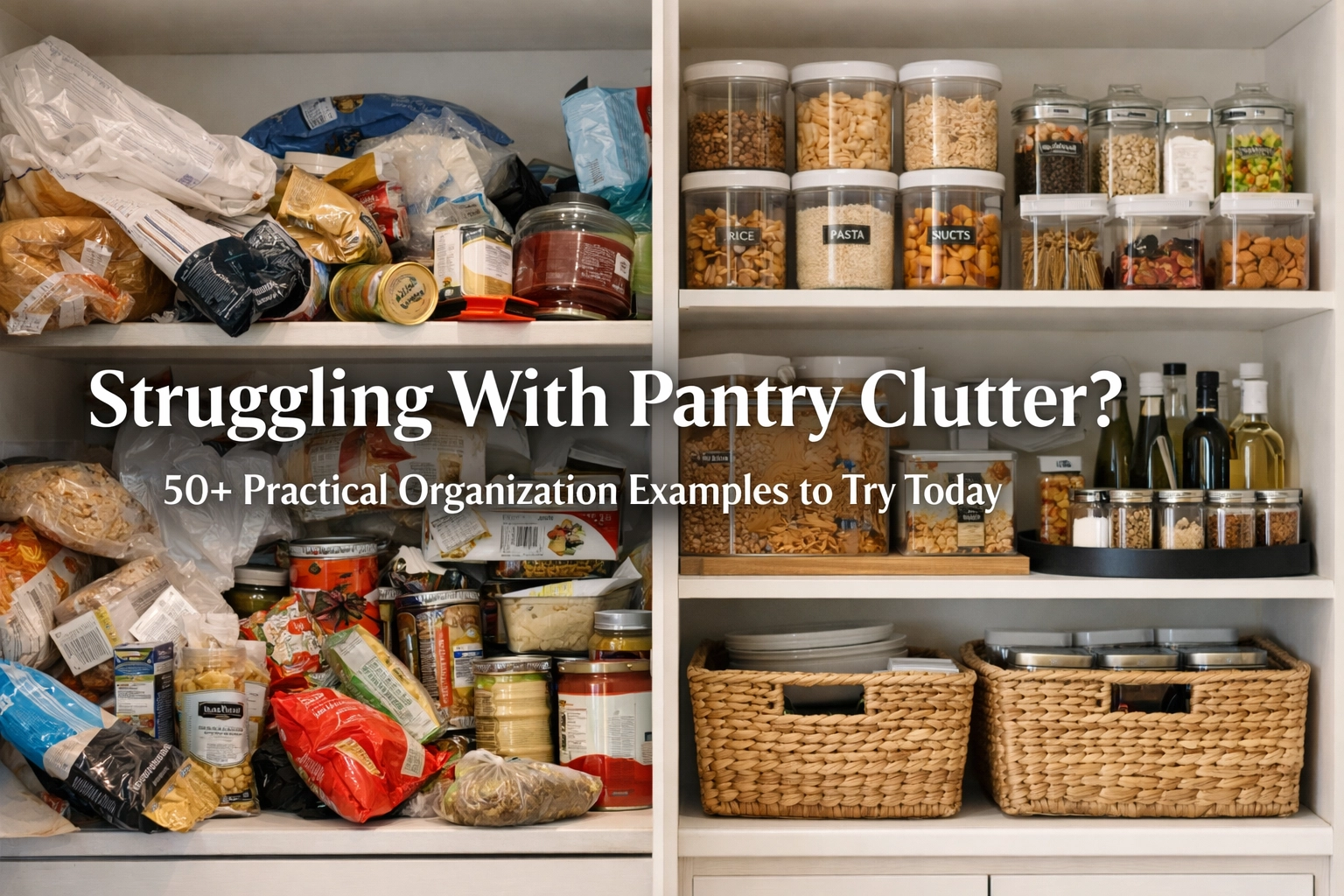
A disorganized pantry creates daily frustration. Finding ingredients becomes a scavenger hunt, duplicate purchases pile up, and food expires before it gets used. The good news: transforming a chaotic pantry into a functional space doesn’t require a complete renovation or expensive custom solutions.
The following practical examples focus on proven organization methods that address common pantry challenges. These strategies work for various pantry sizes and budgets, from small closets to walk-in spaces.
Start With a Complete Declutter
Before implementing any organization system, clear everything from the pantry. This step reveals what’s actually being stored and identifies items that no longer serve a purpose.
Example 1: Remove all items and sort into three categories: keep, donate, discard.
Example 2: Check expiration dates on canned goods, spices, and packaged items.
Example 3: Discard opened packages that have gone stale or lost freshness.
Example 4: Donate unopened, unexpired items that won’t realistically be used.
Example 5: Group similar items together during the sorting process to understand quantities.
Example 6: Wipe down all shelves before placing items back.
This foundation ensures the organization system will be built around actual needs rather than accommodating unnecessary items.

Create Functional Zones by Category
Organizing a pantry by category mimics how grocery stores arrange products. This approach makes locating items intuitive and prevents random placement.
Example 7: Dedicate one shelf exclusively to breakfast items like cereal, oatmeal, pancake mix, and syrup.
Example 8: Create a baking zone with flour, sugar, baking powder, baking soda, chocolate chips, and vanilla extract.
Example 9: Designate a pasta and grains section including various pasta shapes, rice, quinoa, and couscous.
Example 10: Establish a canned goods area organized by type: vegetables, soups, beans, tomatoes.
Example 11: Set up a snack station with chips, crackers, nuts, granola bars, and dried fruit.
Example 12: Create a beverage zone for coffee, tea, hot chocolate, and drink mixes.
Example 13: Allocate space for oils, vinegars, and cooking liquids.
Example 14: Designate a section for condiments and sauces.
Example 15: Create a separate area for spices and seasonings.
Example 16: Establish a meal prep zone for items frequently used together.
Apply Strategic Shelf Placement
The location of items within the pantry significantly impacts functionality. Placement should reflect usage patterns and accessibility needs.
Example 17: Store everyday essentials like cooking oil, salt, and pepper at eye level for quick access.
Example 18: Place heavier items like canned goods and bottled liquids on bottom shelves to prevent accidents.
Example 19: Reserve top shelves for occasionally used items such as specialty baking ingredients or seasonal items.
Example 20: Position frequently used spices at the front of their designated area.
Example 21: Store grab-and-go snacks at a height accessible to children when appropriate.
Example 22: Keep backup supplies and bulk purchases toward the back or top.
Example 23: Place items used for morning routines on easily accessible shelves.
Example 24: Store pet food on lower shelves or in a separate designated area.

Maximize Space With Smart Containers
The right containers transform how much can be stored and how easily items can be found. Different container types serve different purposes.
Example 25: Transfer flour, sugar, and baking ingredients into large airtight containers with pop-top lids.
Example 26: Use clear stackable containers for pasta varieties to save space and maintain visibility.
Example 27: Store cereal in rectangular airtight containers that fit shelves more efficiently than boxes.
Example 28: Place nuts, dried fruit, and granola in medium-sized clear containers.
Example 29: Use small airtight containers for opened chip bags and crackers to maintain freshness.
Example 30: Store coffee beans and ground coffee in opaque airtight containers to preserve flavor.
Example 31: Transfer snack-sized portions into small containers for easy grab-and-go options.
Example 32: Use rectangular containers instead of round ones to eliminate wasted corner space.
Example 33: Select stackable containers to maximize vertical space.
Example 34: Choose containers with measurement markings for easy inventory tracking.
Implement Specialized Storage Solutions
Beyond standard containers, specific tools address unique pantry challenges and awkward spaces.
Example 35: Install a lazy Susan on shelves for cooking oils, vinegars, and condiments to eliminate lost items in back corners.
Example 36: Use a second lazy Susan for sauces, salad dressings, and frequently rotated items.
Example 37: Place magazine holders vertically to organize aluminum foil, plastic wrap, and parchment paper boxes.
Example 38: Use clear plastic bins to corral small packets of seasonings, gravy mixes, and sauce packets.
Example 39: Install wire mesh drawers for onions, potatoes, and garlic to allow air circulation.
Example 40: Add wicker or water hyacinth baskets for organizing paper products and produce.
Example 41: Use over-the-door organizers for spices, small packets, or cleaning supplies.
Example 42: Install tiered shelf risers to create double the usable space on existing shelves.
Example 43: Add pull-out drawers to deep shelves for easier access to back items.
Example 44: Use expandable shelf dividers to create organized sections within a single shelf.

Optimize Vertical and Wall Space
Many pantries have untapped vertical space that can significantly increase storage capacity.
Example 45: Install shelving all the way to the ceiling for storing infrequently used items.
Example 46: Mount wall hooks for reusable shopping bags, aprons, or oven mitts.
Example 47: Add narrow shelving to the inside of the pantry door for spices or small items.
Example 48: Install a wall-mounted paper towel holder to free up shelf space.
Example 49: Use stackable can organizers to create vertical storage for canned goods.
Example 50: Add tension rods vertically between shelves to create dividers for baking sheets or cutting boards.
Example 51: Mount a small wall shelf specifically for frequently used items.
Example 52: Install battery-powered LED lights under shelves to illuminate dark corners.
Maintain Clear Visibility and Labels
Knowing what’s stored where eliminates guesswork and prevents duplicate purchases.
Example 53: Label all containers clearly with contents and purchase or expiration dates.
Example 54: Use a label maker for uniform, professional-looking labels.
Example 55: Create chalkboard labels that can be erased and rewritten as contents change.
Example 56: Label shelf edges to designate zones and maintain organization long-term.
Example 57: Use color-coded labels to differentiate categories at a glance.
Example 58: Remove items from bulky cardboard packaging immediately and transfer to clear containers.
Example 59: Position labels on the front of containers for easy reading.
Example 60: Keep an inventory list posted inside the pantry door for tracking items that need replenishing.
Address Deep Shelves and Awkward Spaces
Deep shelves and unusual pantry configurations require specific strategies to prevent items from getting lost.
Example 61: Use long, narrow clear containers for deep shelves to pull items forward without reaching.
Example 62: Install pull-out drawers on deep shelves for full visibility of contents.
Example 63: Place frequently used items toward the front of deep shelves.
Example 64: Use risers to create tiers on deep shelves for better visibility.
Example 65: Store backup and bulk items in deep shelf backs since they’re accessed less frequently.
Create Systems for Odd Items
Some pantry items don’t fit standard containers but still need organized storage.
Example 66: Use magazine holders turned horizontally to store pouches and small boxed items.
Example 67: Hang a small basket on the wall for snack bars and individually wrapped items.
Example 68: Store reusable water bottles in a designated bin to prevent tip-overs.
Example 69: Keep lunch-packing supplies in one container for quick morning routines.
Example 70: Use a small basket for bread and baked goods that don’t fit in containers.

Establish Maintenance Habits
Organization systems only work when maintained. Simple habits prevent clutter from returning.
Example 71: Return items to designated zones immediately after use.
Example 72: Rotate stock by placing new purchases behind existing items.
Example 73: Do a quick pantry check weekly to identify items approaching expiration.
Example 74: Wipe up spills immediately to prevent sticky buildup.
Example 75: Refill containers as they empty rather than letting them accumulate.
Example 76: Do a complete pantry inventory monthly to adjust organization as needs change.
Example 77: Keep a running shopping list inside the pantry for items running low.
Adapt Systems for Specific Needs
Pantry organization should reflect household cooking habits and dietary requirements.
Example 78: Create a separate gluten-free section to prevent cross-contamination.
Example 79: Designate a shelf for meal prep containers and supplies.
Example 80: Store baking supplies together if baking happens frequently.
Example 81: Keep international ingredients in a designated area for specialty cooking.
Example 82: Create a smoothie station with protein powders, seeds, and dried fruits together.
Example 83: Establish a coffee and tea station with all related supplies in one location.
These organization examples provide a framework that can be customized to any pantry size, layout, and household needs. The key to lasting organization lies in creating systems that match actual usage patterns and maintaining them consistently. Small adjustments over time will refine the system further, making the pantry work harder and reducing daily frustration.

