
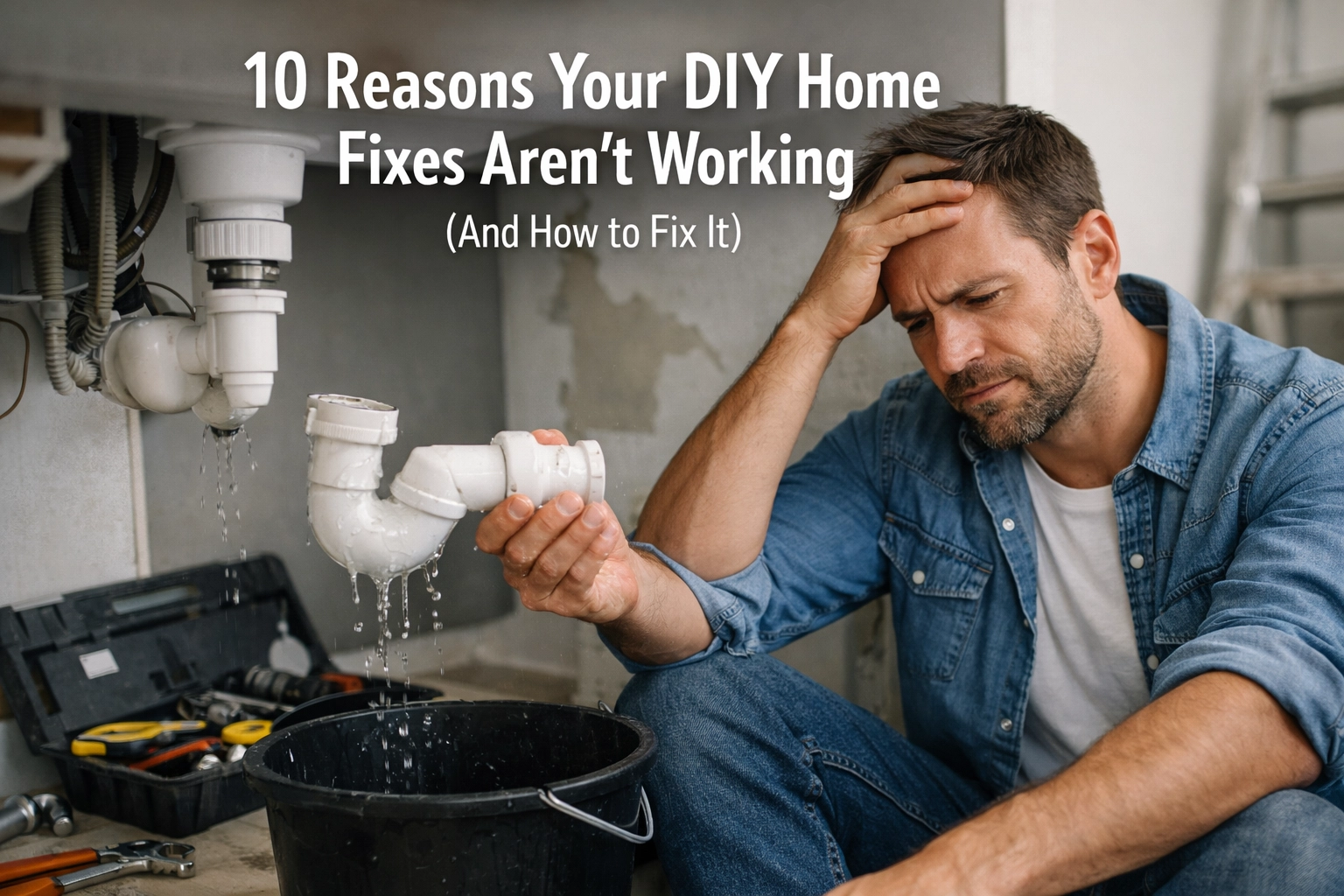
Home improvement projects can be rewarding, but frustration often replaces satisfaction when repairs fail to deliver lasting results. Understanding why DIY fixes go wrong helps prevent wasted time, money, and effort. The following ten issues represent the most common obstacles to successful home repairs and practical solutions to overcome them.
Attempting Too Many Projects Simultaneously
Juggling multiple repairs at once rarely produces good outcomes. When attention splits between several tasks, mistakes multiply and projects remain incomplete for weeks or months.
A kitchen faucet leak, a squeaky bedroom door, and a loose cabinet handle might all seem like quick fixes. Starting all three at once typically means running to the hardware store multiple times, losing track of which tools belong to which project, and leaving at least one job half-finished.
The Solution: Complete one repair fully before starting another. This approach allows full concentration on each task, reduces errors, and provides the satisfaction of actually finishing something. Break larger projects into specific phases with clear completion points.

Incorrect Measurements
Few mistakes prove more costly than cutting materials to the wrong size. A board that’s too short can’t be extended, and improperly measured spaces lead to gaps, overlaps, and ill-fitting components.
Installing shelving, cutting trim work, or building any structure requires precise measurements. A single miscalculation can waste expensive materials and hours of work.
The Solution: Adopt the “measure twice, cut once” rule without exception. Use quality measuring tools, mark measurements clearly, and verify dimensions before making permanent changes. For critical cuts, triple-checking isn’t excessive: it’s sensible.
Missing or Inadequate Tools
Attempting repairs with improvised or incorrect tools creates substandard results and safety hazards. A butter knife isn’t a screwdriver substitute, and pliers can’t replace a proper wrench.
The wrong tool damages surfaces, strips screws, and makes simple tasks unnecessarily difficult. Projects take longer and frustration increases when the proper equipment isn’t available.
The Solution: Research required tools before starting any project. Create a checklist and verify everything is on hand. For expensive or rarely used tools, consider rentals rather than purchases. Quality basic tools: hammer, screwdrivers, tape measure, level, drill: form the foundation of any DIY toolkit.

Neglecting Safety Precautions
Home repairs involve inherent risks that increase dramatically without proper safety measures. Cuts, falls, electrical shocks, and toxic exposure are entirely preventable with the right precautions.
Working without safety glasses, gloves, or dust masks exposes the body to unnecessary harm. Skipping protective equipment because a project seems quick often results in trips to urgent care facilities.
The Solution: Treat safety equipment as non-negotiable. Wear eye protection when cutting or drilling, use gloves for rough materials, and employ proper respiratory protection for dust or fumes. Keep a first aid kit accessible and know when to shut off electrical or water supplies before beginning work.
Skipping Permit Requirements
Many repairs require local permits, especially those involving electrical systems, plumbing, structural changes, or roofing work. Proceeding without proper approval creates legal and financial consequences.
Unpermitted work can result in significant fines, complicate home sales, and void insurance claims if damage occurs. The cost and hassle of obtaining permits seems minor compared to penalties or having to tear out completed work.
The Solution: Contact the local building department before starting projects that might require permits. Requirements vary by location and project scope. The permitting process often includes inspections that catch problems before they become expensive disasters.
Inadequate Planning and Preparation
Diving into repairs without thorough planning creates cascading problems. Rushed preparation leads to forgotten steps, missing materials, and unexpected complications that could have been anticipated.
Starting to tile a bathroom only to discover the subfloor needs replacement wastes time and money. Painting without proper surface preparation results in peeling paint within months.
The Solution: Develop a detailed project plan that includes every step from preparation through cleanup. Research the task thoroughly using multiple reliable sources. Create a complete materials list with quantities and specifications. Consider what could go wrong and develop contingency plans.

Addressing Symptoms Instead of Root Causes
Surface-level repairs often ignore underlying problems that continue causing damage. Patching a ceiling stain without fixing the roof leak ensures the problem returns. Sealing foundation cracks without investigating why they formed allows continued structural movement.
These superficial fixes create a false sense of security while damage progresses unseen. What seemed like a simple repair can eventually require extensive professional intervention costing thousands of dollars.
The Solution: Investigate what’s causing visible problems before attempting fixes. Water stains indicate leaks that must be stopped at the source. Cracks suggest movement or settling that needs addressing. Recurring issues signal deeper problems requiring thorough diagnosis.
Tackling Projects Beyond Skill Level
Some repairs demand professional expertise due to complexity, safety requirements, or code compliance. Electrical panel upgrades, sewer line work, gas line installations, asbestos removal, and structural modifications fall into this category.
The consequences of errors in these areas extend beyond poor aesthetics or needing redos. Faulty electrical work causes fires, improper gas line installation creates explosion risks, and disturbing asbestos endangers health. These aren’t appropriate learning experiences for DIY enthusiasts.
The Solution: Honestly assess skill levels before committing to complex projects. Research thoroughly to understand what’s involved. Consult professionals for projects involving electrical systems beyond changing fixtures, plumbing that requires cutting into pipes, structural elements, or hazardous materials. Consider taking classes to build skills before attempting advanced repairs.
Poor Installation Techniques
Even with the right materials and tools, improper installation undermines repairs. Incorrectly installed roof shingles allow leaks, poorly wired electrical connections create fire hazards, and improperly sealed plumbing joints cause water damage.
These technical errors often aren’t immediately visible but manifest over time through failures that cost substantially more to fix than doing it correctly initially. Water damage from a poorly soldered pipe joint can require extensive remediation work costing thousands.
The Solution: Follow manufacturer instructions precisely. Watch multiple instructional videos from credible sources showing proper techniques. Don’t skip steps that seem unnecessary: they’re included for good reasons. Allow adequate curing, drying, or setting time for materials. When uncertain about technique, consult experts before proceeding.

Ignoring Building Codes
Building codes exist to ensure safety, structural integrity, and proper functionality. Repairs that don’t meet code requirements create hidden dangers within walls and can void homeowner’s insurance coverage.
Non-compliant electrical work poses fire risks, improper plumbing creates health hazards, and structural work that doesn’t meet standards compromises building integrity. Future home sales become complicated when unpermitted, non-compliant work is discovered during inspections.
The Solution: Research applicable building codes before starting projects. Many municipalities provide online access to code requirements. When in doubt, consult with inspectors before beginning work. Hiring licensed professionals for code-sensitive work ensures compliance and provides recourse if problems arise.
Moving Forward With Successful Repairs
Understanding these common pitfalls transforms approach to home repairs. Success comes from realistic self-assessment, thorough preparation, proper tools, and knowing when to call professionals. Small projects completed correctly build skills and confidence for gradually more complex work.
The difference between frustrating failures and satisfying successes often comes down to patience, planning, and respecting the complexity of repair work. Taking time to prepare, following established procedures, and prioritizing quality over speed creates repairs that actually last.
Home maintenance represents an ongoing learning process. Each completed project adds to a knowledge base that makes future repairs easier and more successful. The goal isn’t perfection on every project but rather continuous improvement and recognition of personal limits. With proper approach and realistic expectations, DIY home repairs can be both effective and rewarding.

