
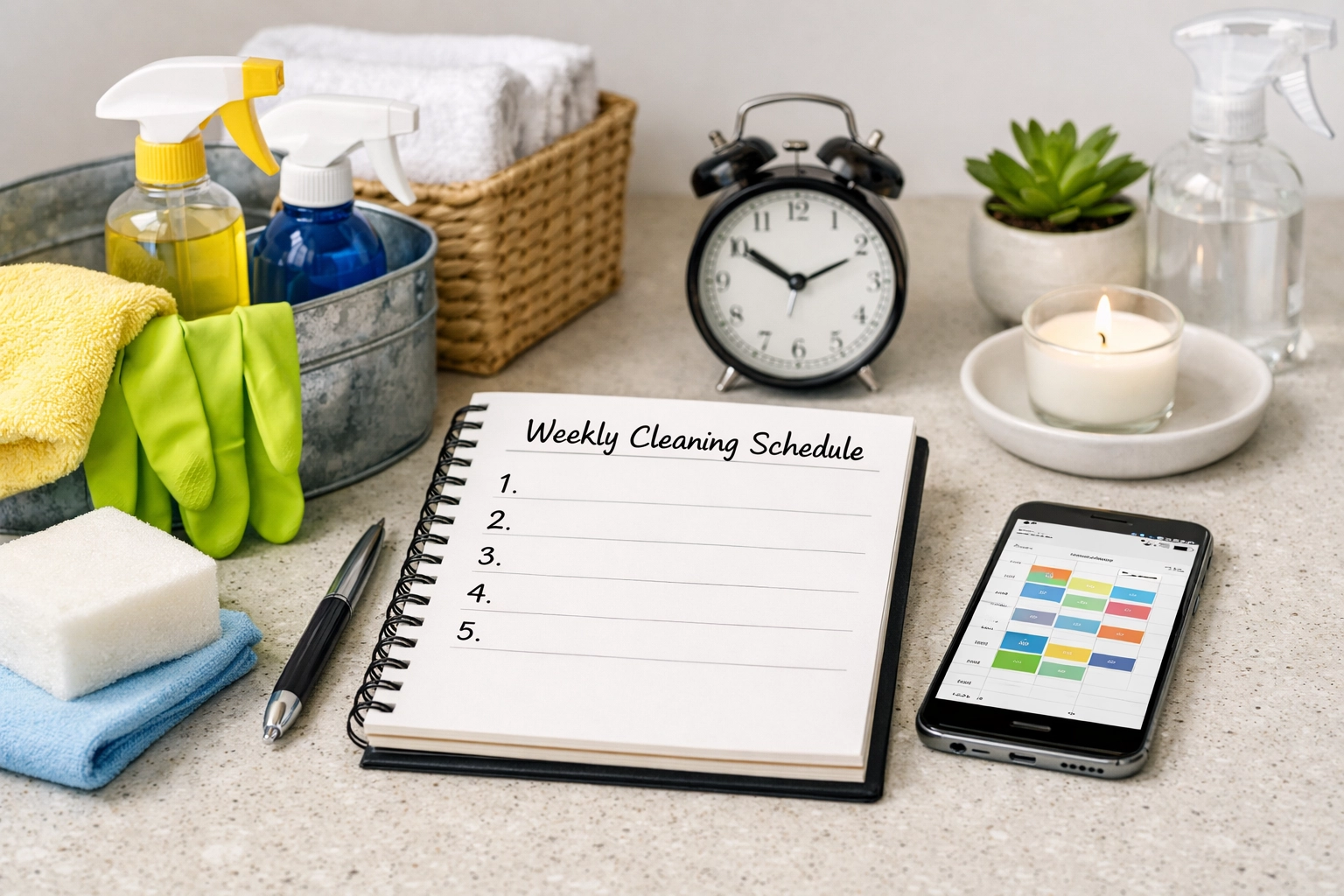
Maintaining a clean and organized home is a common challenge for many modern households. Between professional commitments, family responsibilities, and the need for personal downtime, household chores often fall to the bottom of the priority list. However, a cluttered or dirty environment can contribute to increased stress levels and decreased productivity. The solution is not necessarily to clean more, but to clean more efficiently.
Building a realistic weekly cleaning schedule allows a household to move away from “panic cleaning”: the frantic tidying that occurs right before guests arrive: and toward a sustainable rhythm. This guide provides a step-by-step framework for creating a customized plan that fits into a busy lifestyle without causing burnout.
Understanding the Foundations of a Realistic Schedule
Before diving into the steps, it is important to acknowledge why many cleaning schedules fail. Often, people download generic templates found online that do not account for their specific living situation. A schedule designed for a single person living in a studio apartment will not work for a family of five with two dogs.
A realistic schedule is based on three pillars:
- Prioritization: Focusing on high-impact areas first.
- Consistency: Performing small tasks regularly to prevent build-up.
- Flexibility: Allowing room for life’s unpredictable events.
By adopting these pillars, any household can create a system that keeps the home functional and comfortable.

Step 1: Assess the Current Situation and Define Goals
The first step in building a schedule is to perform a thorough assessment of the home and the lifestyle of its residents. Without this data, a schedule is merely a list of wishes rather than a practical plan.
Evaluate the Physical Space
Walk through every room and take note of the specific cleaning needs. Different surfaces and rooms require different levels of attention. Consider the following:
- Square Footage: Larger homes require more time for floor care and dusting.
- High-Traffic Areas: Entryways, kitchens, and main bathrooms typically require daily or frequent attention.
- Surface Types: Hardwood floors, carpets, stainless steel, and granite all have unique maintenance requirements.
Analyze the Household Dynamics
The number of people and pets in a home significantly dictates the frequency of cleaning. A household with toddlers will likely need to focus more on sanitizing and floor cleaning, while a home with shedding pets will require daily vacuuming.
Identify Time Blocks
A realistic schedule must fit into the actual hours available. It is helpful to look at a weekly calendar and identify “pockets of time.” This might include thirty minutes before leaving for work, fifteen minutes after dinner, or a two-hour block on a Saturday morning. Being honest about available time prevents the creation of an over-ambitious plan that is impossible to follow.
For those looking to expand their knowledge on home management or other life skills, visiting Paris Wheel can provide additional resources for structured learning.
Step 2: Identify and Categorize Main Cleaning Tasks
Once the situation is understood, the next step is to list every task that needs to be performed. To avoid feeling overwhelmed, categorize these tasks by frequency. This prevents “deep cleaning” tasks from cluttering the daily routine.
Daily “Non-Negotiables”
These are the tasks that keep the home functional and prevent a sense of chaos. They should generally take less than 30 minutes in total.
- Making the bed.
- Wiping down kitchen counters and the sink.
- Loading and unloading the dishwasher.
- A quick 5-minute declutter of the main living area.
- Handling one load of laundry (if necessary).
Weekly Tasks
These tasks involve a deeper level of cleaning but do not need to happen every day.
- Vacuuming and mopping all floors.
- Dusting furniture and electronics.
- Cleaning bathrooms (toilets, mirrors, showers).
- Changing bed linens and towels.
- Cleaning out the refrigerator of expired items.
Monthly and Seasonal Tasks
These are often forgotten but are essential for long-term home maintenance.
- Dusting baseboards and ceiling fans.
- Cleaning the inside of the oven and microwave.
- Wiping down window sills and glass.
- Vacuuming under furniture.

Step 3: Choose a Distribution Strategy
There is no “right” way to distribute cleaning tasks; the best method is the one that is most likely to be followed. There are three primary strategies used by busy households.
The “One-Task-a-Day” Method
This approach involves assigning one major weekly task to each day of the week. For example:
- Monday: Bathrooms.
- Tuesday: Dusting.
- Wednesday: Vacuuming.
- Thursday: Mopping.
- Friday: Kitchen deep-clean.
- Saturday/Sunday: Laundry and linens.
This method is ideal for those who prefer to spend 20–30 minutes a day rather than several hours on the weekend.
The “Timed Block” Method
For those with very busy weeknights, the timed block method focuses on doing the bulk of the cleaning on one or two days. During the week, only “daily non-negotiables” are performed. On a Saturday morning, a two-hour block is dedicated to completing all weekly tasks at once.
The “Zone Cleaning” Method
Zone cleaning involves focusing on one specific area of the house each week or each day. In week one, the focus might be the kitchen; in week two, the living room. This allows for a deeper level of cleaning in each area but may mean that some rooms go longer between cleanings.
Information on various approaches to home organization can also be found in the Paris Wheel blog section.
Step 4: Plan for Daily Constraints and Work-Life Balance
A schedule that works on a quiet Tuesday may fail on a hectic Thursday. To make a cleaning schedule truly realistic, it must account for daily energy levels and constraints.
The 15-Minute Morning Reset
Before the day becomes chaotic, a 15-minute window can be used to set the tone. Emptying the dishwasher and making the bed ensures that the “hub” of the home is ready for the evening return.
The After-Work “Transition”
For many, the hardest part of cleaning is starting after a long workday. Integrating a small task into the transition from work to home can help. This might mean putting away shoes and coats immediately or starting a load of laundry while the evening meal is cooking.
Evening Tidy-Up
Before retiring for the night, a quick walk-through of the main living areas to put away stray items can prevent the “clutter creep” that often happens overnight. This is not about deep cleaning, but about ensuring the next morning starts with a clean slate.

Step 5: Consistency, Delegation, and Habit Stacking
The final step is transforming the schedule from a document into a habit. Consistency is more important than perfection. If a day is missed, the schedule should allow for simply picking up where things left off rather than trying to “catch up” and becoming overwhelmed.
The Power of Delegation
Cleaning should not be the sole responsibility of one person if multiple people live in the home.
- Age-Appropriate Tasks for Children: Even young children can help by putting toys away or matching socks.
- Partner Contributions: Dividing the weekly tasks ensures that no one person carries the full “mental load” of household management.
- Shared Calendars: Using a physical chart on the fridge or a shared digital calendar can keep everyone accountable.
Habit Stacking
Habit stacking is the process of “stacking” a new habit onto an existing one. For example, wipe down the bathroom mirror immediately after brushing teeth, or wipe the kitchen counters while waiting for the coffee to brew. These micro-tasks eventually become automatic, reducing the effort required to maintain the home.
Review and Adjust
Every few months, it is beneficial to review the schedule. If certain tasks are consistently being skipped, the schedule might be too demanding. Alternatively, as seasons change: such as during the winter when more time is spent indoors: the cleaning needs of the home may shift.

Essential Tools for an Efficient Routine
While the schedule is the blueprint, having the right tools can significantly reduce the time spent cleaning. A “cleaning caddy” that can be easily carried from room to room prevents wasted time walking back and forth to the kitchen sink for supplies.
Recommended basics include:
- A high-quality microfiber cloth (reduces the need for chemical cleaners).
- An all-purpose cleaner.
- A dedicated glass cleaner.
- A versatile vacuum with attachments for different surfaces.
- A mop system that is easy to deploy and clean.
By keeping these supplies organized and accessible, the barrier to starting a cleaning task is lowered. For more information on maintaining a household or getting help with specific questions, the customer help page can be a useful resource for general inquiries.
Conclusion
Building a realistic weekly cleaning schedule is an investment in the overall well-being of a household. It transforms the home from a source of stress into a sanctuary of order. By assessing individual needs, categorizing tasks, choosing a distribution method that fits the personality of the residents, and staying consistent through delegation and habit stacking, a clean home becomes an achievable reality rather than a distant dream.
The goal is not to have a museum-perfect home every minute of the day, but to create a system where the “mess” never reaches a point of overwhelm. With a clear plan in place, busy households can spend less time worrying about chores and more time enjoying their living space. For those interested in further structured learning or organizational strategies, exploring the various categories at Paris Wheel offers a wealth of information to help streamline everyday life.

