
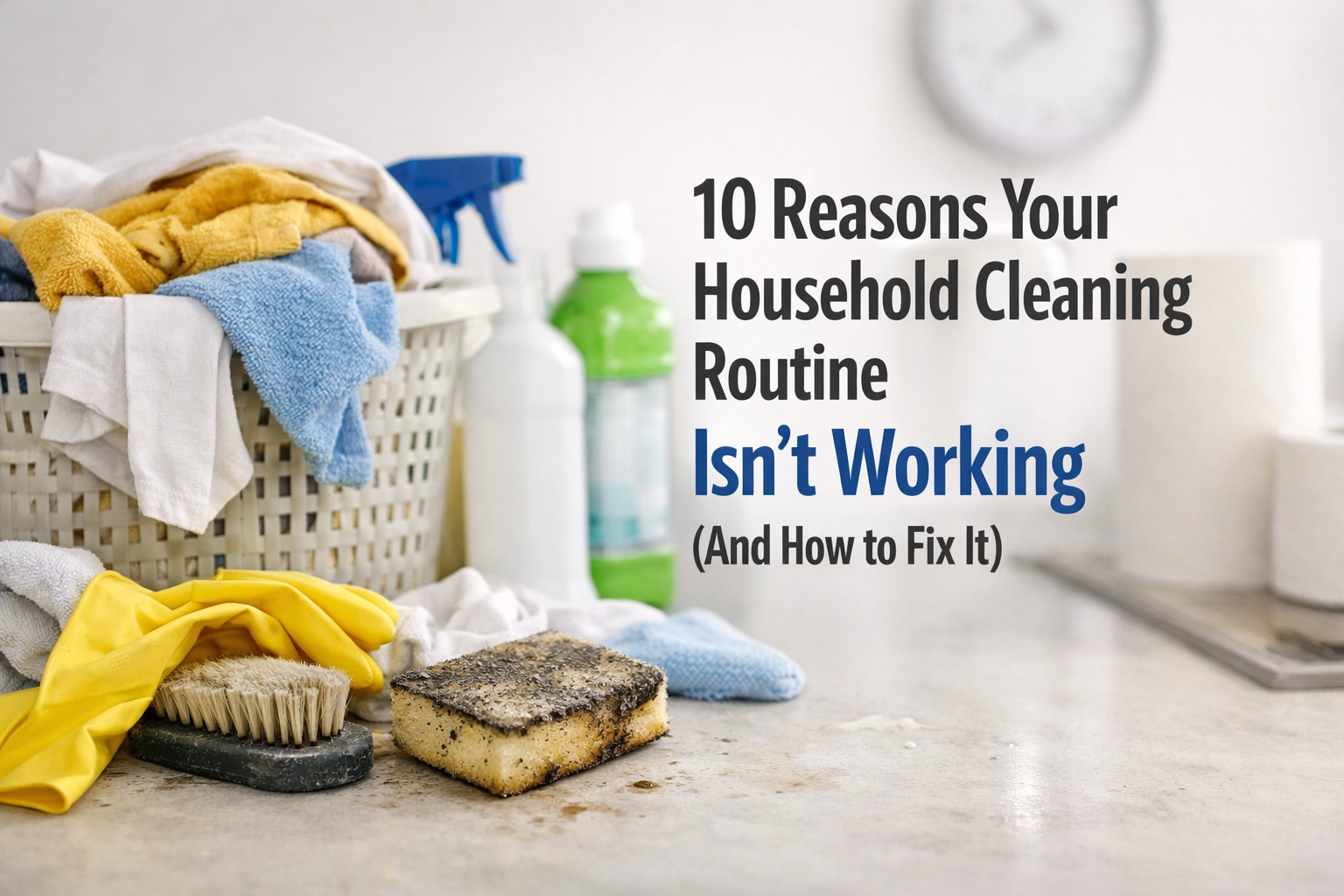
Maintaining a clean and organized home is often viewed as a straightforward task, yet many individuals find themselves trapped in a cycle of constant cleaning with minimal results. It is common to spend hours scrubbing, dusting, and vacuuming, only to feel that the living space remains cluttered or unsanitary just a few days later. This frustration often stems from fundamental flaws in the cleaning routine rather than a lack of effort.
A successful household maintenance plan relies on efficiency, the right tools, and a systematic approach. When a routine fails, it usually indicates that the methods being used are outdated, ineffective, or simply ill-suited for the specific needs of the environment. Understanding the underlying reasons for these failures is the first step toward creating a sustainable and effective system.
1. Using the Wrong Cleaning Products
One of the most frequent reasons a cleaning routine falls short is the use of inappropriate chemicals for specific surfaces. The market is flooded with “all-purpose” cleaners, but the reality is that different materials: such as natural stone, hardwood, stainless steel, and glass: have unique chemical requirements.
Using an acidic cleaner on a marble countertop can lead to etching, while using a wax-based polish on a modern laminate floor can create a slippery, dirt-attracting film. Furthermore, over-reliance on heavy disinfectants for basic dusting tasks can leave behind a sticky residue that actually attracts more dust over time.
How to Fix It:
Take the time to audit the current supply of cleaning agents. Read the labels carefully to ensure they are safe for the surfaces in the home. For most daily tasks, a pH-neutral cleaner is the safest bet. It is also beneficial to explore natural alternatives. For instance, a mixture of water and a small amount of dish soap is often more effective and safer for various surfaces than harsh chemical sprays. However, be cautious with vinegar; while it is an excellent descaler for faucets, its acidity can damage natural stone and grout.

2. Cleaning in the Wrong Order
Efficiency in cleaning is largely determined by physics: specifically, the law of gravity. A common mistake is cleaning floors first or jumping between tasks without a logical flow. If the floors are mopped before the ceiling fans are dusted, the debris from the fans will inevitably fall onto the clean floor, necessitating a second round of work.
Cleaning randomly also leads to “missed spots.” When there is no set path through a room, it is easy to overlook corners, baseboards, or the tops of picture frames. This lack of direction turns a quick chore into a time-consuming ordeal that yields inconsistent results.
How to Fix It:
Adopt the “Top-to-Bottom, Left-to-Right” rule. Start at the highest point in a room: such as crown molding or light fixtures: and work downward. This ensures that any dust or debris disturbed during the process eventually settles on the floor, which is the final area to be addressed. Additionally, move around the room in a consistent circle (either clockwise or counter-clockwise). This systematic approach ensures every square inch is covered without backtracking.
3. Not Letting Cleaners Sit Long Enough
In a fast-paced world, the tendency is to spray a surface and immediately wipe it away. However, most cleaning products, especially disinfectants and heavy-duty degreasers, require “dwell time” to work effectively. Chemistry takes time to break down the molecular bonds of grease or to neutralize bacteria and viruses.
Wiping away a disinfectant immediately after application may remove visible dirt, but it often leaves the underlying pathogens intact. This leads to a home that looks clean but is not truly sanitary, which can be particularly problematic in kitchens and bathrooms.
How to Fix It:
Read the manufacturer’s instructions for “contact time.” For general cleaning, letting a solution sit for 30 to 60 seconds can make scrubbing significantly easier. For disinfection, many products require a dwell time of 5 to 10 minutes. A helpful strategy is to spray down the entire bathroom: the shower, the sink, and the toilet: and then move to another task, such as emptying the trash or mirrors, while the chemicals do the heavy lifting.

4. Using Dirty Cleaning Tools
It is impossible to clean with dirty tools. A sponge that has been used for weeks, a microfiber cloth that hasn’t been laundered, or a vacuum cleaner with a full bag will simply redistribute dirt and bacteria around the home. Cross-contamination is a significant risk here; using the same cloth to wipe the bathroom counter and then the kitchen table is a common mistake that compromises household hygiene.
Furthermore, worn-out tools lose their efficacy. A frayed scrub brush or a saturated mop head will not agitate surfaces or absorb liquid as well as a fresh one, leading to streaks and leftover grime.
How to Fix It:
Establish a routine for cleaning the cleaners. Microfiber cloths should be washed after every use in hot water (avoiding fabric softener, which clogs the fibers). Sponges should be replaced every two weeks or sanitized in the dishwasher frequently. To prevent cross-contamination, implement a color-coding system: for example, blue cloths for glass, red for bathrooms, and green for the kitchen. For more guidance on maintaining household standards, visiting the Paris Wheel blog can provide additional insights into organizing household tasks.
5. Overlooking High-Touch Surfaces
While it is easy to remember to clean the floors and the countertops, the “hidden” dirt often resides on high-touch surfaces. Doorknobs, light switches, cabinet handles, remote controls, and refrigerator doors are touched dozens of times a day but are frequently ignored during weekly cleaning. These areas act as reservoirs for oils, skin cells, and germs.
If these surfaces are neglected, the home never truly feels “fresh.” Fingerprints on switches and grime on handles provide a visual cue of a house that isn’t fully maintained, regardless of how clean the floors might be.
How to Fix It:
Incorporate a “touchpoint sweep” into the daily or bi-weekly routine. Use a disinfectant wipe or a cloth dampened with an all-purpose cleaner to quickly wipe down these common areas. This takes less than five minutes but significantly impacts the overall cleanliness and health of the household. Paying attention to these details is a hallmark of an advanced cleaning schedule.

6. Not Vacuuming and Mopping Correctly
Floor care is often the most labor-intensive part of a routine, yet it is frequently done incorrectly. Many people move the vacuum too quickly, not allowing the brush roll enough time to agitate the carpet fibers and lift the dirt. Similarly, mopping with a single bucket of water often results in spreading dirty water across the floor rather than removing it.
Additionally, neglecting vacuum maintenance: such as cleaning the HEPA filter or removing tangled hair from the roller: drastically reduces the machine’s suction power. If the equipment isn’t performing at 100%, the routine will fail to produce the desired results.
How to Fix It:
When vacuuming, use slow, deliberate strokes. Overlap each pass to ensure no strips of floor are missed. For mopping, consider the “two-bucket method”: one bucket for the cleaning solution and one for rinsing the dirty mop. This ensures that only clean water touches the floor. Regularly check vacuum filters and replace them as recommended by the manufacturer to maintain air quality and suction. Information on maintenance can often be found in customer help sections of equipment providers.
7. Not Cleaning Regularly Enough
The “marathon cleaning” approach: where one spends an entire Saturday cleaning the whole house: is often unsustainable and leads to burnout. It also allows dirt to build up to a point where it becomes much harder to remove. Hard water stains in a shower are easy to wipe away after three days but require intense scrubbing and harsh chemicals after three weeks.
When cleaning is viewed as a massive, infrequent event, it becomes a source of stress. This leads to procrastination, which only worsens the state of the home.
How to Fix It:
Shift the mindset from “deep cleaning” to “maintenance cleaning.” Break tasks down into daily, weekly, and monthly categories. A “little and often” approach: such as wiping the shower walls after every use or doing one load of laundry a day: prevents the workload from becoming overwhelming. Consistent maintenance keeps the home at a baseline level of cleanliness that is easy to manage.

8. Not Using Proper Ventilation
Cleaning products often release volatile organic compounds (VOCs) into the air. Without proper ventilation, these chemicals, along with stirred-up dust and moisture, remain trapped inside the home. This can lead to poor indoor air quality and, in humid areas like bathrooms or kitchens, the growth of mold and mildew.
Mold can take hold in as little as 24 to 48 hours in damp environments. If a cleaning routine doesn’t address moisture control and airflow, the home will never feel truly clean, and a musty odor may persist despite the use of scented cleaners.
How to Fix It:
Always open windows when using strong cleaning agents to ensure fresh air circulation. Use exhaust fans in the bathroom during and for 20 minutes after a shower to pull out moisture. In the kitchen, use the range hood while cooking to prevent grease particles from settling on cabinets. Regularly changing HVAC filters is also a critical part of a household routine that many overlook, as these filters trap airborne dust before it can settle on surfaces.
9. Keeping Supplies Out of Reach
The psychology of cleaning is heavily influenced by “friction.” If someone has to go to the garage or the basement to get a spray bottle and a cloth just to wipe up a small spill in the kitchen, they are less likely to do it. When supplies are difficult to access, the barrier to entry for cleaning is too high.
This lack of accessibility leads to small messes accumulating into large ones. Effective routines are built on the ability to address issues the moment they arise.
How to Fix It:
Store cleaning supplies at the “point of use.” Keep a small kit of bathroom cleaners under every bathroom sink. Store kitchen-specific degreasers and microfiber cloths in the kitchen. Having the necessary tools within arm’s reach makes it much easier to perform quick “micro-cleans” throughout the day. For those looking to streamline their household management, exploring the Paris Wheel shop may offer ideas for organizational tools that facilitate this accessibility.

10. Not Having the Right Equipment for Your Needs
Sometimes, the failure of a routine isn’t about the person cleaning, but the tools being used. Using a broom on a high-pile carpet, or a standard vacuum in a home with three shedding pets, is an uphill battle. Specialized cleaning challenges require specialized equipment.
For example, individuals with allergies may find that a standard vacuum simply kicks dust back into the air. In such cases, the routine isn’t “working” because the equipment isn’t capable of capturing the microscopic particles causing the problem.
How to Fix It:
Evaluate the specific needs of the household. If pet hair is a constant issue, invest in a vacuum specifically designed for pet dander and hair. If the home has many hard floors, a high-quality steam mop might be more effective than a traditional string mop. Matching the equipment to the environment reduces the physical effort required and improves the longevity of the clean.
Creating a functional cleaning routine is less about the time spent and more about the strategy employed. By addressing these ten common pitfalls, it is possible to transform a frustrating chore into a manageable and even rewarding part of daily life. For more resources on improving household skills and general knowledge, visiting the Paris Wheel homepage offers a gateway to various learning opportunities that can help refine many aspects of home management.

