
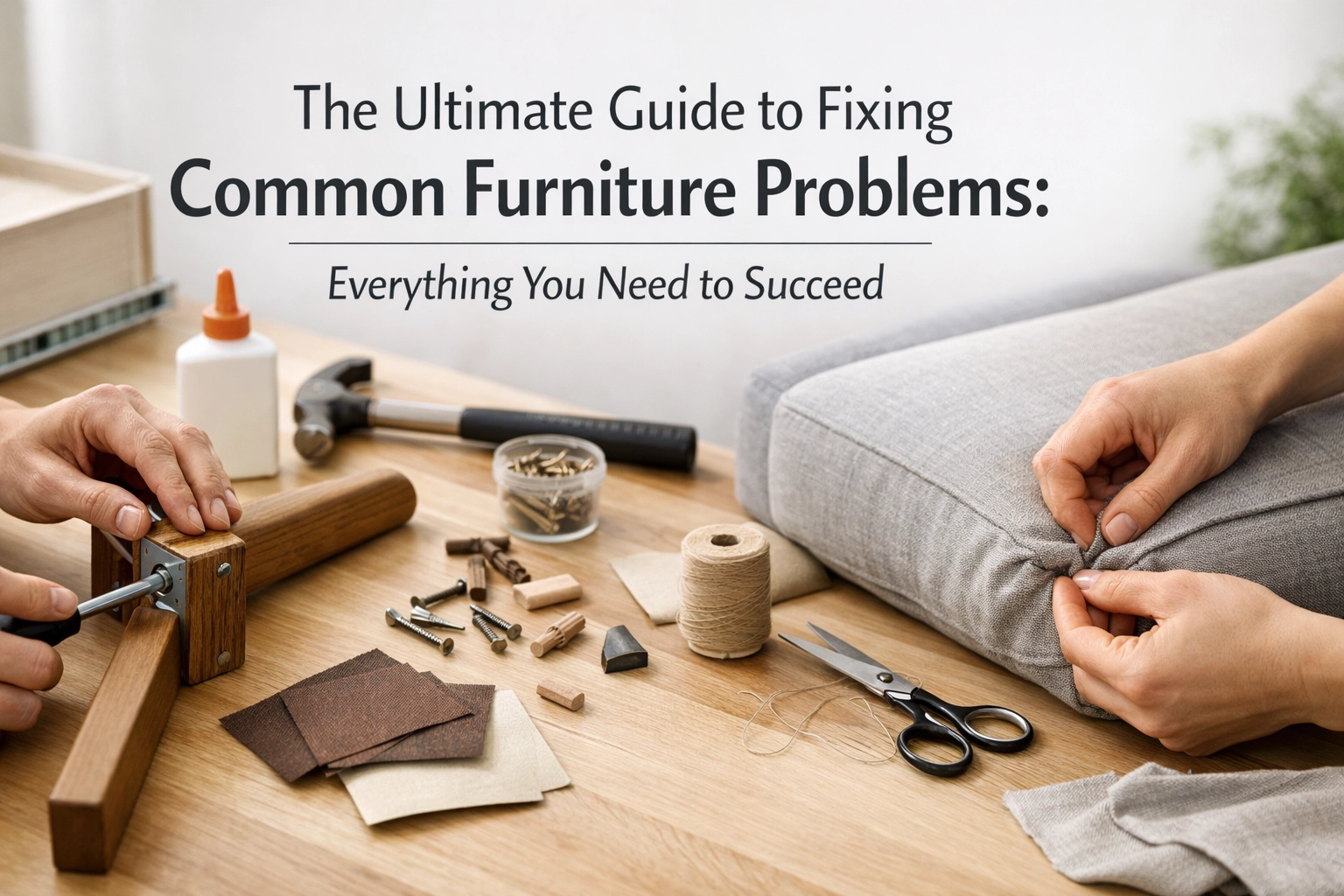
Furniture serves as the functional and aesthetic foundation of a home. Over time, even the highest-quality pieces are subject to wear, environmental changes, and accidental damage. Maintaining furniture is not just about aesthetics; it is about preserving structural integrity and extending the lifespan of an investment. Many common issues: from wobbly chair legs to unsightly water rings: can be addressed with a systematic approach and basic tools.
Understanding the mechanics of furniture construction and the properties of materials like wood, fabric, and veneer allows for effective repairs. This guide provides detailed, practical solutions for the most frequent furniture problems encountered in the modern household, ensuring that pieces remain both beautiful and safe for years to come.
Structural Instability: Addressing Wobbly Joints
The most common structural issue in wooden furniture is the wobbly joint. This typically occurs in chairs and tables where the legs meet the frame or where rungs and stretchers connect. Wobbling is often the result of wood shrinkage over time or the failure of old adhesive due to stress and movement.
Diagnosing the Cause
To fix a wobble, the first step is identifying the exact point of failure. Place the piece on a flat surface and apply pressure to different corners. Watch for movement at the joints. If a chair rung moves within its socket, the glue has likely failed or the wood has shrunk. If a table leg moves, the hardware might be loose, or the structural brace may be damaged.
Re-gluing Loose Rungs
When a rung or spindle becomes loose, simply adding more glue to the exterior will not solve the problem. The joint must be treated internally.
- Clean the Joint: If the rung can be pulled out entirely, sand the end of the rung to remove old, brittle glue. Sand down to the raw wood.
- Apply Adhesive: Use a high-quality wood glue. For joints that cannot be fully disassembled, a glue syringe is an essential tool. It allows for the precise delivery of adhesive deep into the socket without making a mess.
- Mechanical Reinforcement: If the rung is still loose after sanding, it may have shrunk too much for a snug fit. A small piece of thread or a very thin shaving of wood can be wrapped around the rung end before gluing to create a tighter seal.
- Clamping: Always clamp the joint while the glue dries. Use a bar clamp or a strap clamp, ensuring the piece is square.
Using Corner Braces
For tables or chairs where glue alone is insufficient, adding right-angle corner braces provides significant structural reinforcement. These are inexpensive and can be installed on the underside of the furniture where they are not visible. For pieces that require extra stability, metal braces prevent the legs from splaying outward under weight.

Repairing Wood Surface Damage
Wood surfaces are susceptible to scratches, dents, and gouges. The approach to repair depends largely on the depth of the damage and the type of finish on the wood.
Minor Scratches and Scuffs
Surface-level scratches that have not penetrated the stain can often be hidden by polishing. A mixture of one part white vinegar and two parts olive oil can be rubbed into light scratches to hydrate the wood and mask the mark. Alternatively, rubbing the meat of a walnut over a scratch can fill it with natural oils and pigments that blend with many medium-toned woods.
Deep Scratches and Gouges
When a scratch is deep enough to reveal the raw wood beneath the finish, a more technical approach is required.
- Preparation: Clean the area with mineral spirits to remove wax and oils.
- Sanding: Lightly sand the area with 220-grit sandpaper, following the direction of the grain.
- Filling: For deep gouges, use a wood filler or a wax burn-in stick that matches the color of the wood. Overfill the hole slightly, as filler often shrinks as it dries.
- Staining and Blending: Once the filler is dry, sand it flush with the surface. Apply a matching stain with a small artist’s brush. Feather the edges to blend the repair with the surrounding finish.
- Protection: Apply a thin coat of polyurethane or lacquer to match the original sheen.
Fixing Dents
Dents are areas where the wood fibers have been compressed but not removed. These can often be “lifted” using steam. Place a damp cotton cloth over the dent and apply a hot iron for a few seconds. The steam penetrates the wood fibers, causing them to swell back to their original shape. This method should be used cautiously on finished wood, as excessive heat can damage some coatings.
Removing Stains and Water Rings
Water rings are a common frustration, particularly on coffee and dining tables. These marks are usually categorized as white rings or black rings.
White Water Rings
White rings indicate that moisture has been trapped in the finish but has not reached the wood itself. This usually happens with lacquer or wax finishes.
- The Heat Method: Use a hairdryer on a low setting or a dry iron over a thin towel. The heat helps the trapped moisture evaporate.
- The Abrasive Method: A paste made of non-gel toothpaste and baking soda can be gently rubbed into the ring with a soft cloth. The mild abrasive removes the cloudy layer of the finish.
Black Stains
Black stains are more serious, indicating that moisture has penetrated the finish and reacted with the tannins in the wood, often causing mold or rot. These usually require stripping the finish, treating the wood with an oxalic acid solution (wood bleach), and then refinishing the area.

Managing Moving Parts: Drawers and Doors
Sticky drawers and misaligned cabinet doors are functional nuisances that often stem from humidity or mechanical wear.
Sticky Wood-on-Wood Drawers
In older furniture, drawers often slide directly on wood tracks. When humidity rises, the wood expands, causing friction.
- Lubrication: The simplest fix is applying a lubricant. Beeswax or a paraffin candle rubbed along the drawer glides and the bottom of the drawer sides will significantly reduce friction.
- Sanding: If lubrication isn’t enough, identify the “high spots” where the wood is rubbing (look for shiny or worn areas) and sand them down lightly.
Adjusting Cabinet Doors
Modern cabinets usually feature European-style concealed hinges. These hinges have adjustment screws that allow the door to move up, down, left, right, in, or out. If a door is crooked or doesn’t close flush, turning these screws a quarter-turn at a time is usually the only repair needed. For older furniture with butt hinges, check for loose screws. If a screw hole is stripped, insert a glue-soaked toothpick or matchstick into the hole, let it dry, cut it flush, and then re-drive the screw.
For those looking to keep their workspaces organized while maintaining their furniture, utilizing tools like the desk is arranged in a 360 degree rotating cosmetic receiving box can prevent the clutter that often leads to surface scratches and spills.
Upholstery Maintenance and Repair
Fabric and leather furniture face unique challenges, including sagging, tearing, and fading.
Addressing Sagging Cushions
Most modern sofas use polyurethane foam. Over time, the cells in the foam break down, leading to a “sinking” feeling.
- Foam Replacement: Unzip the cushion cover and replace the old foam with high-density foam. For extra comfort, wrap the new foam in dacron (a polyester batting) before inserting it back into the cover.
- Support: If the frame itself is sagging, check the webbing or springs. Sinuous springs can sometimes be re-clipped if they have popped loose, but stretched-out webbing usually needs to be replaced using a webbing stretcher.
Small Tears and Holes
For minor snags or tears in fabric, a fabric adhesive can be used to secure a patch behind the hole. For leather, specialized repair kits containing tinted fillers can bridge the gap and mimic the texture of the hide.

Repairing Veneer and Laminate
Veneer is a thin layer of decorative wood glued to a less expensive base material like MDF or plywood. Because it is thin, it is prone to chipping and bubbling.
Fixing Bubbles
Bubbles occur when the glue holding the veneer to the base dries out or fails. To fix this, use a fine needle to inject wood glue into the bubble. Place a piece of wax paper over the area, followed by a flat wood block, and apply a heavy weight or clamp. This flattens the veneer and rebonds it to the substrate.
Lifting Edges
If the veneer is peeling at the corners, clean out any debris from under the flap. Apply wood glue using a small brush or syringe, then clamp the edge firmly. If a piece of veneer is missing entirely, it must be patched with a “plug” cut from a matching piece of veneer, carefully aligned with the grain.
Solving Furniture Layout and Functional Problems
Sometimes the problem with furniture isn’t structural but functional. A room that feels cramped or a desk that feels unusable often requires a layout adjustment rather than a repair.
Improving Traffic Flow
A common mistake is placing furniture too close together. For a comfortable home, main traffic paths should be at least 36 inches wide. Between a coffee table and a sofa, a gap of 15 to 18 inches is ideal: close enough to reach a drink, but far enough to walk through.
Addressing Lighting
Functional problems often arise from poor lighting. A reading chair is useless without proper illumination. Incorporating small, portable solutions like a bookmark light can provide targeted task lighting for reading nooks without the need for bulky floor lamps.

Correcting Uneven Furniture and Floor Protection
An uneven table or chair can be more than an annoyance; it can cause structural stress as the piece leans.
Shimming Uneven Legs
If one leg is shorter than the others, or if the floor itself is unlevel, nail-on glides are a permanent solution.
- Measure the gap between the short leg and the floor.
- Use small washers as shims between the bottom of the leg and the glide to create the necessary height.
- Pre-drill a pilot hole to prevent the wood from splitting, then tap the glide into place.
Protecting Floors
To prevent future damage to both the furniture and the flooring, always use felt pads on the feet of chairs and tables. Felt allows furniture to slide smoothly, preventing the “racking” motion that loosens joints. For larger items or items kept in storage areas, using a car trunk storage bag to organize repair tools and supplies in a garage or utility room keeps everything accessible for quick fixes.
The Essential Furniture Repair Kit
To successfully manage these common problems, maintaining a dedicated repair kit is recommended. Having the right materials on hand allows for immediate intervention, which often prevents a small problem from becoming a major structural failure.
- Adhesives: High-quality wood glue, fabric adhesive, and a glue syringe for precision work.
- Abrasives: Sandpaper in varying grits (120, 180, 220, and 400).
- Fillers: Wood putty, wax sticks in various wood tones, and epoxy for structural cracks.
- Hardware: An assortment of wood screws, right-angle braces, and flat corner braces.
- Finishing Supplies: Mineral spirits, cotton rags, and a selection of stains or touch-up markers.
- Tools: A rubber mallet, a set of clamps (bar or C-clamps), a screwdriver set, and a utility knife.

Long-Term Maintenance Strategies
Preventative care is the most effective way to avoid common furniture problems. Environmental control is perhaps the most significant factor in wood furniture longevity. Wood is a hygroscopic material, meaning it absorbs and releases moisture based on the surrounding air. Extreme fluctuations in humidity can cause wood to warp, crack, or pull apart at the seams. Maintaining a consistent indoor humidity level (ideally between 35% and 45%) helps keep joints stable.
Regular cleaning should be done with a soft, lint-free cloth. Avoid silicone-based polishes, as they can create a “smear” over time that makes future refinishing difficult. For upholstery, vacuuming once a week removes dust and grit that act like sandpaper on fabric fibers, leading to premature thinning and tears.
By applying these practical repair techniques and maintenance strategies, anyone can ensure their furniture remains functional and visually appealing. Whether it is the restoration of a family heirloom or the maintenance of modern pieces, the ability to fix common furniture problems is a valuable skill for any homeowner. For more information on home organization and maintenance, resources are available through the Paris Wheel sitemap or by exploring the various product categories for home solutions. Comprehensive learning about home care ensures that every piece of furniture in the home is treated with the expertise it deserves.

