
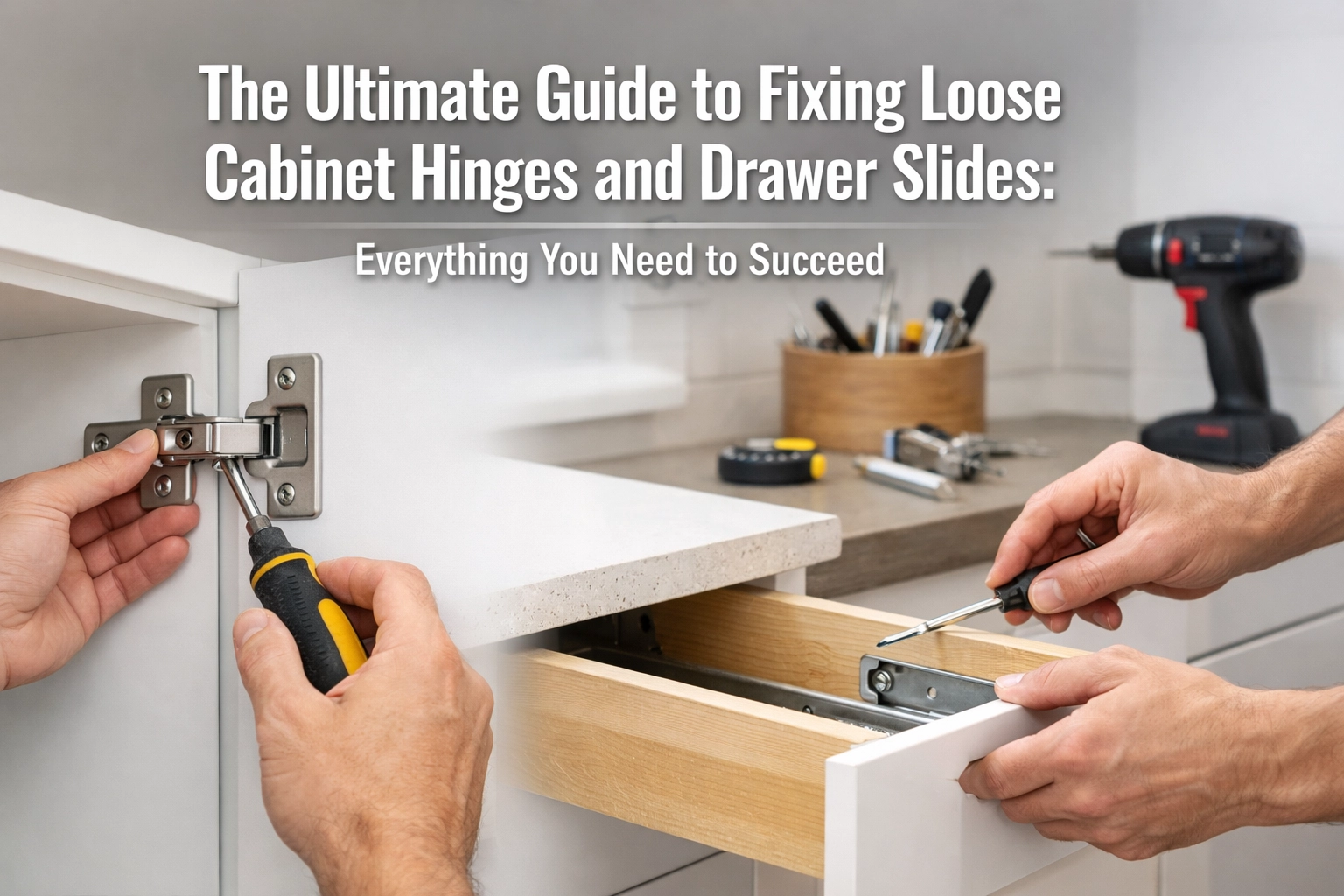
Maintaining a functional kitchen or bathroom requires attention to the small mechanical details that facilitate daily movement. Cabinet hinges and drawer slides are the unsung heroes of home organization, subjected to repetitive stress, weight, and environmental fluctuations. Over time, the constant opening and closing can lead to loose screws, sagging doors, and drawers that stick or refuse to close properly.
Addressing these issues promptly prevents further damage to the cabinetry structure and ensures a seamless experience in the home’s most-used spaces. This guide provides a comprehensive technical overview of how to diagnose, repair, and maintain cabinet hardware, ensuring longevity and precision in every movement.
Understanding the Mechanics of Cabinet Hardware
Before beginning any repair, it is essential to understand the physics of cabinet movement. Cabinet hinges are designed to support the weight of a door while allowing for specific ranges of motion. Most modern cabinetry utilizes “European” or concealed hinges, which offer three-way adjustability. Traditional cabinetry may use butt hinges or surface-mounted hinges, which are simpler but less forgiving of misalignment.
Drawer slides, on the other hand, manage linear motion. They typically consist of two main components: the cabinet member (attached to the cabinet frame) and the drawer member (attached to the drawer box). Whether they are side-mounted ball-bearing slides or bottom-mounted roller slides, the principle remains the same: reducing friction to allow heavy loads to move with minimal effort.
Failure in these systems usually stems from one of three causes:
- Material Fatigue: The wood or composite material (like MDF or particle board) surrounding the screws begins to crumble or “strip,” losing its grip.
- Mechanical Wear: Metal parts bend, ball bearings fall out, or plastic rollers crack.
- Environmental Factors: Humidity causes wood to swell or contract, shifting the alignment of the hardware.

Essential Tools and Materials for Cabinet Repair
Successful repairs depend on having the correct equipment ready. Professional results are rarely achieved with improvised tools. The following items should be gathered before starting:
Required Tools
- Screwdrivers: A high-quality set including #1 and #2 Phillips head and various flathead sizes.
- Power Drill and Bits: Essential for creating pilot holes or drilling out damaged areas for dowel insertion.
- Measuring Tape: For ensuring symmetry across multiple cabinet doors.
- Level: A small torpedo level helps ensure drawer tracks are perfectly horizontal.
- Hammer or Mallet: For tapping in dowels or adjusting the fit of metal tracks.
- Pencil: For marking new pilot hole locations.
Essential Materials
- Wood Glue: A high-quality PVA glue (polyvinyl acetate) is necessary for bonding wood fibers.
- Wooden Toothpicks or Dowels: Used for filling stripped screw holes. Hardwood dowels (typically 1/4 inch or 3/8 inch) are preferred for heavy-duty repairs.
- Wood Filler: For cosmetic repairs or filling minor gaps.
- Replacement Screws: Often, original screws are too short. Having a variety of #6 and #8 wood screws in lengths of 5/8 inch to 1 inch is helpful.
- Lubricant: Silicone-based spray or dry PTFE lubricant for drawer slides. Avoid thick greases that attract dust.
For those organizing their repair kits for transport between properties or rooms, utilizing a car trunk storage bag can keep heavy tools and chemicals organized and prevent spills during transit.
Part 1: Fixing Loose and Stripped Cabinet Hinges
The most common issue with cabinet hinges is the “stripped hole.” This occurs when the screw has been pulled out of the wood, often taking a portion of the wood fibers with it. In such cases, simply putting the screw back in will not work, as there is no material for the threads to bite into.
The Toothpick Method for Minor Stripping
For minor repairs where the screw still fits in the hole but won’t tighten, the toothpick method is the most efficient solution.
- Remove the Hinge: Unscrew the hinge from the cabinet frame or door to expose the damaged hole completely.
- Prepare the Fill: Dip two or three wooden toothpicks into wood glue.
- Insert and Pack: Push the toothpicks into the hole as far as they will go. If the hole is wide, add more toothpicks until the space is tightly packed.
- Trim: Use a utility knife or wire cutters to snip the toothpicks flush with the surface of the wood.
- Dry and Redrill: Allow the glue to dry for at least 30 minutes. While not strictly necessary to wait for a full cure, a firmer bond yields better results. Use a small drill bit to create a tiny pilot hole in the center of the new wood mass.
- Reinstall: Drive the screw back into the hole. The new wood fibers and glue will provide a secure grip.
The Wooden Dowel Method for Significant Damage
When the cabinet material is particle board or the hole has become significantly enlarged, a more robust intervention is required.
- Drill Out the Hole: Use a drill bit that matches the size of a standard wooden dowel (typically 1/4 inch). Drill into the damaged hole to create a clean, uniform cylinder.
- Glue and Plug: Apply wood glue to a 1/4-inch hardwood dowel and tap it into the hole with a mallet.
- Flush Cut: Once the glue has set, use a flush-cut saw or a sharp chisel to remove the excess dowel sticking out of the cabinet surface.
- Mark and Drill: Hold the hinge in place, mark the center of the hole, and drill a new pilot hole. This creates a “wood-to-wood” bond that is often stronger than the original material.

Part 2: Adjusting European Concealed Hinges
If the hinges are physically secure but the doors are crooked, rubbing against each other, or refusing to stay closed, the issue is alignment. Concealed hinges are designed with adjustment screws that move the door in three dimensions.
Vertical Adjustment
Most concealed hinges have two screws (top and bottom) that secure the hinge plate to the cabinet frame. Loosening these screws slightly allows the entire door to slide up or down. Once the door is level with its neighbor, tighten the screws firmly.
Lateral (Side-to-Side) Adjustment
Look for the screw closest to the front of the cabinet. Turning this screw clockwise moves the door closer to the edge of the cabinet. Turning it counter-clockwise moves the door toward the center. This is used to fix gaps between double doors or to ensure the door covers the cabinet face evenly.
Depth (In-and-Out) Adjustment
The screw located toward the back of the hinge arm controls how close the door sits to the cabinet face. If the door has a visible gap at the top or bottom when closed, or if it feels “springy” because it is hitting the frame, adjusting this screw will pull the door tighter against the cabinet or push it further away.
Part 3: Repairing and Maintaining Drawer Slides
Drawer slides face different challenges than hinges. Because they support the full weight of the drawer’s contents, they are prone to bending, jamming, and losing their lubrication.
Cleaning and Lubrication
Before assuming a slide is broken, it should be cleaned. Dust, hair, and kitchen grease can accumulate in the tracks, especially in ball-bearing models.
- Remove the Drawer: Most slides have a small plastic lever that must be pushed up or down to release the drawer from the tracks.
- Wipe the Tracks: Use a damp cloth to remove debris. For stubborn grease, a mild degreaser or isopropyl alcohol is effective.
- Inspect for Obstructions: Ensure no loose silverware or debris has fallen behind the drawer and into the rear of the slide.
- Lubricate: Apply a thin layer of silicone spray to the moving parts. Slide the tracks back and forth several times to distribute the lubricant.
Fixing “Sticking” or Misaligned Slides
If the drawer sticks at a certain point, the track may be bent or the mounting screws may be protruding.
- Check for Protruding Screws: If a screw is not flush with the metal track, the roller or ball-bearing carriage will hit it. Tighten the screw or replace it with a flat-head screw that sits deeper in the track’s countersink.
- Straighten Bent Tracks: If a metal track has been bent outward, use a pair of pliers to gently bend it back into alignment. If the track is severely buckled, replacement is the only reliable option.
- Shim the Slides: Sometimes cabinets are not perfectly square. If the gap between the drawer and the cabinet wall is too wide, the slide will not engage properly. Placing a thin piece of cardboard or a wood veneer shim behind the track can push it closer to the drawer box, ensuring a secure fit.

Part 4: Replacing Hardware Entirely
When hinges are snapped or drawer slides have lost their ball bearings, replacement is necessary. Compatibility is the most critical factor here.
Measuring for Replacement Hinges
If replacing hinges, identify the “overlay” amount. This is the distance the door overlaps the cabinet frame on the hinged side. Common overlays include 1/2 inch, 1-1/4 inch, and “inset” (where the door sits inside the frame). It is often easiest to bring the old hinge to a hardware specialist to ensure the hole pattern matches.
Measuring for Drawer Slides
Drawer slides are sold by length, usually in 2-inch increments (e.g., 12″, 14″, 16″). Measure the length of the drawer box, not the cabinet depth. A slide that is too long will prevent the drawer from closing, while one that is too short will limit access to the back of the drawer.
When sourcing parts globally, keep in mind that shipping locations can affect delivery times for specialized hardware. For instance, components shipping from the United Kingdom or shipping from the United States may offer different regional standards (metric vs. imperial) for screw sizes and track widths.
Troubleshooting Common Scenarios
Scenario A: The Cabinet Door Won’t Stay Closed
This is often caused by the “depth” adjustment being too tight. If the hinge is pulling the door too close to the frame, the hinge’s internal spring tension is fighting against the physical barrier of the wood. Loosen the depth screw (the one furthest back) by half a turn and test the closure.
Scenario B: The Drawer Falls Off the Track
This indicates the cabinet walls have “bowed” outward or the drawer was built too narrow for the opening.
- Verify the tracks are still screwed tightly to the walls.
- If the tracks are tight but the drawer still falls, add shims (thin strips of wood or plastic) behind the cabinet-side tracks to narrow the opening.
- Check if the rollers are intact. If a plastic roller has a flat spot or has cracked, the entire slide must be replaced.
Scenario C: The Screw Hole is Completely Blown Out
In MDF or “honeycomb” core cabinets, a large chunk of material may break away. Standard wood glue and toothpicks will not work here.
- Solution: Use a two-part epoxy putty. This material can be molded into the gap, and once hardened, it can be sanded and drilled just like wood. It provides a much higher structural integrity for synthetic materials.

Long-Term Maintenance Strategies
To prevent the need for frequent repairs, a proactive approach to cabinetry maintenance is recommended.
- Weight Distribution: Avoid overloading drawers, particularly those with side-mount roller slides. Heavier items should be placed in drawers equipped with heavy-duty under-mount slides or ball-bearing systems.
- Regular Tightening: Once a year, use a manual screwdriver to check the tightness of every hinge and slide screw in the kitchen. Avoid using a power drill for this, as it is too easy to over-torque and strip the holes.
- Climate Control: Extreme changes in humidity can cause wood to move. Maintaining a consistent indoor humidity level (between 30% and 50%) helps keep cabinetry stable and reduces the loosening of hardware.
- Soft-Close Dampers: If your cabinets do not have built-in soft-close hinges, consider adding inexpensive “add-on” dampers. These prevent doors from slamming, which significantly reduces the shock and vibration that eventually loosens screws.
Advanced Repair: Addressing Sagging Drawer Bottoms
While not strictly a slide issue, a sagging drawer bottom often interferes with the slide’s operation. When the bottom panel bows downward due to heavy weight, it can scrape against the cabinet frame or the slide below it.
To fix this:
- Empty the drawer and turn it upside down.
- Apply a bead of wood glue along the groove where the bottom panel meets the drawer sides.
- Reinforce the bottom by screwing small “drawer bottom brackets” or “mending plates” into the corners.
- For severe sagging, cut a piece of 1/4-inch plywood to fit the interior dimensions and glue it directly over the existing bottom to double the thickness.

Final Thoughts on Precision and Patience
The key to succeeding with cabinet and drawer repairs is precision. Rushing a repair by forcing a screw into a stripped hole or eyeballing an alignment often leads to more work in the long run. By taking the time to fill holes properly, use the correct lubricants, and understand the adjustment screws on modern hinges, homeowners can restore their cabinetry to a “like-new” condition.
Whether you are managing a single kitchen update or maintaining multiple properties, these skills ensure that the foundational elements of home storage remain reliable. For more specialized tasks or learning about home organization systems, exploring modern solutions can make the process more efficient. For example, keeping your workspace illuminated with a portable bookmark light can help when peer-viewing deep into the dark corners of lower cabinets where hardware is often hidden.
Regular maintenance and a few simple wood-working tricks can extend the life of your cabinetry by decades, saving the significant expense of a full kitchen or bathroom remodel. Consistent care and the right technical approach transform a frustrating, squeaky kitchen into a smooth, functional workspace.

