
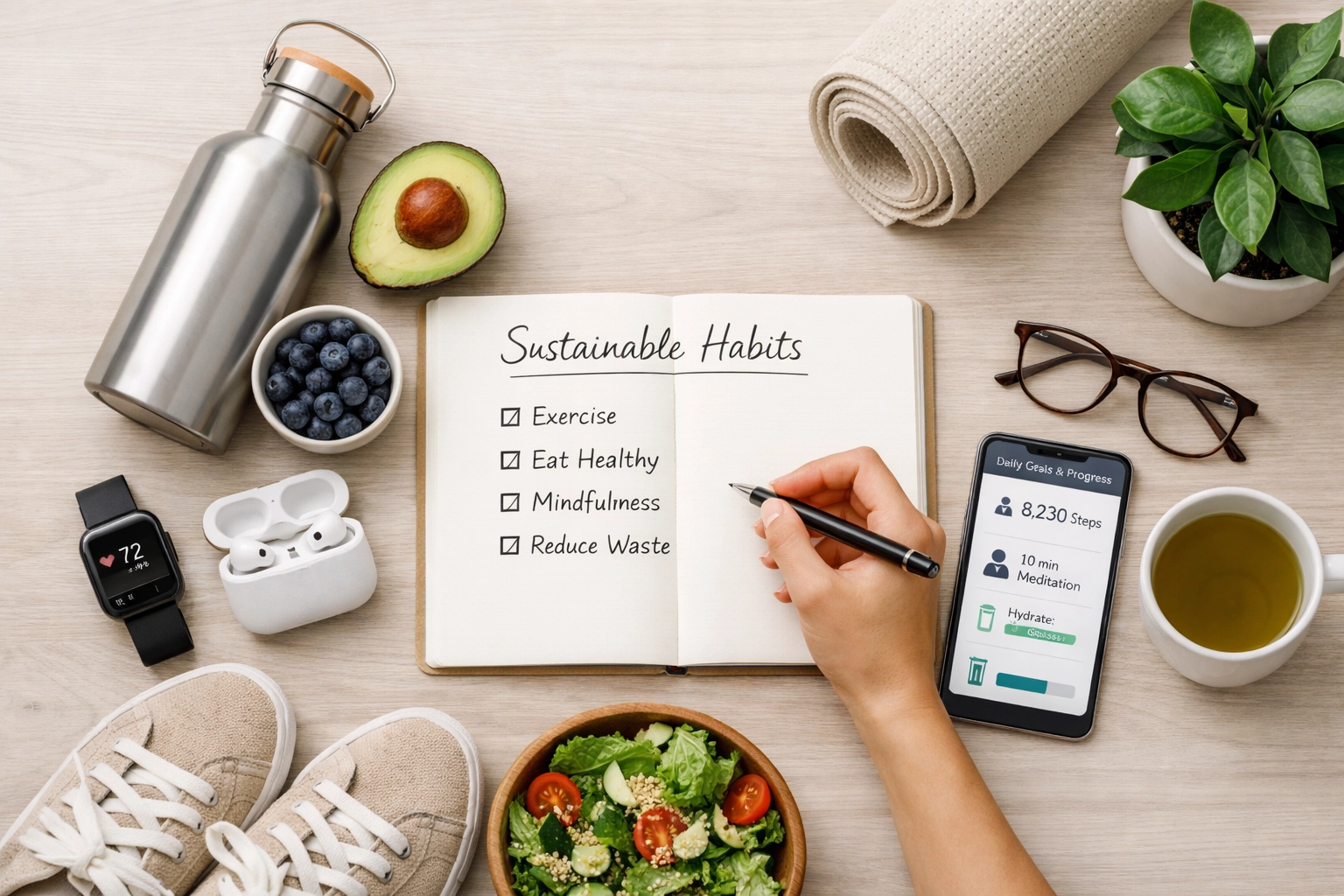
Habit formation is the invisible architecture of daily life. From the moment of waking to the final minutes before sleep, roughly 40% to 50% of daily actions are performed not through conscious decision-making, but through automaticity. These repeated patterns dictate health, productivity, and overall well-being. However, the process of intentionally creating these patterns: and making them stick: remains one of the most common challenges in personal development.
Sustainable habits are not the result of a single burst of inspiration or an iron-clad will. Instead, they are the product of a structured system that aligns human psychology with environmental design. Understanding how the brain processes repetitive actions is the first step toward reclaiming control over daily routines.
The Science of Habit Formation
The neurological basis of a habit is found in the basal ganglia, a portion of the brain associated with emotion, pattern recognition, and memories. When a behavior is repeated in a consistent context, the brain begins to automate the process to save energy. This is known as “chunking.”
The Habit Loop
Every habit can be broken down into a four-step loop:
- The Cue: A trigger that tells the brain to go into automatic mode and which habit to use.
- The Craving: The motivational force behind every habit. Without some level of desire or craving: the desire to change an internal state: there is no reason to act.
- The Response: The actual behavior or thought performed.
- The Reward: The end goal of every habit. The reward provides satisfaction and teaches the brain which actions are worth remembering in the future.
If a behavior fails in any of these four stages, it will not become a habit. Eliminating the cue prevents the habit from starting. Reducing the craving results in a lack of motivation. Making the response difficult ensures the action is never completed. Finally, if the reward fails to satisfy the desire, there is no incentive to repeat the behavior.

Why Traditional Resolutions Often Fail
Most attempts at change fail because they rely on willpower, which is a finite resource. When stress levels rise or energy levels dip, willpower is the first thing to vanish. This phenomenon, often called “ego depletion,” explains why people can maintain a strict diet or a rigorous study schedule for three days but return to old patterns by the weekend.
Sustainable success requires moving away from “outcome-based” goals and moving toward “identity-based” habits. Instead of focusing on a specific result: such as losing twenty pounds: the focus shifts to the type of person who could achieve that result. For example, focusing on “becoming the type of person who never misses a workout” creates a more resilient psychological framework than focusing on a number on a scale.
Strategy 1: The Two-Minute Rule
One of the most effective ways to overcome the barrier of starting is the Two-Minute Rule. This principle states that when starting a new habit, it should take less than two minutes to do.
The logic behind this is that a habit must be established before it can be improved. If an individual cannot master the basic skill of showing up, there is no hope for mastering the finer details.
- “Read before bed each night” becomes “Read one page.”
- “Do thirty minutes of yoga” becomes “Take out my yoga mat.”
- “Study for the exam” becomes “Open my notes.”
By scaling down the habit, the resistance to starting is minimized. Once the initial two-minute action is completed, the “starting friction” is gone, making it significantly easier to continue for a longer duration.
Strategy 2: Habit Stacking
New habits are easier to form when they are anchored to existing ones. This technique, known as habit stacking, utilizes the neural pathways already established in the brain for daily routines.
The formula is simple: After [Current Habit], I will [New Habit].
For example:
- After I pour my first cup of coffee, I will write down my three most important tasks for the day.
- After I finish my evening meal, I will clear the kitchen counters immediately.
- After I get into bed, I will turn on my bookmark light to read for five minutes.
By linking a new behavior to a “load-bearing” habit that is already automatic, the new behavior benefits from the momentum of the old one.

Strategy 3: Environmental Design and Friction
The physical environment is a silent driver of behavior. Humans are highly visual creatures, and often, the most prominent cues in an environment dictate the actions taken. If a person wants to drink more water, placing a bottle on the desk in their direct line of sight is more effective than “reminding” themselves to go to the kitchen.
Increasing and Decreasing Friction
Friction refers to the number of steps or the amount of effort required to perform an action.
- To build a good habit: Decrease the friction. If the goal is to exercise in the morning, lay out clothes and shoes the night before.
- To break a bad habit: Increase the friction. If the goal is to spend less time on social media, delete the app from the phone so it must be accessed via a web browser and a manual login.
Organization plays a vital role in reducing friction. A chaotic workspace creates mental friction that discourages productivity. Utilizing tools like The Desk is Arranged in a 360-degree Rotating Cosmetic Receiving Box can help centralize essentials, ensuring that the focus remains on the task at hand rather than searching for misplaced items. Similarly, a wireless key finder can eliminate the morning stress of searching for lost keys, preserving mental energy for more important decisions.
Practical Applications for Everyday Challenges
Managing Morning Routines
The first hour of the day often sets the tone for the remaining fifteen. Many people struggle with the “snooze button” cycle, which leads to a rushed and stressful morning. To combat this, one can increase the friction of staying in bed. A flying alarm clock is an example of an environmental intervention; it requires the user to physically get out of bed to retrieve a flying component to turn off the alarm. This physical movement breaks the sleep-inertia cycle and prevents the habit of falling back asleep.
Enhancing Focus and Time Management
In an age of constant digital distraction, deep work is a rare skill. Building a habit of focused work requires clear boundaries. This can be achieved through “time blocking,” where specific hours are dedicated to single tasks. To make this sustainable, the environment should be cleared of distractions. Putting the phone in another room or using “Do Not Disturb” modes are low-friction ways to protect attention.
Maintaining Organization
Clutter is often the result of “delayed decisions.” A habit of immediate action: putting items back in their designated place rather than setting them down “for now”: prevents accumulation. For those who travel or spend significant time in their vehicles, a car trunk storage bag provides a designated structure for essential gear, preventing the vehicle from becoming a source of stress.

Tracking Progress and Maintaining Momentum
Visualizing progress provides a dopamine hit that reinforces the habit loop. The most effective method is a simple habit tracker. Whether it is a digital app or a paper calendar, crossing off a day creates a visual “streak” that the brain becomes loath to break.
The “Never Miss Twice” Rule
Perfectionism is the enemy of sustainability. Life is unpredictable, and eventually, a day will be missed. The key to long-term success is the “Never Miss Twice” rule. Missing one day is an accident; missing two days is the start of a new, undesirable habit. By focusing on getting back on track immediately, the overall trajectory remains positive.
Implementation Intentions
Research shows that people who create a specific plan for when and where they will perform a habit are much more likely to follow through. This is called an implementation intention.
- Vague: “I will try to meditate more.”
- Specific: “I will meditate for one minute at 7:00 AM in the living room chair.”
Being specific removes the need for decision-making in the moment. When 7:00 AM arrives, the “what, where, and when” are already decided.

Overcoming Plateaus: The Valley of Latent Potential
Habit formation often feels like it is yielding no results for a long time. This is known as the “Plateau of Latent Potential.” In the early stages of a new routine, the effort expended does not seem to match the results achieved. This leads many to quit, believing the habit isn’t working.
However, habits are compound interest for self-improvement. Just as a bank account grows slowly at first and then exponentially, habits require a critical threshold before the major benefits become visible. Success is often the result of months of “invisible” work that finally breaks through to the surface. Staying consistent during this plateau is what separates sustainable success from temporary change.
The Role of Social Influence
The people and groups surrounding an individual have a profound impact on their habits. Humans have a natural desire to fit in and belong to a tribe. Consequently, it is easier to build habits in an environment where those habits are considered the “norm.”
If one wishes to build a habit of reading, joining a book club or spending time in libraries creates a social cue that reinforces the behavior. Conversely, if a social circle prioritizes late-night entertainment and unhealthy eating, maintaining a regimen of early sleep and clean nutrition becomes a constant uphill battle against social friction.
Refining the System
As habits become more ingrained, they should be periodically reviewed. What worked six months ago might not be the most efficient path today. This process of “Reflection and Review” allows for the fine-tuning of routines.
For instance, an individual might find that their morning workout habit is becoming stale. Instead of quitting, they might “stack” a new element, like listening to an educational podcast during the session, to refresh the reward component of the habit loop.
Sustainable habits are not a destination but a continuous process of refinement. By focusing on the system rather than the goal, and by prioritizing small, manageable changes over radical overhauls, anyone can build a lifestyle that supports their long-term aspirations.

Summary of Key Principles for Success
To summarize the path toward building habits that last, consider the following checklist:
- Make it Obvious: Use visual cues and environment design to trigger the behavior.
- Make it Easy: Use the Two-Minute Rule to reduce starting friction.
- Make it Attractive: Pair the habit with something enjoyable (temptation bundling).
- Make it Satisfying: Use a habit tracker or immediate rewards to reinforce the loop.
- Focus on Systems: Prioritize the process over the final result to maintain long-term motivation.
Building sustainable habits is a skill that can be developed over time. By understanding the mechanics of the human brain and applying practical strategies like habit stacking and environmental design, it becomes possible to transform everyday challenges into automatic successes. The journey toward a more organized, productive, and healthy life begins with the smallest possible step, repeated consistently.

