
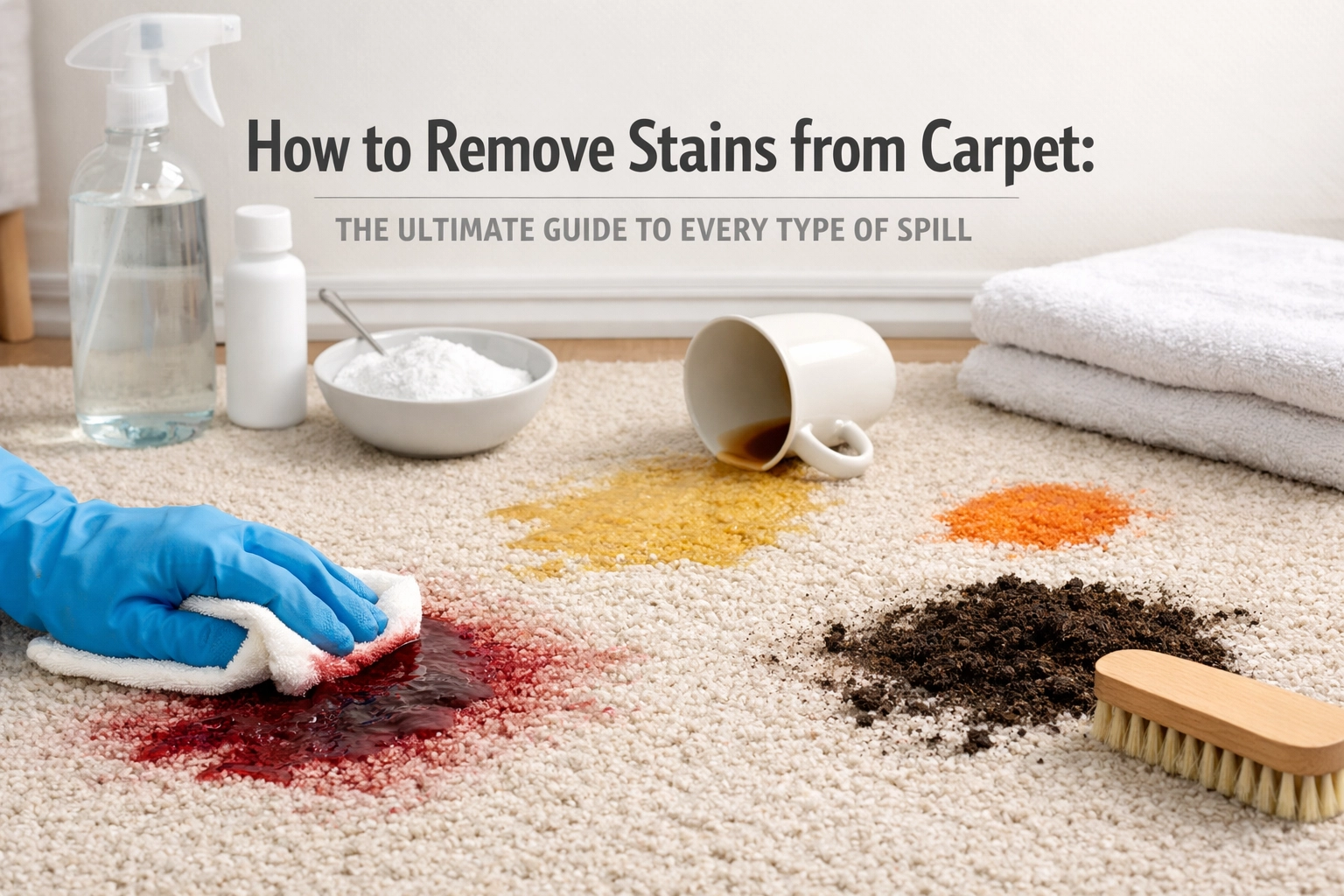
Maintaining a clean carpet is one of the most challenging aspects of home upkeep. Carpet fibers act as a filter for the home, trapping dust, allergens, and, unfortunately, every liquid or solid that happens to fall. Whether it is a splash of red wine during a dinner party or a muddy paw print after a rainy walk, knowing exactly how to treat specific stains can mean the difference between a permanent blemish and a restored floor.
The key to successful carpet restoration lies in understanding the chemistry of the stain and the physical properties of the carpet fibers. Different substances require different pH levels and temperatures to release their grip on the pile. This guide provides a comprehensive look at how to tackle every common household spill with precision and care.
Fundamental Principles of Carpet Stain Removal
Before addressing specific substances, certain universal rules apply to almost every carpet cleaning scenario. Ignoring these basics often results in spreading the stain or damaging the carpet’s structural integrity.
The Blotting Rule
The most common mistake made during a spill is the urge to scrub. Scrubbing creates friction that generates heat, which can permanently set a stain. Furthermore, the mechanical action of scrubbing twists and frays the carpet fibers, leading to a “fuzzy” patch that remains visible even if the color is removed.
Always blot. Use a clean, white cloth or paper towel to apply downward pressure, soaking up the liquid. Work from the outside of the spill toward the center to prevent the perimeter from expanding.
Time is of the Essence
A fresh spill is a “spot,” while a dried spill is a “stain.” Once a substance dries, it undergoes a chemical bond with the carpet fibers. For example, many food dyes are designed to be permanent, and as the liquid evaporates, the pigment anchors itself to the material. Acting within the first few minutes significantly increases the success rate of total removal.
The Importance of Neutralization
Cleaning is often a process of balancing pH. Acidic spills (like coffee or wine) often benefit from a slightly alkaline treatment, while alkaline spills may require a mild acid like white vinegar. After using any cleaning agent, it is vital to rinse the area with plain water and blot dry to remove residue. Leftover soap acts as a magnet for dirt, leading to a dark spot appearing in the same location weeks later.
The Essential DIY Toolkit
Professional-grade results can often be achieved using common household items. Keeping these supplies organized in home storage ensures a rapid response when accidents occur.
- White Vinegar: A mild acid that helps break down alkaline stains and deodorize.
- Clear Dish Soap: A surfactant that lifts oils. Avoid soaps with dyes (like blue or green) as they can tint light carpets.
- Baking Soda: Excellent for absorbing odors and moisture.
- Rubbing Alcohol (Isopropyl): A powerful solvent for non-water-soluble stains like ink or grease.
- Hydrogen Peroxide (3%): A mild bleaching agent useful for organic stains, but must be used with caution on dark carpets.
- White Cloths/Towels: To prevent dye transfer from the cleaning rag to the floor.

Categorizing Stains by Type
Not all spills are created equal. To treat them effectively, they must be categorized by their chemical makeup.
Water-Soluble Stains
These are the most common household spills. They include substances like soda, milk, wet mud, and most fruit juices. Because they are water-based, they are generally the easiest to remove if caught early.
- Preparation: Blot as much liquid as possible.
- Solution: Mix 1/4 teaspoon of clear dish soap with one cup of lukewarm water.
- Application: Dip a cloth in the solution and blot the area. Do not oversaturate, as excess moisture can seep into the carpet backing and lead to mold.
- Rinse: Blot with a fresh cloth dipped in plain water.
Coffee and Tea
Coffee and tea contain tannins, which are natural dyes. If these liquids are hot when spilled, they open the carpet fibers and penetrate deeper.
For coffee, a mixture of white vinegar and water is often more effective than soap alone. Mix one part vinegar to two parts water. The acidity of the vinegar helps neutralize the tannins. If the coffee contained cream or sugar, the dish soap method mentioned above should follow the vinegar treatment to remove the proteins and sticky residues often found in kitchen and dining areas.
Red Wine and Dark Juices
The dreaded red wine spill requires a specific protocol. Salt or baking soda can be used as an immediate absorbent.
- The Salt Method: Blot the excess wine. Cover the damp area with a thick layer of salt. The salt will draw the pigment upward as it dries. Once dry, vacuum the salt away.
- The Vinegar and Soap Method: If a shadow remains, mix a tablespoon of dish soap and a tablespoon of white vinegar with two cups of warm water. Blot until the color lifts.

Removing Protein-Based Stains
Protein stains include blood, meat juices, and pet accidents. These require specialized care because heat will “cook” the protein into the fiber, making it nearly impossible to remove.
Blood
Always use cold water for blood. Warm or hot water will set the stain instantly.
- Apply cold water to a cloth and blot.
- If the stain persists, apply a small amount of 3% hydrogen peroxide to a cloth and dab the spot. The peroxide will foam as it reacts with the proteins.
- Blot immediately with a dry towel. Note: Test peroxide on a hidden corner of the carpet first to ensure it doesn’t bleach the pigment.
Pet Accidents (Urine and Vomit)
Pet stains are two-fold problems: the visible stain and the invisible odor. Standard cleaners often fail to remove the uric acid crystals found in urine.
An enzymatic cleaner is essential for these situations. These cleaners contain bacteria that literally “eat” the organic matter causing the odor.
- Clean up the solid or liquid waste.
- Saturate the area with the enzymatic cleaner.
- Cover the area with a damp towel and let it sit for several hours or as directed by the product. This keeps the enzymes active for a longer period.
Tackling Oil, Grease, and Solvent-Based Stains
Oil-based stains are not water-soluble, meaning soap and water will often slide right off them without removing the blemish. These are common near garage entries or in home office storage areas where lubricants or printer inks might be handled.
Kitchen Grease and Motor Oil
For heavy grease, start by applying a dry absorbent like cornstarch or baking soda. Let it sit for 15 minutes to pull the oil out of the pile, then vacuum.
If a mark remains, use rubbing alcohol. Apply the alcohol to a cloth: never directly to the carpet, as it can dissolve the adhesive holding the carpet fibers to the backing. Blot the grease. The alcohol acts as a solvent, breaking the oil’s bond with the polyester or nylon.
Ink and Marker
Ballpoint ink can often be removed with high-percentage isopropyl alcohol. Permanent markers are significantly more difficult and may require a specialized citrus-based solvent.
- Dampen a cotton ball with alcohol.
- Dab the ink, moving from the outside in.
- Replace the cotton ball frequently as it absorbs the ink to avoid spreading the color.

Handling Solids and Adhesives
Sometimes the issue isn’t a liquid, but a solid that has become embedded in the fibers.
Chewing Gum and Wax
The best way to remove gum or candle wax is to change its physical state from soft and sticky to hard and brittle.
- Place an ice pack or a plastic bag filled with ice cubes over the gum or wax.
- Wait several minutes until the substance is frozen solid.
- Use a blunt object, like a spoon or a butter knife, to gently crack and chip away the pieces.
- Vacuum the small fragments immediately before they thaw.
- If any residue remains, a small amount of rubbing alcohol on a cloth will dissolve the remaining stickiness.
Mud and Dirt
Unlike liquid spills, mud should be allowed to dry completely before cleaning. Attempting to clean wet mud will simply push the liquefied dirt deeper into the carpet backing.
- Once the mud is dry and crumbly, vacuum the area thoroughly.
- Use the blunt edge of a spoon to break up large clumps and vacuum again.
- Treat the remaining brown shadow with a solution of dish soap and warm water.
Understanding Carpet Fiber Types
The material of the carpet dictates how it responds to cleaning agents. Most modern homes feature synthetic fibers, but high-end home and garden furniture settings may incorporate natural materials.
Synthetic Fibers (Nylon, Polyester, Triexta)
Nylon is the most common and is generally very resilient. It handles most DIY cleaning solutions well. Polyester is naturally stain-resistant to water-based spills but has a high affinity for oil. If an oily substance hits a polyester carpet, it requires immediate attention with a surfactant or solvent.
Natural Fibers (Wool, Sisal)
Wool is highly absorbent and sensitive to high pH levels. Never use bleach or strong alkaline cleaners on wool, as it can dissolve the protein fibers. Wool also holds onto water, so it is crucial to use as little liquid as possible and ensure the carpet dries quickly to prevent “browning.”

Deep Cleaning Techniques
While spot cleaning handles localized accidents, carpets eventually require a deep clean to remove embedded grit that acts like sandpaper against the fibers.
Hot Water Extraction (Steam Cleaning)
This is the gold standard for carpet maintenance. A machine injects a solution of hot water and detergent into the pile and immediately sucks it back out along with the loosened dirt. This method is highly effective for removing allergens and deep-seated oily residues. It is recommended to perform this once every 12 to 18 months.
Dry Chemical Cleaning
For delicate carpets or areas that cannot tolerate moisture, dry cleaning is an alternative. A powder or foam “dry” solvent is spread over the carpet and worked into the fibers with a machine. The solvent attracts dirt and is then vacuumed away. While not as deep-reaching as steam cleaning, it allows for immediate foot traffic.
Common Mistakes to Avoid
Even with the best intentions, certain actions can permanently ruin a carpet.
- Over-wetting: This is the primary cause of “wicking.” Wicking occurs when the liquid travels down to the backing and then, as the surface dries, the stain is pulled back up to the tips of the fibers like a candle wick. Excessive moisture can also cause the carpet to shrink or develop a musty odor.
- Using Bleach: Unless the carpet is “solution-dyed” (where the color is part of the fiber itself rather than added afterward), bleach will create a permanent white or yellow hole in the color.
- Heat on Protein Stains: Using a hair dryer or hot water on blood or milk will lock the stain in permanently.
- Neglecting the Rinse: Leaving soap in the carpet is the fastest way to get a “reappearing” stain.
Long-Term Maintenance and Prevention
The best way to handle stains is to prevent them from occurring or to make the carpet easier to clean.
- Walk-off Mats: Place heavy-duty mats at every entrance to catch dirt before it enters the home.
- Regular Vacuuming: Vacuuming twice a week removes the dry soil that acts as an abrasive, protecting the fiber’s protective coating.
- Carpet Protectors: After a professional cleaning, consider having a fluorochemical protector applied. This coating creates a barrier that gives the homeowner more time to blot a spill before it penetrates the fiber.
- Shoe Policy: Implementing a no-shoe policy in the house reduces the amount of oil and street grime tracked onto the fibers, which are the primary magnets for liquid stains.

Proper carpet care is an ongoing process of vigilance and correct technique. By understanding how to respond to various substances: from the coffee spills of a busy morning to the mud of an adventurous afternoon: the lifespan and appearance of a home’s flooring can be extended significantly. For those looking to organize their home maintenance supplies or upgrade their living spaces, exploring various home and garden categories can provide the tools needed to keep every room in top condition.

