
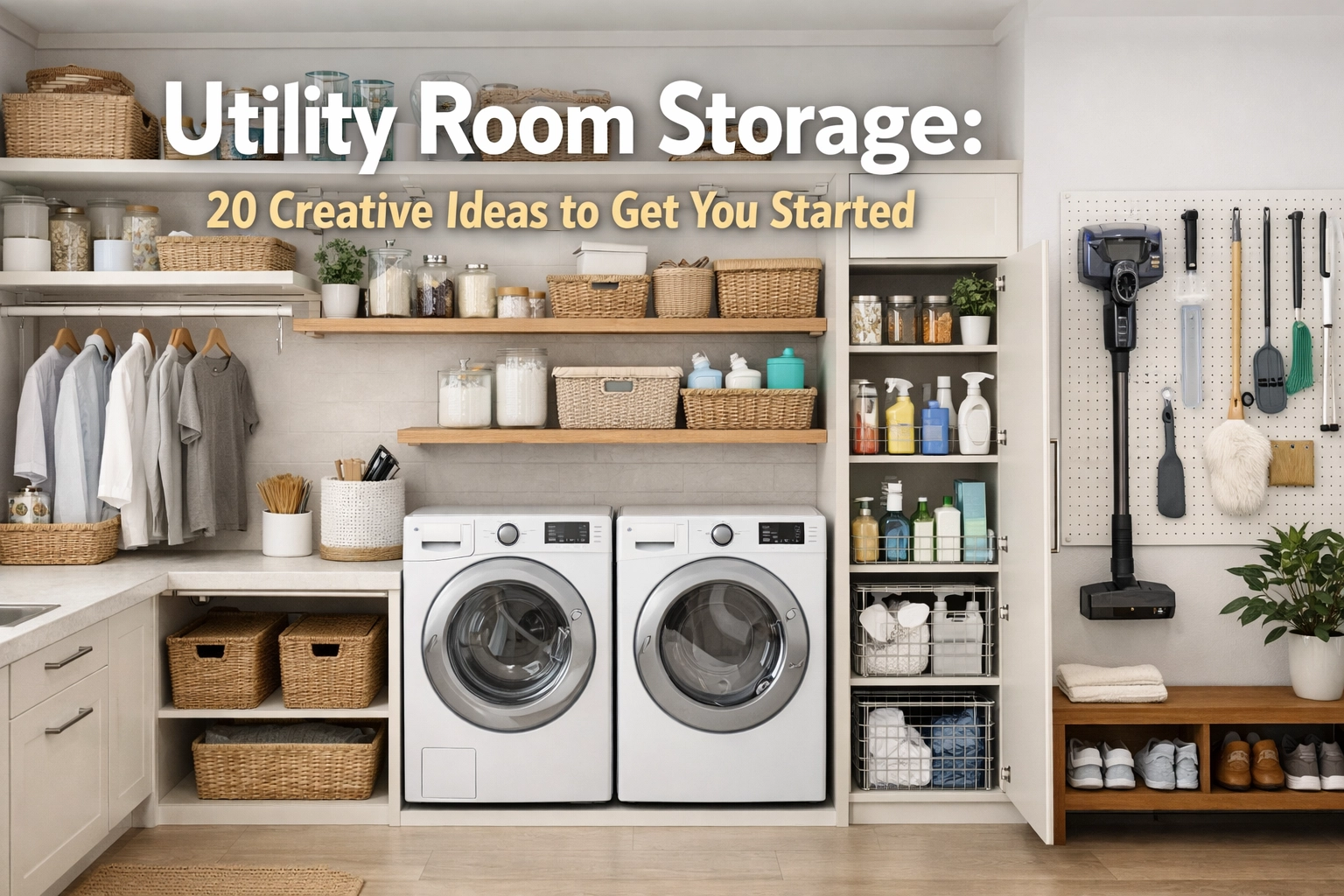
A utility room often serves as the hard-working engine of a home. It is the space where laundry is processed, cleaning supplies are housed, and various household maintenance tasks occur. However, because these rooms are frequently tucked away or treated as secondary spaces, they can easily become cluttered and disorganized. Proper home storage is essential for maintaining a functional utility room that streamlines daily chores rather than complicating them.
Implementing creative storage solutions transforms a chaotic laundry area into an efficient workspace. By utilizing vertical space, optimizing cabinetry, and choosing the right organizational containers, it is possible to maximize even the smallest utility room. This guide explores 20 creative ideas to help organize this essential area of the home.
1. Versatile Pegboard Walls
Pegboards are one of the most adaptable storage solutions available. Originally found in workshops, they have transitioned into the home as a primary tool for organization. In a utility room, a large pegboard can host everything from scissors and rolls of tape to dustpans and small hand tools.
The beauty of a pegboard lies in its customizability. Hooks, baskets, and small shelves can be rearranged as needs change. For a cohesive look, painting the pegboard to match the room’s trim or cabinetry integrates it into the overall design. This keeps frequently used items visible and within reach, preventing them from being lost in the back of a drawer.
2. Floating Shelves for Accessibility
Floor space is a premium in most utility rooms. Floating shelves provide storage without the bulky footprint of traditional floor-standing units. These can be installed above the washer and dryer or in awkward corners to hold laundry detergents, fabric softeners, and glass jars filled with clothespins.
Floating shelves also offer an opportunity to incorporate home and garden furniture aesthetics into a functional space. By choosing high-quality wood or sleek metal finishes, the utility room feels more like a curated part of the home rather than a forgotten closet.

3. Built-In Custom Shelving
For those with a specific set of tools or unique architectural features, built-in shelving is an excellent investment. Unlike pre-made units, built-ins can be designed to wrap around pipes, fit into alcoves, or reach all the way to the ceiling.
Custom shelving allows for the precise placement of heavy items like vacuum cleaners or large buckets at floor level, while lighter, less frequently used items can be placed higher up. This structured approach ensures that every square inch of the room is utilized effectively.
4. Full-Height Pantry Cupboards
When the utility room also serves as a secondary pantry or a place to store bulk household goods, full-height cupboards are indispensable. These tall units provide a significant amount of cubic storage space.
Adjustable internal shelving is key for pantry cupboards. It allows for the storage of tall items like mop buckets alongside smaller items like lightbulbs or batteries. Keeping these items behind closed doors maintains a clean, minimalist look in the room, which can reduce the visual stress often associated with household chores.
5. Dedicated Broom and Mop Cabinets
Tall, thin cabinets specifically designed for brooms, mops, and ironing boards solve the problem of these items falling over or cluttering corners. A dedicated tall cupboard often includes specialized hooks or clips to hold long-handled tools securely against the back wall.
Some modern designs even include integrated charging points for cordless vacuum cleaners, keeping them out of sight while they recharge. This type of home office storage logic: assigning a specific home to every tool: is the foundation of a tidy utility room.
6. Top-to-Bottom Storage Strategy
A successful storage plan uses the entire wall. This means installing cabinets near the floor and floating shelves or smaller cabinets near the ceiling. The space above a doorway, for example, is often overlooked but is perfect for storing seasonal items or extra paper products.
By utilizing the “top-to-bottom” approach, the middle section of the wall (at eye level) remains clear for active work, such as folding laundry or treating stains. This vertical layering prevents the room from feeling cramped while doubling the available storage capacity.
7. Woven Baskets for Texture and Order
Storage does not have to be strictly industrial. Woven baskets add a natural, warm element to the utility room while hiding clutter. They are ideal for sorting laundry into lights, darks, and delicates, or for holding clean towels waiting to be distributed to bathrooms.
Baskets can be placed on open shelves or tucked into cubbies. Using consistent sizes and styles creates a unified look that makes the room feel more organized. For easier identification, small wooden tags or ribbons can be attached to the handles to indicate the contents.

8. Under-Cabinet Hanging Baskets
In rooms with existing cabinetry, the space underneath the upper cabinets is often wasted. Slide-on wire baskets can be attached to these shelves to create an extra layer of storage. This is a perfect spot for flat items like microfiber cloths, sponges, or dryer sheets.
These baskets require no drilling or permanent installation, making them an excellent choice for renters or those looking for a quick organizational upgrade. They keep small, frequently used items at fingertips’ reach without taking up counter space.
9. Glass Jars for Laundry Essentials
Decanting laundry powders, pods, and scent boosters into clear glass jars serves both a functional and aesthetic purpose. Visually, it eliminates the “visual noise” of mismatched plastic packaging and cardboard boxes. Functionally, it allows the user to see at a glance when supplies are running low.
When choosing jars, look for those with airtight seals to prevent moisture from clumping powders. Large jars can be placed on counters, while smaller ones fit perfectly on narrow shelves or within kitchen and dining storage units that have been repurposed for the utility room.
10. Bespoke Drawer Inserts
Drawers often become “junk drawers” if they lack internal structure. Custom inserts or adjustable dividers are essential for organizing small utility items. These can include sewing kits, spare buttons, Allen keys, and furniture felt pads.
By categorizing these small items, they are protected from damage and are easy to locate during a minor home repair. Felt-lined inserts can also protect more delicate items, such as specialized tools and accessories used for household maintenance.
11. Multi-Functional Bench Storage
If space permits, a storage bench provides a place to sit while putting on shoes (if the utility room doubles as a mudroom) or a surface for resting a laundry basket. The area beneath the seat can feature drawers, cubbies for shoes, or a flip-top lid for hidden storage.
A bench can also act as a divider in larger utility rooms, separating the laundry zone from the storage or entry zone. This piece of home storage furniture adds significant value by performing multiple roles simultaneously.
12. Integrated Linen Cabinets
Centralizing all household linens in the utility room can free up valuable space in bedrooms and bathrooms. A dedicated linen cabinet with slatted shelves allows for airflow, keeping towels and bedsheets fresh.
To maintain order, linens can be folded and stacked by set or by room. Using shelf dividers ensures that stacks do not topple over. This centralized system makes it easier to track which sets are in the wash and which are ready for use.

13. 3-Tier Rolling Storage Trolleys
Mobile storage is a game-changer for utility rooms. A slim, 3-tier trolley on casters can slide into the narrow gap between a washing machine and a wall. It can hold detergents, stain removers, and bleach, and be rolled out only when needed.
Trolleys are also useful for transporting cleaning supplies throughout the house. A “cleaning station” on wheels means everything required for a Saturday morning deep clean is in one place and easily moved from room to room.
14. Under-Sink Organizers
The area under the utility sink is notoriously difficult to organize due to plumbing. However, specialized under-sink shelving units are designed to expand around pipes. Utilizing tiered pull-out drawers in this space allows for easy access to items stored in the back.
Waterproof mats should be placed on the floor of the cabinet to protect the wood from potential leaks or spills of liquid cleaners. This area is ideal for storing heavy bottles of drain cleaner, floor wax, or extra sponges.
15. Door-Mounted Storage Racks
The back of the door is prime real estate for organization. Over-the-door racks with baskets or hooks can hold a surprising amount of gear. This is an excellent location for iron storage, spray bottles, or even a collection of reusable shopping bags.
For a more permanent and sturdy solution, screw-in door racks offer better stability than hook-over versions. This prevents the rack from rattling every time the door is opened and closed.
16. Stacked Appliance Configurations
One of the most effective ways to save floor space is to stack the dryer on top of the washing machine using a compatible stacking kit. This opens up floor space for a tall cupboard or a sorting station.
When stacking appliances, ensure they are level and secured according to the manufacturer’s instructions. Some stacking kits even include a pull-out shelf between the two units, providing a convenient surface for resting a laundry basket while loading the dryer.
17. Ceiling-Mounted Drying Racks
Traditional floor-standing drying racks can be cumbersome and take up significant floor space. A ceiling-mounted rack, often operated by a pulley system, utilizes the warm air that naturally rises to the top of the room to dry clothes more efficiently.
When not in use, these racks are pulled up to the ceiling, completely out of the way. This is an ideal solution for drying delicate items or bedsheets that require a lot of space. It also keeps damp laundry away from children and pets.

18. Pull-Out Ironing Boards
If space is too tight for a traditional ironing board, consider a pull-out or fold-down version. These can be integrated into a drawer or mounted on a wall inside a cabinet. They provide a sturdy surface for quick touch-ups without the hassle of setting up a full-sized board.
Many integrated ironing boards come with heat-resistant covers and built-in iron rests. This ensures that the iron can be safely stored away immediately after use, reducing the risk of accidental burns.
19. Wall-Mounted Drying Racks
For smaller items like socks or hand-washed garments, a fold-away wall-mounted rack is a practical addition. These racks can be folded flat against the wall when not in use. Some designs resemble a decorative wall panel until they are pulled out to reveal several drying rungs.
Positioning these racks near a heat source or a window can speed up the drying process. They are also useful for hanging freshly ironed shirts to prevent them from wrinkling before they are moved to a wardrobe.
20. Smart Home Integration for Utility Management
While not a physical storage container, integrating smart home technology can help manage the “storage” of time and tasks in the utility room. Smart leak detectors can be placed near appliances to prevent water damage to storage units, and smart plugs can ensure that irons or other heating elements are turned off remotely.
Using digital assistants to set timers for laundry cycles or to add cleaning supplies to a digital shopping list ensures that the room remains stocked and operational. This modern approach to household management complements physical storage solutions by reducing the mental load of home maintenance.

Maintaining a Functional Space
Creative storage ideas are only as effective as the systems used to maintain them. Periodically reviewing the contents of the utility room is necessary to ensure that expired cleaning products are discarded and that items that have migrated from other parts of the house are returned to their proper places.
Labeling is a crucial part of maintenance. Whether using a professional label maker or simple hand-written tags, clearly identifying what belongs in each basket or on each shelf prevents the “toss and forget” habit that leads to clutter. When every family member knows where an item belongs, the system is much more likely to succeed long-term.
By combining vertical storage, specialized cabinetry, and mobile solutions, the utility room can transition from a source of stress to a highlight of home efficiency. Whether the space is a large dedicated room or a small laundry closet, these 20 ideas provide a blueprint for a more organized and productive home.

