
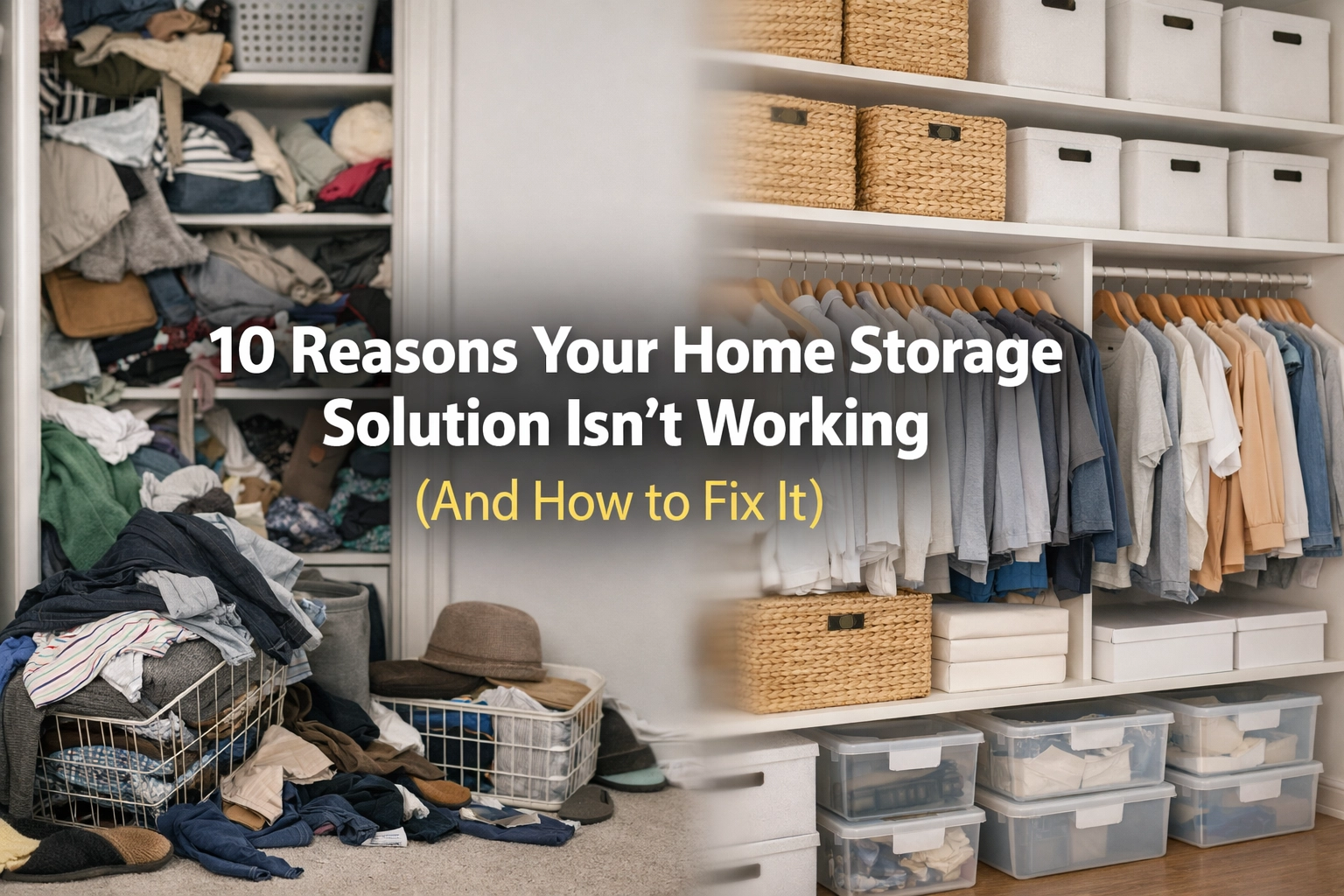
Maintaining an organized home is a common challenge that often persists despite the purchase of various bins, shelves, and containers. Many households find that even after a weekend spent tidying, the clutter inevitably returns within a few weeks. This cycle occurs because most storage solutions address the symptoms of clutter rather than the underlying structural or behavioral causes.
When a storage system fails, it is rarely due to a lack of effort. More often, the failure stems from a mismatch between the chosen solution and the actual needs of the space. Understanding why these systems break down is the first step toward creating a sustainable, functional environment.
1. Organizing Before Decluttering
One of the most frequent mistakes in home organization is attempting to organize items that should no longer be in the home. Storage containers do not make clutter disappear; they merely group it together. If a closet is overflowing, adding more bins often results in “organized hoarding.”
The process must begin with a rigorous assessment of belongings. A standard rule of thumb is to evaluate items based on their utility over the last two years. If an object has not been used, worn, or even looked at in twenty-four months, it is a candidate for donation, recycling, or disposal.
How to Fix It:
Before purchasing any new storage equipment, empty the target area completely. Sort items into three categories: Keep, Donate, and Discard. Only once the volume of “Keep” items is finalized should the planning of a storage solution begin. This ensures that the storage is sized correctly for the necessary items rather than the excess.
2. Underutilizing Vertical Space
Many storage failures occur because the floor and reachable shelf surfaces are over-capacity while the walls and higher areas remain empty. In standard cabinets and closets, a significant amount of “dead air” exists above the items currently stored. This leads to stacking items on top of each other, making the bottom layers inaccessible and prone to becoming a disorganized mess.
Vertical storage is the most efficient way to increase a room’s capacity without increasing its footprint. Tall bookcases, wall-mounted shelving, and door-hanging organizers are essential tools for maximizing every square inch of a home.

How to Fix It:
Install adjustable shelving that can be moved to accommodate the height of specific items. In kitchens, use shelf risers to create two levels of storage for plates or canned goods. In closets, consider a second hanging rod or floor-to-ceiling shelving units. For utility areas, pegboards provide a customizable way to keep tools and supplies visible and off the floor.
3. Purchasing Containers Without Measuring
The visual appeal of matching bins and baskets often leads to impulsive purchases before the physical dimensions of the storage space are considered. A container that is even half an inch too wide for a shelf becomes useless, leading to awkward gaps or bins that protrude from cabinets.
Furthermore, failing to measure the items being stored can lead to wasted space. Large bins used for small items result in a “jumble” effect where things are difficult to find, while small bins used for bulky items lead to overflow.
How to Fix It:
Always use a measuring tape to record the height, width, and depth of the storage area. Consider any obstructions, such as cabinet hinges or recessed lighting. When selecting containers, aim for square or rectangular shapes, as round containers create unused gaps in corners. For specific needs like the car trunk storage bag, ensure the dimensions align with the vehicle’s interior to prevent sliding during transit.
4. Ignoring the Prime Real Estate Rule
Storage systems often fail because frequently used items are stored in hard-to-reach places, while rarely used items occupy the most accessible spots. This is known as a violation of the “prime real estate” rule. If a daily-use item requires moving three other boxes to reach, the user is less likely to put it back in its proper place, leading to surface clutter.
In any room, the area between the knees and the shoulders is considered prime real estate. This is the zone where the most frequently used items should reside.

How to Fix It:
Audit the frequency of use for every item in a room. Daily essentials should be at eye level or in the front of drawers. Seasonal items, such as holiday decorations or winter clothing, should be moved to the highest shelves or the back of the closet. Utilizing a 360-degree rotating cosmetic receiving box on a vanity or desk can also bring multiple items into the “prime” zone through rotation rather than reach.
5. Lack of Categorization and Visibility
When items are stored without a clear category, the system becomes a series of “junk drawers.” If the contents of a bin are unknown, the user will eventually buy duplicates of items they already own because they cannot find them. This is particularly common in pantries, craft rooms, and home offices.
Visibility is a key component of success. While opaque baskets might look tidier from a distance, they can lead to “out of sight, out of mind” syndrome, where items are forgotten and unused.
How to Fix It:
Group items by “like with like”: all baking supplies together, all electronic cables together, and all first-aid items together. Use clear containers for items used daily. For opaque storage, labeling is mandatory. If small essentials like keys or remotes are frequently lost within the home, integrating a wireless key finder into the organizational system can bridge the gap between physical storage and digital tracking.
6. The “One-Size-Fits-All” Mentality
Every household has unique habits and spatial constraints. A storage solution that works for a minimalist may fail for a family with young children. Relying solely on standard furniture pieces often leaves gaps in functionality, especially in awkward spaces like under-sink cabinets or laundry rooms.
Standard cabinets are deep and dark, making them magnets for forgotten items. Without specialized inserts, these deep spaces are almost impossible to maintain.

How to Fix It:
Look for modular or adjustable solutions that can be customized. In the kitchen, use pull-out drawers or “Lazy Susans” to access the back of deep cabinets. In the bathroom, utilize specialized bags like the sanitary napkin storage bag to keep personal items organized and discreet within larger drawers. Customizing the solution to the specific item prevents the “catch-all” habit.
7. Environmental Factors and Material Choice
A storage solution might be physically organized but physically damaging to the items inside. Storing sensitive items in attics or garages without considering humidity and temperature can lead to ruin. Cardboard boxes, for instance, attract pests and absorb moisture, making them poor choices for long-term storage in non-climate-controlled areas.
Furthermore, the type of container must match the item’s needs. Delicate fabrics need to breathe, while dry foods need airtight seals.
How to Fix It:
Use airtight plastic bins for storage in basements or garages. For indoor textiles, consider breathable fabric bins or vacuum-sealed bags. When storing outdoor gear, like a portable folding camping mat, ensure it is completely dry before folding it away to prevent mildew. Selecting the right material ensures the storage solution preserves the items rather than just holding them.
8. Failing to Account for Item Maintenance
Storage is not just about where an item sits; it is about keeping that item ready for use. A storage system fails if the items inside it are poorly maintained, leading to a pile of “to-be-fixed” objects that take up space without providing value. This includes clothes with pills, dull knives in the kitchen, or electronics with dead batteries.

How to Fix It:
Integrate maintenance tools into the storage area. Keep a hair ball trimmer in the laundry room or closet to refresh sweaters before they are put away. Store a dust-removing brush near the entryway to maintain coats. By keeping maintenance tools accessible, the stored items remain in a “ready-to-wear” state, preventing the buildup of unusable clutter.
9. Over-Complicating the System
If a storage system requires too many steps to maintain, it will eventually be abandoned. For example, if a child has to open a lid, remove a tray, and then sort by color to put away a toy, they likely won’t do it. Simple, one-motion storage is always more sustainable than complex, multi-tiered systems.
The best systems work with existing habits rather than trying to force new ones. If a person tends to drop their mail on the kitchen counter, the storage solution should be placed on that counter, not in a home office three rooms away.
How to Fix It:
Simplify. Use open bins for items used by children. Use hooks instead of hangers for frequently used coats or towels. Incorporate small, clever tools that solve specific problems without adding bulk, such as a luminous LED bookmark that stays with the book rather than requiring a dedicated bedside lamp and drawer space.
10. The Absence of a Maintenance Schedule
Even the most perfect storage system requires regular upkeep. A home is a living environment where items are constantly entering and exiting. Without a “reset” habit, the most organized pantry will eventually become cluttered with expired spices and empty boxes.
Failure to maintain the system is the primary reason why professional organization results often disappear after a few months. Organization is not a one-time event; it is a recurring process.

How to Fix It:
Implement a “one-in, one-out” rule: for every new item brought into the home, one item must leave. Schedule a ten-minute “daily reset” every evening to put items back in their designated spots. Use technology to simplify chores; for instance, a voice control smart switch can help manage lighting in storage areas, making it easier to see and sort items without fumbling for switches in the dark.
Conclusion: Building a Sustainable System
The goal of a home storage solution is to reduce stress and increase the functionality of a living space. When a system isn’t working, it is an opportunity to re-evaluate the relationship between the items and the space they occupy.
By focusing on decluttering, maximizing vertical space, measuring accurately, and prioritizing accessibility, any home can transition from a state of constant tidying to a state of sustainable order. Success lies in the details: choosing the right container, labeling clearly, and committing to small daily habits that prevent the return of chaos.
A functional home is not one that is perfectly empty, but one where everything has a purpose and a place that is easy to reach and even easier to maintain.

