
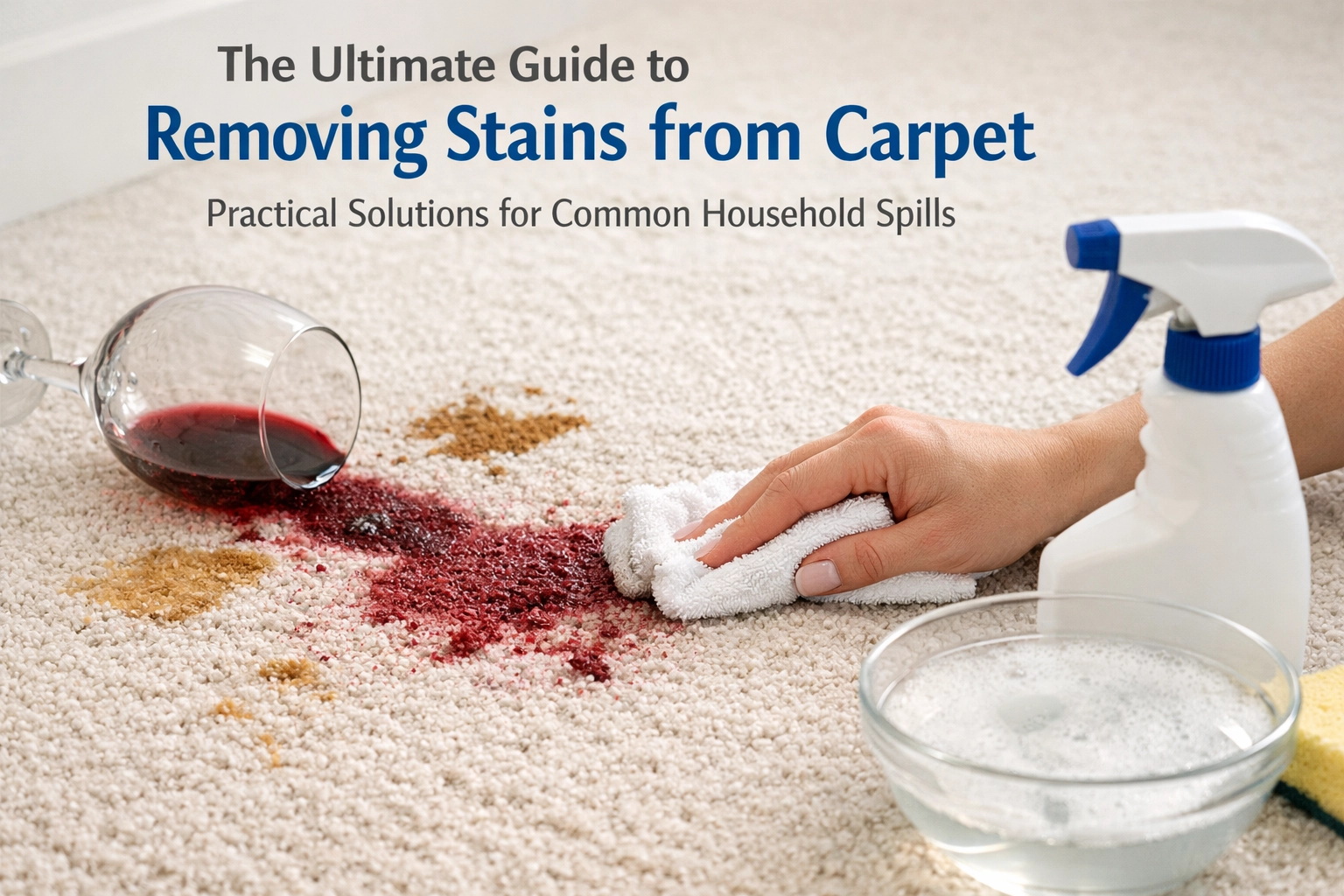
Maintaining the appearance and longevity of household carpeting requires more than just regular vacuuming. Spills and stains are an inevitable part of home life, whether they stem from a dropped glass of wine, a muddy pet, or a morning coffee mishap. When a spill occurs, the immediate reaction often dictates whether the mark becomes a permanent fixture or a forgotten accident.
Understanding the science of carpet fibers and the chemistry of cleaning agents allows for a more effective approach to maintenance. Most modern carpets are treated with stain-resistant coatings, but these are not invincible. Over time, or with the wrong cleaning technique, these barriers can break down, allowing liquids to penetrate the core of the fiber. This guide provides a comprehensive overview of how to address various types of carpet stains using practical, household-safe methods.
Understanding Carpet Fibers and Stains
Before applying any cleaning solution, it is important to identify the type of carpet fiber in the home. Most residential carpets are made from synthetic materials like nylon, polyester, or triexta. These fibers are generally durable and respond well to water-based cleaning solutions. Natural fibers, such as wool or sisal, are more delicate and can be easily damaged by high heat or harsh chemicals.
Stains are generally categorized into three types: water-soluble, non-water-soluble (oil-based), and biological. Water-soluble stains include items like soda, mud, and most food dyes. Oil-based stains include grease, makeup, and cooking oils. Biological stains, such as pet accidents or blood, require specific enzymes or cold-water treatments to remove effectively without setting the protein.
The Essential Stain Removal Toolkit
Having the right supplies on hand ensures that a spill can be treated before it sets. A well-stocked carpet cleaning kit should include:
- White Cloths or Paper Towels: Always use white materials to prevent dye transfer from the cloth to the carpet.
- Clear Dish Soap: A mild, non-bleaching detergent is essential for breaking down surface tension.
- White Vinegar: Excellent for neutralizing odors and cutting through alkaline residues.
- Baking Soda: Useful for absorbing liquids and neutralizing acidic odors.
- Hydrogen Peroxide (3%): A mild oxidizing agent helpful for organic stains on light-colored carpets.
- Isopropyl Alcohol: Useful for dissolving ink or oil-based spots.
- A Dull Knife or Spoon: For gently scraping away solid debris.
For more general home maintenance tips, visiting the everyday living category can provide additional context on managing household tasks.
The Golden Rule: Blotting vs. Scrubbing
The most frequent mistake made during carpet cleaning is the urge to scrub. Scrubbing a stain creates friction that generates heat and physically pushes the liquid deeper into the carpet pile and the backing. Furthermore, aggressive scrubbing can fray the carpet fibers, leading to a “fuzzy” patch that remains visible even after the color is gone.

Blotting is the correct technique. This involves pressing a clean, dry white towel firmly onto the spill to wick the moisture upward and into the towel. The process should begin at the outer edges of the stain and move toward the center. This prevents the liquid from spreading outward and creating a larger circle of discoloration.
A Universal Seven-Step Process for Fresh Stains
Regardless of the substance spilled, following a standardized sequence increases the likelihood of total removal:
- Act Immediately: The longer a liquid sits, the more likely it is to bond with the carpet fibers.
- Remove Solids: Use a spoon or a dull knife to lift away any solid matter. Do not press down while doing this.
- Blot Excess Liquid: Use white paper towels to absorb as much of the spill as possible until no more moisture transfers to the towel.
- Apply Cleaning Solution: Spray a small amount of the appropriate cleaner onto a cloth, then dab the cloth onto the stain. Avoid over-wetting the carpet, as excess moisture can lead to mold or mildew in the padding.
- Wait: Allow the solution to sit for three to five minutes. This gives the chemicals time to break the bond between the stain and the fiber.
- Rinse: Use a separate cloth dampened with plain water to “rinse” the area. Removing the detergent is vital, as soap residue attracts dirt.
- Dry: Place a stack of paper towels over the damp area and weigh them down with a heavy object (like a book protected by plastic wrap). Leave this for several hours to draw out any remaining deep-seated moisture.
Removing Water-Soluble Spills
Water-soluble stains are the most common and are often the easiest to treat if addressed quickly.
Mud and Dirt
Unlike other stains, mud should be allowed to dry completely before cleaning. Attempting to clean wet mud often results in rubbing the soil deeper into the weave. Once the mud is dry, vacuum the area thoroughly to remove the bulk of the dirt. If a brown shadow remains, a solution of one teaspoon of mild dish soap and one cup of warm water can be used to blot the area.
Soda and Sugary Drinks
Sugary liquids become sticky as they dry, creating a “dirt magnet.” To treat these, blot as much as possible, then apply a mixture of one part white vinegar to two parts water. The acidity of the vinegar helps break down the sugars. Rinse thoroughly with water to ensure no sticky residue remains.
Tackling “Special” Water-Soluble Stains
Some water-soluble substances contain dyes or proteins that require a specialized approach.
Red Wine and Juice
Red wine is notorious for its ability to stain permanently. If a spill occurs, immediately blot the area. Some find success by covering the damp area with a thick layer of salt or baking soda to absorb the pigment. After the powder dries and is vacuumed away, a solution of dish soap and white vinegar can be applied to address any remaining pink hue.

Coffee and Tea
These liquids contain tannins, which act as natural dyes. A mixture of one tablespoon of liquid dish soap, one tablespoon of white vinegar, and two cups of warm water is usually effective. If the coffee contained milk or cream, it is essential to use a detergent that breaks down proteins to prevent future odors.
Blood
When dealing with blood, never use warm or hot water, as heat “cooks” the protein and sets the stain into the fiber. Use cold water only. For light-colored carpets, a small amount of hydrogen peroxide can be applied with a dropper. It will foam upon contact; blot the foam away immediately. This process should be repeated until the stain is gone.
Dealing with Oil-Based and Greasy Stains
Oil-based stains do not mix with water, meaning standard water-based cleaners will often slide right off them without removing the grease.
Butter, Oil, and Gravy
The first step for grease is absorption. Sprinkle the area liberally with cornstarch or baking soda and let it sit for at least 30 minutes. The powder will draw the oil out of the fibers. After vacuuming the powder, apply a small amount of grease-cutting dish soap to a damp cloth and blot the area.
Makeup and Lipstick
Lipstick and mascara are highly pigmented and oil-rich. A small amount of isopropyl (rubbing) alcohol on a white cloth can help dissolve the oils. It is vital to test the alcohol on an inconspicuous spot first to ensure it does not damage the carpet’s dye.
Removing Sticky and Hardened Substances
Items like gum or wax cannot be blotted away. They require a change in physical state to be removed.
Chewing Gum and Candle Wax
The most effective way to remove these is to freeze them. Place a plastic bag filled with ice cubes directly on the substance until it becomes brittle. Once hardened, use a spoon to gently crack and chip the pieces away. For remaining wax, some professionals use a brown paper bag and a warm iron to melt the wax into the paper, though this carries a risk of melting synthetic carpet fibers and should be done with extreme caution.

Hardened Paint
If the paint is water-based (latex) and still wet, it can be blotted with warm water. If it has dried, the task is much harder. A solution of hot water and a small amount of dish detergent can sometimes soften the paint enough to be scraped away. For stubborn spots, a commercial paint remover designed for carpets may be necessary.
Managing Biological and Pet Stains
Pet accidents require a different approach because they involve organic compounds that can leave behind persistent odors and bacteria.
For fresh accidents, blot the area thoroughly. Avoid using ammonia-based cleaners, as the scent of ammonia can mimic the smell of urine and encourage the pet to “mark” the spot again. Instead, use an enzymatic cleaner. These products contain live bacteria or enzymes that actually consume the organic matter causing the stain and odor.
If the stain is old and has already dried, it may be necessary to use a blacklight to find the exact perimeter of the affected area, as urine can spread further in the carpet padding than it appears on the surface. For more specific questions regarding household maintenance and cleaning products, the frequently asked questions page may offer further guidance.
Advanced Techniques and Deep Cleaning
While spot cleaning is effective for localized incidents, periodic deep cleaning is necessary to remove the oily soils that build up from foot traffic and air pollutants.
Steam Cleaning (Hot Water Extraction)
Contrary to the name, steam cleaning doesn’t actually use steam. It involves a machine that injects a solution of hot water and detergent deep into the carpet pile under pressure and then immediately extracts it with a high-powered vacuum. This is widely considered the most effective method for deep cleaning, as it reaches the base of the fibers.

When using a rental machine, it is critical to avoid over-wetting the carpet. One pass with the cleaning solution followed by two or three “dry” passes (vacuum only) helps ensure the carpet dries within 6 to 12 hours. If a carpet remains wet for longer than 24 hours, there is a significant risk of mold growth.
Preventing Future Stains
Prevention is the most effective form of maintenance. Implementing a “no-shoes” policy significantly reduces the amount of oil and dirt tracked onto the fibers. Placing high-quality walk-off mats at every entrance provides a first line of defense against outdoor contaminants.
Regular vacuuming is also essential. Soil is abrasive; when left in the carpet, it acts like sandpaper, grinding down the fibers as people walk over it. By removing dry soil before it becomes embedded, the carpet remains more resilient to liquid spills.
For those who wish to stay updated on the latest home maintenance strategies and educational resources, subscribing to the newsletter provides regular insights. If a stain proves particularly difficult or if the carpet requires professional intervention, reaching out through the contact us page can help direct users toward the appropriate support services available through customer help.
Proper carpet care is a combination of the right tools, the correct techniques, and consistent maintenance. By treating spills as immediate priorities and using the appropriate chemical reactions for different substances, most household carpets can be kept in excellent condition for many years.

