
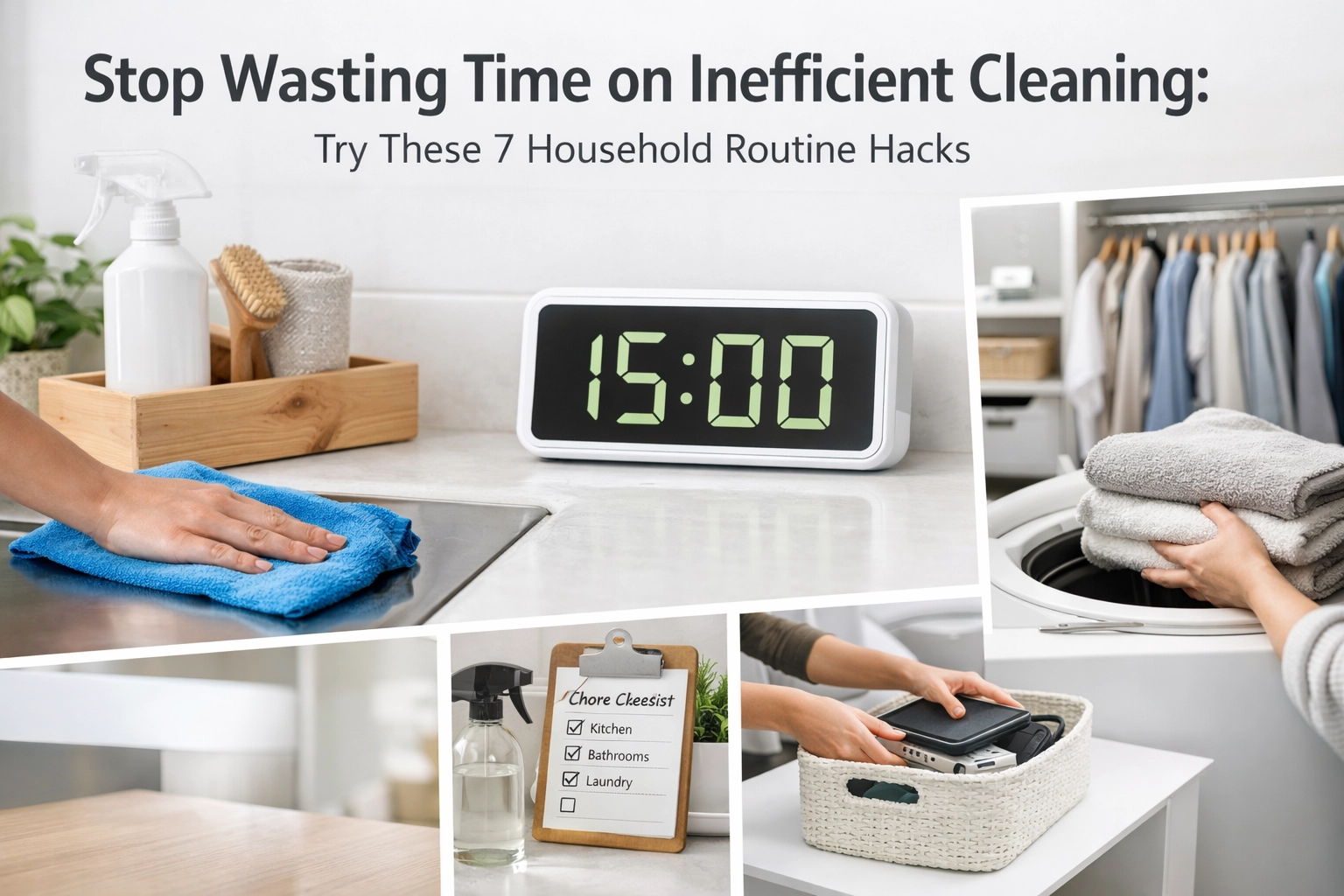
Maintaining a clean and organized home is often perceived as a never-ending cycle of labor. For many, the challenge lies not in the cleaning itself, but in the inefficiency of the methods used. Traditional cleaning routines often involve repetitive movements, unnecessary trips across the house, and a lack of systematic focus. By shifting the approach from “working harder” to “working smarter,” it is possible to reclaim hours of time each week while achieving a higher standard of household hygiene.
The key to efficiency is the implementation of structured routines that minimize friction. When tasks are streamlined, they require less mental energy and physical effort. This guide explores seven practical, high-impact household routine hacks designed to eliminate wasted time and optimize the cleaning process for any living space.
1. Implement the Bulk Transport Method for Appliance Maintenance
One of the most significant time-wasters in kitchen maintenance is the constant back-and-forth movement between an appliance and a countertop. This is particularly evident when cleaning a refrigerator. Most people remove two or three items at a time, wipe a small section of a shelf, and then return the items. This fragmented approach can turn a twenty-minute task into an hour-long ordeal.
The bulk transport method involves using a large container, such as a sturdy box or a laundry hamper, to clear entire sections of the refrigerator at once. By placing the container on a nearby surface or even a chair, every item from a single shelf can be moved in one motion. This provides immediate, unobstructed access to the interior surfaces.
Once the shelf is clear, it can be wiped down quickly without maneuvering around jars and bottles. This method also provides an excellent opportunity to check expiration dates as items are moved back from the container to the clean shelf. The same principle can be applied to pantry organization or cleaning out bathroom cabinets, ensuring that no movement is wasted on individual items.

2. Leverage Habit Bundling for Passive Cleaning
Cleaning does not always require a dedicated block of time. In fact, some of the most effective routines are those integrated into existing daily habits. This concept, known as habit bundling, involves attaching a small cleaning task to a task that is already performed automatically.
For example, the bathroom sink and countertop can be wiped down immediately following a morning skincare or tooth-brushing routine. Since the hands are already at the sink and water is being used, adding a thirty-second wipe-down prevents the buildup of toothpaste residue and water spots. To keep these areas organized and make wiping easier, using a 360-degree rotating cosmetic receiving box allows for quick movement of products to access the surface beneath.
Another example of habit bundling is the “shower spray” technique. By keeping a spray bottle of a mild cleaning solution inside the shower, the walls can be misted as one steps out of the water. This daily action utilizes the steam and heat from the shower to break down soap scum before it hardens, virtually eliminating the need for deep scrubbing sessions later in the month.
3. Utilize Dry Mechanical Friction for Tough Grime
A common mistake in household cleaning is the over-reliance on liquid cleaners for every surface. While chemical cleaners have their place, they often require “dwell time” to be effective, and excess moisture can actually make some messes more difficult to remove by creating a slippery sludge.
For surfaces with baked-on grease or heavy mineral deposits, such as ovens or glass stovetops, dry mechanical friction is often faster and more effective. Using a dry sponge or a specialized cleaning paste with minimal water allows the abrasive qualities of the sponge to work directly on the grime.
To clean an oven efficiently, one can apply a paste of baking soda and a small amount of dish soap. Rather than saturating the area with water, use a dry or very slightly damp sponge to scrub in circular motions. The lack of excess liquid provides better “bite” against the grease. Once the grime is loosened, a single damp microfiber cloth can be used to rinse the surface. This method avoids the mess of liquid runoff and cuts the cleaning time in half.

4. Simplify with a Universal Cleaning Solution
The modern cleaning industry often suggests that every room and surface requires a different specialized chemical. This leads to cluttered cabinets and the time-consuming process of carrying a dozen different bottles from room to room. In reality, a single, effective multi-purpose cleaner can handle approximately 80% of household surfaces.
A highly effective and cost-efficient universal cleaner can be made by mixing equal parts water and white distilled vinegar with a small squirt of concentrated dish soap. This solution is acidic enough to cut through hard water stains and soap scum, while the dish soap acts as a surfactant to lift oils and dirt.
This mixture is safe for most non-porous surfaces, including windows, mirrors, laminate countertops, and tile floors. By carrying one bottle and a stack of microfiber cloths, one can move through the entire house without stopping to switch products. Note that acidic cleaners like vinegar should be avoided on natural stone surfaces like marble or granite, where a pH-neutral cleaner is required. Reducing the “product kit” simplifies the mental load and physical weight of cleaning day.
5. Ergonomic Vertical Cleaning with a Broom
Baseboards, crown molding, and high wall corners are frequently neglected because they are difficult to reach. Traditional cleaning methods for baseboards often involve crawling on the floor, which is slow and physically taxing. To solve this, one can adapt a standard broom into a high-reach cleaning tool.
By wrapping a microfiber cloth around the bristles of a broom and securing it with a rubber band, a wide-surface cleaning wand is created. Damping the cloth with a light cleaning solution allows for the cleaning of baseboards while standing upright. The length of the broom provides the necessary leverage to apply pressure into crevices that a hand-held cloth might miss.
This same tool can be used to clear cobwebs from ceiling corners or dust the tops of door frames. Because it covers a larger surface area than a hand-held rag, the task is completed much faster. Maintaining textiles and furniture is also part of this vertical routine; for instance, using a hair ball trimmer on upholstery or curtains can refresh the look of a room without requiring heavy equipment.

6. Apply the Mop Method to Cabinets and Walls
Just as a broom can be used for baseboards, a flat microfiber mop can be used for large vertical surfaces like kitchen cabinets and walls. Many people approach cabinet cleaning by wiping each door individually with a small cloth. This is inefficient because cabinets, like floors, are essentially large flat planes.
Using a clean, damp microfiber mop head allows for long, continuous strokes from the top of the cabinet to the bottom. This method is particularly effective in kitchens where airborne grease settles on the upper surfaces of the cabinetry. A flat mop can cover the entire surface area of a pantry door or a set of cabinets in seconds.
This technique is also excellent for washing walls in high-traffic areas or hallways. It ensures an even application of the cleaning solution and prevents the “patchy” look that sometimes occurs when hand-wiping walls. By treating vertical surfaces with the same tools used for horizontal ones, the speed of the routine increases exponentially.
7. The Corner-to-Corner Decluttering Strategy
The greatest obstacle to efficient cleaning is clutter. Attempting to dust or vacuum around miscellaneous objects significantly slows down the process. A professional cleaning approach always begins with a dedicated decluttering phase before any cleaning product is touched.
The most effective way to do this is the “corner-to-corner” method. Start at the entrance of a room and move clockwise, picking up every item that is out of place. Do not stop to put each item in its final destination yet; instead, group items by the room they belong in. For example, all items belonging in the garage or the car can be placed in a staging area, perhaps utilizing a folding car utility storage bag to organize them for the next trip out.
By clearing the surfaces first, the actual cleaning: dusting, wiping, and floors: can be done in a single, uninterrupted flow. This prevents the “stop-and-start” rhythm that makes cleaning feel tedious. Once the surfaces are polished, the grouped items can be returned to their proper places in bulk.

Establishing a Sustainable Routine
Efficiency is not just about the techniques used during the act of cleaning; it is about how those acts are distributed over time. A common pitfall is the “marathon cleaning” session, where an entire Saturday is dedicated to scrubbing the house. This often leads to burnout and a home that is only truly clean for one day a week.
The 15-Minute Daily Reset
A more sustainable approach is the 15-minute daily reset. This involves a quick sweep of the main living areas every evening. The focus is on high-impact zones: the kitchen counters, the living room coffee table, and the entryway. By maintaining these areas daily, the weekly deep clean becomes significantly easier because dirt and clutter never have the chance to accumulate.
Creating a Zonal Schedule
To avoid feeling overwhelmed, divide the home into “zones.” Instead of trying to clean the whole house at once, assign one zone to each day of the week.
- Monday: Kitchen (Appliances and counters)
- Tuesday: Bathrooms (Sinks, mirrors, and toilets)
- Wednesday: Living Areas (Dusting and glass surfaces)
- Thursday: Bedrooms (Linens and floors)
- Friday: Floors (Vacuuming and mopping the entire house)
This zonal approach ensures that every part of the home receives attention regularly without requiring hours of work on any single day. It also allows for the use of the hacks mentioned above in a targeted way.

The Role of Organization in Cleaning Speed
It is much faster to clean a home that has a designated “home” for every object. When surfaces are kept clear, dusting takes minutes rather than hours. Strategic organization tools can facilitate this. For instance, a portable LED bookmark lamp kept in a specific drawer prevents it from becoming part of the “surface clutter” on a nightstand.
When everything has a place, the “decluttering” phase of the cleaning routine becomes a simple matter of returning items to their homes. This synergy between organization and cleaning is what ultimately creates a low-maintenance household.
Conclusion
Inefficiency in household chores is often the result of outdated habits and a lack of systemic planning. By adopting methods like bulk transport for cleaning appliances, habit bundling for daily maintenance, and utilizing ergonomic tools like brooms for vertical surfaces, the time spent on chores can be drastically reduced.
The goal is to create a living environment that supports a high quality of life rather than one that demands all of one’s free time. Implementing these seven hacks, combined with a consistent zonal schedule, allows for a consistently clean home with a fraction of the traditional effort. Efficiency is the bridge between a cluttered, stressful environment and a calm, organized sanctuary.

