
A slow-draining kitchen sink is a common household frustration that often signals a developing problem within the plumbing system. While it may start as a minor annoyance: water lingering for a few seconds longer than usual: it can quickly escalate into a complete backup, rendering the kitchen workspace unusable. Understanding the mechanics of drainage and the specific substances that compromise pipe integrity is the first step toward a permanent fix.
Modern plumbing relies on a delicate balance of gravity, water pressure, and airflow. When any part of this system is obstructed, the flow rate decreases. Identifying the root cause requires an investigation into daily habits, water quality, and the age of the home’s infrastructure.
1. Fat, Oil, and Grease (FOG) Accumulation
Perhaps the most frequent cause of slow drains in the kitchen is the accumulation of fats, oils, and grease, commonly referred to in the plumbing industry as FOG. When these substances are warm, they exist as liquids and slide easily down the drain. However, as they travel through the pipes and cool down, they undergo a phase change, solidifying into a waxy, sticky coating on the interior walls of the plumbing.
This buildup acts like a magnet for other debris. Small food particles, lint, and minerals become trapped in the sticky grease, gradually narrowing the diameter of the pipe. Over time, a pipe that was originally two inches wide may be reduced to the width of a pencil, causing water to drain at a snail’s pace.
How to Fix It
For minor grease clogs, the application of boiling water can sometimes melt the blockage and push it through. However, a more effective method involves a combination of baking soda and vinegar. Pouring half a cup of baking soda followed by half a cup of white vinegar creates a chemical reaction that can break down greasy residues. After letting it sit for thirty minutes, flush the system with a large pot of boiling water.

2. Food Scraps and Organic Waste
Even with a garbage disposal, many kitchen sinks suffer from the accumulation of organic waste. Certain foods are particularly problematic. Fibrous vegetables like celery, corn husks, and artichokes have “strings” that can wrap around disposal blades or catch on pipe joints. Starchy foods like pasta, rice, and potato peels are equally hazardous; they expand when exposed to water and create a thick, paste-like substance that acts as a physical barrier.
Coffee grounds are another common culprit. While they appear fine and easily flushable, they do not dissolve in water. Instead, they settle in the P-trap (the curved section of the pipe) and compact over time, creating a dense, soil-like plug.
How to Fix It
Manual removal is often necessary for food-based clogs. If the clog is near the surface, a standard cup plunger can be used to create the pressure needed to dislodge the mass. To use a plunger effectively, fill the sink with enough water to cover the bell of the plunger, seal the overflow (if present), and use firm, vertical strokes. If the sink is a double-bowl model, one side must be sealed with a stopper to ensure the pressure is directed toward the clog.
3. Soap Scum Buildup
It may seem counterintuitive that soap: a cleaning agent: could cause a drain to clog. However, traditional bar soaps and some liquid detergents are made with fats and minerals. When these react with the calcium and magnesium found in water, they form a hard, chalky substance known as soap scum.
In a kitchen environment, soap scum coats the inside of the pipes and provides a textured surface that allows food and grease to cling more easily. This creates a feedback loop where the scum traps debris, and the debris traps more scum, leading to a significant restriction in water flow.
How to Fix It
Switching to a soap-free detergent or a synthetic liquid soap can prevent future buildup. To remove existing soap scum, specialized calcium, lime, and rust (CLR) cleaners can be effective. Alternatively, a mixture of hot water and a degreasing dish soap can help break down the fatty components of the scum.
4. Mineral Deposits and Hard Water Scale
In regions with hard water, mineral deposits are an inevitable challenge for plumbing systems. Calcium and magnesium dissolved in the water supply gradually precipitate out and attach to the interior of the pipes. This process, known as scaling, is similar to the way plaque builds up in arteries.
Scaling is particularly problematic in older homes with galvanized steel pipes, as the rough interior surface of the metal provides an ideal anchor for mineral crystals. Over decades, this scale can become so thick that the only solution is to replace the affected sections of the pipe.
How to Fix It
For localized mineral buildup near the sink flange or within the P-trap, soaking the components in white vinegar can dissolve the calcium. For systemic hard water issues, installing a water softener is the most effective long-term solution. This prevents minerals from entering the household plumbing in the first place, protecting not only the drains but also appliances like dishwashers and coffee makers.
5. Obstructions in the P-Trap
The P-trap is the U-shaped pipe located directly beneath the sink. Its primary function is to hold a small amount of water that acts as a seal, preventing sewer gases from entering the home. Because of its shape, it is also the most likely place for heavy objects or dense debris to settle.
If a kitchen sink is draining slowly, the P-trap is the first place a homeowner should check. It often captures rings, small utensils, or heavy food particles that cannot make the “climb” out of the U-bend.

How to Fix It
The P-trap is designed to be easily removed. Place a bucket underneath the trap to catch standing water. Unscrew the slip nuts at both ends of the U-shaped pipe: this can usually be done by hand or with a pair of channel-lock pliers. Once removed, the trap can be emptied and cleaned in another sink or outside with a garden hose. Inspect the washers for wear before reassembling the unit to ensure a water-tight seal.
6. Garbage Disposal Malfunctions
A garbage disposal that is not functioning at peak efficiency will contribute to slow drainage. Over time, the impellers (often mistakenly called blades) can become dull or coated in a film of grease, preventing them from pulverizing food waste into small enough particles. If the disposal only partially grinds the waste, the larger chunks will quickly clog the discharge pipe that leads away from the unit.
Furthermore, the “slat” or the small opening where the disposal connects to the drain line is a notorious bottleneck. Grease often collects here, narrowing the exit point for the ground-up waste.
How to Fix It
To clean and sharpen the disposal’s internal components, grind a tray of ice cubes and a handful of rock salt through the unit. The abrasive action helps strip away residue and hone the edges of the impellers. To clear the discharge pipe, it may be necessary to disconnect the pipe from the side of the disposal and manually clear any trapped debris.
7. Blocked Vent Pipes
Plumbing systems require air to move water. The vent pipe, which usually exits through the roof of the house, allows air to enter the drainage system, equalizing pressure and allowing water to flow smoothly. If the vent is blocked by a bird’s nest, leaves, or snow, a vacuum is created within the pipes.
A tell-tale sign of a vent issue is a “gurgling” sound coming from the sink when it drains. Because the water is fighting against air pressure, it moves much slower than it should, often stalling entirely until the pressure equalizes through the drain itself.
How to Fix It
Clearing a vent pipe requires access to the roof. A plumber or a confident homeowner can use a garden hose to flush the vent stack with water or use a specialized plumbing auger to clear debris. If the blockage is due to ice or frost, pouring hot water down the vent can resolve the issue.
8. Corroded or Outdated Pipe Materials
Homeowners with older properties often deal with the physical degradation of the pipes themselves. Galvanized steel pipes, common in homes built before the 1960s, are prone to internal corrosion. As the iron in the pipe reacts with water and oxygen, it creates rust “tubercles”: bumpy growths on the inside of the pipe.
These growths create a very rough surface that slows down water through friction and provides countless “hooks” for hair and food to snag on. In these cases, the slow drain isn’t caused by a single clog, but by the permanent narrowing and degradation of the entire pipe run.
How to Fix It
While chemical cleaners might provide temporary relief, they often accelerate the corrosion of old metal pipes. The permanent fix for corroded piping is a “re-pipe,” involving the replacement of old galvanized lines with modern PVC or copper. For those looking to organize their space after such repairs, using a 360-degree rotating cosmetic receiving box in the bathroom or under-sink area can help keep new plumbing visible and accessible.

9. Structural Issues: Improper Pipe Slope
Water in a drainage system relies on gravity to move. For a drain to work correctly, the horizontal pipes must have a specific “slope” or “pitch”: typically 1/4 inch of drop for every foot of horizontal travel. If a house has settled or if the plumbing was installed incorrectly, the pipes may have “bellies” (low spots) or even back-pitch (sloping the wrong way).
In a pipe with a belly, water and debris sit in the low spot rather than flowing toward the main stack. This standing water allows solids to settle and eventually form a thick sludge that slows down the entire system.
How to Fix It
Fixing a slope issue is a significant undertaking that usually involves re-hanging the pipes. Plumbers use adjustable hangers to ensure the pipe maintains a consistent downward angle. In some cases, if the settling is in the foundation, more extensive structural work may be required to realign the drainage exit.
10. Main Sewer Line Blockage
If the slow drainage isn’t limited to the kitchen sink but is also affecting the bathroom sinks, toilets, and tubs, the problem likely lies in the main sewer line. This is the large pipe that carries all household waste to the city sewer or a septic tank.
The most common cause of main line issues is tree root intrusion. Roots are drawn to the moisture and nutrients inside sewer pipes and can enter through tiny cracks or joints. Once inside, they grow rapidly, creating a “root mat” that can completely stop the flow of water.
How to Fix It
Main line blockages cannot be fixed with household tools. A professional plumber must use a heavy-duty motorized auger or a hydro-jetter (a high-pressure water sprayer) to clear the line. In cases of severe root damage, a camera inspection is often performed to locate the break, followed by a localized repair or a pipe-lining procedure.

Tools for DIY Drain Maintenance
Having the right tools on hand can prevent a slow drain from becoming an emergency. Most minor kitchen clogs can be handled with a few basic items:
- Cup Plunger: Specifically designed for flat surfaces like sinks.
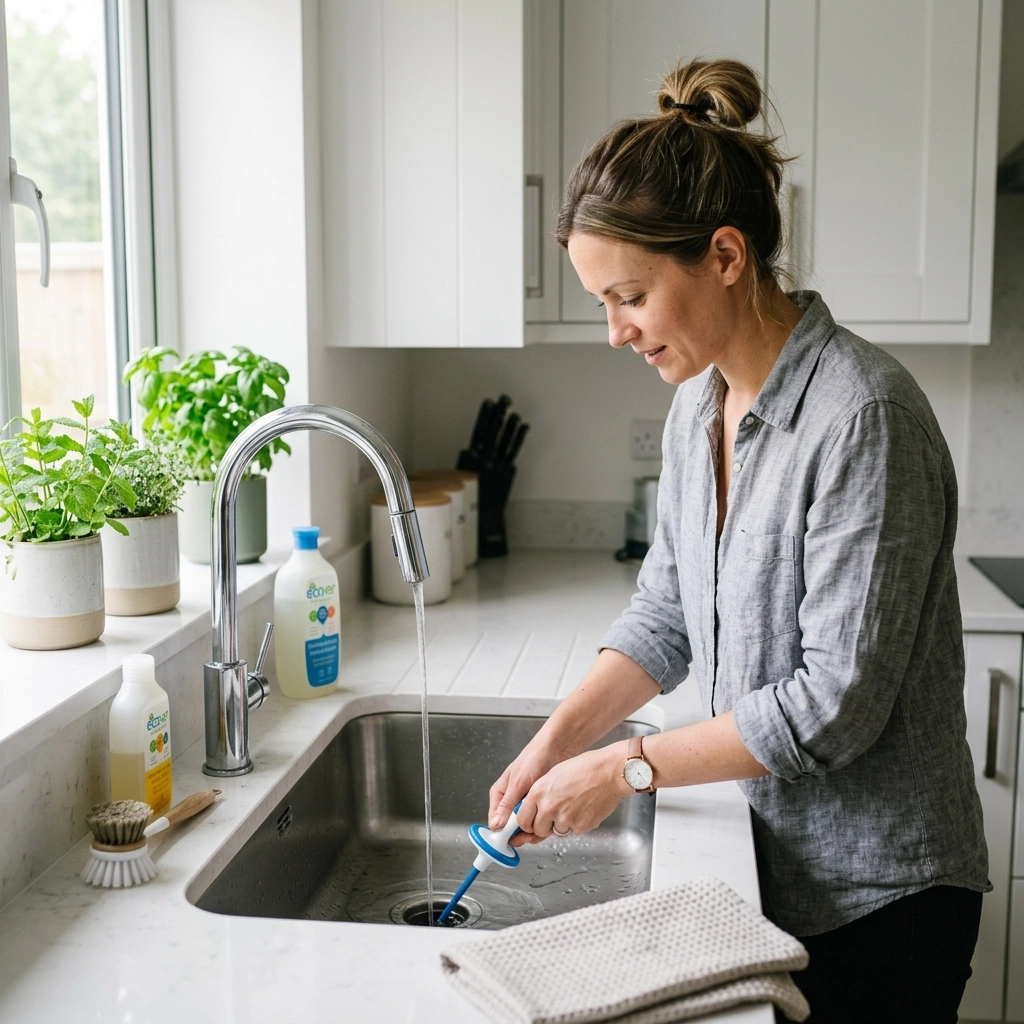
- Zip-It Tool: A long, thin plastic strip with barbs, perfect for pulling hair and surface debris out of the drain.
- Plumbing Auger (Snake): A flexible cable that can reach several feet into the wall to break up deeper clogs.
- Bucket and Wrench: For removing the P-trap.
When working on under-sink areas, keeping the space organized is essential. While things like a car trunk storage bag are designed for vehicles, the concept of compartmentalized storage applies to the “wet” cabinet under the sink as well. Keeping tools and cleaning supplies in a portable container ensures that when a leak or a clog occurs, there is immediate access to the necessary equipment.
Prevention Strategies for a Healthy Drain
Maintenance is significantly more cost-effective than repair. Implementing a few daily habits can extend the life of a plumbing system and keep water flowing freely.
Use a Sink Strainer
A high-quality mesh strainer is the best defense against clogs. It catches small food scraps, coffee grounds, and even bits of plastic that might otherwise enter the system. Emptying the strainer into the compost or trash after every meal prevents the majority of physical obstructions.
The “Cold Water” Rule for Disposals
When using a garbage disposal, always run cold water. Cold water keeps fats and oils in a solid state so they can be chopped up and flushed through the system. Hot water melts grease, allowing it to coat the pipes further down the line where it will eventually cool and solidify.
Monthly Maintenance Flushes
Once a month, fill the sink to the brim with hot water and then pull the stopper. The weight and volume of the water create a “scouring” effect that can help wash away loose debris and minor grease buildup before it becomes a problem.

When to Call a Professional
While many slow drains are DIY-friendly, certain scenarios require the expertise of a licensed plumber. Professional intervention is recommended if:
- Multiple fixtures are slow: This indicates a main line or vent stack issue.
- Water is backing up into other sinks: This suggests a complex clog that could lead to flooding.
- Chemical cleaners have failed: Repeated use of caustic chemicals can damage pipes and create a hazardous environment for any plumber who has to work on the system later.
- There is a persistent foul odor: This could indicate a broken vent or a dried-out trap that is allowing sewer gas into the home.
Understanding the “why” behind a slow-draining sink allows for more targeted troubleshooting. Whether it is a simple matter of cleaning the P-trap or a more complex issue with mineral scaling, addressing the problem early prevents the inconvenience and expense of a total plumbing failure. By maintaining a balance of proper usage, regular cleaning, and the right tools, homeowners can ensure their kitchen remains a functional and efficient space. For those who enjoy learning about home maintenance and DIY fixes, staying informed about the various components of the home is a continuous and rewarding process.

