
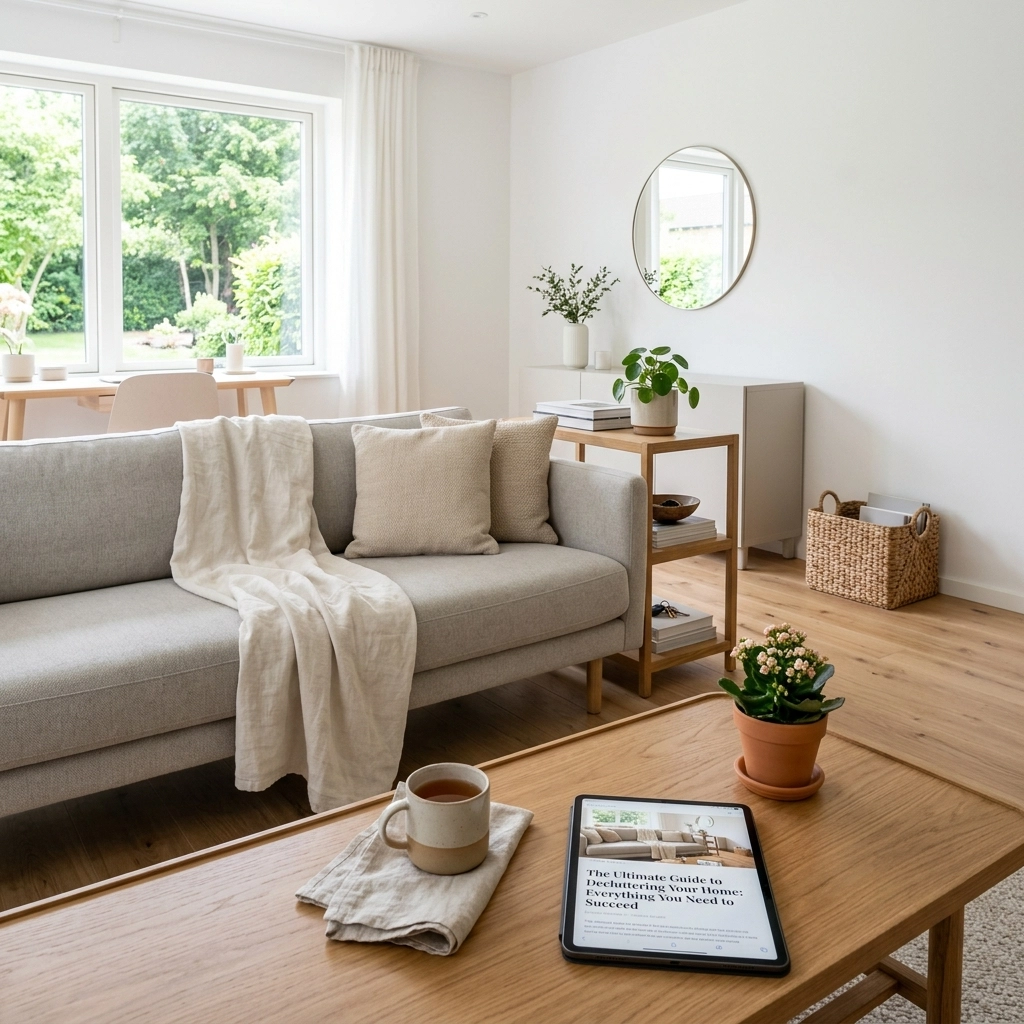
A cluttered home often leads to a cluttered mind. Physical objects carry visual weight, and when every surface is covered with mail, toys, or miscellaneous items, the brain struggles to process the environment, leading to increased stress and decreased productivity. Transforming a home from a state of chaos to a sanctuary of order is not merely about aesthetics; it is about reclaiming time, energy, and mental clarity.
The process of decluttering can seem overwhelming when viewed as a single, monumental task. However, by breaking the process down into manageable systems and room-specific strategies, anyone can achieve a streamlined living space. This guide provides a comprehensive framework for sorting through belongings, implementing sustainable storage solutions, and establishing habits that prevent clutter from returning.
Understanding the SOS Decluttering Method
Success in home organization relies on a repeatable framework. The SOS method: Simplify, Organize, and Systematize: serves as a foundation for any decluttering project, regardless of the size of the room.
Simplify: The Art of Letting Go
The first and most critical step is simplification. It is impossible to organize a mess; one must first reduce the volume of items. This phase involves a rigorous evaluation of every object. A common hurdle is the emotional attachment to items or the “just in case” mentality. To combat this, categorize items into four groups: keep, donate, sell, and discard. If an item has not been used in the past year and does not serve a clear purpose or provide genuine joy, it is a candidate for removal.
Organize: Creating a Logical Flow
Once the volume of possessions is reduced, the remaining items must be assigned a home. Organization is about accessibility and logic. Items used daily should be stored in “prime real estate”: areas between the shoulders and knees that are easy to reach. Items used less frequently can be moved to higher shelves or lower cabinets. Before purchasing new bins or baskets, utilize what is already available. The goal is to ensure that every object has a designated spot to return to after use.
Systematize: Ensuring Long-Term Success
A common mistake is treating decluttering as a one-time event. Systematization involves creating habits and boundaries that maintain the order. This includes the “one thing in, one thing out” rule and scheduled weekly “reset” sessions. By building systems, the home remains organized without requiring another massive overhaul in six months.

Choosing the Right Timeline for Your Home
The speed of a decluttering project depends on the size of the home and the amount of free time available. Forcing a rapid cleanup during a busy season often leads to burnout, while moving too slowly can cause a loss of momentum.
The 10-Day Focused Sprint
For those who prefer a high-intensity approach, a 10-day sprint targets specific problem areas sequentially. This method is ideal for smaller homes or for individuals with a week of dedicated time.
- Day 1: Personal care products and toiletries.
- Day 2: Medicine cabinets and first aid.
- Day 3: Clothing and footwear.
- Day 4: Office supplies and paperwork.
- Day 5: The “junk drawer” and miscellaneous utility items.
- Day 6: Kitchen cabinets and small appliances.
- Day 7: Children’s toys or hobby equipment.
- Day 8: Cleaning supplies and laundry areas.
- Day 9: The pantry and refrigerator.
- Day 10: Linens, towels, and seasonal decor.
The Three-Month Gradual Plan
For larger homes or families with limited daily time, a three-month plan allows for deep work without disrupting daily life. This involves focusing on one room or one major category (such as books or kitchenware) per week. Spending 20 to 30 minutes each evening on a small zone: like a single drawer or shelf: builds a consistent habit that yields significant results over time.
Room-by-Room Strategies for Success
Each area of the home presents unique challenges. Applying specific tactics to different rooms ensures that nothing is overlooked.
The Entryway: Managing the Transition Zone
The entryway is the first impression of a home and the primary catch-all for daily debris. It often suffers from “drop-zone clutter” where mail, keys, shoes, and bags accumulate the moment someone walks through the door.
- Edit Outerwear: Keep only the current season’s coats and shoes in the entryway. Store off-season gear in a secondary closet or under-bed storage.
- Establish a Mail Station: Place a small bin or tray for incoming mail and a shredder or recycling bin nearby to handle junk mail immediately.
- Vertical Storage: Use wall-mounted hooks for bags and keys to keep floor surfaces clear. A dedicated bench with cubbies can provide a spot for shoes, preventing them from scattering across the floor.
The Kitchen: Maximizing Functional Space
The kitchen is often the busiest room in the house. Clutter here can make meal preparation frustrating and time-consuming.
- Clear the Counters: Limit countertop items to the three to five appliances used daily (e.g., the coffee maker or toaster). Everything else should be stored in cabinets.
- The Pantry Reset: Remove everything from the pantry. Check expiration dates and discard anything past its prime. Group similar items together: baking supplies in one bin, snacks in another.
- Duplicate Cull: Many kitchens contain multiple vegetable peelers, three sets of measuring cups, and a surplus of plastic containers without lids. Keep the best-quality set and donate the duplicates.
- Zone Planning: Organize cabinets based on activity. Store mugs and coffee pods near the machine, and keep pots and pans near the stove.

The Living Room: Balancing Comfort and Order
As a shared space, the living room quickly collects items that belong elsewhere.
- Surface Control: Coffee tables and side tables should be kept clear of clutter. Use a decorative tray to corral remote controls and coasters.
- Toy Management: If children use the living room, implement a “one-bin” rule. At the end of the day, all toys must fit into a designated basket or ottoman.
- Digital Declutter: The living room often houses tangled cords and outdated electronics. Use cable management sleeves to hide wires and dispose of old chargers or non-functional devices at an e-waste facility.
The Bedroom: Creating a Sanctuary
The bedroom should be a place of rest, but visible clutter can interfere with sleep quality.
- Under-Bed Storage: Utilize the space under the bed for items used infrequently, such as extra linens or out-of-season clothing. Use long, shallow bins with lids to prevent dust accumulation.
- The Nightstand Rule: Keep only the essentials on the nightstand: a lamp, a book, and perhaps a glass of water. Use drawers to hide chargers and personal items.
- The Wardrobe Edit: Use the “reverse hanger” trick. Turn all hangers backward. Once an item is worn and washed, return it with the hanger facing forward. After six months, any hangers still facing backward represent clothes that have not been worn and can likely be donated.

Effective Sorting and Decision-Making Techniques
Making decisions about what to keep can be mentally exhausting. Using specific techniques can help bypass “decision fatigue.”
The 30-Day Junk Box
For items that fall into the “maybe” category, use the 30-day box method. Place these items in a box, tape it shut, and write the date on it. If the box hasn’t been opened after 30 days, it is a sign that the contents are not necessary for daily life. The box can then be donated without looking inside again, which prevents the urge to pull items back out.
Visual Markers and Labeling
Using visual cues can speed up the process. When sorting through a large storage area like a garage or attic, use colored stickers. Green stickers for items to keep, red for items to donate, and yellow for items that require further inspection. This allows for a quick visual assessment of progress.
Addressing Expired Goods
Bathrooms and kitchens are notorious for housing expired products. Set a timer for 15 minutes and conduct a “sweep” of the medicine cabinet and pantry. Check for:
- Expired medications and vitamins.
- Old makeup and skincare (many products lose efficacy or harbor bacteria after 6–12 months).
- Spices that have lost their scent.
- Old sunscreens, which lose their SPF rating over time.
Advanced Storage Solutions
Once the decluttering is complete, the focus shifts to organization. Effective storage is not about hiding items; it is about making them accessible.
Utilize Vertical Space
In small homes, floor space is a premium. Use tall shelving units, over-the-door organizers, and wall-mounted racks to move storage upward. In the kitchen, magnetic knife strips and hanging pot racks can free up significant cabinet space.
The Power of Clear Containers
Clear bins allow for instant visibility. In a pantry or closet, being able to see exactly how much of a product remains prevents overbuying and reduces the time spent searching for items. For those who prefer a more uniform look, labeling opaque bins is an essential alternative.
Prime Real Estate and Deep Storage
Divide storage into zones based on frequency of use.
- Zone 1 (Prime): Items used daily. These should be at eye level or in the top drawers.
- Zone 2 (Secondary): Items used weekly. These can be on higher shelves or lower cabinets.
- Zone 3 (Deep): Items used seasonally or once a year (e.g., holiday decor, camping gear). These belong in the attic, garage, or the very back of high closets.

Maintaining a Clutter-Free Environment
The hardest part of decluttering is not the initial purge, but the daily maintenance. Without intentional habits, clutter will slowly migrate back into the home.
The One-In, One-Out Rule
This is the most effective way to maintain a steady volume of possessions. For every new item brought into the home: whether it is a new pair of shoes, a book, or a kitchen gadget: an existing item in that category must be removed. This encourages more intentional purchasing and ensures that storage spaces never overflow.
The Daily 15-Minute Reset
Set a timer for 15 minutes every evening. During this time, walk through the main living areas and return items to their designated homes. Clear the kitchen counters, fold the living room throw blankets, and process the day’s mail. This prevents small messes from snowballing into a major project.
Keep a Permanent Donation Bag
Place a sturdy bag or box in the bottom of a closet or in the laundry room. As soon as an item is identified as no longer needed, it goes into the bag immediately. When the bag is full, it is taken to a local donation center. This “passive decluttering” keeps the process moving year-round.
Overcoming Common Hurdles
Even with a plan, certain obstacles can stall progress. Recognizing these challenges is the first step to overcoming them.
Dealing with Paperwork
Paper clutter is a significant source of stress. The best way to manage it is to digitize as much as possible. Scan important documents and save them to a secure cloud service. For physical papers that must be kept (like original birth certificates or tax records), use a dedicated filing system.
For more information on managing your account or finding resources on organization, you might visit the customer help or FAQ pages for structured guidance.
Sentimental Items
It is often difficult to let go of items with emotional history. Instead of keeping entire boxes of mementos, select one or two representative pieces to display. For example, instead of keeping a grandmother’s entire set of china that is never used, keep one beautiful tea cup and saucer. Taking high-quality photographs of sentimental items is another way to preserve the memory without keeping the physical bulk.
The “Cost” Fallacy
Many people struggle to discard items because they “spent a lot of money on it.” However, the money is already spent: this is a “sunk cost.” Keeping an item that is not used does not bring the money back; it only consumes valuable space and causes guilt. If an item has high value but is not used, selling it is a productive way to recoup some of the investment.

The Impact of a Simplified Home
A successful decluttering project changes the way a person interacts with their environment. When a home is organized, daily routines become more efficient. Less time is spent searching for keys or matching socks, and more time is available for hobbies, family, and relaxation.
For those interested in learning more about creating a balanced lifestyle, the Paris Wheel blog offers various insights into personal development and structured learning. Understanding the terms and conditions of maintaining a clean and organized space often starts with the commitment to a few simple rules.
Decluttering is a journey toward a more intentional life. It is about choosing to surround oneself only with items that add value, functionality, or beauty to the daily experience. By following a systematic approach and maintaining small, daily habits, any home can be transformed into an organized and peaceful environment.
To learn more about the philosophy behind our approach to home and learning, visit our about page. Whether tackling a single drawer or an entire house, the key is to begin. Small steps lead to significant transformations, and the clarity gained from a decluttered space is well worth the effort required to achieve it.

