
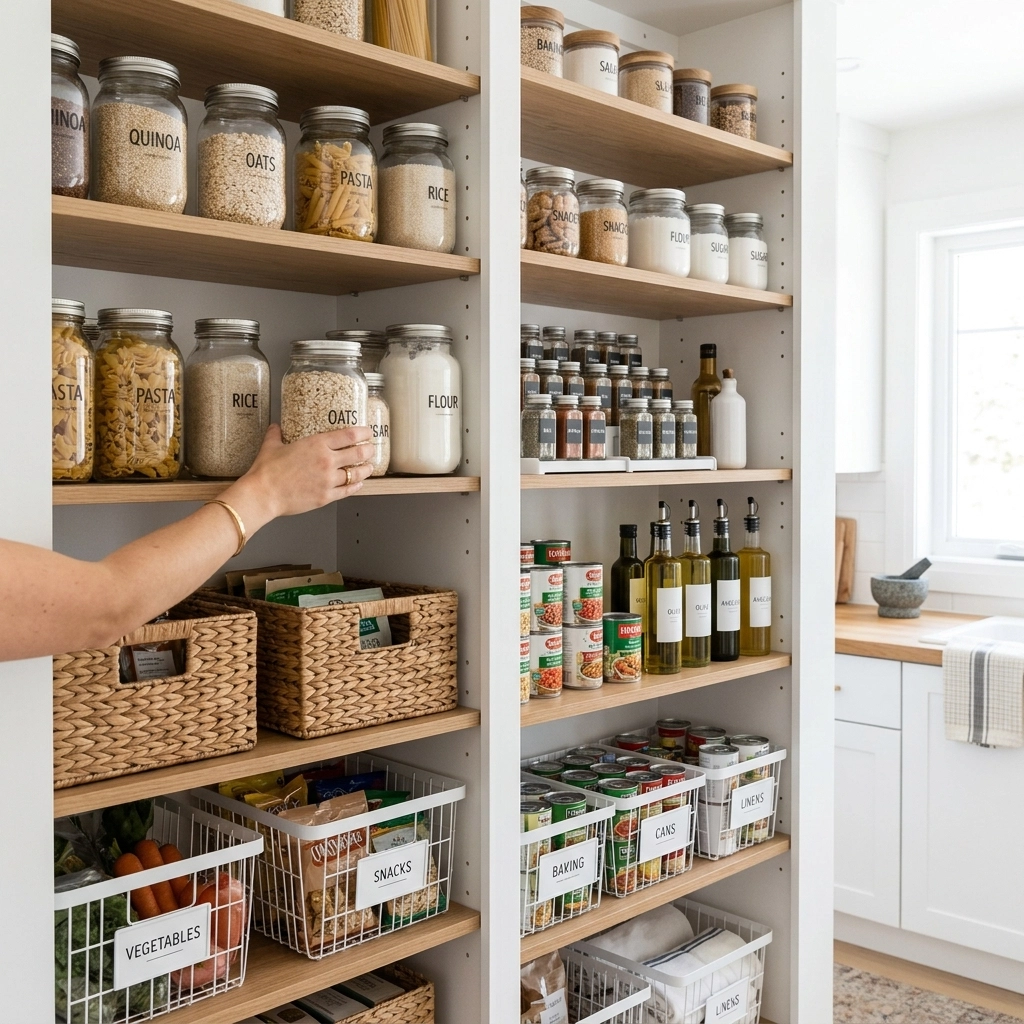
A well-organized pantry serves as the backbone of a functional kitchen. It reduces the time spent searching for ingredients, minimizes food waste, and simplifies the meal preparation process. When every item has a designated place, the daily friction of cooking and grocery management shifts into a streamlined routine.
Organizing a pantry is not just about aesthetics; it is about creating a system that responds to the specific needs of a household. Whether working with a small reach-in closet or a spacious walk-in, the goal is to maximize efficiency and maintain visibility.
Assessing the Current State of the Pantry
Before implementing new storage solutions, a thorough assessment is necessary. This process begins by removing every item from the shelves. Clearing the space allows for a deep clean and provides a literal blank canvas to visualize a new layout.
Once the shelves are bare, check expiration dates on all dry goods, canned items, and spices. Discard anything that is no longer safe for consumption. Group the remaining items into broad categories, such as baking supplies, grains, canned vegetables, snacks, and condiments. This categorization reveals which types of food require the most space and which items are frequently forgotten at the back of the shelf.
Establishing Functional Zones
The most effective pantries are divided into “zones” based on frequency of use and the nature of the tasks performed in the kitchen.
- The Everyday Zone: Items used daily, such as coffee, cereal, and popular snacks, should be kept at eye level.
- The Baking Zone: Flour, sugar, baking soda, and extracts are best grouped together on a mid-to-lower shelf.
- The Bulk Zone: Large bags of rice, flour, or multipacks of paper goods should occupy the floor or the very highest shelves.
- The Kids’ Zone: If applicable, healthy snacks should be placed on lower shelves where children can safely reach them without assistance.
With a clear plan for zones, it becomes easier to select the right tools for the job.

20 Creative Solutions for Pantry Organization
Implementing specific storage strategies can turn a chaotic cupboard into a model of efficiency. Here are twenty creative solutions designed to tackle various pantry challenges.
1. Utilize Versatile Drawers
If the pantry consists of deep, fixed shelves, items often get lost in the shadows at the back. Installing pull-out drawers or sliding baskets can transform these “dead” spaces into accessible storage. Drawers allow for a full view of the contents from above, making it easy to grab a can of beans or a box of pasta without moving five other items first.
2. Stackable Square Containers
Round containers are aesthetically pleasing but inefficient for space management. Square or rectangular containers sit flush against one another, eliminating the wasted gaps found between round jars. Choosing stackable versions allows for the full use of vertical space between shelves.
3. Clear Bins with Labels
Visibility is the enemy of clutter. When items are hidden in opaque boxes, it is easy to overbuy or lose track of inventory. Clear acrylic bins provide immediate visual confirmation of what is in stock. Adding labels helps every member of the household know exactly where items should be returned after use.
4. Uniform Glass Jars for Dry Goods
Decanting items like flour, sugar, and oats into uniform glass jars creates a cohesive look and keeps food fresh. Glass is non-porous and easy to clean, making it an excellent choice for long-term storage. For more information on maintaining a clean home environment, visiting the blog can provide further organizational insights.
5. Food-Specific Baskets
Not everything belongs in a jar. Wire or wicker baskets are ideal for grouping “loose” items like bags of chips, packets of seasoning, or root vegetables like potatoes and onions. Baskets provide airflow, which is essential for fresh produce, and they can be easily pulled off the shelf like a drawer.
6. Shelf Risers for Canned Goods
Canned goods are notoriously difficult to see when stacked two or three deep. Shelf risers, often designed with a “stadium seating” tiered look, allow the back rows to sit higher than the front rows. This ensures that every label is visible at a glance.
7. Undershelf Hanging Baskets
The space between the top of a row of items and the bottom of the shelf above is often wasted. Undershelf baskets slide onto existing shelves and hang down, creating a “floating” storage area. This is a perfect spot for flat items like wraps, napkins, or small snack bars.
8. Slim Pull-Out Towers
Many kitchens have a narrow gap between the refrigerator and the wall. A slim, rolling pull-out tower can turn a six-inch gap into a high-capacity spice rack or oil station. These towers are particularly useful in small apartments where every square inch of floor space counts.
9. Pegboards for Custom Wall Storage
If the pantry has an empty wall, a pegboard offers ultimate flexibility. Hooks can be moved to accommodate different items over time, such as measuring cups, colanders, or even small baskets for garlic and ginger. It is a functional way to turn vertical surfaces into storage hubs.
10. Over-the-Door Racks
The back of the pantry door is one of the most underutilized spaces in the home. A multi-tiered wire rack can hold dozens of jars, spices, or condiment bottles. This effectively adds an entire extra “shelf” to the pantry without taking up any floor or cabinet space.

11. Tiered Spice Racks
Spices are small and easily cluttered. A dedicated tiered rack: either for a shelf or a drawer: keeps jars organized and accessible. Organizing spices alphabetically or by cuisine type further enhances the efficiency of the cooking process.
12. Lazy Susans for Corner Access
Corner shelves are notoriously difficult to organize because the back corner is hard to reach. A Lazy Susan (turntable) solves this by bringing the back items to the front with a simple spin. These are excellent for oils, vinegars, and tall condiment bottles.
13. Interior LED Lighting
A dark pantry is a messy pantry. If the space lacks built-in lighting, battery-operated motion-sensor LED strips can be attached to the underside of shelves. Improved lighting makes it easier to read labels and notice when shelves need a quick wipe-down.
14. Chalkboard Labels
Inventories change. Today’s “Quinoa” bin might be next month’s “Lentils” bin. Using chalkboard labels or erasable markers on glass jars allows the organizational system to evolve without the need for constant relabeling or sticky residue.
15. Rolling Carts for Overflow
For those who lack a dedicated pantry room, a three-tier rolling cart can act as a mobile pantry. It can be tucked into a corner and rolled out during meal prep. This is a common solution for baking supplies or a dedicated “coffee and tea station.”
16. Magazine Files for Cans and Boxes
Standard office magazine files are the perfect size for holding boxes of aluminum foil, plastic wrap, or even cans of soda. Turning them on their side or standing them upright creates a tidy, vertical filing system for kitchen essentials.
17. Tension Rods as Dividers
Tension rods aren’t just for curtains. Placed vertically between shelves, they act as dividers for flat items like baking sheets, cutting boards, and serving platters. This keeps them upright and prevents the “avalanche” effect when trying to pull one out from a stack.
18. Dedicated Snack Stations
For families, a dedicated snack station can prevent “pantry raiding” that leaves boxes half-empty and messy. Using open-top bins at a reachable height encourages independence for children and keeps the rest of the pantry organized for meal cooking.
19. Floor Baskets for Heavy Items
The floor of a pantry is the best place for heavy, bulky items. Large wicker baskets or crates can hold gallon jugs of water, heavy bags of pet food, or bulk packages of paper towels. Placing these items in containers makes the floor easier to sweep and prevents a cluttered appearance.
20. Specialized Appliance Shelves
Many people store small appliances like mixers, blenders, or bread makers in the pantry to save counter space. Designating a specific shelf for these items: ideally at waist height to prevent heavy lifting: ensures they are used frequently rather than gathering dust.

Maintaining the System
Creation is only half the battle; maintenance is what keeps a pantry functional over the long term. A system that is too complex will eventually fall apart. The key is to keep the “one-in, one-out” rule. When a new grocery haul arrives, take the extra five minutes to decant items into their designated jars and place the new items behind the older ones (the First-In, First-Out method).
Regularly scheduled “pantry resets” are also helpful. Once a month, take ten minutes to straighten labels, consolidate half-empty bags, and check for any items that might be nearing their expiration date. This prevents the need for a massive overhaul every year.
For users seeking additional guidance on home management or general inquiries, the customer help section offers resources for navigating various services.
The Impact of a Well-Ordered Space
The benefits of a creative pantry organization extend beyond the kitchen. Studies in environmental psychology suggest that organized spaces reduce stress and promote a sense of control. When the pantry is in order, the mental load of “what’s for dinner?” is significantly lightened because the ingredients and tools are clearly laid out.
Furthermore, an organized pantry is a more sustainable pantry. By having a clear view of inventory, households are less likely to buy duplicates of items they already own. This reduces food waste and saves money over time. Using reusable containers instead of keeping items in their original plastic packaging also contributes to a more eco-friendly home.

Solving Common Pantry Problems
Deep, Dark Shelves
The most common complaint in pantry organization is the “black hole” effect of deep shelving. If pull-out drawers are not an option, using long, narrow bins that act as “drawers” is the next best solution. These bins can be pulled out by a handle, allowing the user to see everything from the front to the back of the shelf.
High Ceilings and Inaccessible Shelves
In many modern homes, pantry shelving goes all the way to the ceiling. These top shelves are perfect for items that are only used once or twice a year, such as holiday cookie cutters, large turkey roasters, or extra sets of glassware. Keeping a small, sturdy step stool nearby ensures these items remain accessible when needed.
Small, Awkward Corners
For very small pantries, “swing-out” shelving or “blind corner” organizers can be installed. These mechanical solutions pull the contents of the corner out into the room, making every inch of the cabinet usable. If hardware installation isn’t possible, using the aforementioned Lazy Susans is the most effective manual alternative.
Final Considerations for Pantry Logic
When setting up a pantry, consider the ergonomics of the space. Items that are heavy should never be stored above shoulder height to prevent injury. Conversely, items used multiple times a day should never be stored on the floor.
The aesthetic of the pantry can also be a motivating factor. While functionality is primary, a pantry that looks good is more likely to be kept clean. Matching containers, consistent labeling fonts, and a clean color palette can turn a utility closet into a space of pride. For those interested in staying updated with more home organization tips and company updates, subscribing to the newsletter provides a regular stream of helpful content.
Organizing a pantry is a journey of trial and error. What works for a professional baker might not work for a busy family of five. It is important to remain flexible and adjust the system as the needs of the household change. By implementing these twenty creative solutions, any pantry can be transformed into a streamlined, stress-free environment that supports a healthy and efficient lifestyle.

In the end, the goal of pantry organization is to spend less time looking for food and more time enjoying it. A bit of upfront effort in categorizing, zoning, and containing can pay dividends in the form of hundreds of hours saved in the kitchen over the coming years. By focusing on visibility, accessibility, and logical grouping, anyone can master the art of the organized pantry.

