
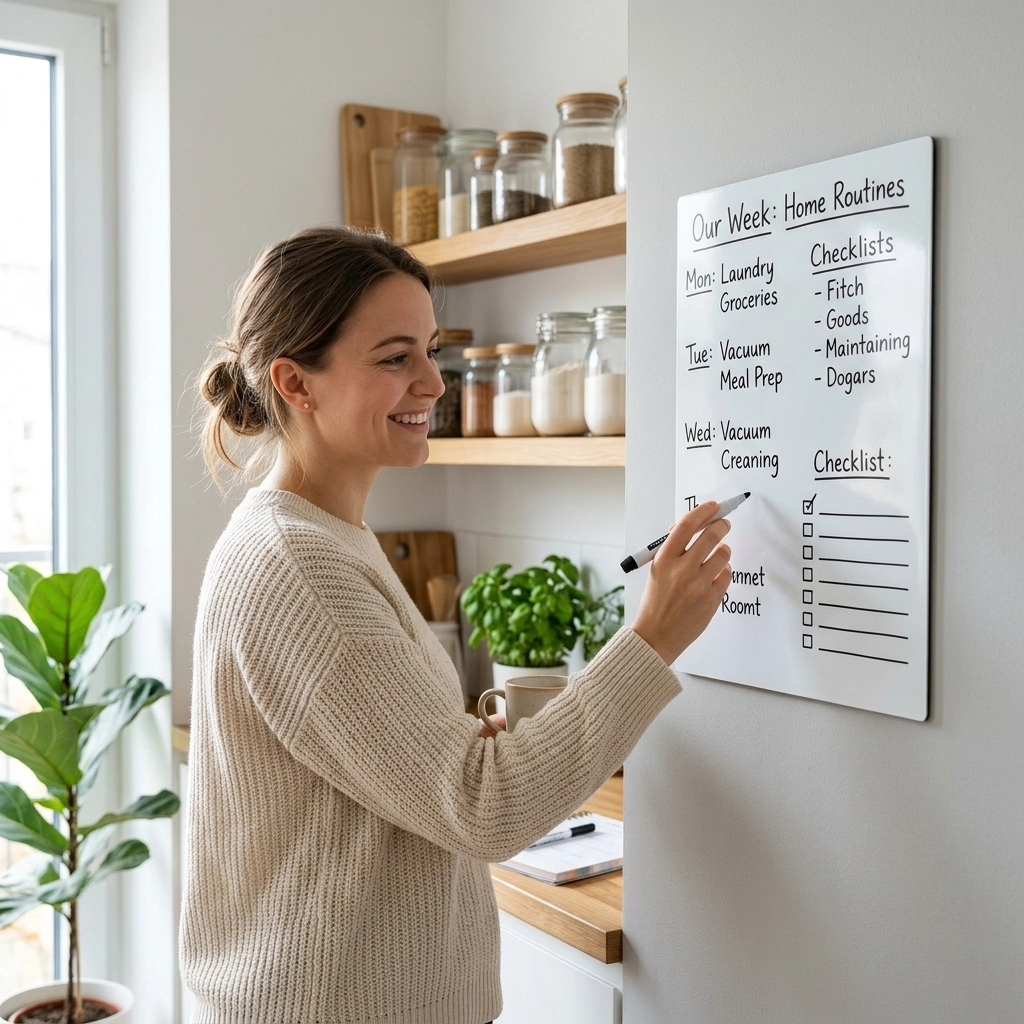
Maintaining a functional and clean home is a foundational aspect of personal well-being and productivity. A well-structured household routine serves as the invisible framework that supports a stress-free environment. However, many people find themselves trapped in cycles of perpetual cleaning with very little to show for it. The frustration often stems not from a lack of effort, but from fundamental errors in the approach to household management.
Understanding the mechanics of home maintenance allows for a shift from reactive cleaning: tackling messes as they become unbearable: to proactive systems. By identifying common pitfalls, it is possible to reclaim time and energy while ensuring the living space remains a sanctuary of order.
1. Attempting to Organize Before Decluttering
One of the most frequent errors in household management is the tendency to purchase storage solutions before assessing the actual inventory of a home. There is a common misconception that more bins, baskets, and shelving units will solve a clutter problem. In reality, organizing items that are no longer needed simply results in “organized clutter.”
When storage containers are purchased prematurely, they often do not fit the items they are meant to hold, leading to wasted space and unnecessary expense. Furthermore, keeping items that serve no purpose increases the “inventory” of the home, which in turn increases the amount of time required to clean and maintain the space.
The Fix: The Purge-First Protocol
The solution is a strict “purge before purchase” policy. Before any organization can happen, every item in a designated area must be evaluated. This process involves categorizing items into three groups: keep, donate/sell, and discard.
Once the “keep” items are identified, they should be grouped by category. Only after this step is it clear exactly what kind of storage is required. Measuring the dimensions of the available space and the volume of the items ensures that any organizational tools purchased are functional rather than just aesthetic. Reducing the total number of possessions automatically simplifies any routine, as there are fewer objects to move, dust, and manage.

2. Relying on Rigid, Unrealistic Schedules
Many people approach household routines with an “all-or-nothing” mentality, creating complex calendars that schedule every minute of the day. While these schedules look impressive on paper, they rarely survive the unpredictability of daily life. When a single task is missed due to a late meeting or an unexpected errand, the entire system often collapses, leading to feelings of failure and a total abandonment of the routine.
Rigid schedules fail because they do not account for energy fluctuations or the varying demands of different seasons of life. Expecting to perform deep cleaning tasks on a day when professional or personal demands are at their peak is a recipe for burnout.
The Fix: Flexible Rhythms and Task Batching
Instead of a rigid schedule, focus on “rhythms.” A rhythm identifies the natural flow of the day: morning, afternoon, and evening: and assigns a small cluster of tasks to those blocks. For example, a morning rhythm might include starting a load of laundry and unloading the dishwasher, while an evening rhythm focuses on clearing kitchen counters and prepping for the next day.
Task batching is another effective fix. Instead of doing a little bit of everything every day, group similar tasks together. Designate a “Floor Day” for all vacuuming and mopping, or a “Linen Day” for bedding and towels. This reduces the “switching cost”: the mental energy required to move from one type of task to another: and makes the routine feel more manageable. For those looking to improve their household management skills, checking a blog for new strategies can provide ongoing inspiration.
3. Ignoring the “Point of Use” Storage Principle
A common mistake that leads to disorganized homes is storing items far away from where they are actually used. If the supplies needed to clean the bathroom are kept in a central hallway closet on a different floor, the friction required to start the task increases. When items are difficult to access or put away, they are more likely to be left out, creating a visual mess and disrupting the flow of the household.
This mistake often results in “item migration,” where objects end up scattered across various surfaces because the effort to return them to their “home” feels too high.
The Fix: Strategic Supply Placement
To fix this, implement the “Point of Use” rule. Store items as close as possible to the location where they are most frequently used. This might mean keeping a small set of cleaning supplies (all-purpose cleaner, microfiber cloth, and toilet brush) under every sink in the house rather than in one central location.
Apply this to all areas of the home. Store coffee pods near the coffee machine, extra trash bags at the bottom of the trash can, and frequently used cooking oils within arm’s reach of the stove. Reducing the physical steps required to complete a task or put something away significantly lowers the barrier to maintaining the routine.

4. Performing Cleaning Tasks in the Wrong Order
Efficiency in a household routine is heavily dependent on physics. Many people clean in a way that inadvertently spreads dirt or requires them to redo work. For example, vacuuming a floor before dusting the shelves above it results in dust falling onto the newly cleaned floor. Similarly, jumping straight to wet cleaning methods (like mopping or using spray cleaners) before removing loose debris can create a muddy slurry that is harder to clean.
The Fix: The Top-to-Bottom, Dry-to-Wet Strategy
Professional cleaning standards dictate two primary rules: work from top to bottom and move from dry to wet.
- Top-to-Bottom: Always start cleaning at the highest point in a room: ceiling fans, light fixtures, or the tops of cabinets. Allow the dust to fall, then work your way down to mid-level surfaces like tables and counters, finishing with the floors.
- Dry-to-Wet: Always remove loose dirt, hair, and dust with dry tools (a microfiber duster, broom, or vacuum) before introducing any liquid. This prevents the “mud effect” and ensures that the cleaning solution can actually reach the surface it is intended to sanitize rather than just sitting on top of a layer of dust.
By following this sequence, the effort expended is maximized, and the results are significantly more thorough.
5. Neglecting Tool Maintenance and Safety
A household routine is only as effective as the tools used to execute it. Using a vacuum with a full bag or a clogged filter does not remove dirt; it simply moves it around and may even exhaust dust back into the air. Similarly, using the same cloth to clean multiple rooms can lead to cross-contamination, moving bacteria from the bathroom to the kitchen.
Furthermore, many people overlook personal safety. Cleaning involves chemicals and repetitive motions that can impact health over time. Neglecting to wear gloves or failing to provide adequate ventilation can lead to skin irritation and respiratory issues.
The Fix: Creating a Maintenance Schedule
Incorporate tool maintenance into the broader household routine. This includes:
- Vacuum Care: Emptying canisters or changing bags when they are two-thirds full and washing filters monthly.
- Microfiber Management: Laundering cleaning cloths after every use. Avoid fabric softeners, as they coat the fibers and reduce their ability to trap dust.
- Chemical Safety: Keeping a pair of reusable gloves in every cleaning kit to protect the skin from harsh surfactants and acids.
Maintaining tools ensures they perform at peak efficiency, which reduces the time and physical effort required for every task. For information regarding product standards or help, the customer help section can be a useful resource.

6. Focusing Only on Surface-Level Aesthetics
It is easy to fall into the trap of “performative cleaning”: making the house look tidy by clearing surfaces while ignoring the deeper layers of grime and organization. While a clear counter provides immediate visual relief, neglecting deep cleaning tasks leads to long-term issues like mold growth, allergen accumulation, and the eventual breakdown of household appliances.
When the routine only addresses what is visible, the “hidden” chores begin to pile up, eventually requiring a massive, overwhelming effort to rectify.
The Fix: The “Zone” Rotation Method
The most effective way to balance daily tidying with deep cleaning is the zone rotation method. Divide the home into four or five zones (e.g., Kitchen, Bathrooms, Living Areas, Bedrooms). While maintaining a basic daily tidying routine for the whole house, focus on one specific zone each week for deep cleaning.
During the “Kitchen Week,” for example, the routine might include cleaning the inside of the microwave, wiping down cabinet fronts, and pulling out the refrigerator to vacuum behind it. By rotating through zones, every inch of the house receives a deep clean at least once a month, preventing any one area from becoming neglected. This systematic approach ensures long-term maintenance without the need for grueling “spring cleaning” marathons.
7. Over-Complicating the Process and Multitasking
The “mental load” of managing a household is often heavier than the physical labor itself. Many people over-complicate their routines by trying to implement every “hack” they see online, leading to a fragmented approach. Additionally, attempting to clean while multitasking: such as trying to deep-clean the kitchen while helping children with homework or taking a work call: often leads to half-finished tasks and increased stress.
Multitasking in a household context usually results in “butterfly cleaning,” where a person starts one task, gets distracted by a mess in another room, and ends up with five half-finished projects and a feeling of exhaustion.
The Fix: Single-Tasking and the 15-Minute Rule
Efficiency comes from focus. When it is time for a household task, commit to single-tasking. Set a timer for 15 or 30 minutes and focus exclusively on one area or one type of task until the timer goes off. The “15-minute rule” is particularly effective for those who feel overwhelmed; almost any task feels manageable when it has a definitive end point.
Simplicity is key. A few high-quality, versatile cleaning products are usually more effective than a dozen specialized cleaners. Consolidating the routine and focusing on high-impact actions allows for a cleaner home with significantly less mental fatigue. For those interested in the principles behind these systems, the about page provides insight into the educational philosophy of structured learning.

Building a Sustainable Foundation
Correcting these mistakes is not about achieving perfection; it is about creating a sustainable system that serves the inhabitants of the home. A household routine should provide a sense of order and predictability, not become a source of guilt or exhaustion.
By focusing on decluttering before organizing, establishing flexible rhythms, and using the correct cleaning sequences, the home becomes easier to maintain. When tools are well-maintained and tasks are approached with focus, the “chores” move from being a burden to being a simple, manageable part of a well-ordered life.
The ultimate goal of any household routine is to free up time for the things that truly matter: learning, rest, and connection. By refining these systems, the environment is optimized to support those higher goals, ensuring that the home remains a place of rejuvenation rather than a source of stress. For further information on terms of service or privacy regarding our educational content, visitors can refer to the terms and conditions or privacy policy.
Managing a home is an ongoing process of adjustment. As seasons change and household needs evolve, the routine should be flexible enough to adapt. The transition from a chaotic environment to a streamlined one happens one small correction at a time. By identifying which of these seven mistakes are currently present, a clear path toward a more efficient and peaceful home is revealed.

