
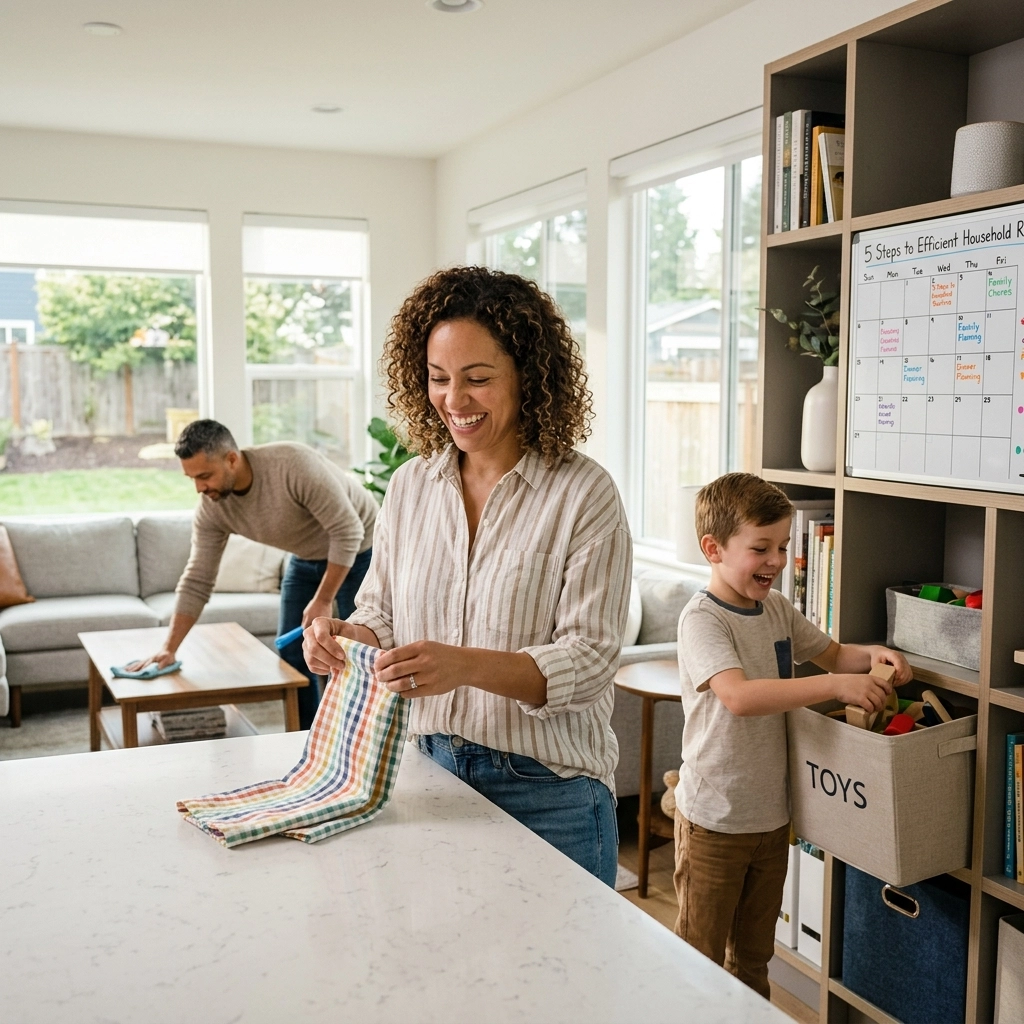
Maintaining a household can often feel like a full-time job without a closing time. For families, the constant influx of dishes, laundry, and clutter can create a cycle of stress that impacts overall well-being. However, efficiency in the home is not about achieving perfection or living in a showroom. Instead, it is about creating sustainable systems that allow the household to function smoothly, freeing up time for what truly matters.
Developing a robust household routine requires a shift in perspective. Rather than viewing chores as a never-ending list of burdens, one should see them as a series of rhythmic habits that preserve the sanctuary of the home. By implementing structured steps and involving every member of the family, the domestic environment can transform from a source of chaos into a place of rest and productivity.
Step 1: Identify and Prioritize the “Core Five” Daily Tasks
The most common reason household routines fail is over-ambition. When a list of daily requirements becomes too long, it is inevitably abandoned. Efficiency starts with identifying the “Core Five”, the five non-negotiable tasks that, when completed, keep the home functional and the atmosphere calm.
The Power of Decision Minimalism
Decision fatigue is a significant barrier to household management. By deciding in advance what the absolute priorities are, the mental energy required to “start” is significantly reduced. For most families, these five tasks include:
- A Clean Sink: Ensuring all dishes from the previous day are washed or placed in the dishwasher before bed.
- Surface Clearing: Wiping down the kitchen counters and the dining table.
- Floor Maintenance: A quick five-minute sweep or vacuum of high-traffic areas.
- Laundry Progress: Completing one full cycle, wash, dry, fold, and put away.
- The 10-Minute Reset: A timed period where the family gathers to return stray items to their proper places.
Establishing a Baseline
These tasks represent the baseline of a functional home. Even on days when energy is low or schedules are packed, completing these five items ensures that the next morning begins on a positive note. It prevents the “snowball effect” where a single day of neglect leads to a week of catch-up.

Step 2: Implement Time-Blocked Routine Anchors
Efficiency is often a matter of timing. Randomly cleaning throughout the day is less effective than clustering tasks into “anchors.” Routine anchors are specific blocks of time: usually in the morning and evening: where household maintenance happens automatically.
The Morning Launch Routine
The goal of a morning routine is to set the house up for success. This block should ideally take no more than 30 to 45 minutes and occur before the primary activities of the day begin.
- Emptying the Dishwasher: Doing this first thing ensures that dirty dishes generated throughout the day have a place to go immediately, preventing sink pile-ups.
- Making Beds: This simple act provides an immediate visual win and signals that the day has started.
- Processing Laundry: Moving a load from the washer to the dryer or starting a fresh load.
The Evening Reset Routine
The evening reset is arguably the most important part of a household routine. It is the process of “closing” the house.
- Kitchen Shutdown: Cleaning the kitchen after the final meal. This includes wiping down the stove and ensuring the dishwasher is running.
- Living Room Tidy: Fluffing pillows, folding blankets, and removing items that don’t belong in the common area.
- Planning for Tomorrow: Setting out clothes or checking the calendar for the next day’s appointments.
By anchoring these tasks to specific times of day, they become habits rather than chores. For more resources on structured habit-building, one might explore the Paris Wheel blog.
Step 3: Master the Art of Systematic Meal Planning
Food management is often the most significant source of daily household stress and financial waste. A master routine must include a systematic approach to what the family eats.
The Inventory-First Approach
Efficiency in the kitchen begins before the grocery store. One should conduct a weekly “fridge and pantry audit.” By seeing what is already available, meal plans can be built around existing ingredients, reducing waste and simplifying the shopping process.
Thematic Meal Scheduling
To reduce the mental load of choosing meals, many families find success with thematic nights. For example:
- Monday: Pasta or grain bowls.
- Tuesday: Tacos or Mexican-inspired dishes.
- Wednesday: Slow cooker or “dump” meals.
- Thursday: Leftovers or “kitchen sink” salads.
- Friday: Homemade pizza or easy finger foods.
Batch Prepping for Efficiency
When cooking, it is often more efficient to “cook once, eat twice.” Preparing double portions of protein or chopping vegetables for multiple meals at once saves significant time during the busy work week. Efficiency is found in the preparation, not just the execution.

Step 4: Adopt the “One-Load-A-Day” Laundry Method
Laundry is a cyclical task that never truly ends. The “marathon” approach: saving all laundry for the weekend: often results in a home filled with piles of clean, unfolded clothes and a feeling of being overwhelmed.
The Lifecycle of a Load
The “One-Load-A-Day” method suggests that every day, one load of laundry is taken through its entire lifecycle:
- Sort and Wash: Usually done in the morning.
- Dry: Done mid-day or upon returning home.
- Fold and Put Away: Done in the evening during a period of low-energy activity, such as listening to a podcast or watching a show.
Reducing the Volume
Efficiency also involves reducing the amount of laundry generated. Encouraging family members to hang up towels for reuse and only washing clothes that are actually dirty can significantly decrease the daily workload. For families with children, teaching them to fold their own clothes as soon as they are able is a vital step in household management.

Step 5: Delegate Responsibility and Use a Visual Schedule
A household routine should not fall on the shoulders of a single person. True efficiency is achieved through delegation and shared responsibility.
Age-Appropriate Contributions
Even young children can contribute to the household routine.
- Toddlers: Can help pick up toys or put silver-ware in the drawer.
- Elementary Age: Can set the table, feed pets, or fold towels.
- Teens: Can manage their own laundry, cook one meal a week, or take out the trash.
The Power of the Visual Chart
Verbal reminders often lead to frustration and “nagging.” A visual chore chart or a shared digital calendar provides a neutral point of reference. When everyone can see what needs to be done, there is less ambiguity about expectations. This transparency fosters a sense of teamwork.
For those interested in learning more about family dynamics and organizational strategies, the About page provides context on the company’s approach to lifelong learning and practical skill development.
Advanced Strategies for Maximum Efficiency
Once the five steps are established, families can look toward advanced optimization techniques to further streamline their lives.
The “One-Touch” Rule
The one-touch rule is a simple productivity hack: if a task takes less than two minutes, do it immediately. This applies to opening mail, putting a coat in the closet, or rinsing a coffee mug. By touching an item only once, one prevents the accumulation of “micro-clutter” that eventually requires a massive cleaning session.
Zone Cleaning for Deep Tasks
Daily routines keep the surface clean, but houses also require deep cleaning. Zone cleaning involves dividing the home into sections (e.g., Kitchen, Bathrooms, Bedrooms) and focusing on one zone for 15-30 minutes each week. This prevents the need for an exhausting “spring cleaning” marathon once a year.

Utilizing Technology and Tools
Efficiency can be enhanced by the right tools.
- Robotic Vacuums: Can maintain floors between manual cleanings.
- Subscription Services: Automated deliveries for household staples like soap and toilet paper prevent “emergency” store runs.
- Digital Lists: Using apps for grocery lists that sync across family devices ensures that everyone is on the same page.
Troubleshooting Common Routine Roadblocks
No routine is perfect, and life often gets in the way of even the best-laid plans. Understanding how to handle these interruptions is key to long-term success.
When Life Gets Busy
During periods of illness, travel, or high-stress work projects, it is acceptable to revert to “Survival Mode.” In survival mode, the goal is simply to maintain the Core Five tasks from Step 1. Everything else can wait until the crisis has passed.
Overcoming Resistance
It is common for family members to resist new routines. The key to overcoming this is consistency and communication. Explaining why the routine is being implemented: usually to reduce stress and create more free time for fun activities: can help gain buy-in. If a particular part of the routine isn’t working after two weeks, be willing to adjust it.
Dealing with “Hot Spots”
Every home has “hot spots”: areas where clutter naturally accumulates, such as the entryway table or the end of the kitchen counter. Identifying these spots and incorporating a 2-minute clear-out of these specific areas into the evening reset can prevent them from becoming overwhelming.
The Psychological Benefits of a Structured Home
The impact of an efficient household routine extends far beyond a clean floor. Research suggests that organized environments contribute to lower cortisol levels and improved mental clarity.
Reducing Parental Burnout
By distributing tasks and automating decisions, parents can reduce the mental load that often leads to burnout. When the house “runs itself,” there is more emotional energy available for parenting and personal pursuits.
Teaching Life Skills
A structured household serves as a classroom for children. They learn the value of contribution, the importance of consistency, and the practical skills necessary for their own future independence.
Creating a Sanctuary
A home should be a place where the family can recharge. When the physical space is managed efficiently, it becomes easier to foster a peaceful atmosphere. A routine isn’t a set of rules meant to restrict the family; it is a framework meant to support them.

Final Considerations for Household Success
Consistency is more important than intensity. It is better to have a simple routine that is followed 80% of the time than a complex one that is followed for only three days.
As the needs of the family change: as children grow or work schedules shift: the household routine must also evolve. Periodically reviewing the systems in place ensures they continue to serve the family’s current reality. For assistance with any questions regarding our resources or to learn more about our company’s mission, feel free to visit our Contact Us page.
By prioritizing the essentials, anchoring tasks to specific times, planning meals, managing laundry daily, and sharing the load, any family can master their household routine and improve their daily efficiency. The result is not just a cleaner house, but a more harmonious and intentional way of living.

